Tag Archives: Crown Flower

Hawaiian Crown Flowers

White Hawaiian Crown Flowers
A Hawaiian Crown Flower bush

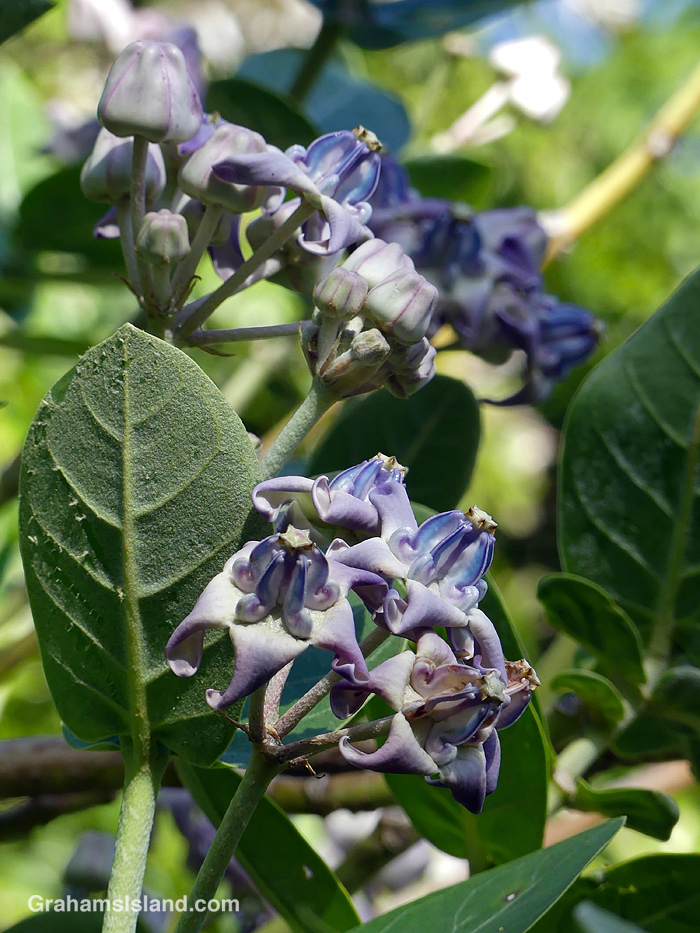
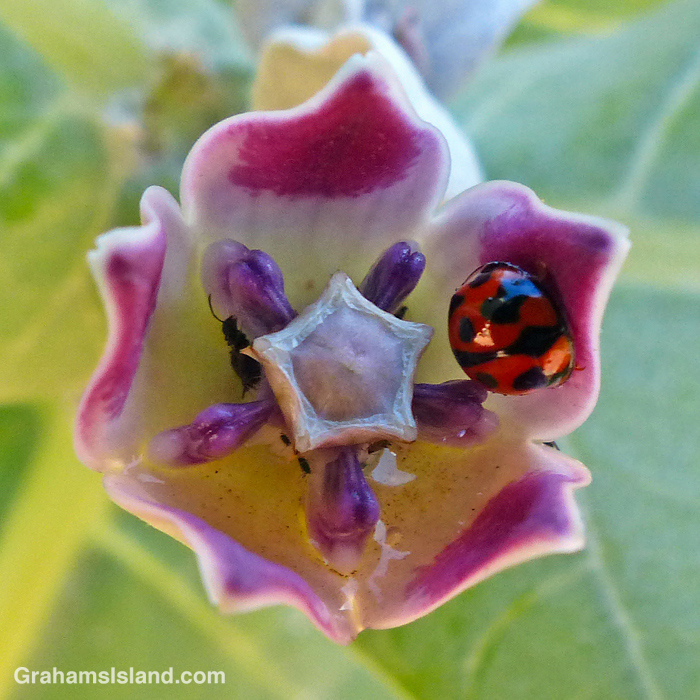
Hawaiian Crown Flowers (Calotropis gigantea) came from India originally, and became popular here because they were favored by Queen Liliuokalani, the last ruler of the Hawaiian monarchy. The purple flower was the one first introduced here, back in the 1880s, with this white variety arriving some 30 years later.

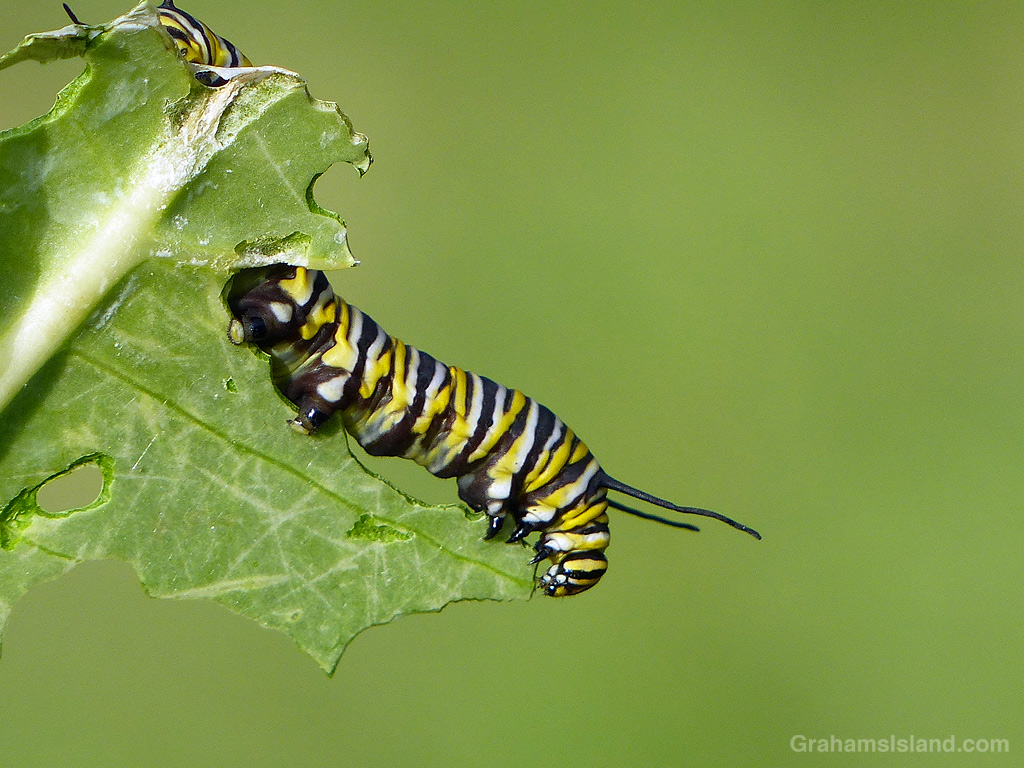
The plant gets its name from the shape of the flowers, which are used in making leis. As members of the milkweed family, they also host Hawaii’s Monarch Butterflies. The plant has a milky sap that is toxic, but that Monarchs, and their caterpillars, are immune to. The caterpillars are voracious eaters, decimating the Crown Flower leaves, but the plant will bounce back after the caterpillars pupate. The plant is drought tolerant and does well on the dry side of the island here.

Hawaiian Crown Flower seeds

Photos for people who like pastels

Pastel Candies in Hawaii
Pastel shades of candy.

This week’s Sunday Stills color challenge theme is ‘Pastels.’ See more responses here. Captions on the photos.

A square deal for bugs

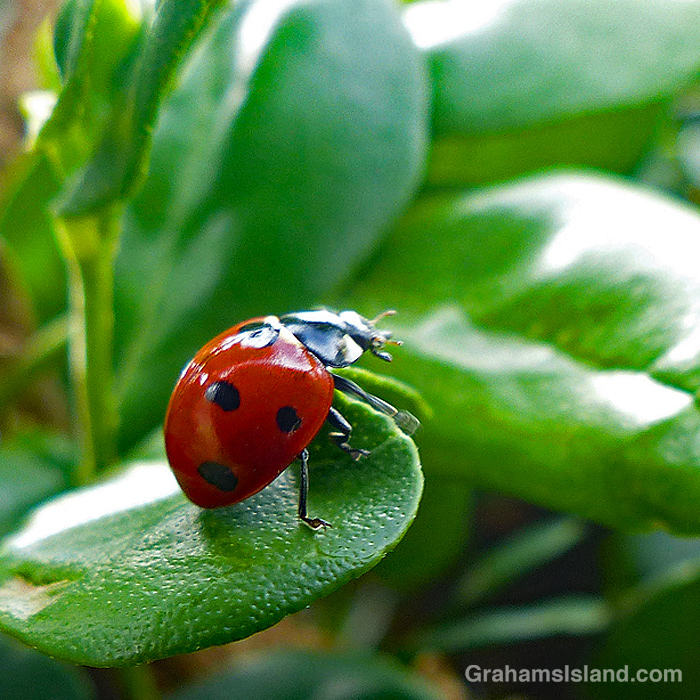
A Seven-spotted ladybug on a leaf in Hawaii
A Seven-spotted Lady Beetle pauses on a leaf.

This week’s Sunday Stills challenge theme is ‘All about bugs.’ See more responses here.

Also posted for Becky’s Squares: Seven. See more responses here.

The bugs in the next gallery were all on the same Monstera leaf, which had accumulated falling flowers from a palm tree.

There’s something bugging me

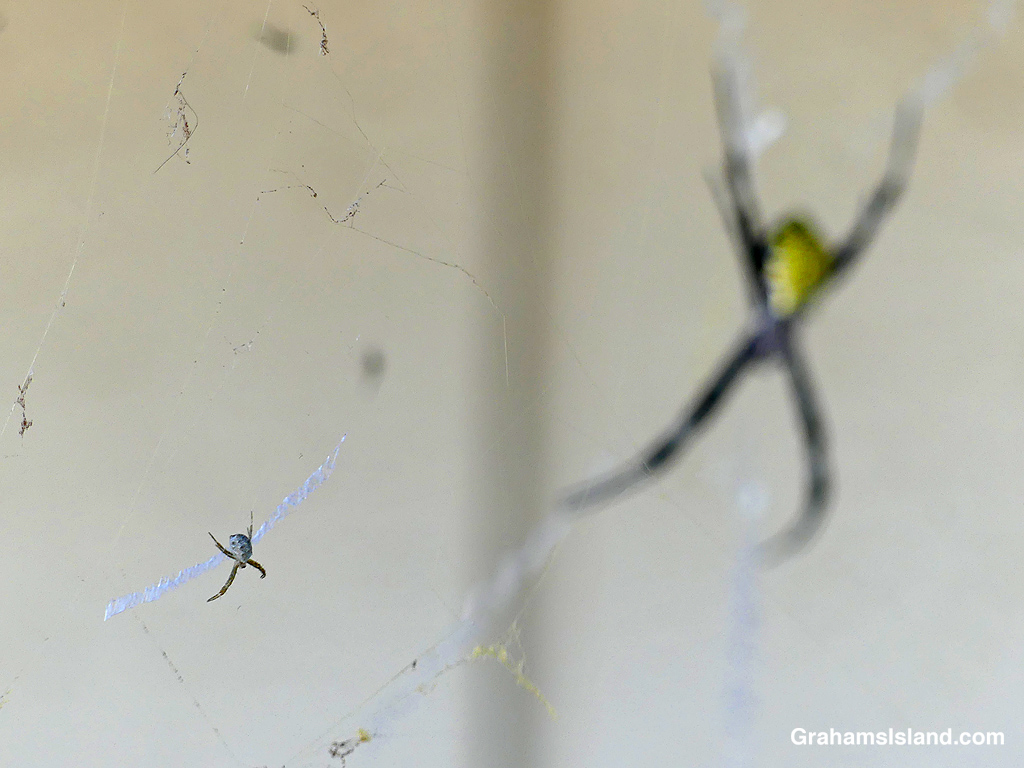
A tiny female Hawaiian Garden Spider with a much bigger one in the background

This week’s Sunday Stills challenge theme is ‘Let’s Get Small.’ See more responses here.

Sorry to start off (above) with spiders, for those with aversions to them, but this one is very small. It’s a tiny female Hawaiian Garden Spider, probably no more than a quarter-inch across, though if it survives, it will grow to be as big as the other one in the photo.

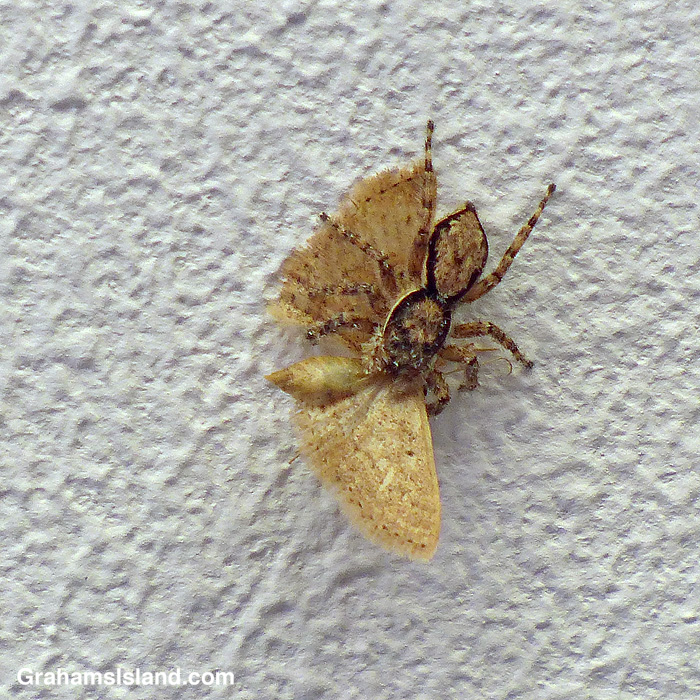
In the gallery below, a Seven-spotted Ladybug putters about in some very green leaves. Another spider, this time a jumping spider no bigger than the little one at the top, has jumped a moth bigger than itself. Finally, what I think is a hover fly pretending to be a wasp with its black and yellow markings.

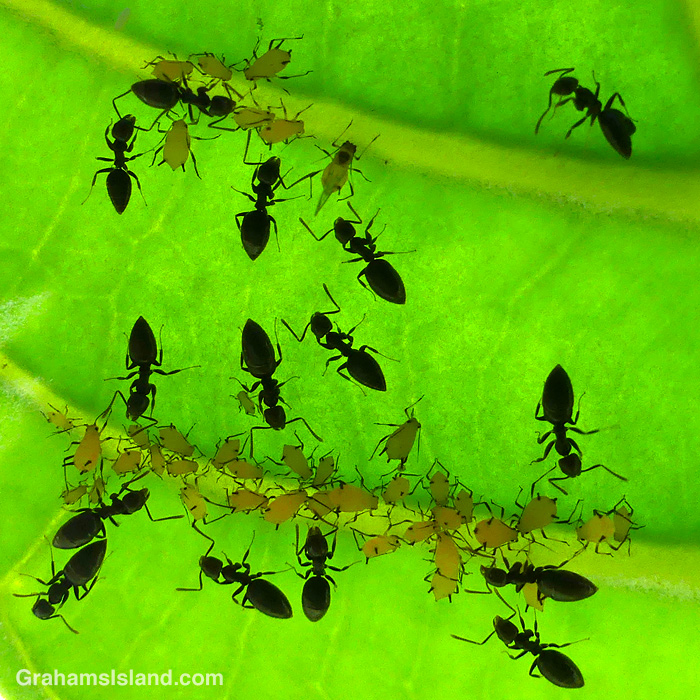
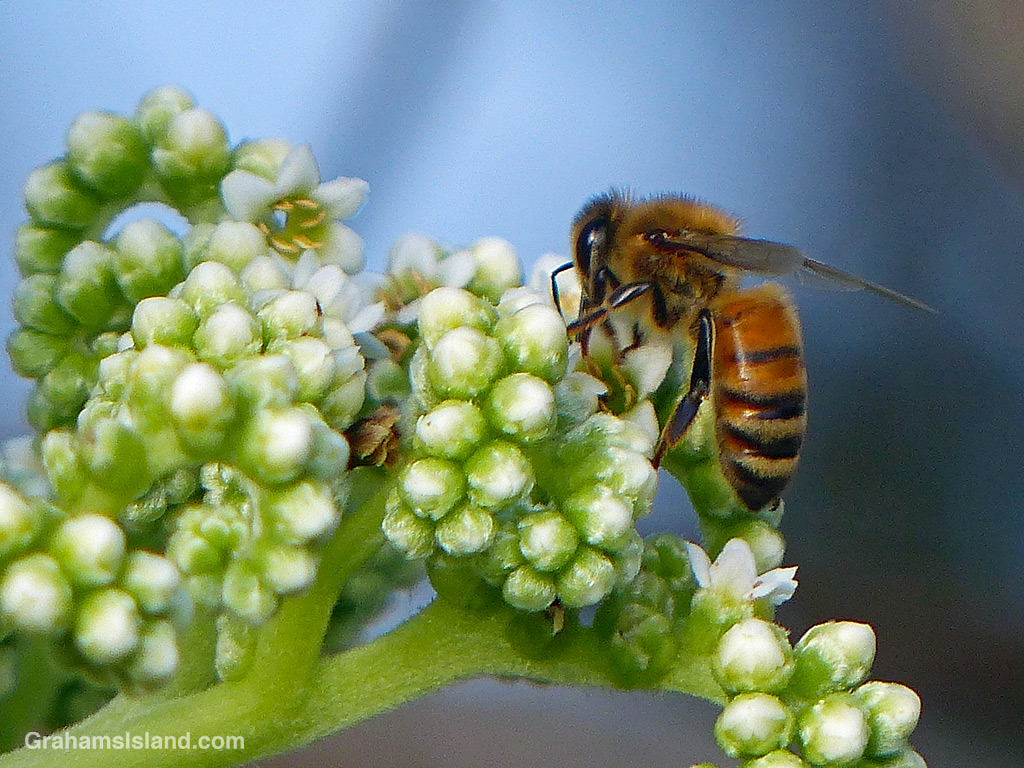
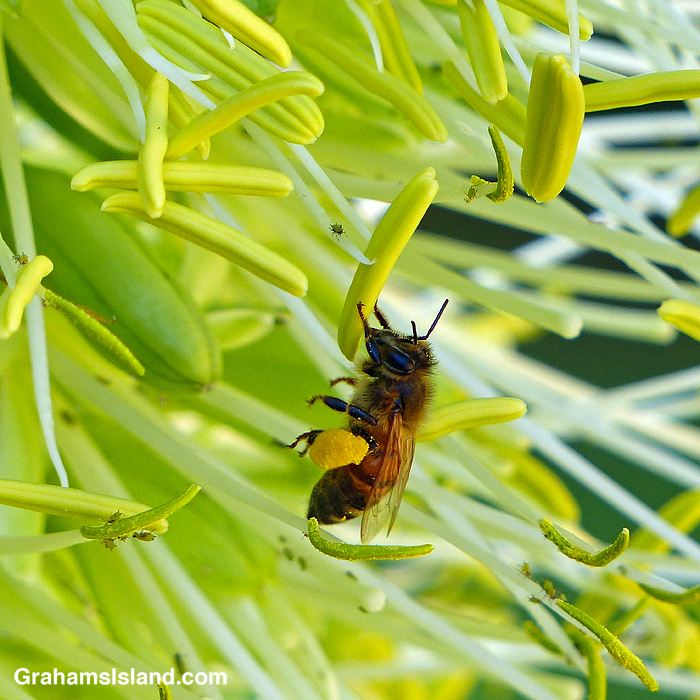
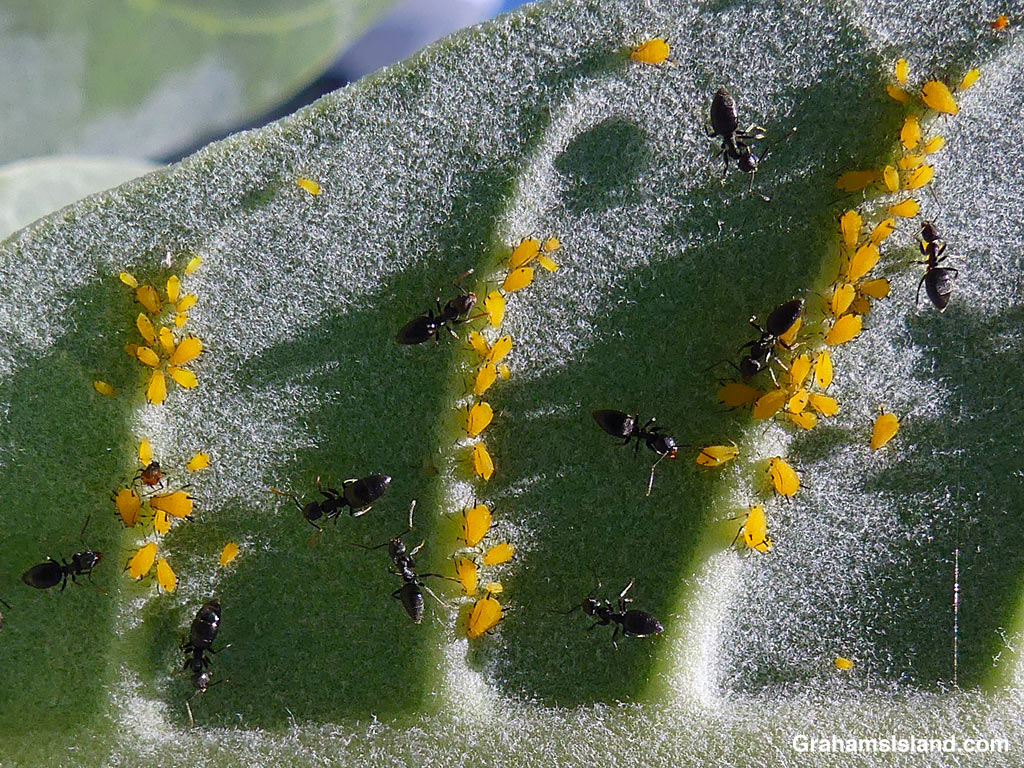
Finally, a Camponotus variegatus ant or carpenter ant. Next, a bee collecting pollen on an agave attenuata. Note the tiny aphids sharing the flower. And finally ants and aphids on the leaf of a Hawaiian Crown Flower. In this symbiotic relationship, the aphids produce sweet goodies for the ants to eat and the ants provide protection against the aphids’ predators.