A friend gave my wife a small bouquet of flowers from the garden. These ended up on a shelf below a print of one of my old photos, and I liked how the colors worked together. This photo also provides evidence that there is at least one snake in Hawaii!
This week’s Sunday Stills challenge theme is ‘Double Trouble.’ See more responses here.
A pair of juvenile Black-crowned Night Herons spell trouble for small fish living in the pool behind Pelekane Beach in Kawaihae.
Giant Porcupinefish can inflate themselves into a ball. When they do so, long spines along the back become raised and stick out, making them an extremely unpleasant proposition for any predator. Oh, and they’re poisonous, too. Trouble, indeed.
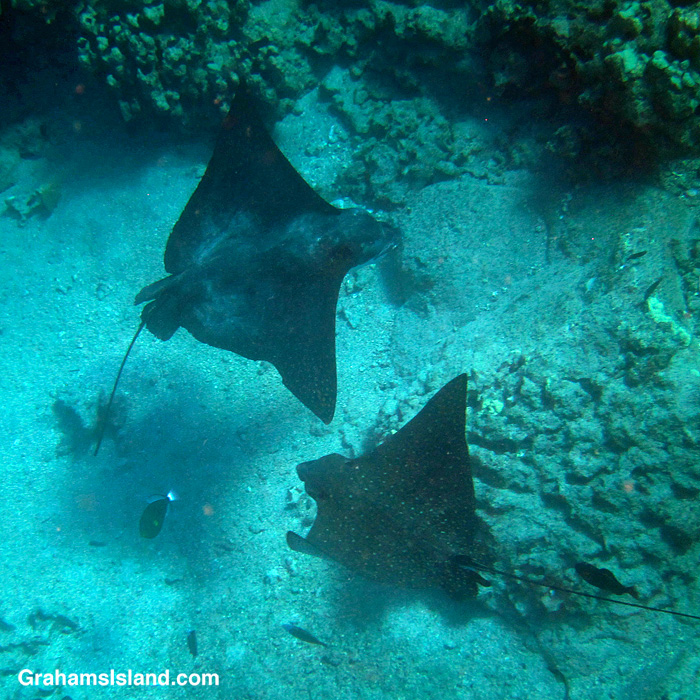
Spotted Eagle Rays hunt for molluscs and other creatures hiding in the sand. They root out prey with their duck-like bills.
Wild pigs can dig up a garden in no time, searching for worms and the like, but they go bananas over fallen fruit. These two were slurping down fallen mangoes.
This cow looked very suspicious of these cattle egrets, especially the one on its back. But they weren’t up to any trouble, just waiting for the cow to start grazing again and stir up some insects for them.
The Gold Dust Day Gecko on the left isn’t licking the paint. He’s sticking out his tongue and leaning to make his body look bigger in a challenge to the other gecko. The other one was singularly unimpressed and chased off his adversary.
A small Gold Dust Day Gecko climbs over a Wax Ginger. The small yellow parts are the flowers and the red mass is bracts.
This week’s Sunday Stills challenge theme is ‘Plant Life.’ See more responses here.
Here are a few plants seen on my last visit to Hawai’i Tropical Bioreserve & Garden. For more information about Hawai’i Tropical Bioreserve & Garden, go to htbg.com.
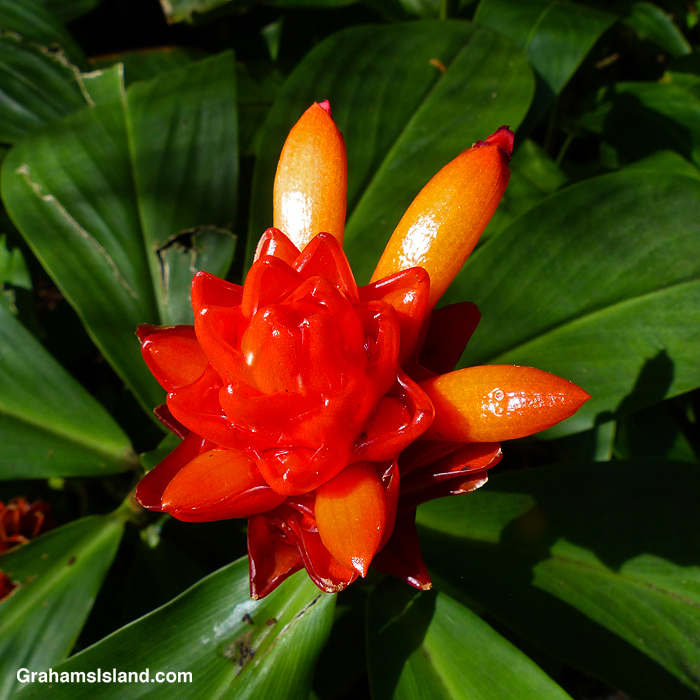
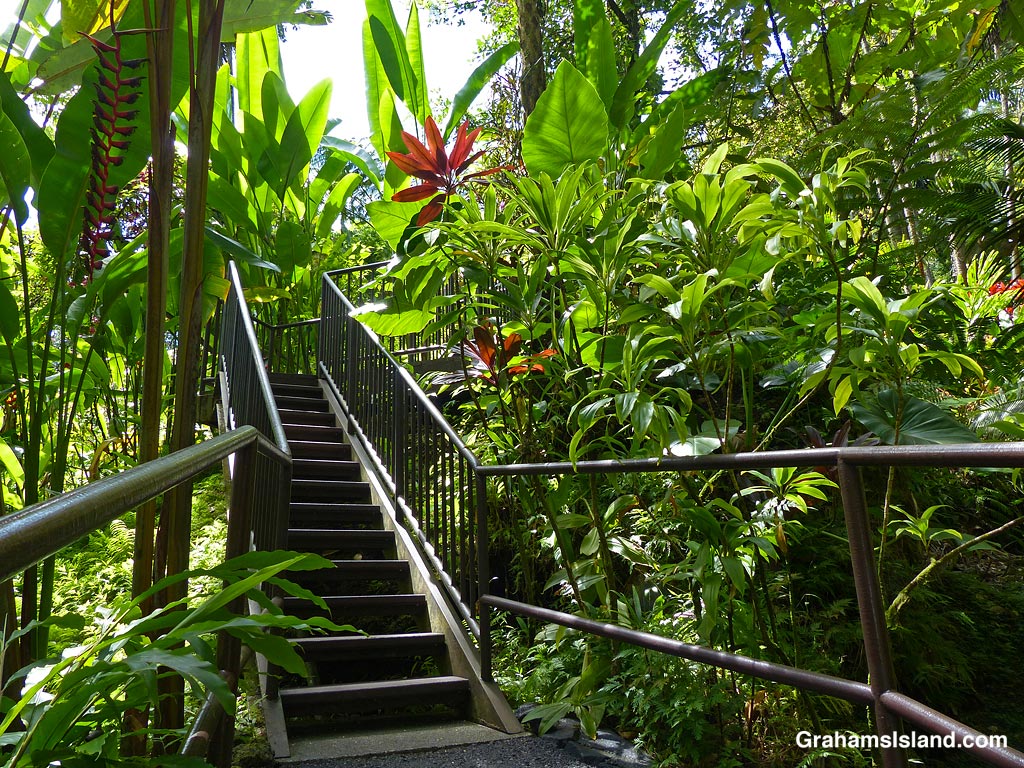
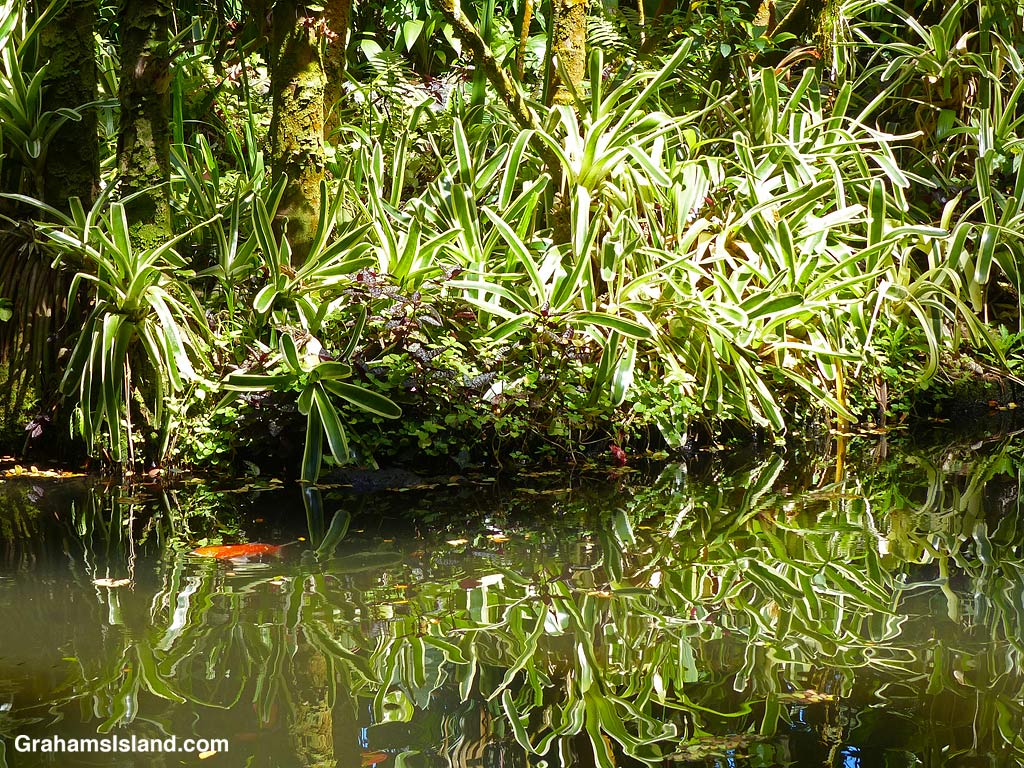
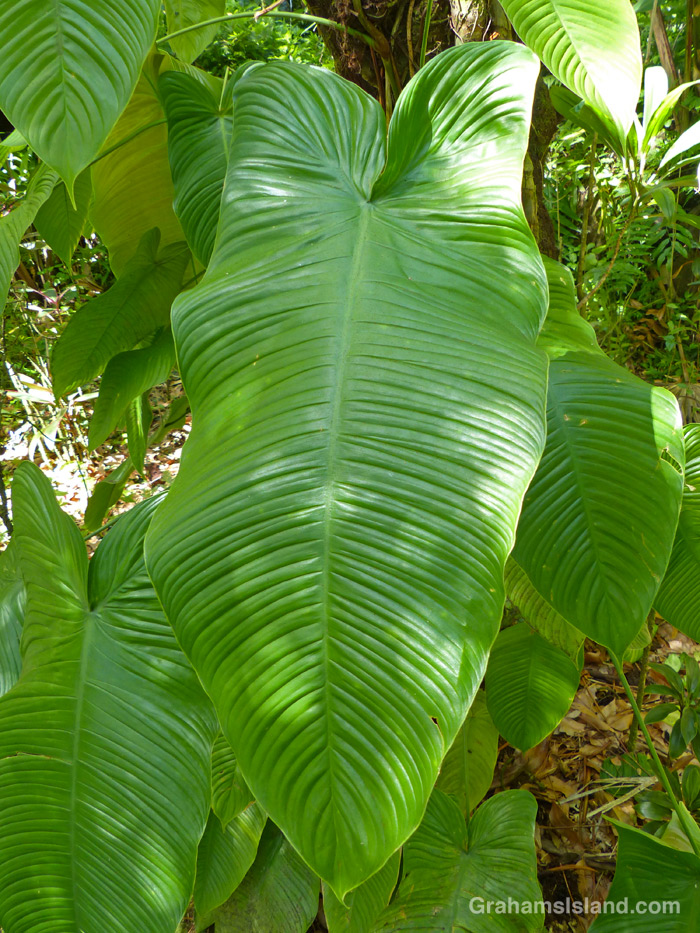
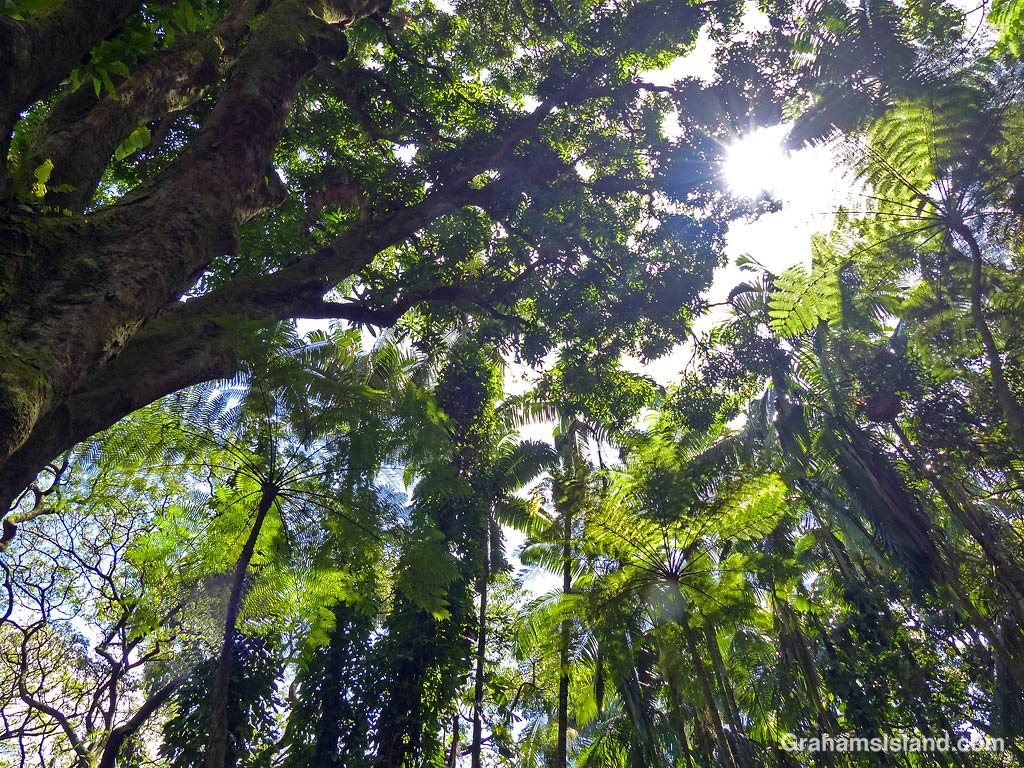
Big leaves on Heliconia Longissima Red WingsTowering trees reach for the sky.The giant leaves and long spadex of an Anthurium Cupulispathum.A mass of Selaginella Umbrosa ferns.A Powderpuff flower growing from a mossy trunk.The syrupy look of a red ginger.A variety of tropical foliage borders a staircase at the garden.There are plants on land and reflected in the water.
This week’s Sunday Stills Color Challenge theme is ‘Pink.’ See more responses here.
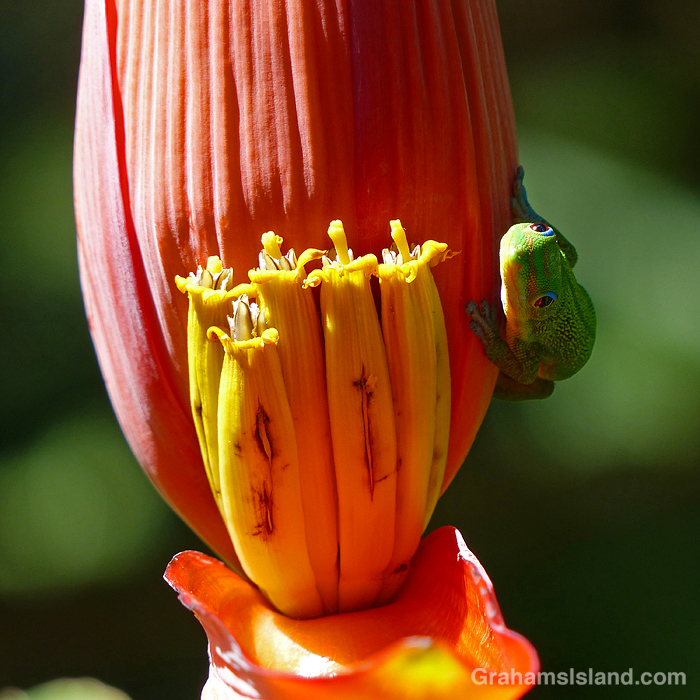
Here’s a Gold Dust Day Gecko exploring a banana flower, looking for water or something sweeter. Weather permitting, I hope to have another pink post tomorrow!
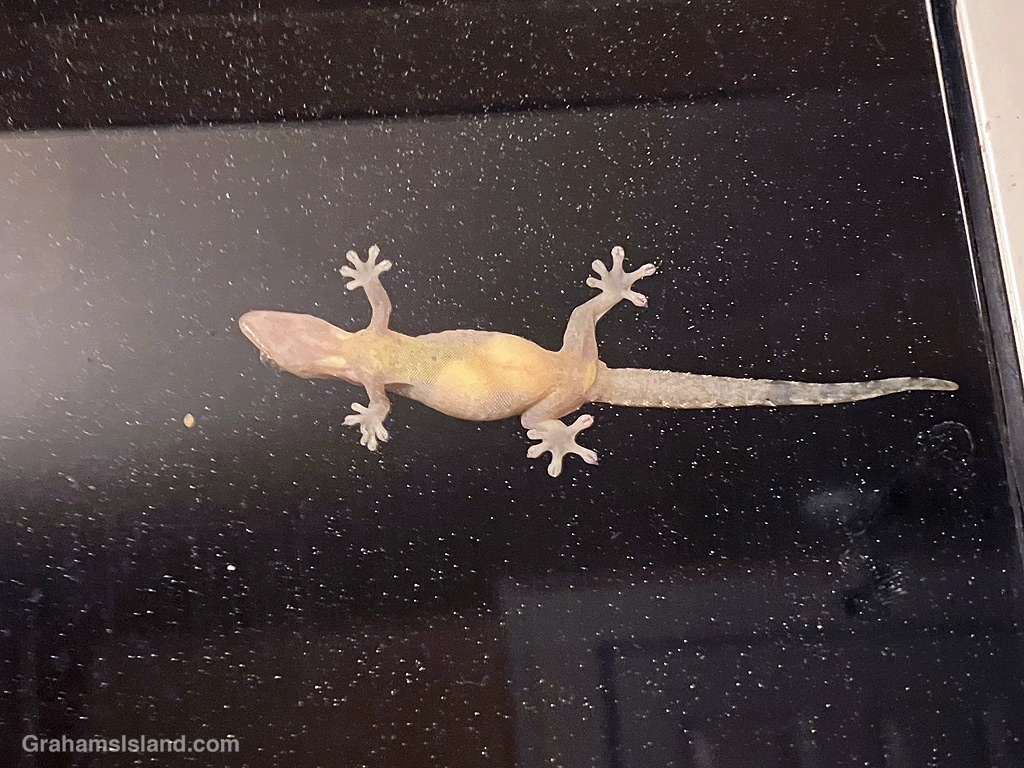
I saw this house gecko on the outside of the bathroom window one night and took a couple of photos. Nothing remarkable about that. True, the gecko is securely attached to a slick vertical surface with those magic feet it has. And yes, the window could use a clean!
But look at the belly of the beast and there are pale, round shapes. Those are gecko eggs. They usually lay one or two eggs at a time and they can be anywhere. I’ve found them in light fixtures, window frames, cupboards. The list is endless. Any place that appears dark and quiet is a likely depository.
Many get broken or eaten or otherwise destroyed, but the supply of geckos is not running out. The hatching time for the eggs depends on the species of gecko, generally running from one to three months. Baby geckos are tiny, looking like there’s no room for internal organs.
In this house, they scamper around for no apparent purpose and I rarely see them catch anything to eat. One thing they learn very quickly if they’re to survive, is that they had better watch out for larger geckos because big geckos will eat little geckos like snack crackers!
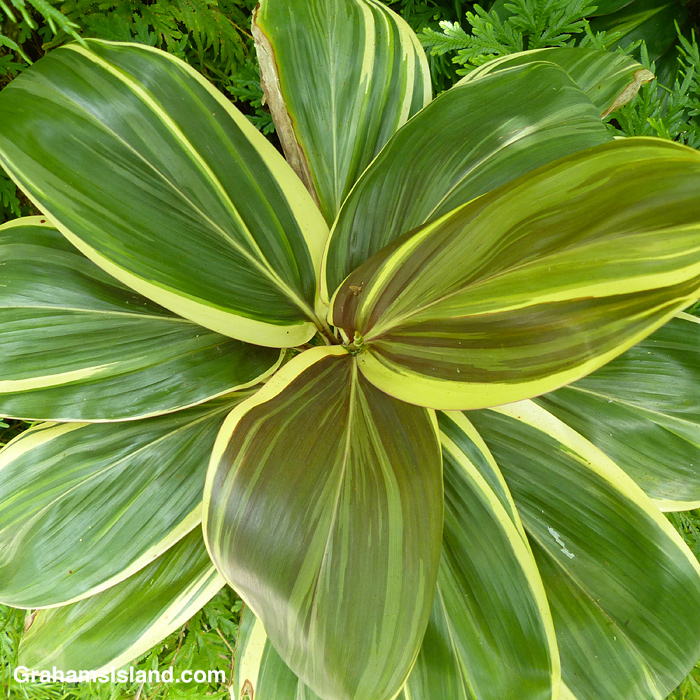
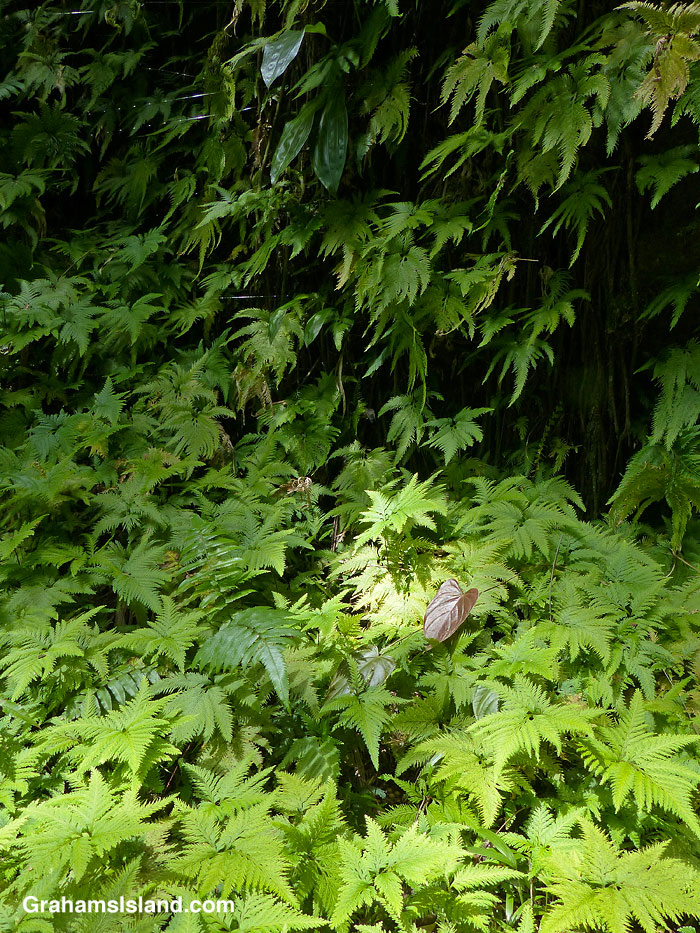
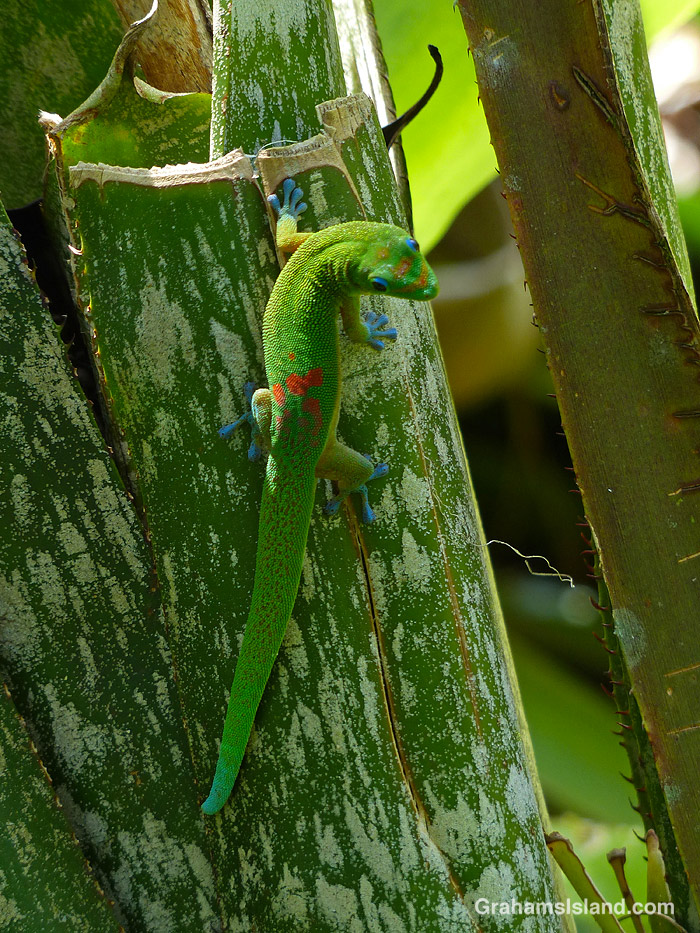
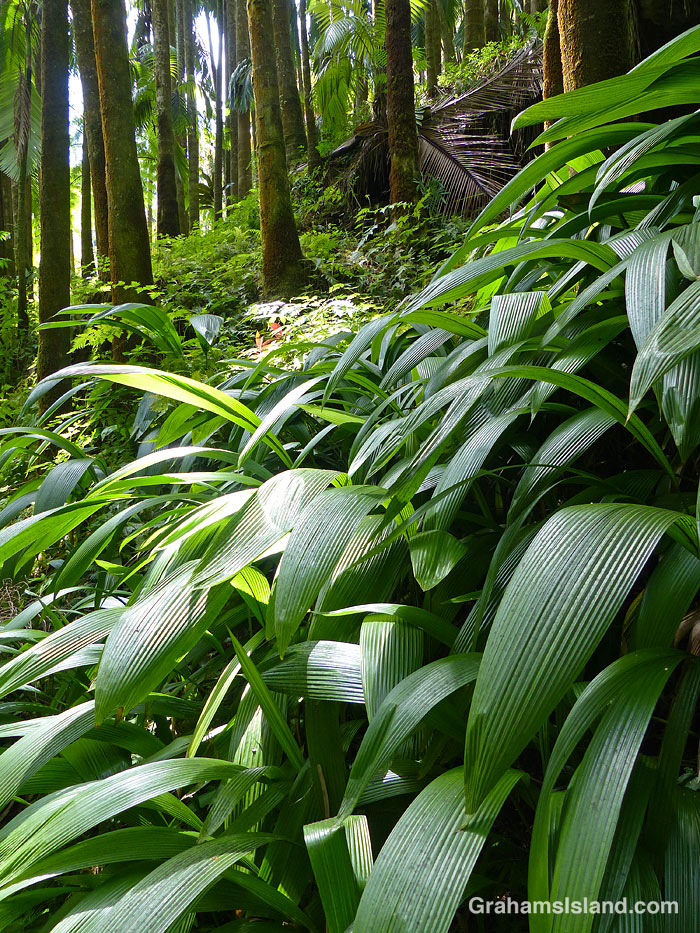
This week’s Sunday Stills Monthly Color Challenge is ‘Green.’ See more responses here. One of my favorite spots on the island is Hawai’i Tropical Bioreserve & Garden and I stopped by there again just last week. As luck would have it, I took a few photos – OK, more than 200; I can’t help it. Many of them – OK, all of them – featured some shade of green. It is a tropical garden after all. Here’s a selection.
All sorts of greens, all sorts of patterns!
Going green. That’s what fronds are for!
Why the long faces? things are looking up.
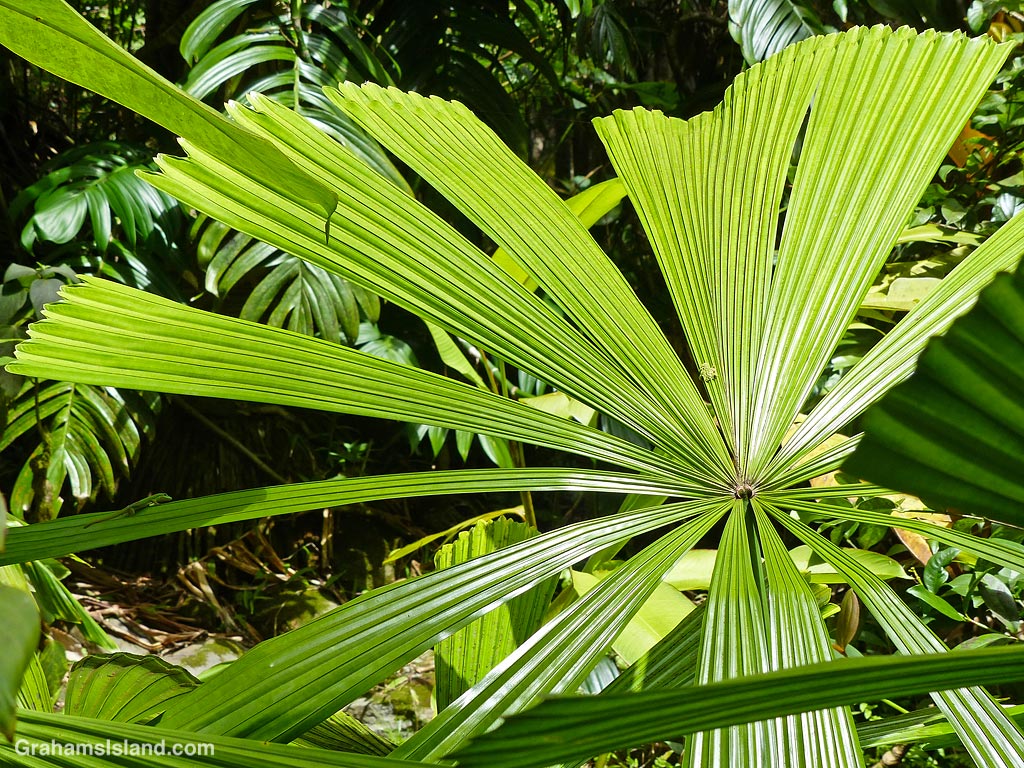
There’s a gecko in two of these photos. There’s probably geckos in all three, but two are visible.
For more information about Hawai’i Tropical Bioreserve & Garden, go to htbg.com.
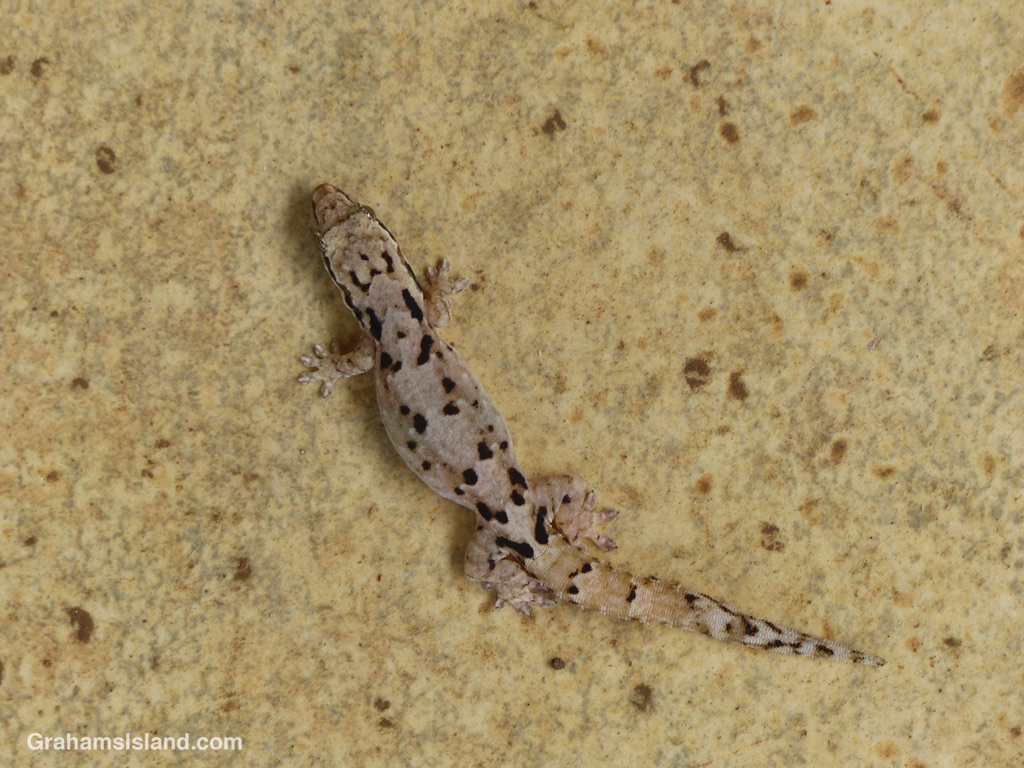
I saw this mourning gecko on the lanai tiles of my neighbor’s now empty house. Mourning geckos are mostly nocturnal, but are sometimes seen during the day, though usually not in such an exposed location. This one is a female. I say that with some confidence because almost all mourning geckos are females. They reproduce by parthenogenesis, which is where an egg or sperm doesn’t have to combine with another egg or sperm for an embryo to develop.
Posted for Bushboy’s Last on the Card photo challenge. See more responses here.











 Graham's Island