Tag Archives: Kohala

Signs: Graffiti

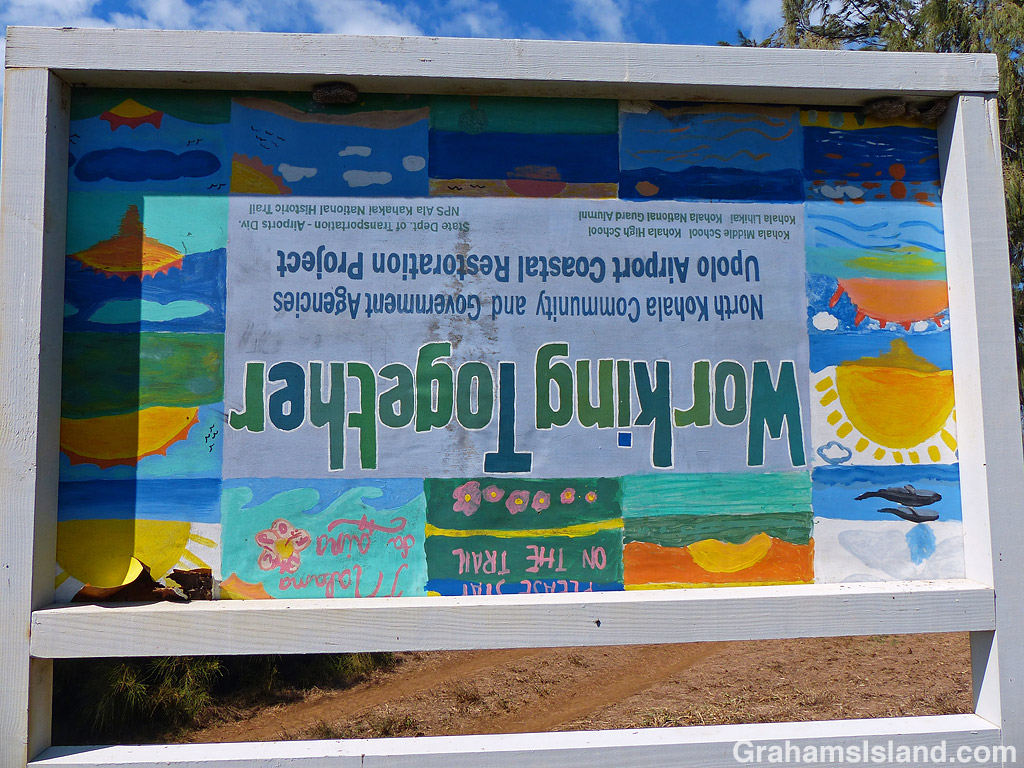
A few years back, a joint project by the county and kids from local schools, sought to address erosion along the coastline below Upolu Airport. The county laid straw barriers (that looked like long sausages) to control water runoff. The kids put in plants that would help stabilize areas of bare dirt and put up signs identifying these plants. At either end of the area where this project took place, two large signs were erected, with a bit of information about the project and some colorful artwork by the kids.

Within a year, one of the large signs fell down, a victim of high winds and one of the posts breaking. The plant identification signs followed, one by one, for various reasons. Some of the plants began to take hold and the sausages did their bit in reducing runoff, but the project seemed to have lost its impetus.

Last year, it sputtered to life again with a few more signs and some tape asking people not to drive in certain areas. Most of these were gone within weeks.

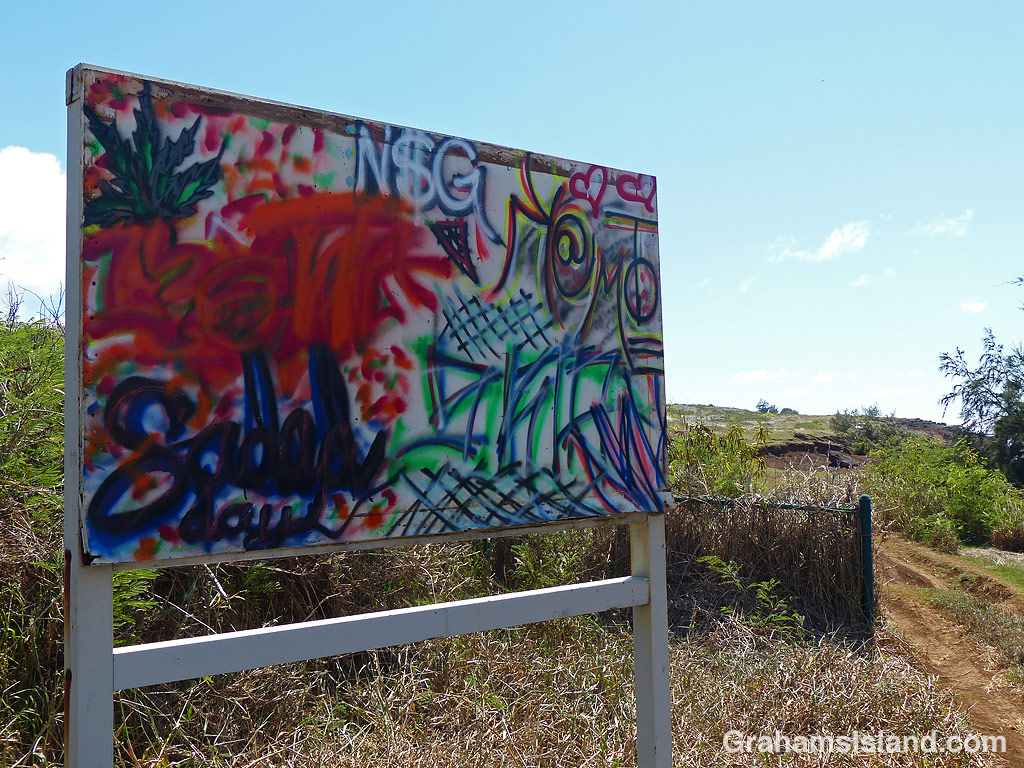
A couple of weeks ago, as I was walking in the area, I noticed that the remaining large sign had been graffitied (top photo). It seemed like an unfortunate, but somehow fitting epitaph for the project.

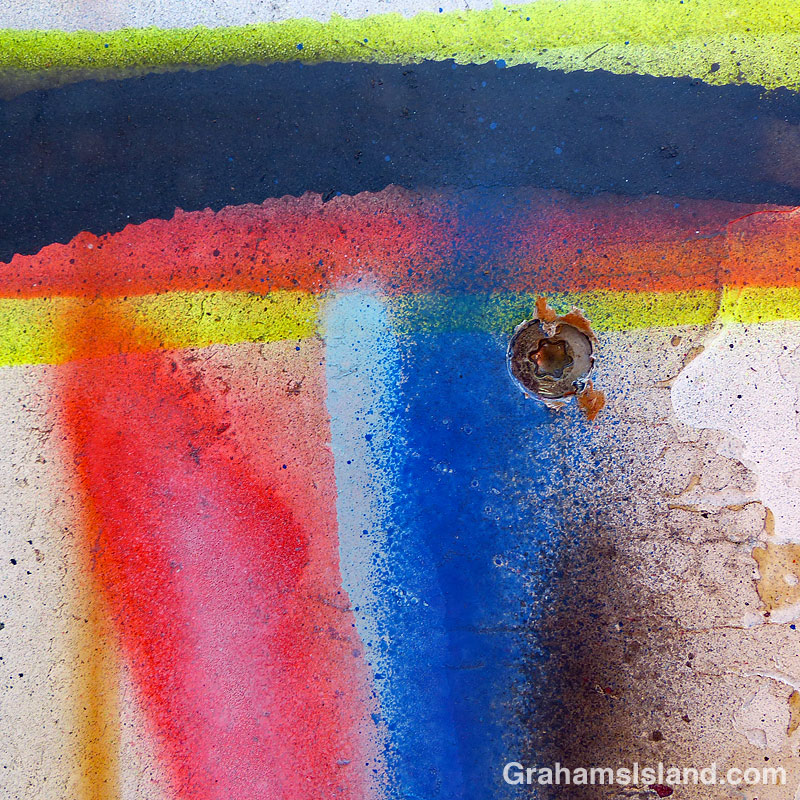
A few days later, approaching the graffitied sign from the other direction, I was surprised to notice the kids’ original artwork. It was upside down on the back of the sign (bottom photo). Whoever had graffitied the sign had taken the trouble to unscrew the board, turn it around, and refasten it. This took some thought and planning since the board was held in place by Torx or star screws (photo at right).

The sign is still graffitied and the project still on life support or dead, but this concern for the artwork on the board somehow made me feel that, perhaps not all hope is gone.
Early morning brush fire

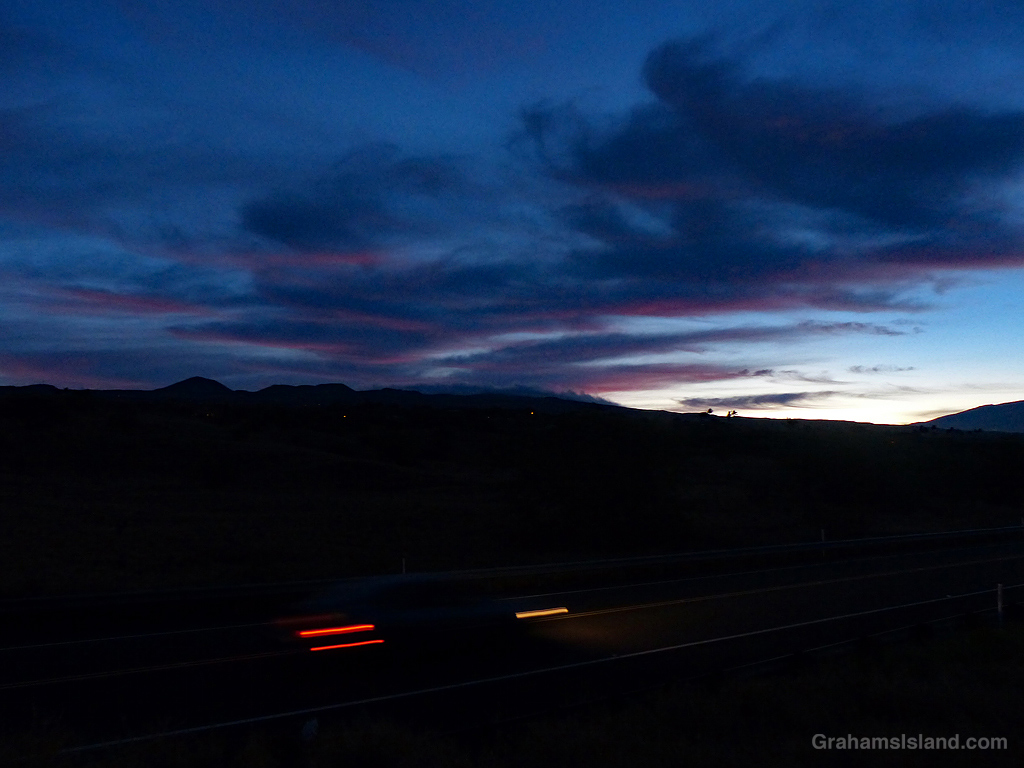
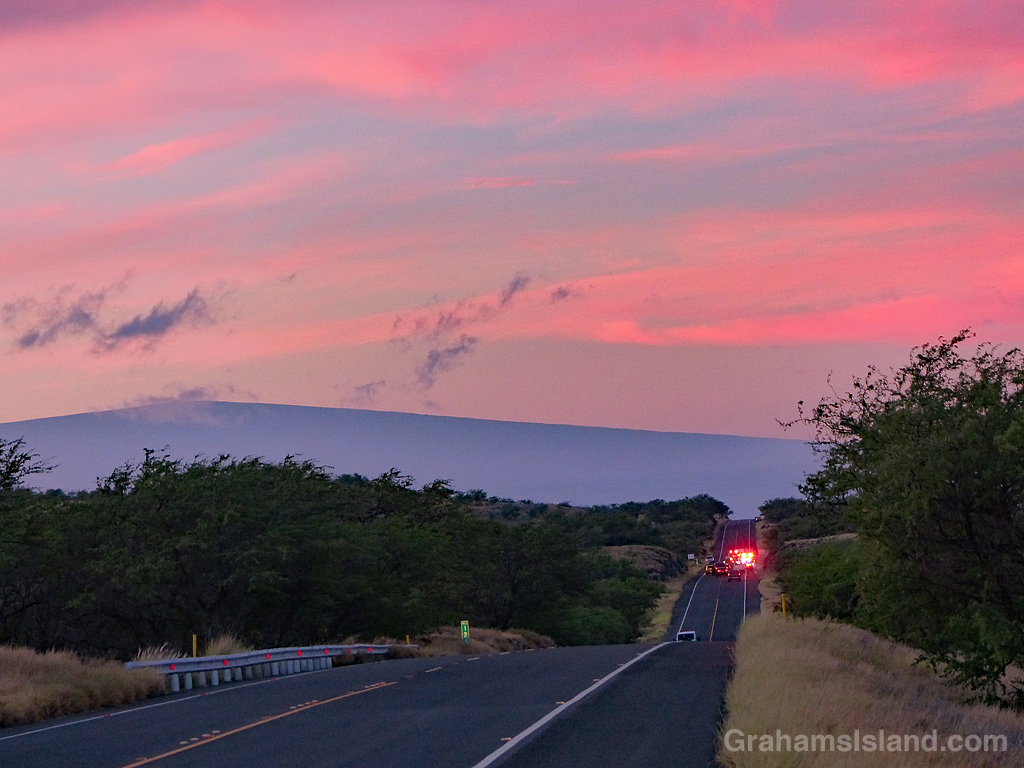
Recently, I was driving to work, enjoying a robust pink sunrise, when I came across the scene in the top photo – flashing lights and a line of traffic. I thought there had been an accident, but when I drove past, I could see most of the vehicles were fire trucks. The air was acrid with smoke and I saw flames here and there. The land there is scrubby and dry and while there isn’t a lot of vegetation, what there is burns easily. I drove on to work.

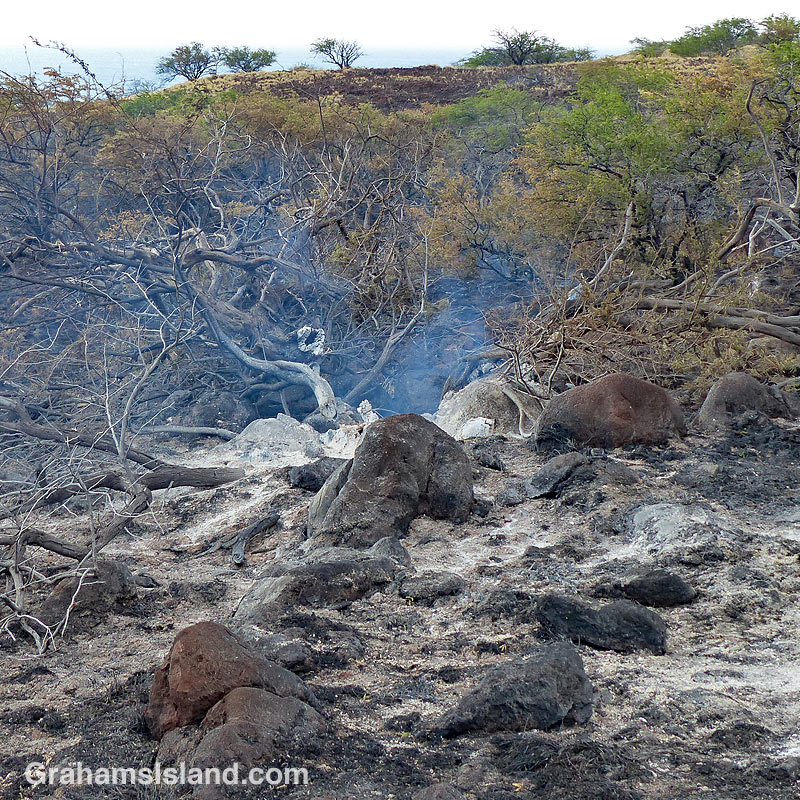
When I returned home late that afternoon, I thought I’d check out the scene of the fire. I was surprised to still see smoke rising in several places, and nobody around. Cars on the highway drove by, barely slowing down. I got out and had a wander along the roadside and then ventured into the ashy ground, all smoky and warm (middle photo). What I didn’t see was any firefighters.

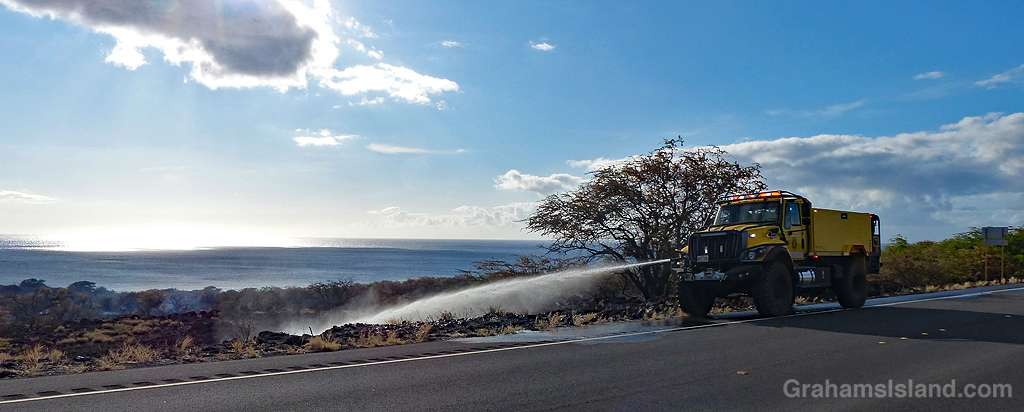
I wondered if I should call 911. Perhaps the fire was thought to be extinguished and had rekindled in the wind. Before I made up my mind, a large yellow truck emerged from a cutting down the road and began spraying water onto the area beside the highway, which was where I was standing (bottom photo). I decided it was a good time to return to my truck.

When I drove on, I saw a clutch of firefighters gathered along a dirt road branching off from the cutting. They were there the next morning, and the next afternoon as well, when I still saw smoke rising from the area. It was three days before they left and the smell of burning hung in the air for a good while afterwards.

Fishing poles

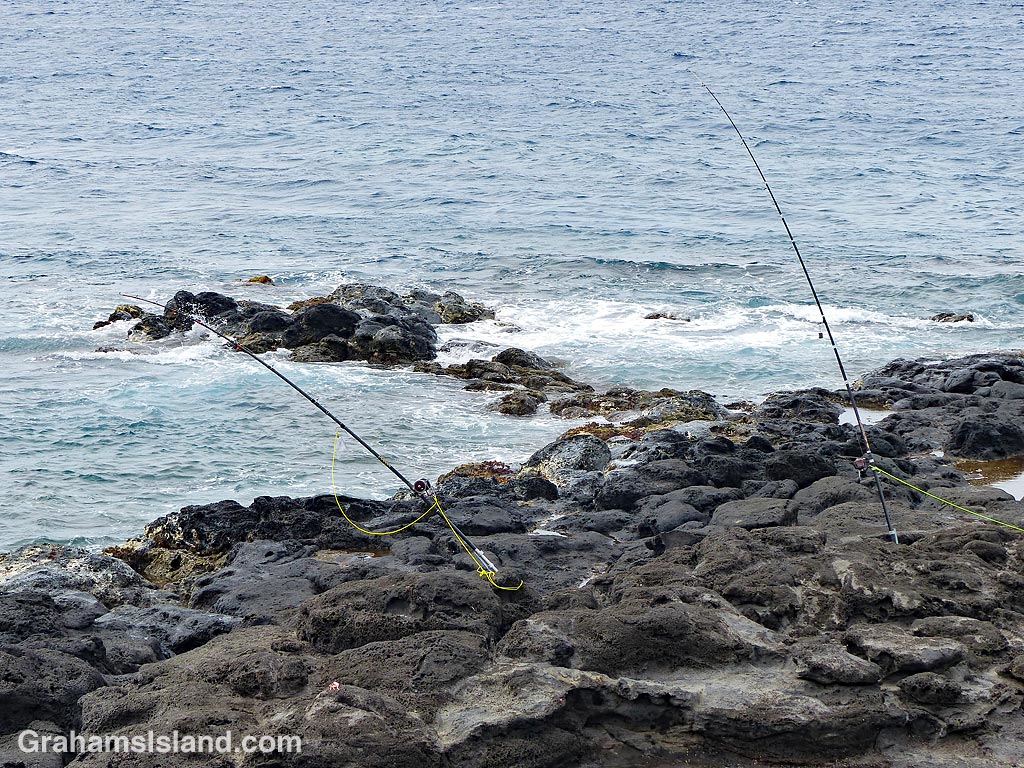
These fishing poles were two of many set up along the North Kohala coast for a fishing tournament. Typically, fishing poles are set into a piece of pipe lodged or cemented into the rocks. They’re anchored on something solid so that they can’t be yanked out – the yellow lines in these photos. Often a bell is attached to a pole so that when something strikes the fisherman is alerted, since they’re not usually tending the poles, but hanging out nearby, often nursing a beer.

Waimea and pu’us

The town of Waimea sits in the saddle between Mauna Kea and Kohala Mountain. The town is also known as Kamuela because several towns on other islands have the name ‘Waimea’ too. The postal service needed something more exclusive so Kamuela, Hawaiian for Samuel, was chosen to honor a local citizen.

This view shows the town nestled among trees and backed by pu’us (hills) on the flank of Kohala Mountain. It could be considered a rather bucolic view, which is something of a private joke in this household. A couple of years ago, a run down and shuttered gas station, at the main intersection in town, was becoming something of an eyesore. A letter to the local paper deplored this situation, saying it was a blight on ‘bucolic Waimea.’

Truth is, Waimea looks a good deal more bucolic from a distance. Close up, it’s a busy small town, with a good deal of traffic and a couple of prominent shopping centers. It’s really a quite nice small town, but I’m not sure ‘bucolic’ is how I’d describe it.