Tag Archives: Kohala

Memorial on the coast

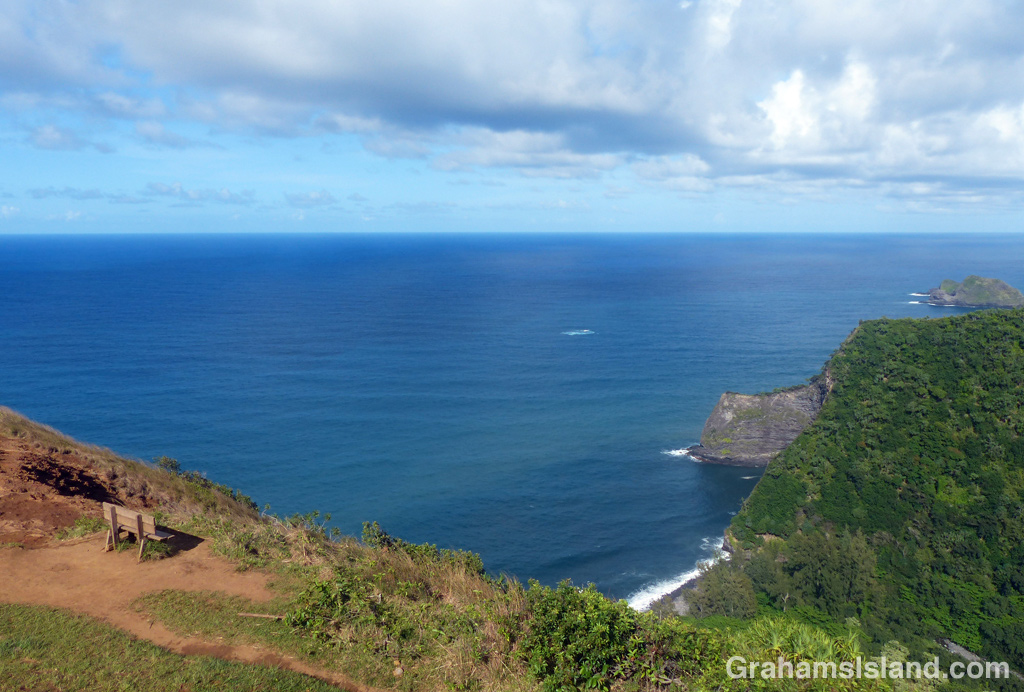
A memorial on the Kohala coast.
As is the case in many places, the Big Island is home to a variety of memorials, put in place and maintained by loved ones. Many can be seen by the side of highways, marking the spot where a life ended.

I don’t know the story behind this one, but it’s a beautiful, peaceful spot with its view across the ʻAlenuihāhā Channel to Maui.

Signs: High surf

A high surf sign at Hapuna beach

This is what people think of when they think of Hawaii: golden sand, blue water, and rolling surf at Hapuna beach, often touted as one of the best beaches in the world. Trouble is sometimes the surf gets too big, which is when the lifeguards have to get busy. Not sure the surf in this photo warrants the sign, but even small surf can cause trouble for people unfamiliar with it.

Kohala Girls’ School

The sign at the entrance to the old Kohala Girls SchoolOne of the old Kohala Girls School buildings.
The Kohala Girls’ School was founded in 1874 by Ellen and Elias Bond, missionaries who came to the Big Island from Maine in 1840. It remained in operation until 1955. Since then the buildings saw only occasional use, but they are currently being renovated as part of the Grace Learning Center, an educational program of the Kohala Institute.

The land managed by the Kohala Institute is called ’Iole and is one of Big Island’s the last intact ahupua’a. An ahupua’a was a land division that stretched from the sea to the mountains, giving those who lived there access to everything they needed for self sufficiency.

For more information about Iole and the Kohala Institute, go to kohalainstitute.org.
For more information about Kohala Girls’ School, go to en.wikipedia.org/wiki/Bond_District

Brugmansia

A brugmansia grows beside the Kohala DitchA brugmansia flower
I grew a brugmansia at my old garden in Washington State. During the course of a summer, it grew to two or three feet high and bloomed. As I expected, the first serious dip in temperature reduced it to a sorry wilted remnant.

Here on the Big Island, such temperature dips aren’t a worry, so a brugmansia will grow to a very large shrub and carry its blooms a good while. This splendid specimen is growing next to the Kohala Ditch in North Kohala. The ditch was used to bring water from the Kohala Mountains to the sugar plantations. These days the water is mostly used for agricultural irrigation.

For more information about the history of the Kohala Ditch, go to fluminkohala.com/the-kohala-ditch.

Great frigatebirds meet Tropical Storm Darby

A great frigatebird angles into the winds of tropical storm Darby.
Tropical Storm Darby reached the Big Island yesterday. It was due to pass over this corner of the island during the night. The predicted track followed the north coast and since it was packing 60 knot winds on its approach, storm warnings were issued.

The power went out here Friday, getting the jump on the storm, but luckily it was just for an hour or so. Saturday dawned dark and windy with sudden, intense downpours, but in the early afternoon the weather broke for a short while and I went down to the coast to see how things looked. In truth, while it was very windy, it didn’t look that much worse than it often does around here.

On the way back from a short walk, some movement caught my eye. A large bird angling along the coast. Then another. In all, three great frigatebirds headed east, into the teeth of the storm. They made slow progress, sliding toward the coast, then away. Even though it was slow going, their progress looked effortless. They glided on the air currents, beating their wings only occasionally. The nice thing about their slow progress was that they remained in view for some time.

Returning home, the power was out again, but as the afternoon progressed the winds died to nothing (the storm had tracked farther south than anticipated). The early evening was tranquil enough that when I stepped outside, mosquitoes quickly buzzed around me. Mosquitoes do not do tropical storms.

Around 8:30 in the evening a decision needed to be made. Power had been out for seven hours or so and the contents of the refrigerator weren’t likely to last the night. It was time to pack the essentials into a cooler while trying not to lose whatever cold air survived in the fridge.

A smooth, military-style operation was worked out. Doors opened, items whisked from shelf to cooler, ice blocks rearranged. The operation was a success. I snapped the lid down on the cooler and the exact instant I did so, the microwave beeped and the power returned.