Tag Archives: Kohanaiki

Hawaiian star compass

Kohanaiki Beach Park, north of Kailua Kona, is a favorite spot for surfers. But at the south end of the park, the focus switches to history.

There’s a hālau, Ka Hale Waʽa, which is used for teaching Hawaiian crafts and culture. There’s a garden which grows the same kind of plants brought over by the first Polynesian settlers. And there’s a Hawaiian star compass, a 17-foot diameter recreation showing how the Polynesians used to navigate the vast open spaces of the Pacific Ocean.

The top photo show shows the compass. The middle photo shows a plaque, which explains the basics of how it works, using the points of the compass, the sun, nighttime celestial bodies and the ocean swells. I won’t go into detail here, but more information can be found here, here, and here. Below, the setting of the compass, with a Pacific golden plover walking on it. I like this shot because the plover is said to be the reason Polynesians discovered Hawaii. Each year, plovers summer in Alaska and then fly south as far as New Zealand. It is said that the Polynesians noted this small bird’s annual journey back and forth and figured there must be land somewhere to the north, so they set out in their canoes to find it.

Posted in response to this week’s Sunday Stills challenge on the theme of ‘Round.’ See more offerings here.

Elephant’s ear

I am particularly fond of any plant that comes with a little tag nearby to identify it. It makes life so much easier.

This is elephant’s ear (Alocasia Macrorrhiza), also known as giant taro. In Hawaii it is known as ‘Ape. I saw this at the Hawaiian Native Plant Garden at Kohanaiki Beach Park, just north of Kailua Kona.

Native to rainforests in Borneo and Australia, elephant’s ear spread to parts of Asia and the South Pacific. It was brought to Hawaii by the Polynesians who first settled the islands, and because of this, it is known here as a canoe plant, a plant brought in the first canoes. The plant is a source of starch from the corms. The leaves and stems of taro plants can also be eaten, but giant taro causes irritation because of calcium oxalate crystals in the sap.

Surfing

This week’s Friendly Friday challenge theme is ‘Alternative Version.’ See more responses here.

Surfing originated in Hawaii and is a quintessential Hawaiian activity. When the surf’s up, so is absenteeism at the workplace. For last week’s challenge, I posted a photo of surfers waiting for a wave.

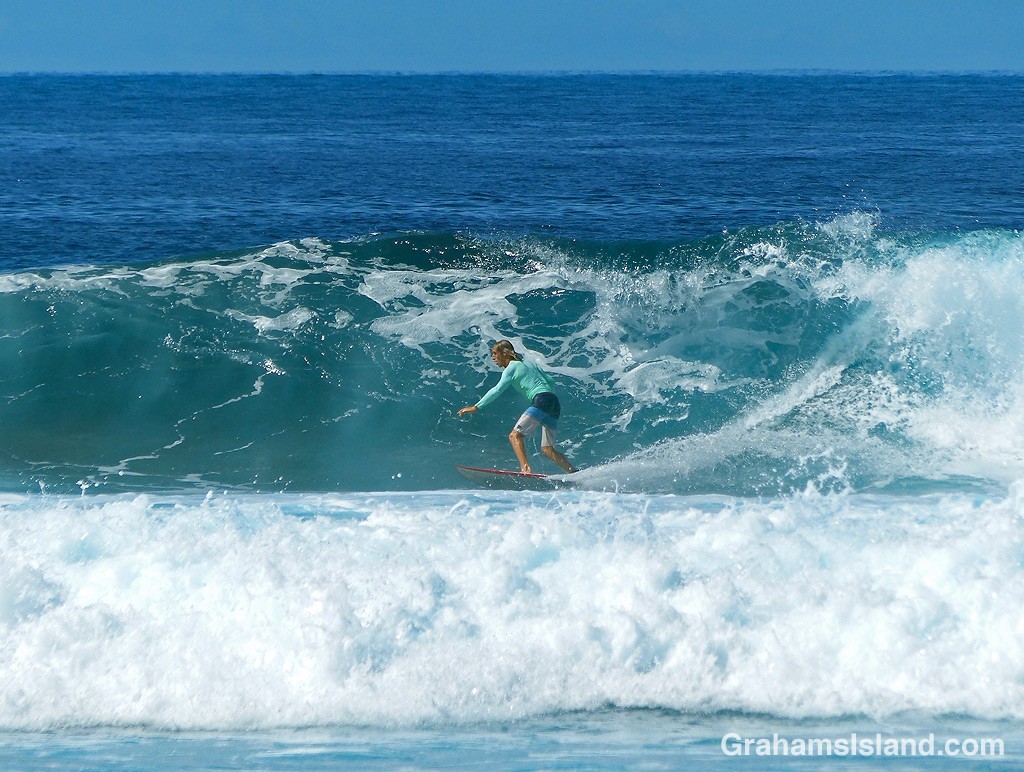
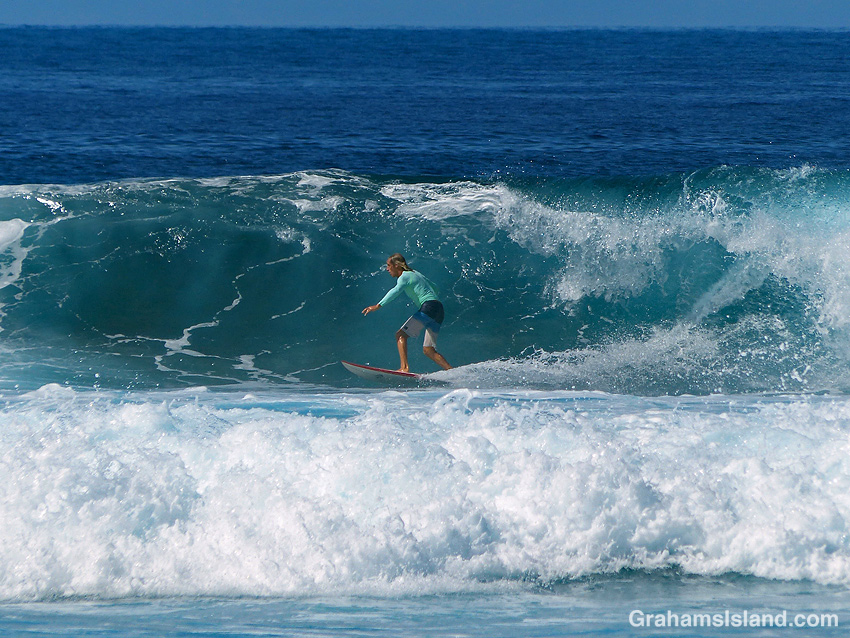
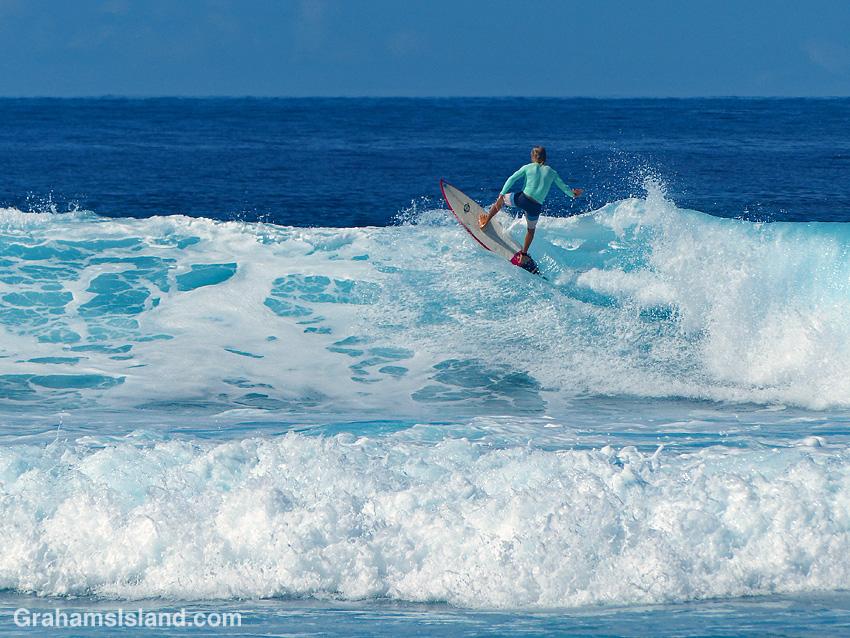
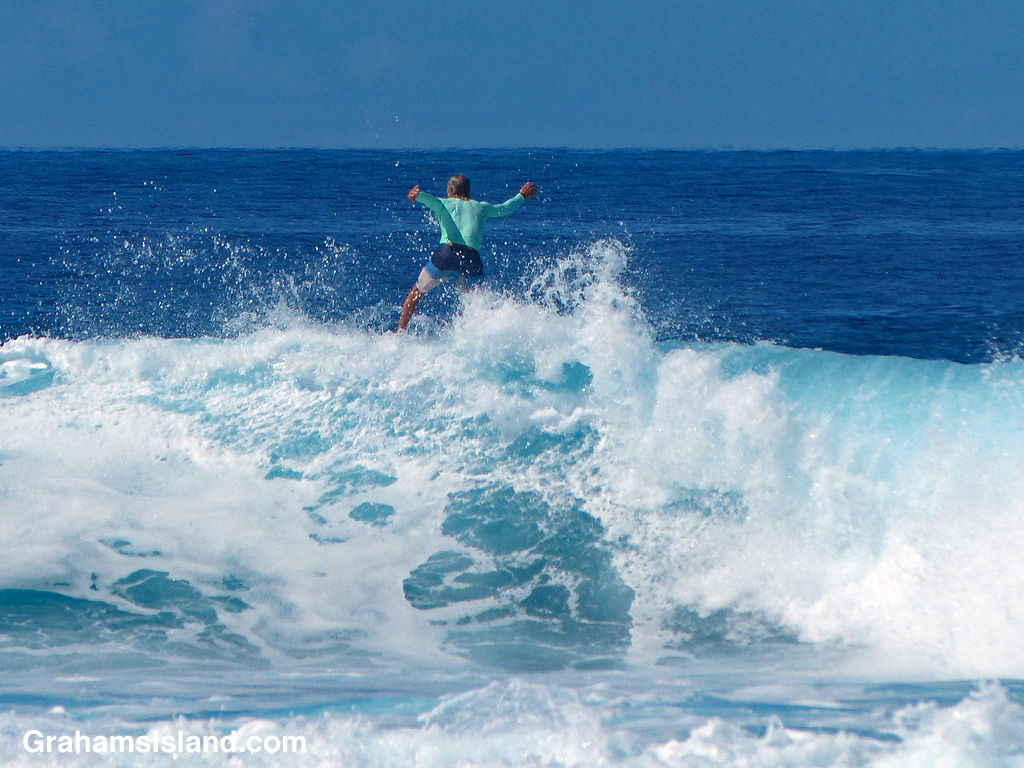
This week, I’m posting photos of one of those surfers catching a wave. In the photos, the surfer cuts a curve down the face of a wave, zips along its base, and then climbs up the face again. At the top, he jumps off, no doubt to wait for the next wave he can catch.

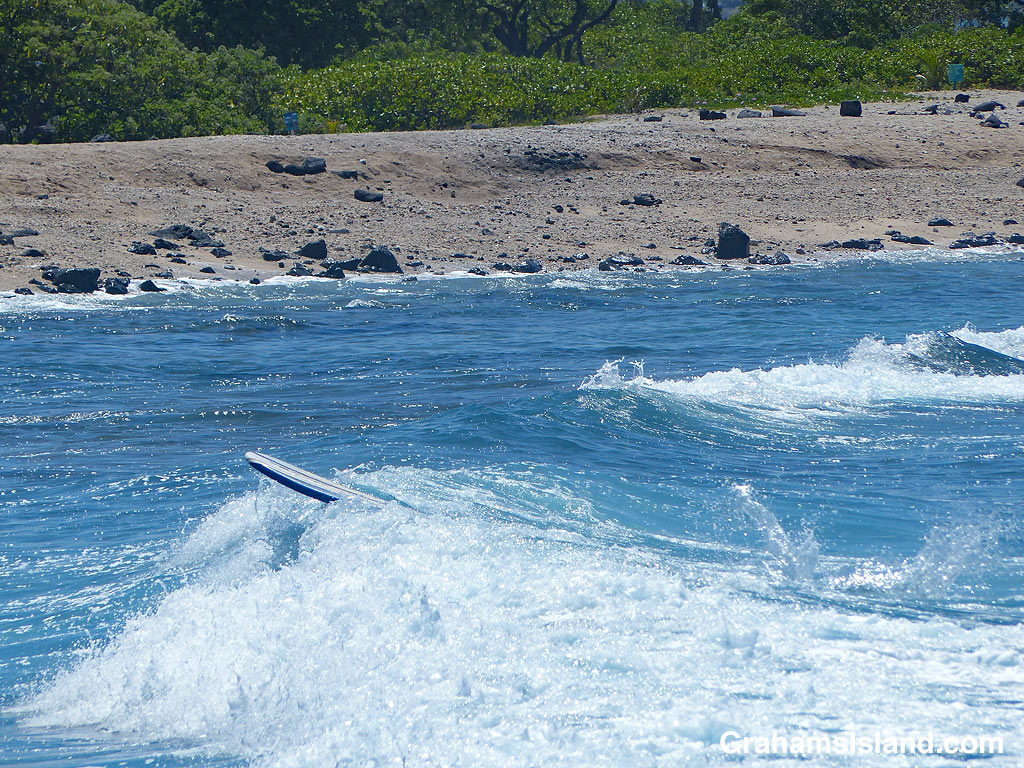
And the alternative version? Wipeout! In the bottom photo an unoccupied surfboard heads to shore, still tethered to the ankle of the out-of-sight surfer who wiped out moments before.