Tag Archives: Macro

Green anole

This week’s Sunday Stills challenge theme is ‘Green Macro or Close-Up.’ See more offerings here.

Here’s a green anole (Anolis carolinensis) perched on a green ti leaf so that I could take its photo (possibly). Light greens in the sun, dark greens in the shadow. With all this, I can forgive the anole its powder blue eye-shadow.

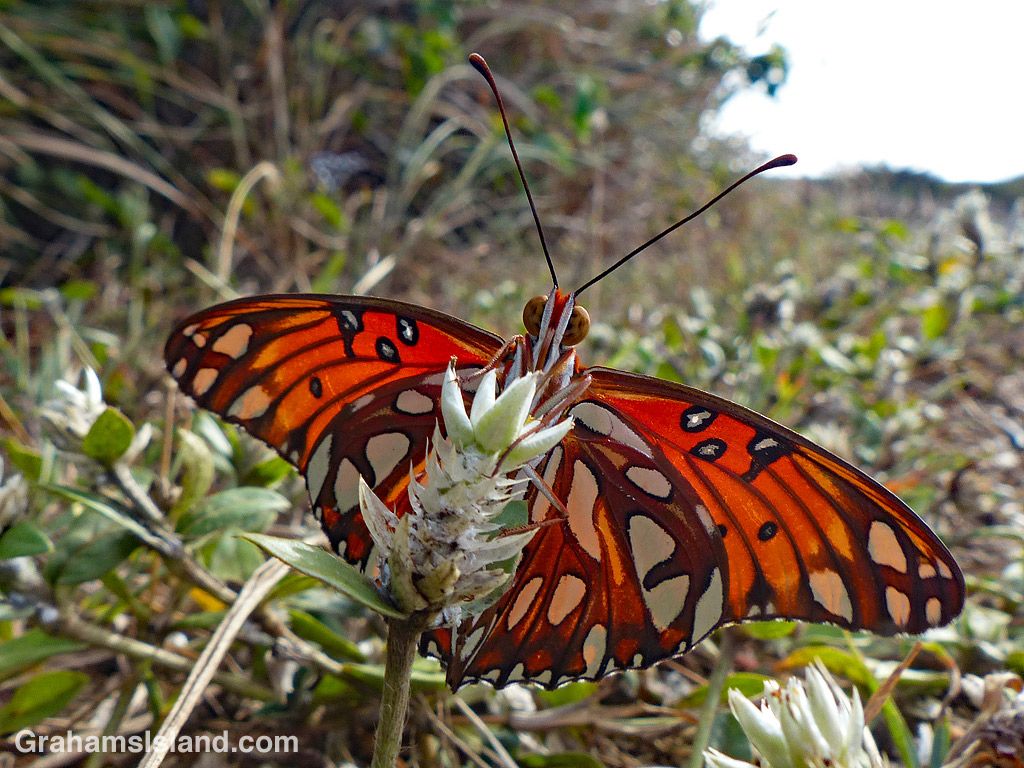
Passion vine butterfly at rest

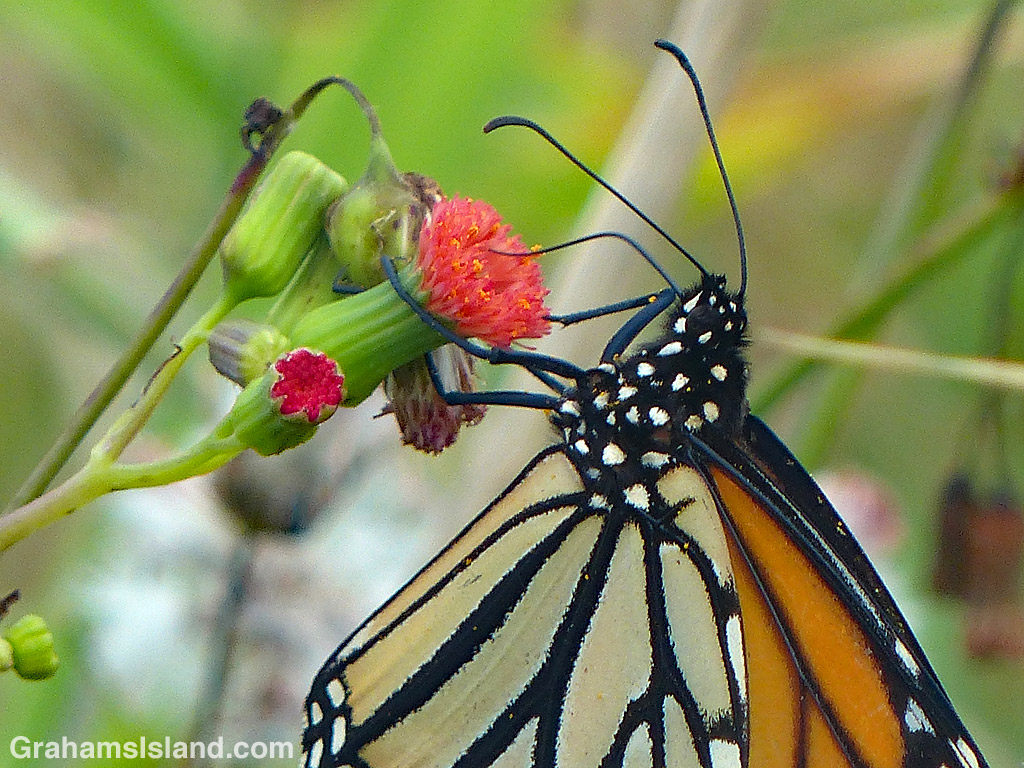
I saw this passion vine butterfly resting one windy late-afternoon. It didn’t seem in any rush to head off into the wind again so I got some decent photos. What I like about the photos is that I was close enough to get clear images of the butterfly’s labial palps, the white appendages sticking up on either side of the proboscis. These palps are covered with hairs that are believed to allow the butterfly to sense whether something is edible or not.

Sheep Bot Fly

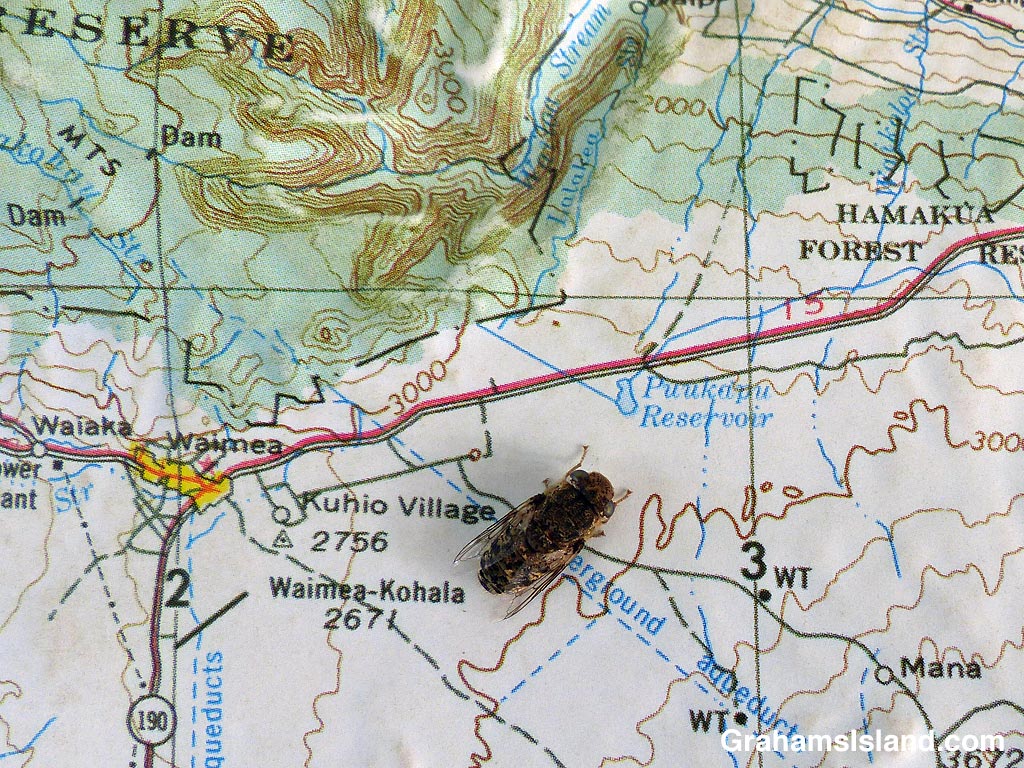
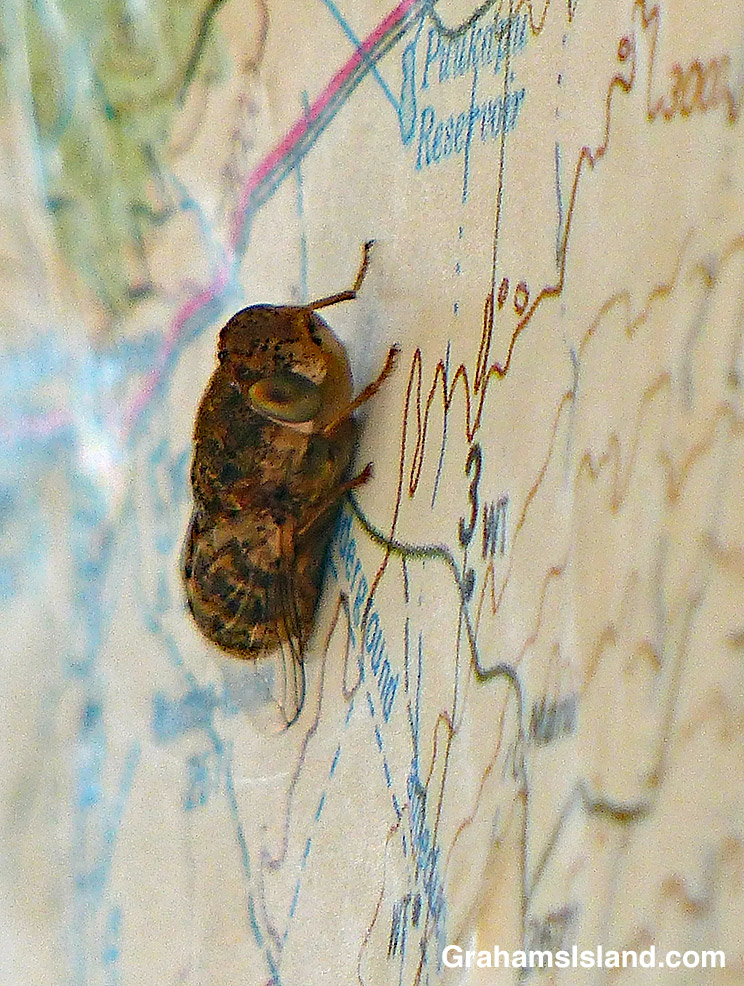
The sheep bot fly (Oestrus ovis) is also known as the sheep nose bot fly or sheep nostril fly. That’s because larval stages of this fly move into the nasal passages of sheep and goats. So not only is it good looking, but it also resides in the best of neighborhoods.

I like how, in the top image, the fly appears to be bigger than the fair-sized town of Waimea, on the map, though it’s actually about half-an-inch long. Then, in the lower image, the large eye casts a quizzical look.

There were no sheep for miles where these photos were taken, but there’s no shortage of goats in the vicinity, so that probably accounts for the presence of the fly.

Black saddlebags skimmer dragonfly

I’d noticed this dragonfly returning to the same twig a few times so I positioned myself to take photos if it continued to do so. Luckily it did and I got a few shots before it took off for good.

The black saddlebags dragonfly (Tramea lacerata) gets its name from the distinctive markings on the wings. It’s found in most places in the U.S. and is one of those good bugs because both naiads and adults help control mosquitos by consuming their larvae.

Hawaiian garden spiders face off

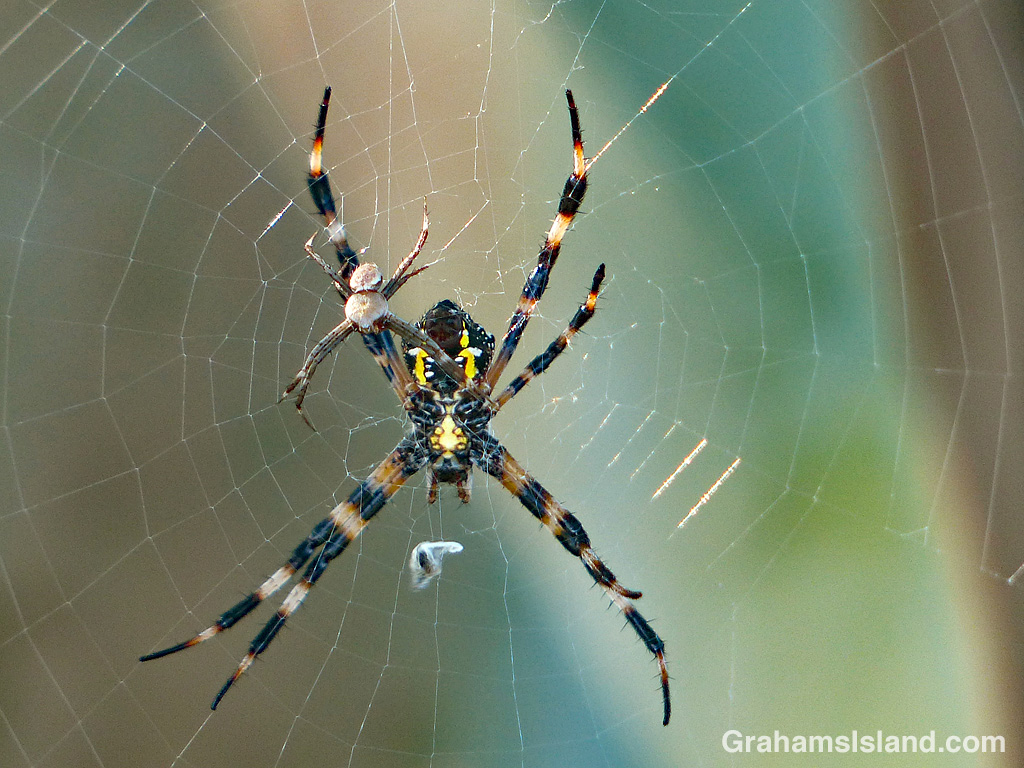
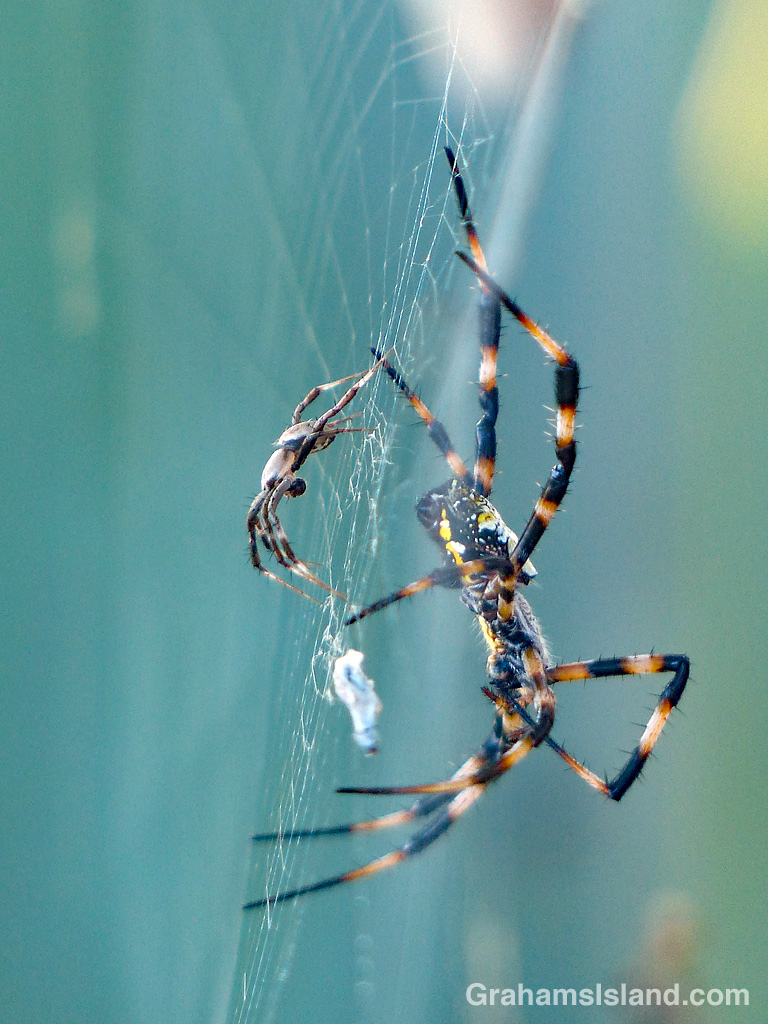
Hawaiian garden spiders face offHawaiian garden spidersThis pair of Hawaiian garden spiders spent a long time facing off from different sides of the female spider’s web. The male is the smaller, drab spider, while the larger female has splashes of yellow, orange bands on her legs, and a bejeweled back, which can be seen here. The female spiders are much bigger than the males, though this female is not actually a particularly large one. Full-sized females dwarf their male counterparts.

I don’t know how this encounter turned out, but the previous day I did see another male on this web and it did not turn out well for him. I didn’t get good photos, but he appeared to be thoroughly enveloped in her ‘loving’ embrace.

When male garden spiders approach a female, they pluck the females web in a certain way to alert her to their presence. Typically, successful male garden spiders mate with a female and then die immediately afterwards. Sometimes the female will eat their male suitors. I’ve read than canny males will try to mate while the female is undergoing her final molt because during this process she will be immobile!