
A lesser grass blue butterfly spreads its wings before taking to the air again.

A lesser grass blue butterfly spreads its wings before taking to the air again.

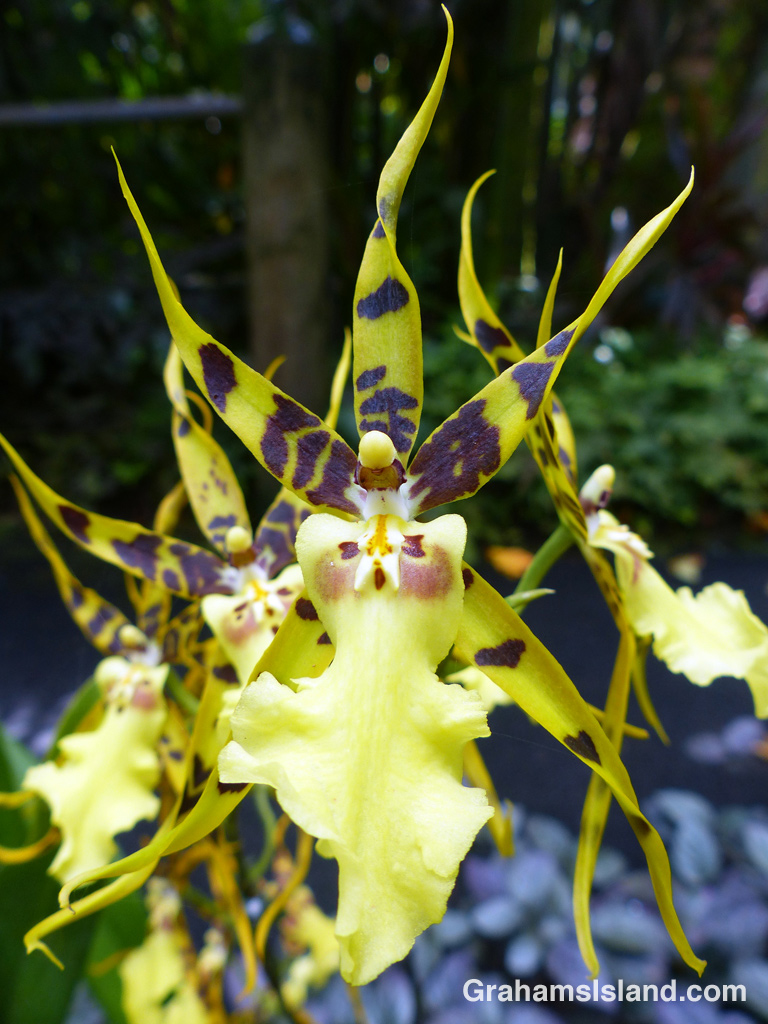
A lot of the plants, fish, and birds that I see on the Big Island are new to me, but I find it satisfying to identify them. It’s often not straightforward. Striking colors or patterns that I think will be easy to place can often prove elusive. Juvenile birds and fish might look nothing like their parents. Other times, a mostly undistinguished look might pop up first in my search.
Orchids are a big challenge since there are numerous hybrids. I’m pretty confident this is Aliceara Pacific Nova not just because it matches photos online, but also because there was a tag at the base of the plant, a useful search tip I’m happy to pass along here.

This passion flower was drawing great attention from various bugs including a fiery skipper butterfly, a variable lady bug, and a host of flying ants, or possibly parasitic wasps.

On a recent hike, I came on several of these passion flowers. I don’t know what kind they are; it’s often very hard to identify passion flowers. The flowers hung down, so this is a view from below. Not only did it have an exotic look to it, but it had a most wonderful fragrance.
This week’s posts are in response to the WordPress photo challenge on the theme of ‘transient.’
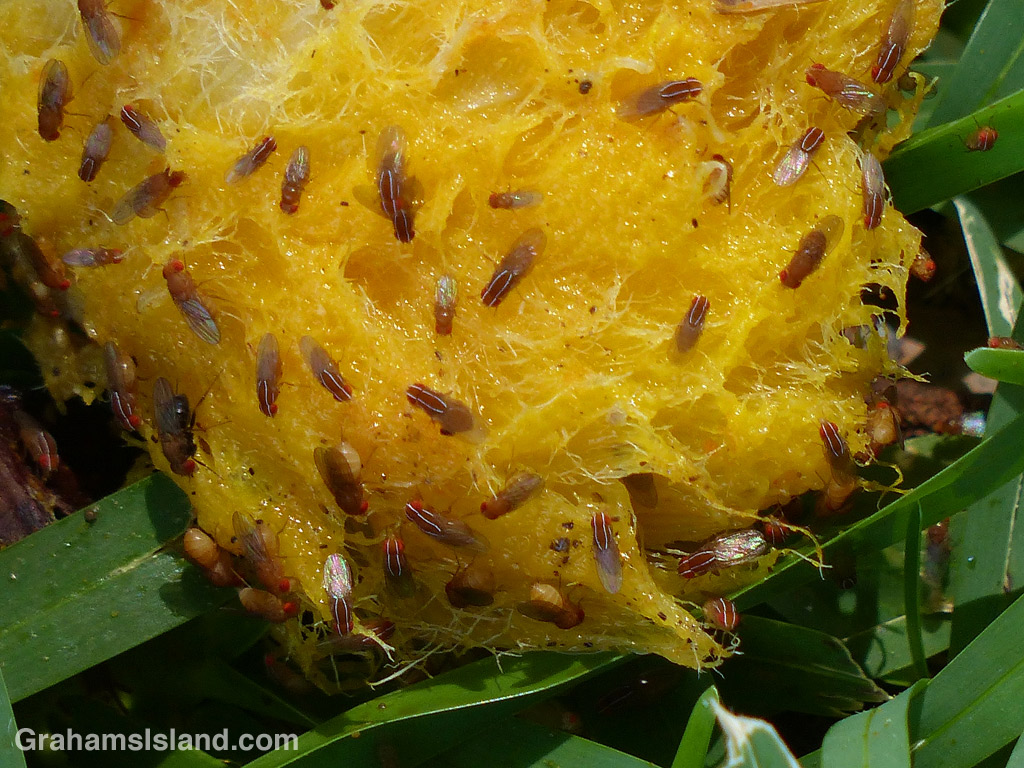
This little scene could be considered transient on three counts. First is the fact that this is a mango that has fallen from the tree. In the life cycle of a mango, it’s a very short interval between ripening on the tree and rotting on the ground. Second, this mango has clearly been chewed over by one of the transient wild pigs that pass through from time to time, more so during mango season. And third, these fruit flies won’t be around long either, having a lifespan in the region of 30 days.
This fruit fly, also called the vinegar fly, is probably Zaprionus ghesquierei, an invasive species known to have reached Hawaii. Zaprionus indianus also looks like this, but hasn’t been seen in Hawaii yet, as far as I know.
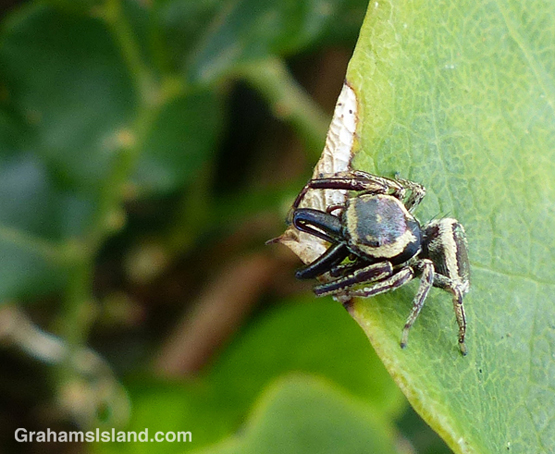
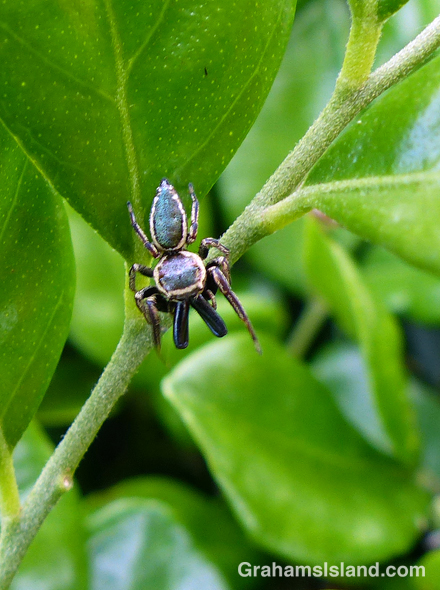
I think this is a bronze jumping spider (Eris militaris). They’re very small, a quarter-inch or less, and quite speedy getting about. This one is a male.

I was trying to photograph this black stink bug in a hedge when it jumped off and landed on my shirt. So I took a photo of it there, which I like for the strong colors, shapes, and textures.

This is a pair of banana stalk flies (Telostylinus lineolatus) mating on a …wait minute, that’s not a banana stalk. In fact it’s the spadix of an Anthurium schlechtendalii or Pheasant’s tail.
I had to hunt around a bit to identify the insect, but found useful information at whatsthatbug.com. One thing I liked was where it stated, “With enormous eyes, this tiny, tropical, stilt-legged fly maintains a confident distance from human approach, by swiftly running around the blind-side of whatever surface it is on.” This made me laugh because that was EXACTLY what this pair did when I tried to photograph them.

