Tag Archives: Macro

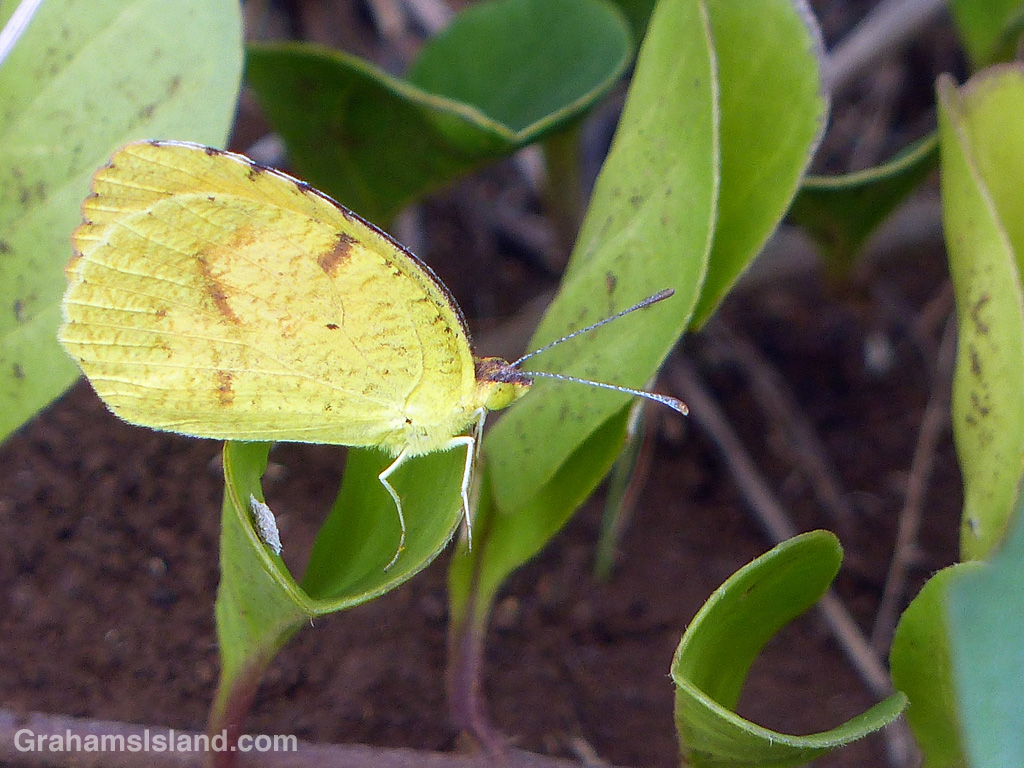
Sleepy orange butterfly

A sleepy orange butterfly on the Big Island of Hawaii
The sleepy orange butterfly (Abaeis nicippe) is one of the newest introductions to Hawaii. It was first seen on Oahu in December 2013 and is already established on all the main Hawaii islands, an unusually rapid spread. Part of its success in thriving here might be that has a wide range of habitats where it can live. It’s been spotted from sea level all the way up to 6,800 feet.

While its name is sleepy orange, like most of the butterflies I see here, it’s a rapid flier, jitterbugging around in such a way that it’s hard to capture in flight. Fortunately for me, this one was jitterbugging in 30 m.p.h. winds and seemed happy to take any opportunity to find a sheltered spot to rest.
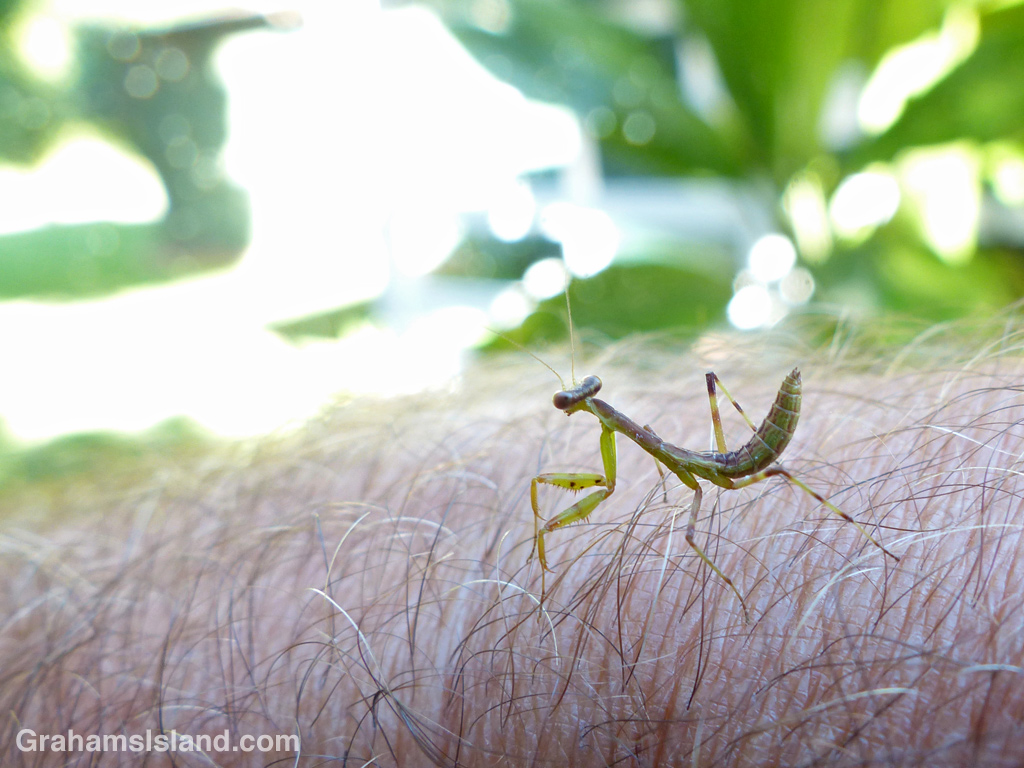
Baby praying mantis

A small praying mantis on an arm.

I was out in the yard taking photos on a windy day when I felt something tickle my arm. I thought it was a leaf, but looking down found this baby praying mantis on the move. I watched it for a while before setting it down on a leaf in a sheltered spot.

Cane spider

A cane spider on the Big Island of Hawaii
The official unit of measurement for cane spiders is the tuna can as in, ‘that spider is the size of a tuna can.’ In the case of this particular cane spider that statement is true – the trim it’s resting on is a 1×4.

While large, cane spiders aren’t particularly aggressive. If threatened, they prefer to run off – and they are fast. If one does bite, it can inject venom, but it isn’t considered dangerous. On the plus side, cane spiders are hunters and include cockroaches amongst their prey. While I heartily endorse this activity, it’s a bit much for me to have a mobile, hairy tuna can scurrying around the house and leaping out at inappropriate moments.

The first time I saw a cane spider was while reading in bed, which was startling to say the least. There then followed a merry chase, involving moving furniture, before I was able to trap the beast and release it outside. That’s where I prefer to see them and I was happy to see this one on the side of the house. It stayed in this spot for quite a while until one time I went to look again and it was gone. At that point, the trick is to carry on as usual and not start wondering whether it followed me inside after the last time I saw it.

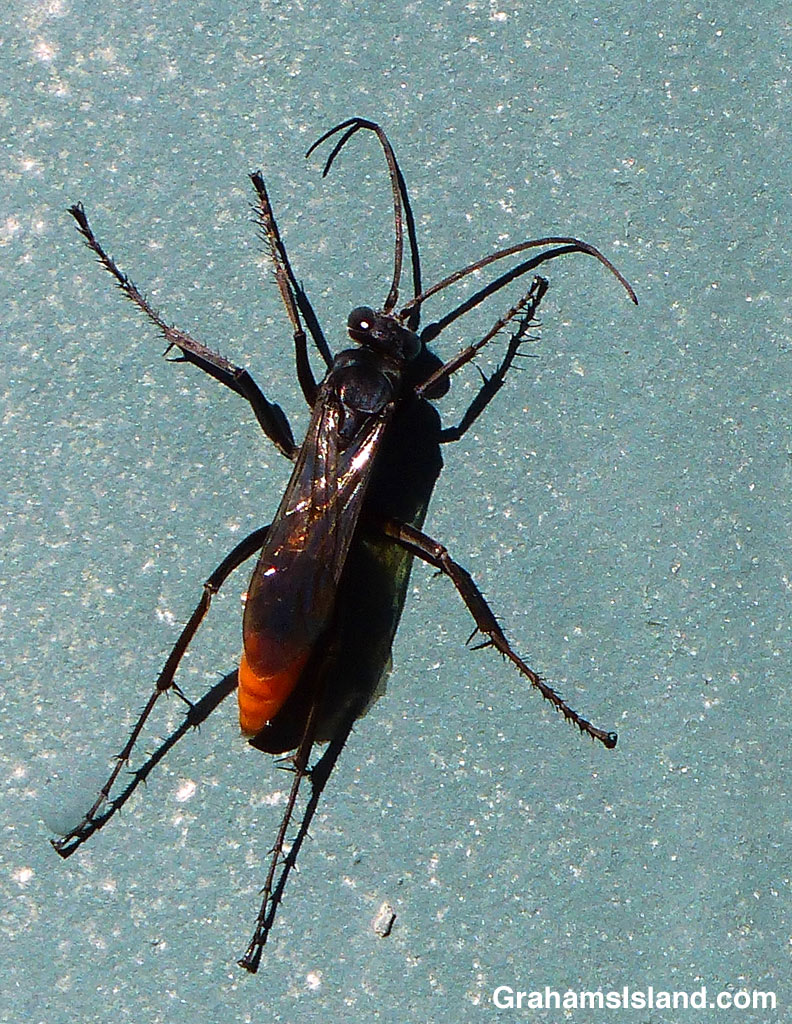
Sphecid wasp

A sphecid wasp, P. fervens
I saw this creature on a wall being eyed by a gold dust day gecko as a possible meal. Eventually the gecko thought better of it, which is probably just as well. This is a sphecid wasp and they can pack a sting, though they aren’t aggressive.

From searches on whatsthatbug.com and bugguide.net, it appears that this sphecid is in the genus Prionyx, probably P. fervens.

Naio

Naio (Myoporum sandwicense) grows on the lower slopes of Mauna Kea.
Naio (Myoporum sandwicense) used to grow in great abundance in Hawaii, but now is much less common. It has some similarities to true sandalwood and was passed off as the latter without much success, leading to it’s other names of false sandalwood or, less sympathetically, bastard sandalwood.

This small tree was found growing on the lower slopes of Mauna Kea.