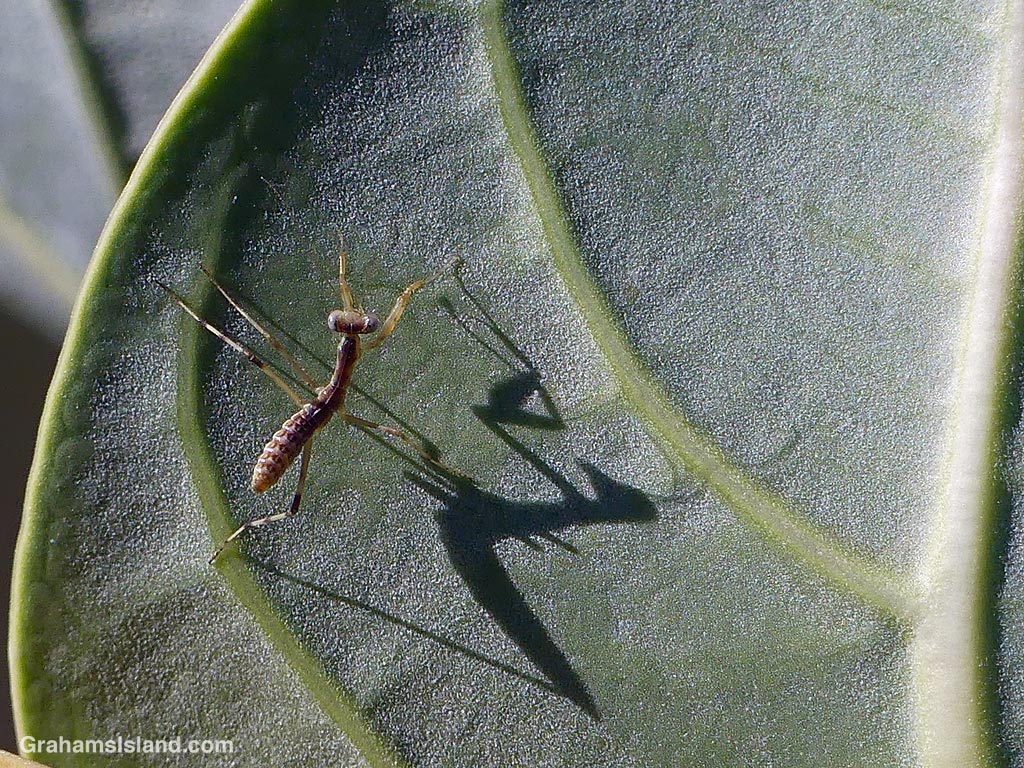

I saw this praying mantis on a crown flower recently. It’s undoubtedly the smallest I’ve ever seen. It might also be the fastest moving mantis I’ve seen. It was zipping around, mostly trying to shake me off, I think!


I saw this praying mantis on a crown flower recently. It’s undoubtedly the smallest I’ve ever seen. It might also be the fastest moving mantis I’ve seen. It was zipping around, mostly trying to shake me off, I think!

A fly rests on a Mamane flower.

I saw this female Hawaiian Garden Spider scooting up a strand of her web during a welcome rain shower. She stopped just before reaching the top and was soon the recipient of drops of water dripping from the roof. When the rain passed, she carried on up to the gutter.
I think she was getting some water to drink and possibly enjoying having a little wash. It’s been very dry here lately and water has been in short supply for the local wildlife.

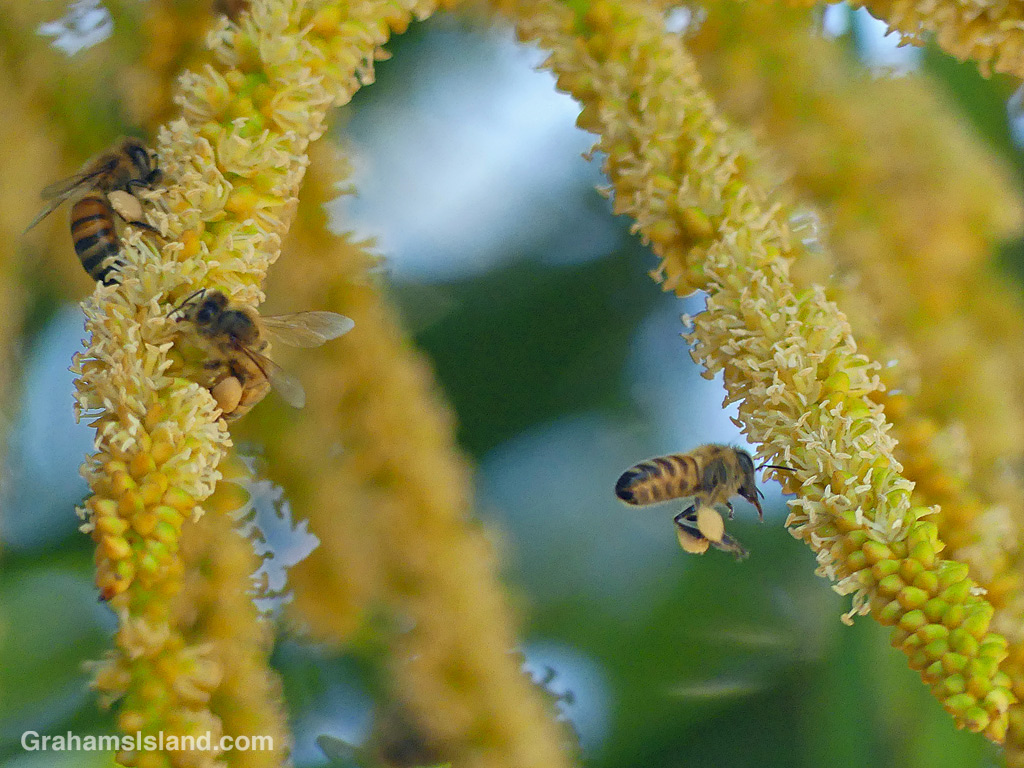
I was watering my coffee plants, early one morning, when I heard a loud buzzing noise. I looked up and saw bees all over the flowers of a palm tree on the edge of the yard. To be honest, I hadn’t noticed the tree had flowers as they’re rather dwarfed by the profusion of fronds. But there are a lot of these small yellow flowers and the bees obviously approve.

I saw this Flowery Flounder in shallow water and was able to get close enough to get this close up of the fish’s head. The bumps are the eyes.
The blue markings of the fish and the rainbow in the water made for a colorful photo.
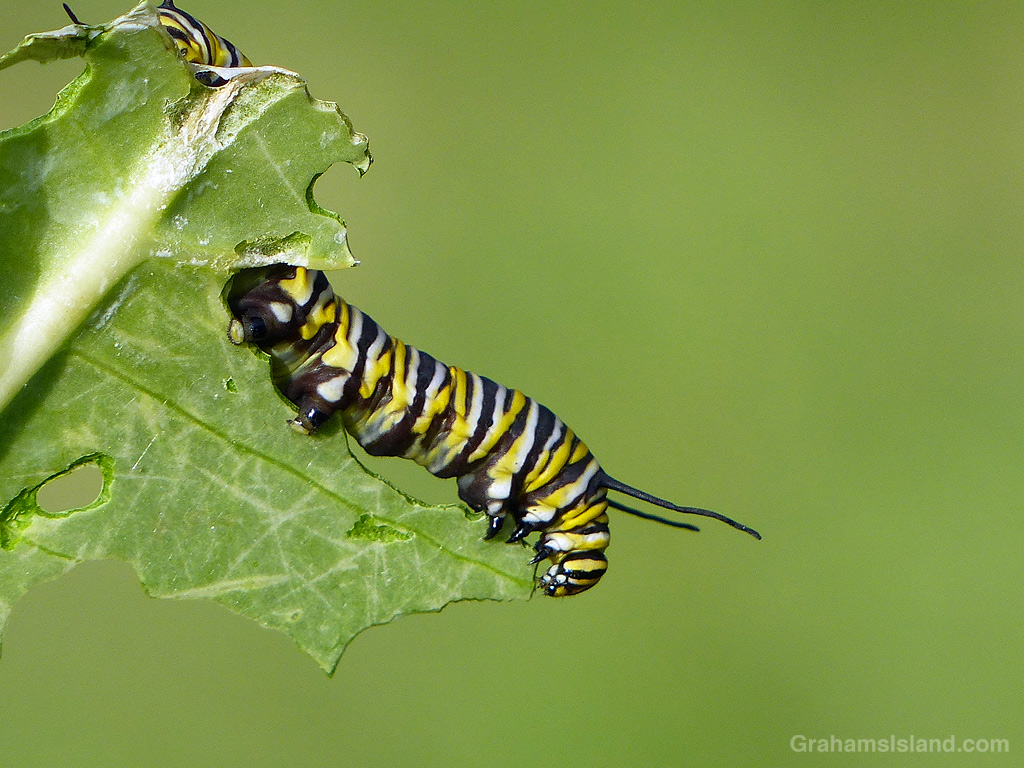
A Monarch Butterfly caterpillar munches along the edges of an Hawaiian Crown Flower (Calotropis gigantea).
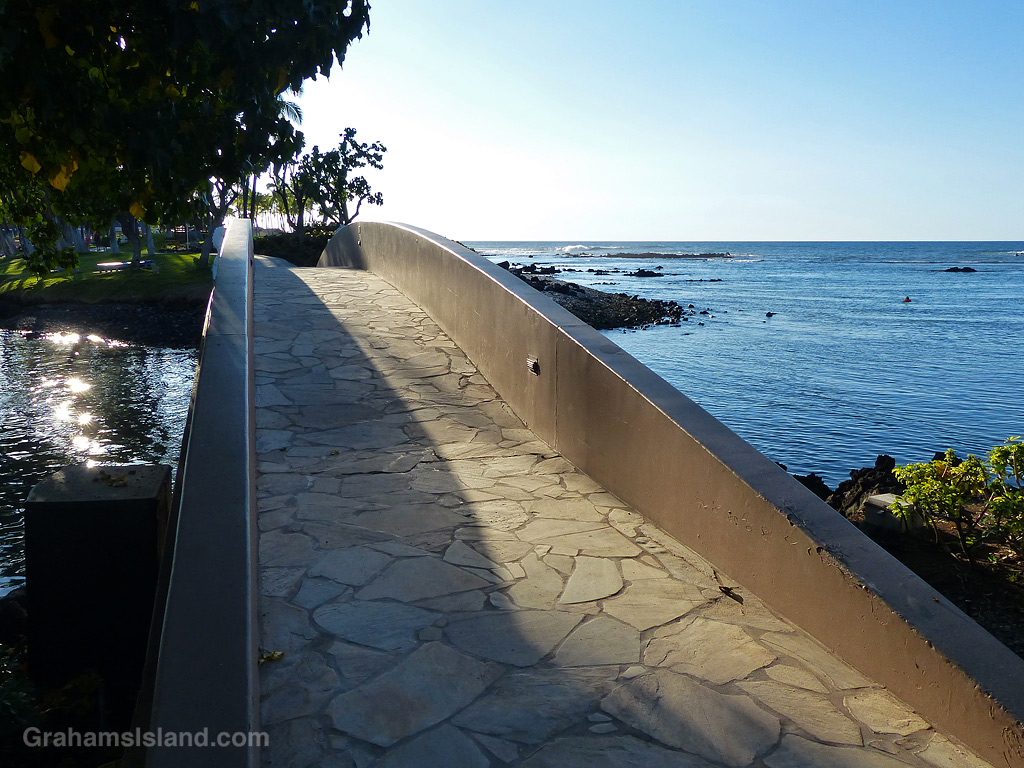
This week’s Sunday Stills challenge theme is ‘Bridges.’ See more responses here.
The top image is an elegant bridge on the coast, in the Hilton Resort at Waikoloa. It spans an inlet from the ocean into a lagoon. This bridge is part of the coast path, which is open for anyone to walk.


The Big Island’s main use of bridges is to span the numerous gullies that run from the mountains down to the ocean. On the east side, some of these bridges are quite long and high, with vertigo-inducing views over the edge. These three bridges cross gullies in North Kohala on the winding road from Kapaau to Pololu. The third has several houses nearby, so a walkway has been added. This is surely safer than walking on the road, though not by much judging from its appearance!
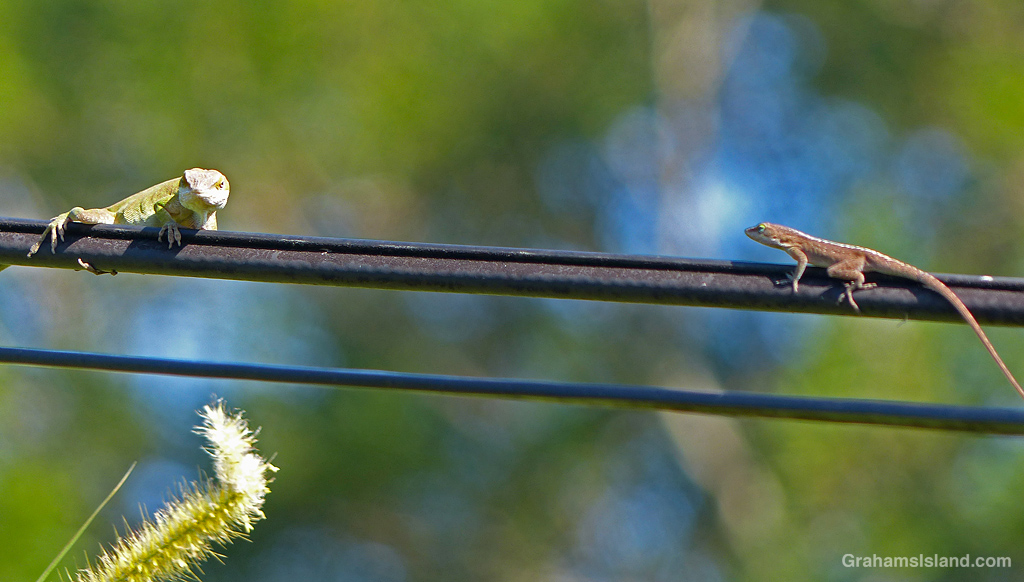
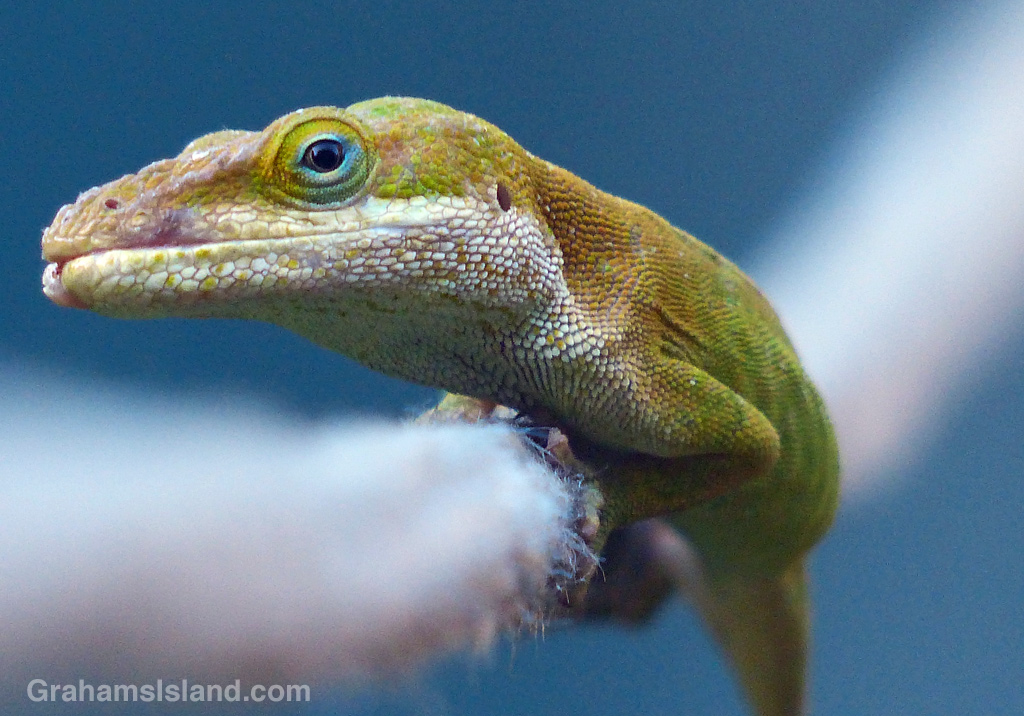
Finally, bridges of a different kind. Anoles and geckos use lines, attached to the house, to get around. Sometimes these one-lane bridges lead to encounters with fellow travelers. In this case the smaller anole leapt off into the cane grass, but that was its intended destination anyway. In the second photo, this anole was using the washing line to bridge the space from the house to a hedge.

I’d like to say this is an image that featured prominently in NASA’s recent foray into UFO investigations. (Apparently, they’re not called UFOs anymore. They’re UAPs (unidentified anomalous phenomena) which I find far less engaging.) However, this image is not of a UFO or even a UAP.
Recently, I got a new printer and it has this circular light that tells me it’s on. This light pulses continuously. It’s also very bright. When I got up in the middle of the night, it was like the house interior was illuminated by one of those rotating searchlights used in prison camps.
It’s a frightening thought that some designer thought this was a good idea. This consumer thought it a very bad idea. However, there was no way to turn the light off unless the machine was turned off. Plan B was to cover the light so it wasn’t so bright. Sounds simple, but it took several tries before finding a dense enough tape combination to dim the light to acceptable levels.
 Graham's Island