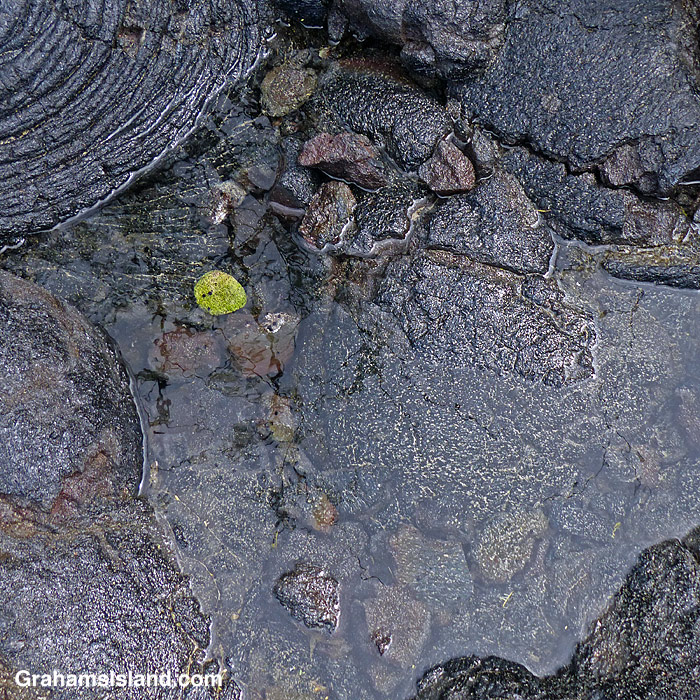
A small greenish rock stands out in a pool of dark lava.
Posted in response to Becky’s January Squares challenge theme of ‘Up.’ See more responses here.

A small greenish rock stands out in a pool of dark lava.
Posted in response to Becky’s January Squares challenge theme of ‘Up.’ See more responses here.
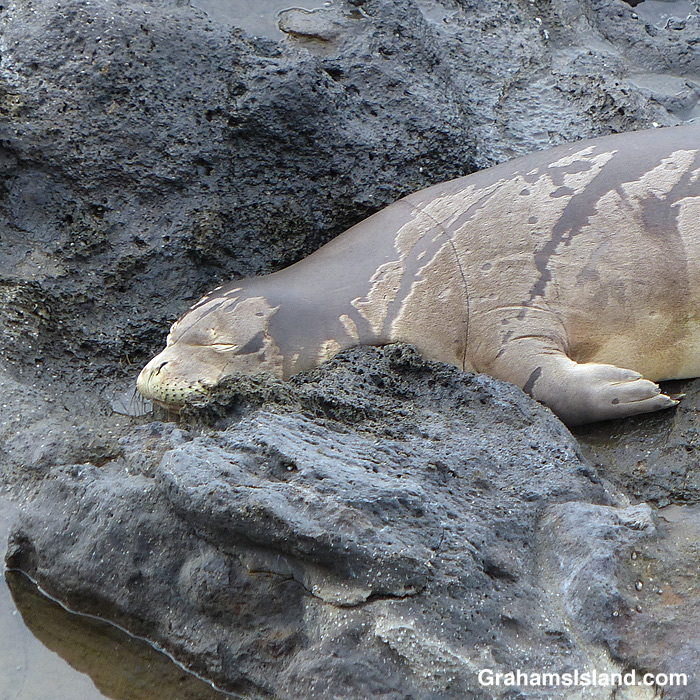
I posted here about seeing the monk seal Hiwahiwa on the coast below Upolu. In that post I noted that Hiwahiwa, the only monk seal pup born around the Big Island in 2020, had no tags or markings of any kind.
Some time after that sighting I saw this monk seal in the same general area. Since the seal was on the small size I figured it could be Hiwahiwa, but it didn’t move so I couldn’t even be sure if it was male or female. I reported the sighting to Ke Kai Ola, which tracks monk seals, and got the response that it probably was Hiwahiwa. They noted the line circling his body in front of the flippers and, while they can’t say with certainty how he got the scar, it’s believed he got entangled in some fishing line.
So now I have a way of identifying him and, of course, haven’t seen him since. The scar doesn’t seem to have bothered him and, like most monk seals, he looks quite contented while resting. The markings on him are where he’s been splashed by waves, the darker skin being wet and smooth.
Posted in response to Becky’s January Squares challenge theme of ‘Up.’ See more responses here.
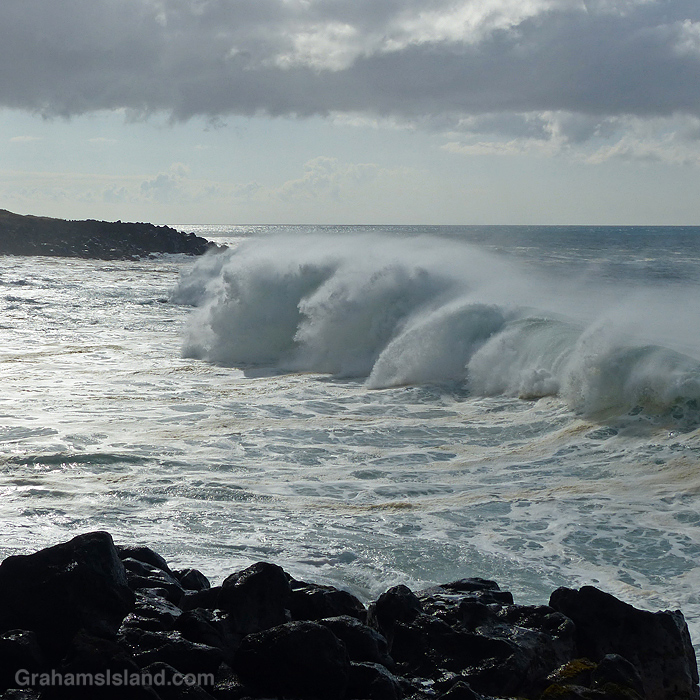
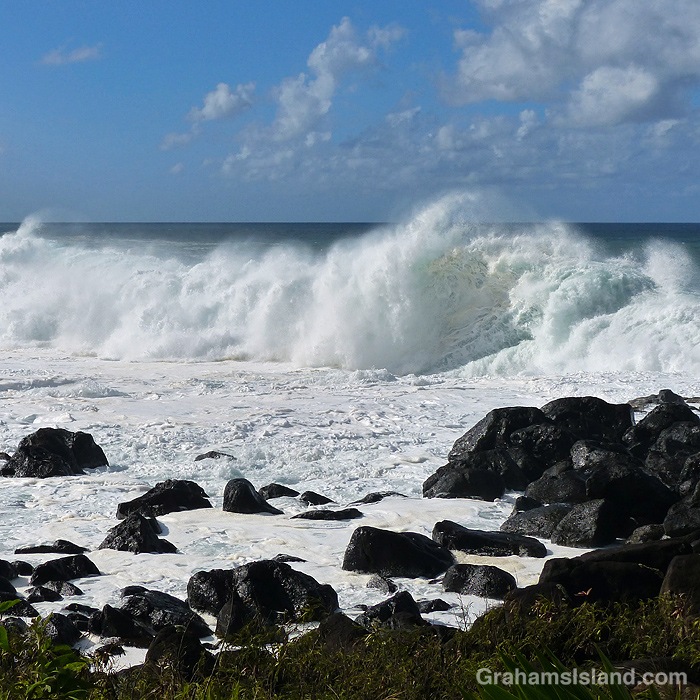
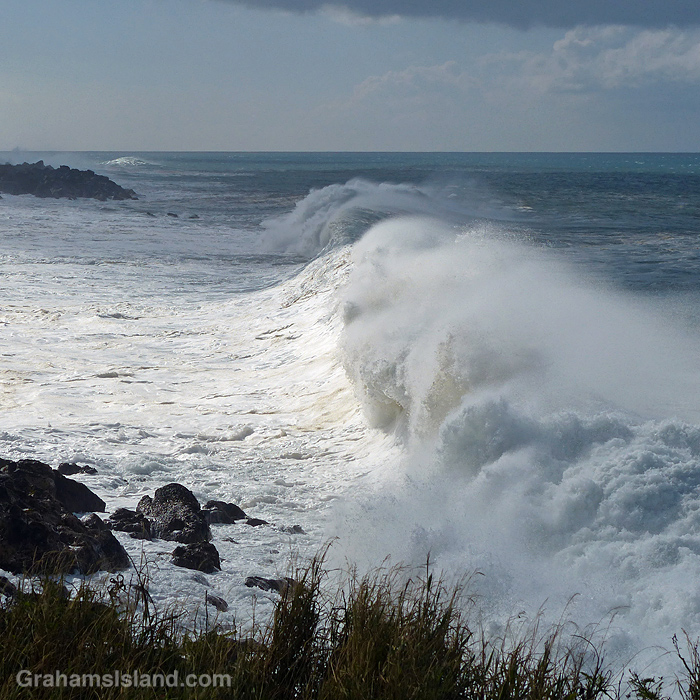
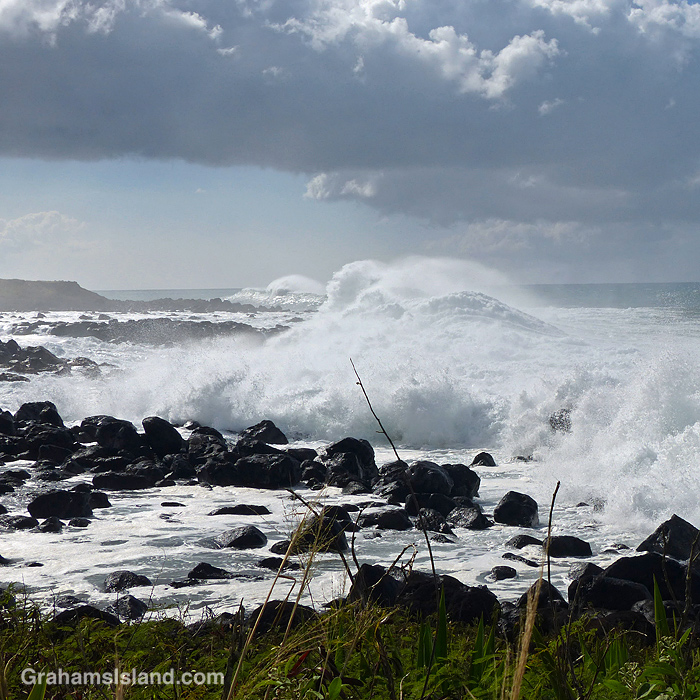

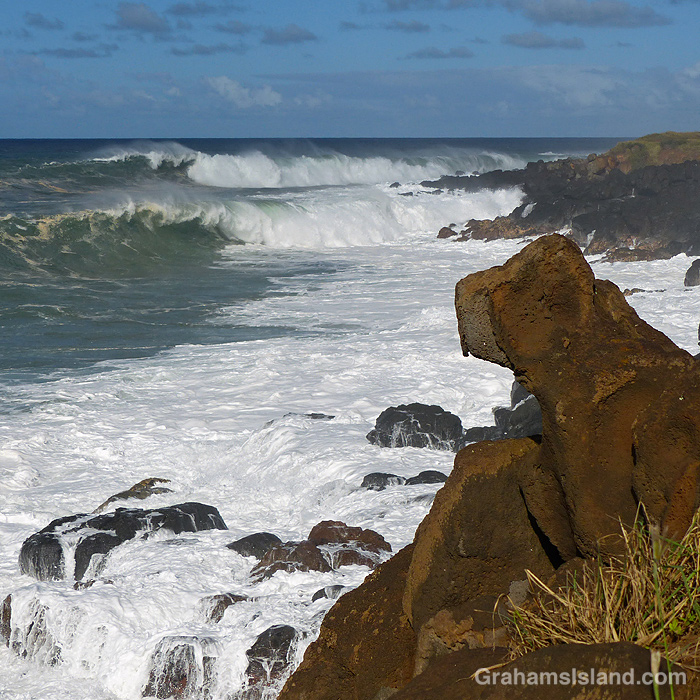
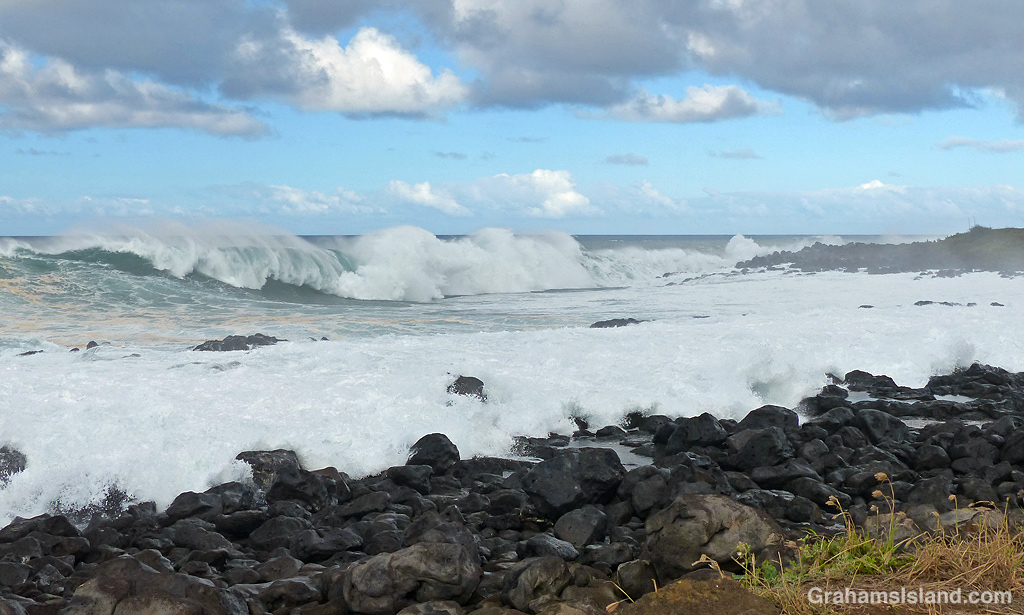
I was going to run photos from my archives for this post, but then last Sunday saw a large northwest swell hit the islands. This is the time of year for such conditions, which generate huge waves on the north coasts of Oahu, Maui, and Kauai, and draw big wave surfers from around the world.
The other Hawaiian islands shelter the Big Island from most of these swells, but if their direction is more northerly or westerly, then we get our share of good-sized waves crashing ashore. Sunday was one such day.
These photos were taken along the North Kohala shore at Upolu. I went down onto the rocks to get some eye-level photos and had to scramble a couple of times when I saw outsize swells rolling in. In the bottom right square is a feature I call Guard Dog Rock because of its profile. On this occasion it could be called Lifeguard Dog Rock, but you’re still on your own if you go in the water.
Posted in response to Becky’s January Squares challenge theme of ‘Up.’ See more responses here.
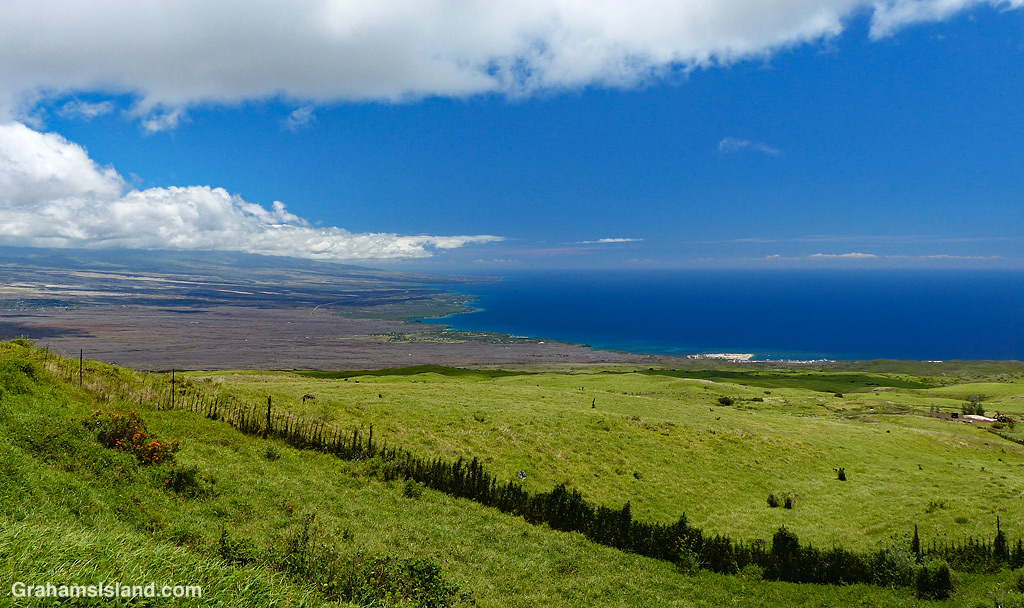
Looking down from the Kohala Mountain Road, the lush, green pastureland of the hillside contrasts with the dry, brown landscape of the South Kohala coast.

This week’s Sunday Stills challenge theme is ‘Winter Wonderland.’ See more responses here.
We do get snow here on the Big Island, on the summits of Mauna Kea and Mauna Loa, but there’s none up there right now. However, for those knee deep in snow, shrouded in freezing fog, or sliding on icy sidewalks, I thought these photos might seem like something of a winter wonderland.
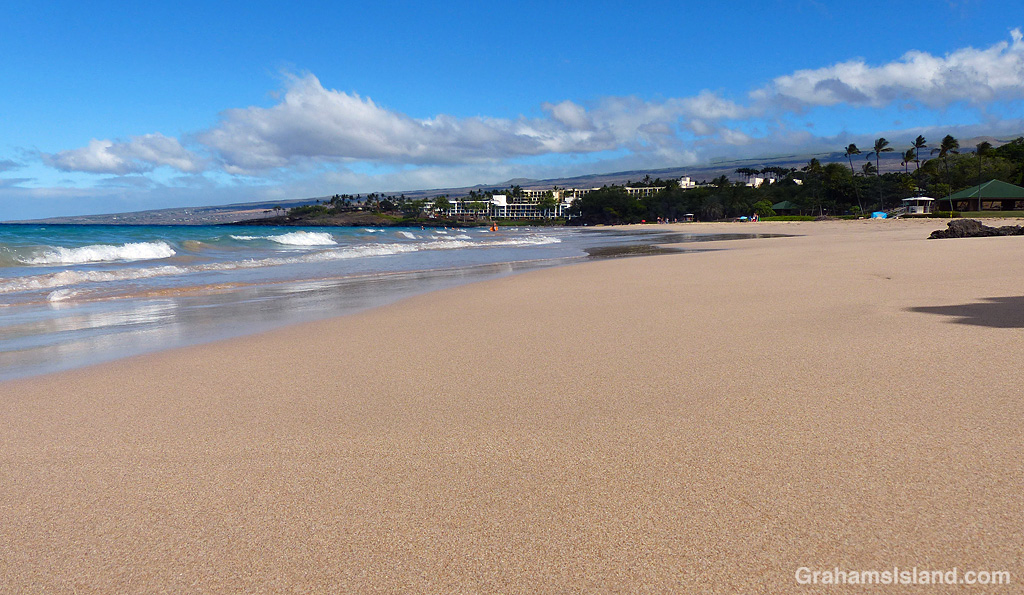
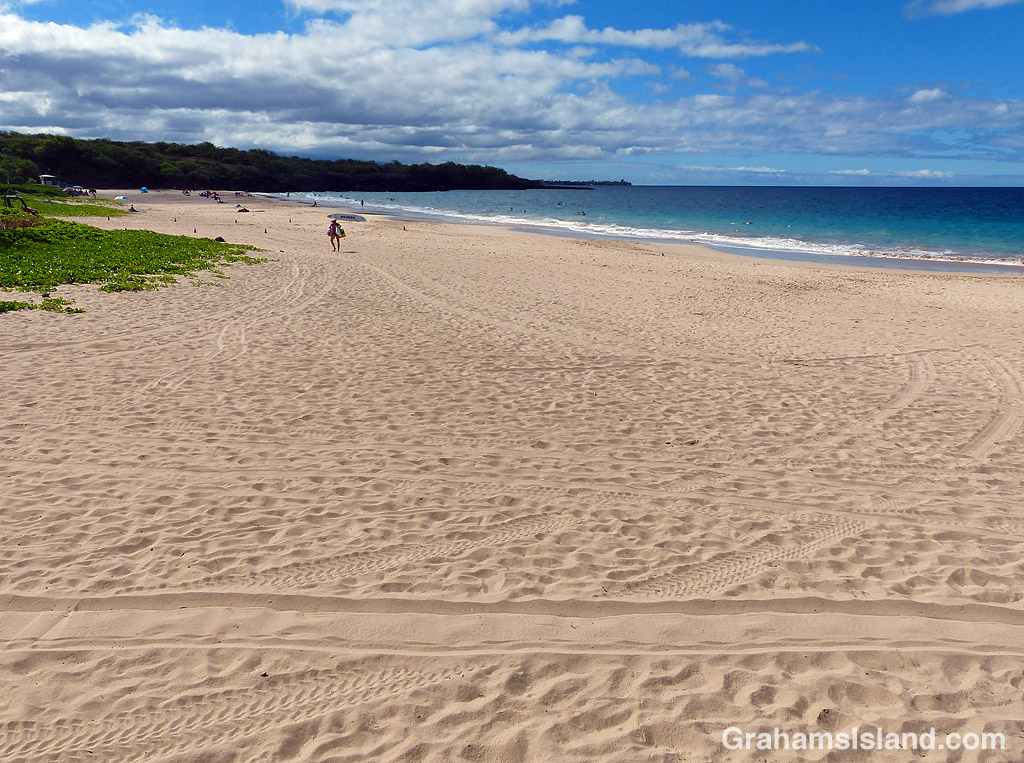
Hapuna beach (officially Hapuna Beach State Recreation Area) regularly features on lists of the world’s best beaches. It’s a long stretch of golden sand across the head of a wide bay with fairly protected waters. Swimming is good, but when waves do roll in, surfers take over.
The top two photos show the view from the south end of the beach. In the second photo, the line of greenery jutting into the beach represents the edge of the State Recreation Area. North of there is Hapuna Resort, which is private, but the beach is still open to the public. The bottom photo shows the view from the north, looking south. The tracks in the sand are from vehicles used in beach maintenance or by the lifeguards who patrol the beach.
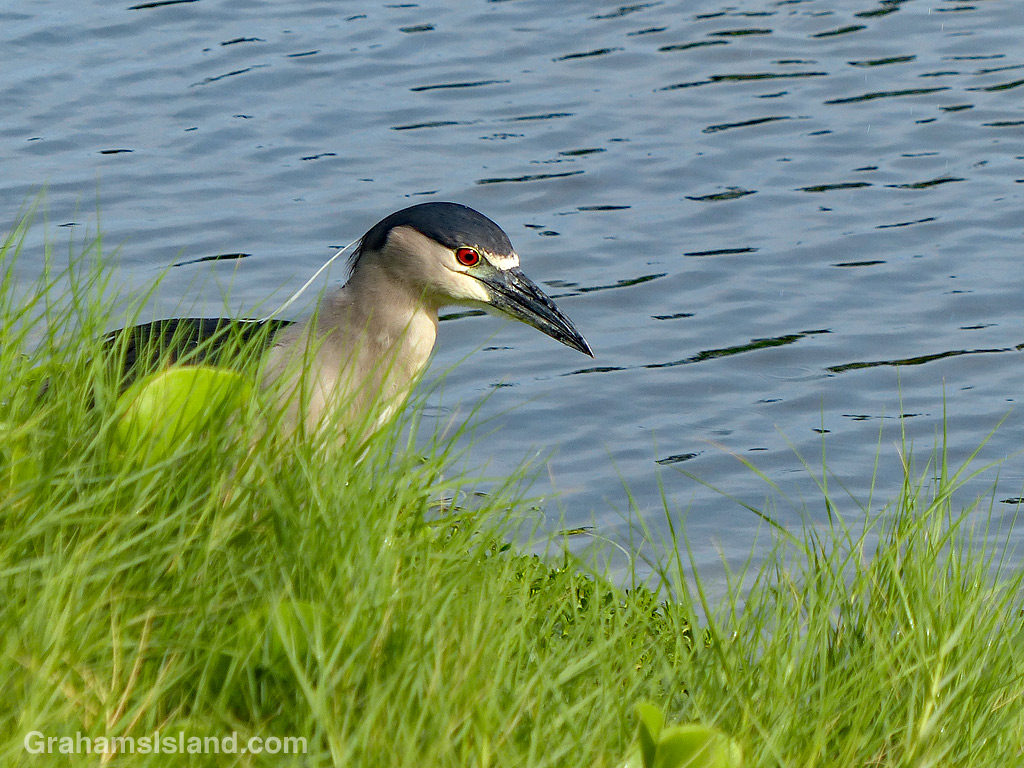

At various places along the North Kona and South Kohala coast there are pools just inland from the coast. Many of these pools are connected to the ocean and serve as breeding grounds for fish. In the larger pools those fish can be quite large. And where there’s a large pool of water with fish in it, herons won’t be far away.
The bird in the top photo was actively hunting, while the other was merely monitoring the situation. These adult birds have the black crowns that juveniles lack and also sport a long, white head plume, that I think is rather elegant.
Black-crowned night herons are considered indigenous because they weren’t introduced to Hawaii, but arrived on their own hundreds of years ago. Thus far, they haven’t changed from their mainland counterparts.


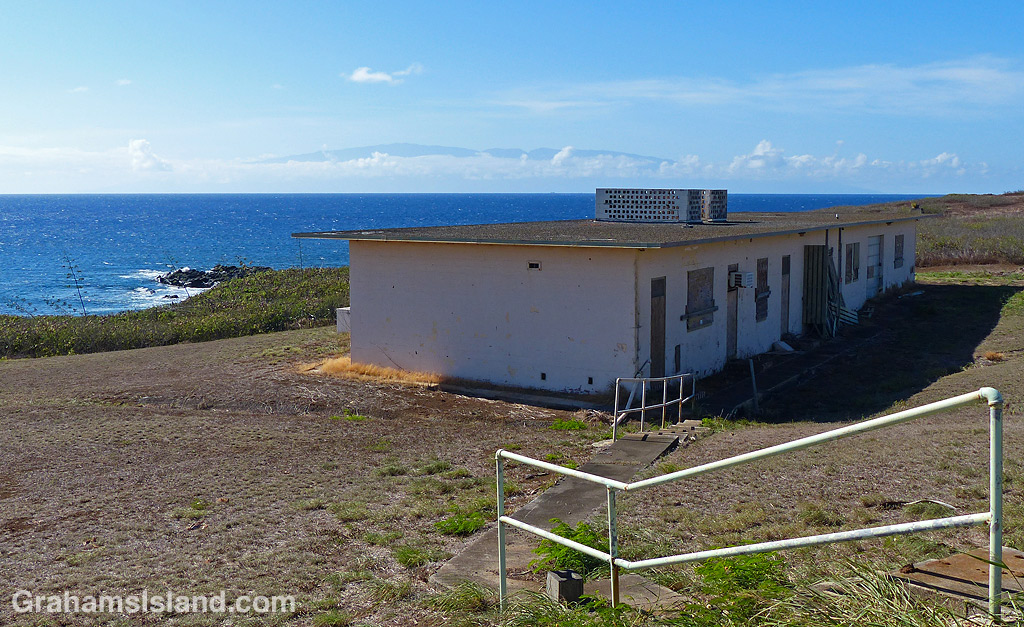
The Old Coast Guard Station near Upolu was constructed in 1944 as a Loran station. Loran was an early navigation positioning system. The original system was Loran A, but this was replaced by Loran C in the early 1960s.
Over the years there were changes to the buildings, staffing, and equipment at the station until, in 1993, the station closed. For many years not much happened. The buildings began a steady decline. The station had been built on two different land parcels and, upon closure, these ended up in the hands of the Hawaiian Homelands and Parker Ranch.
When I first moved to Hawaii, a local policeman used to live in one of the buildings. It was all fairly low key and mellow. When the policeman moved out, Parker Ranch put up no trespassing signs and had security personnel driving by to check the area. They stopped people from walking along the coastline for exercise or to fish because, God forbid that unauthorized people should set foot on any of the thousands of acres they own. (Yes, I was bitter about that attitude.)
Eventually, Parker Ranch sold their slice of the old station and the new owners refurbished the two buildings on that property (the blue buildings in the top photo). Regular people can now walk the coastline again as the very nice owners marked a path with coconut shells.
The rest of the station continues to slowly decay. Owned by Hawaiian Homelands, the chances of anything happening in my lifetime are remote.
For more information about the history of the Old Coast Guard Loran Station near Upolu, go to http://www.loran-history.info/upolu_point/upolu_point.htm. Scroll down to Documents and find the General Information Books for 1969, 1978, and 1988 for some interesting historical information about the station and the area.

The golden pools at Keawaiki, on the North Kona Coast, get their color from a unique algae that lives in the pools. The pools are actually a little way inland from Pueo Bay, just north of Keawaiki Bay. If you visit, please refrain from taking a dip in the pools so that you don’t disturb or destroy the delicate ecosystem there.
 Graham's Island