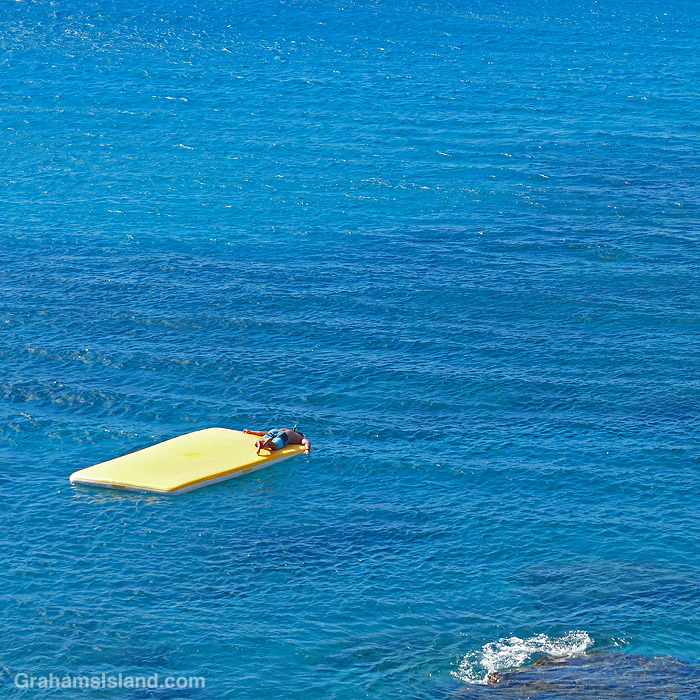
I came across this scene on a recent coast walk, a youngster hanging over the edge of this bright yellow raft, looking to see what’s going on below.
Posted in response to Becky’s April Squares challenge theme of ‘Bright.’ See more responses here.

I came across this scene on a recent coast walk, a youngster hanging over the edge of this bright yellow raft, looking to see what’s going on below.
Posted in response to Becky’s April Squares challenge theme of ‘Bright.’ See more responses here.
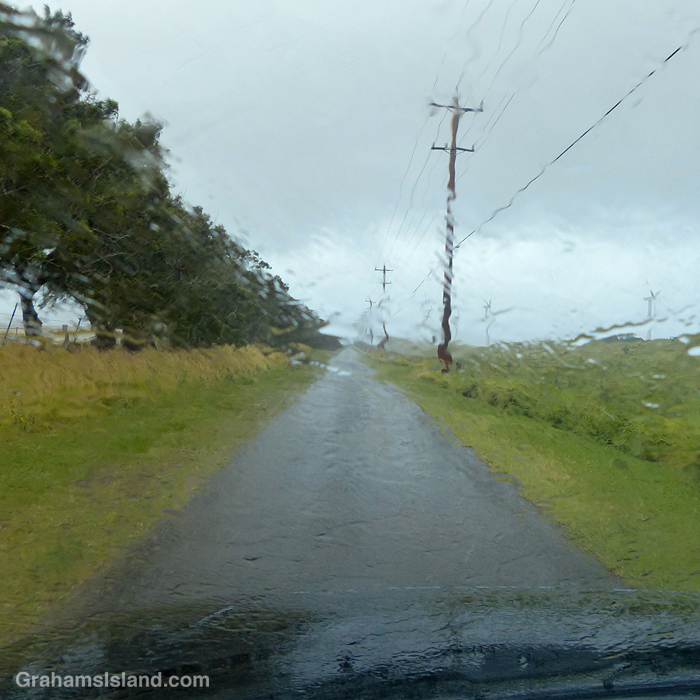
Yesterday, I posted a photo of clouds over Upolu. Sometimes, those clouds do what clouds often do, which is dump a load of rain. When that happens, my drive down to the airport looks like the top photo. It also means that walking on the coast there will not be pleasant. Rain is one thing, but it turns the dirt roads into cloying mud and I end up with sandals weighing five pounds more than when I started.
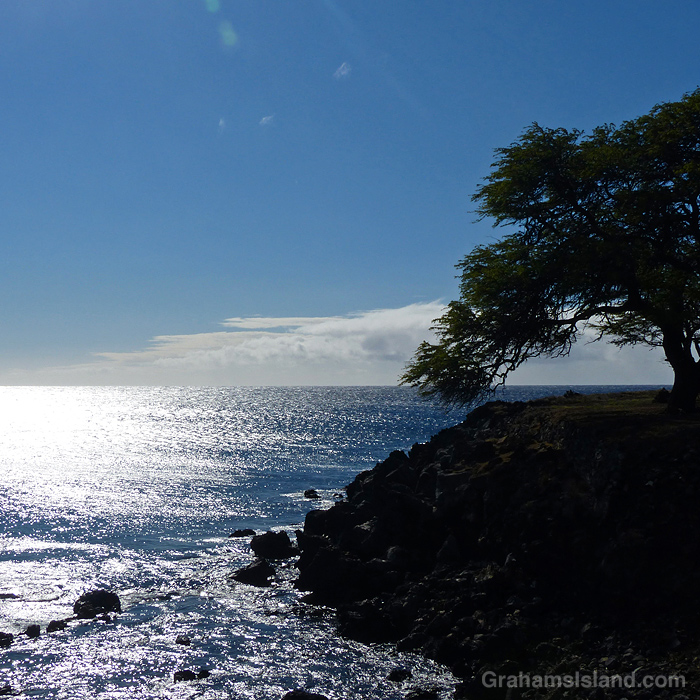
However, such is the nature of the weather here that, most of the time when this happens, I can drive seven miles down the coast and walk there in bright sunshine as in the bottom photo.
Where I live in Hawi, we get around 60 inches of rain a year. Upolu, about three miles away to the north, gets about 45 inches a year. The spot in the second photo receives less than 20 inches a year. The abrupt differences in rainfall are down to the northeast trade winds bumping into the Big Island’s volcanoes. The windward sides of those volcanoes get lots of rain topping out at a whopping 280 inches a year just north of Hilo. The leeward side of the island is much dryer with the South Kohala shore, where the resorts are, receiving less than 10 inches a year. The northern tip of the island, where I live, is a transition area where the shoulder of Kohala Mountain runs down to the sea. I always tell anyone thinking of moving here to check the isohyet map. A half mile east or west, or a half mile up or down the mountain, can make a world of difference to the weather they’ll be living in.
Posted in response to Becky’s April Squares challenge theme of ‘Bright.’ See more responses here.

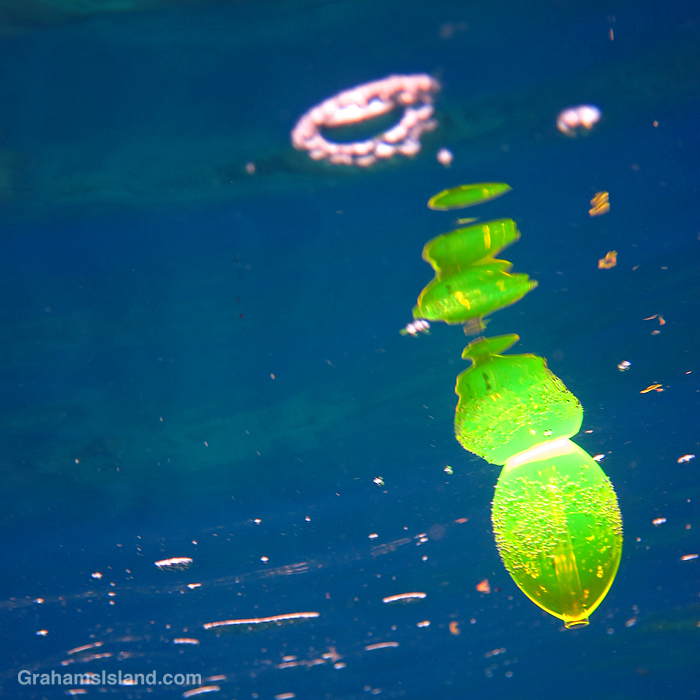
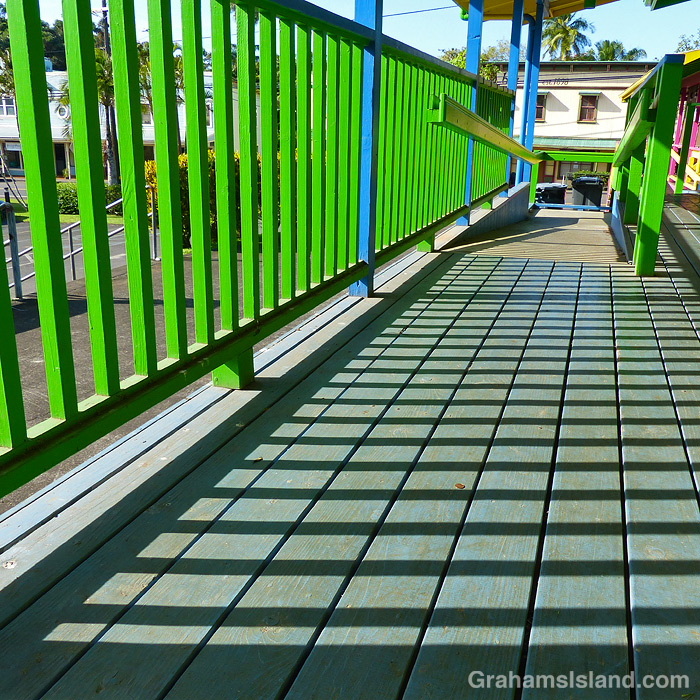
Number four of my rainbow colors in response to Becky’s April Squares challenge theme of ‘Bright.’ (See more responses here.)
This rainbow soared over the tsunami siren above Kapaa Park on the Kohala coast. I found the stray float catching the sunlight as it drifted in the water. The buildings of the Kohala Town Center in Kapaau are painted in very bright colors, including this vibrant green railing.

This is the second of my little series of rainbow colors in response to Becky’s April Squares challenge theme of ‘Bright.’ (See more responses here.)
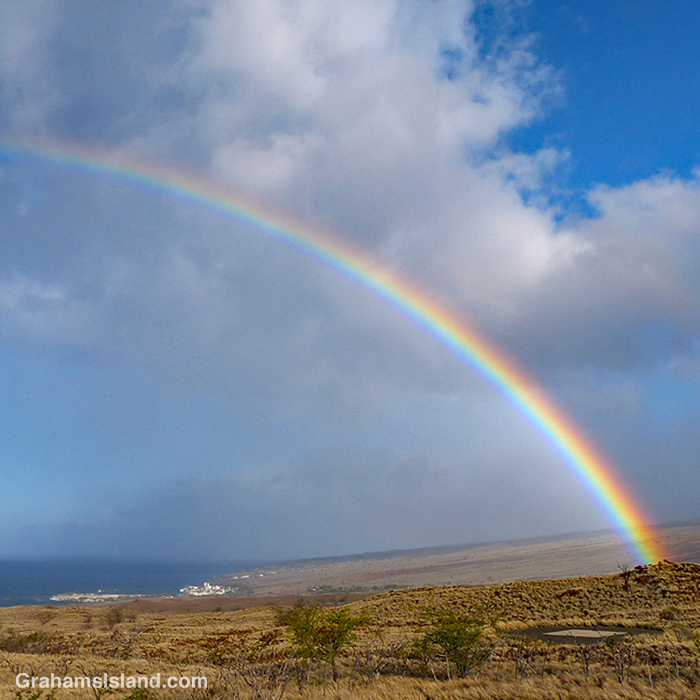
In the top photo, a rainbow arcs over the port of Kawaihae.
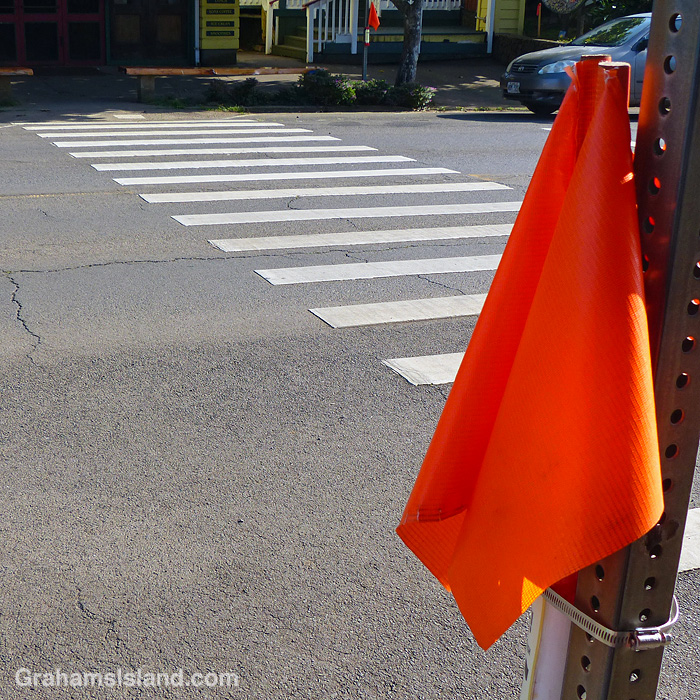
Below that are orange flags available for waving while crossing the street. I haven’t yet felt the need to use them, still being able to leap out of the way of drivers focused on their phones! Actually, drivers here are pretty good about stopping for people to cross the street. I’m more surprised by how many people will just step out into traffic 20 feet up from the crosswalk. Then they look aggrieved if you fail to stop instantaneously.
The bottom photo shows the lovely flower of the kou tree (Cordia subcordata). Kou is indigenous to Hawaii but is also a canoe plant, brought here by Polynesian settlers. It likes the sun and grows along the coast.


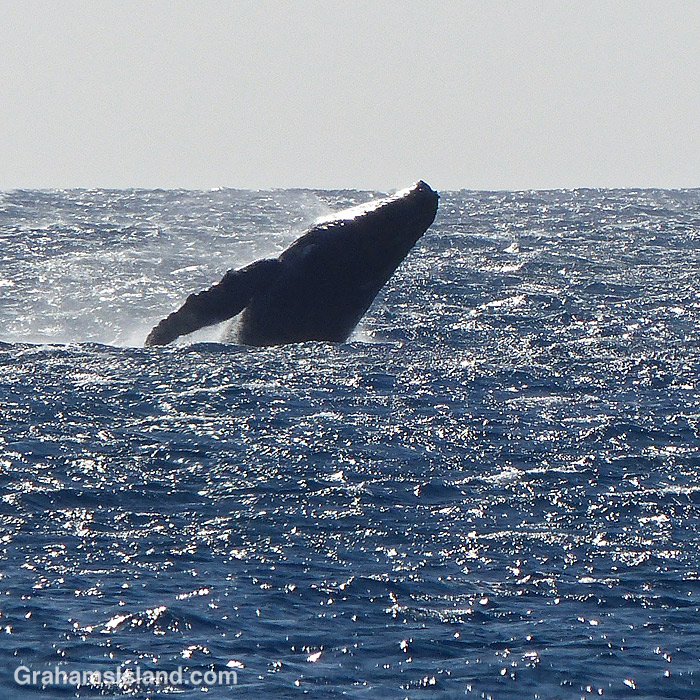
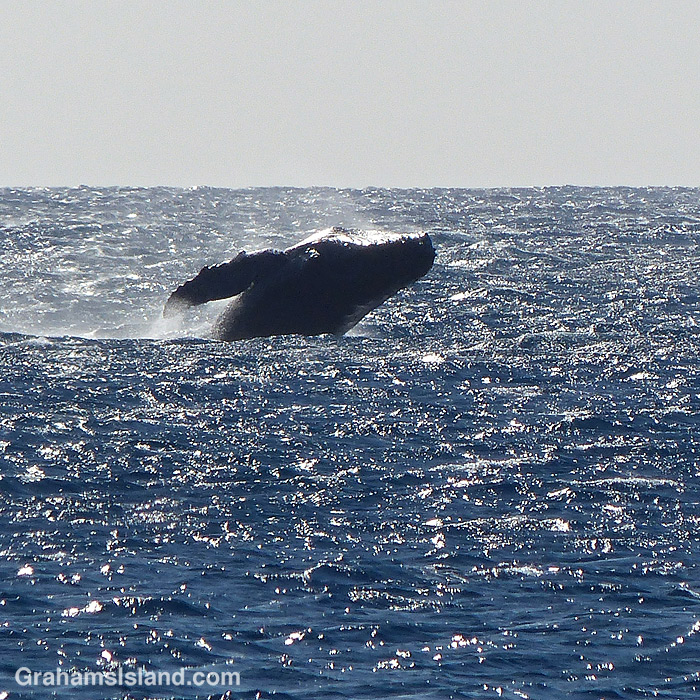


This is a follow up to yesterday’s post. These were taken just a few minutes after yesterday’s photos. It might well be the same whale, but here, it had moved along far enough that I was no longer shooting straight into the sun. The blue of the ocean comes out and my eyes also had a chance to recover!
Last weekend was the third and final of this year’s Sanctuary Ocean Count of humpback whales. Each year, counts are conducted between 8 a.m. and 12:15 p.m. on the final Saturday of January, February, and March. These months are the height of whale season in Hawaii, though whales can be seen here from November through April. The counts happen on Oʻahu, Hawaiʻi and Kauaʻi and are coordinated with similar events on Maui. Volunteers gather at sites around the islands to watch for whales and count their numbers and activities. This information is used to help researchers track how many whales come to Hawaii to calve and mate. Over the last few years, numbers have been in decline, but it’s not clear whether that’s due to drop in the whale population or a change in their migration patterns.
Volunteers for the counts are mostly local people, but more visitors are taking the opportunity to get involved while they’re here. This year, because of Covid restrictions, only site leaders took part in the count, but that will hopefully not be the case next year. I’ve done several of these counts and it’s fun to set aside the time to sit and watch the humpbacks. Sometimes they just cruise by, but often they splash and leap out of the water, putting on a show that’s wonderful to watch.
For more information about NOAA’s Sanctuary Ocean Count, go to https://hawaiihumpbackwhale.noaa.gov/involved/ocean-count.html.
Posted in response to Becky’s April Squares challenge theme of ‘Bright.’ See more responses here. Also posted in response to this week’s Sunday Stills challenge theme of ‘Volunteering.’ See more responses here.
This is the first of a pair of similar posts for Becky’s April Squares challenge theme of ‘Bright.’ (See more responses here.)
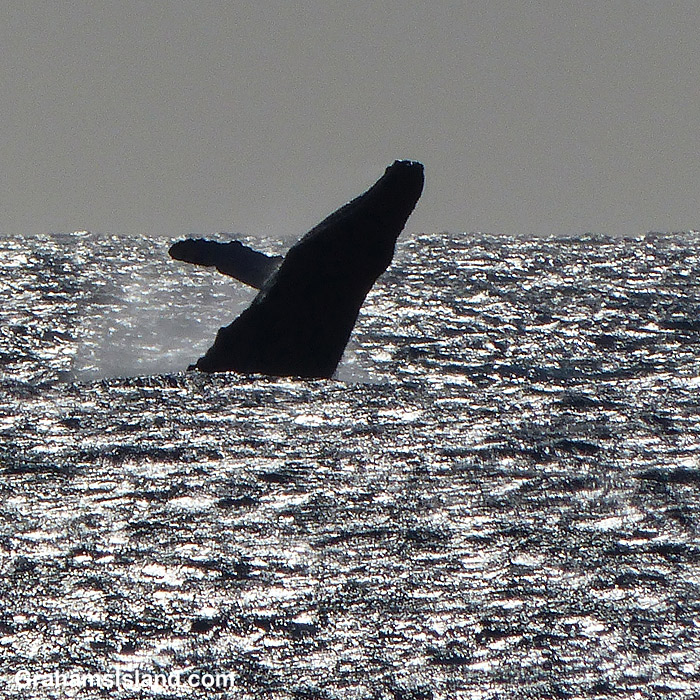
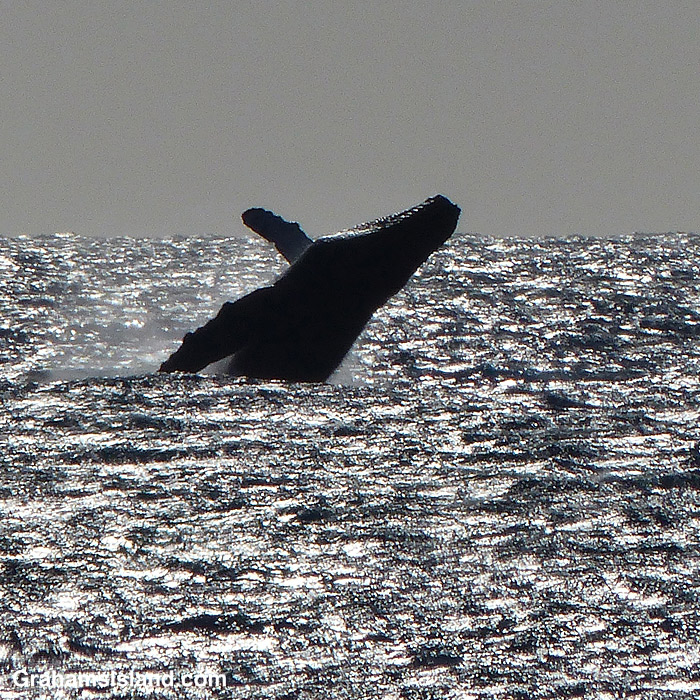
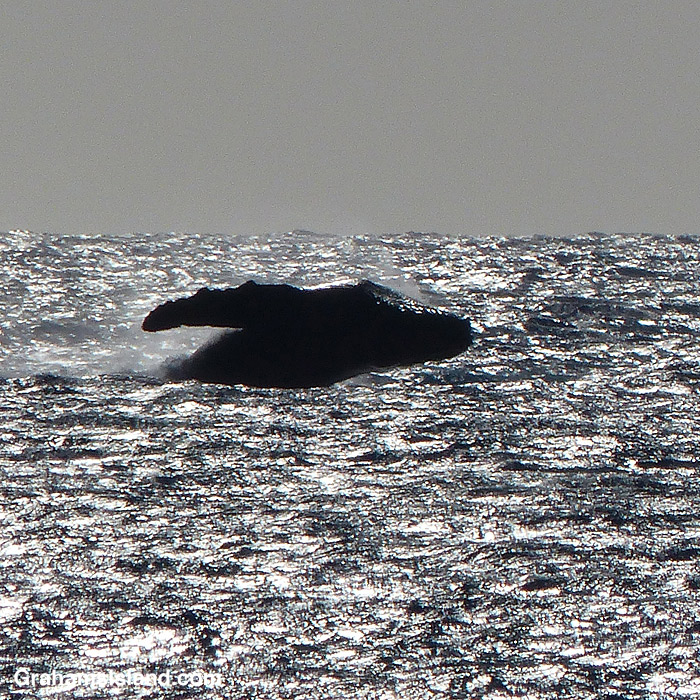
Early last month, I was nearing the end of a walk on a trail along a west-facing shore in North Kohala. I looked out toward the late-afternoon sun sparkling on the water and thought I saw a paddleboarder. A moment later, the paddleboarder fell into the water, then miraculously emerged again. I realized this was not a person, but a humpback whale slapping a pectoral fin. The whale was close enough to shore that the long fin appeared human-sized.
I moved to the shoreline, sat on a rock, and got my camera ready. The whale moved on underwater. So I returned to the trail, looked back one last time, and saw a different whale breach a little farther out. Back to the shoreline and my seat, camera again ready.
This whale was more cooperative and launched itself upward again. I was able to get these images which, shooting into the sun, look almost black and white.
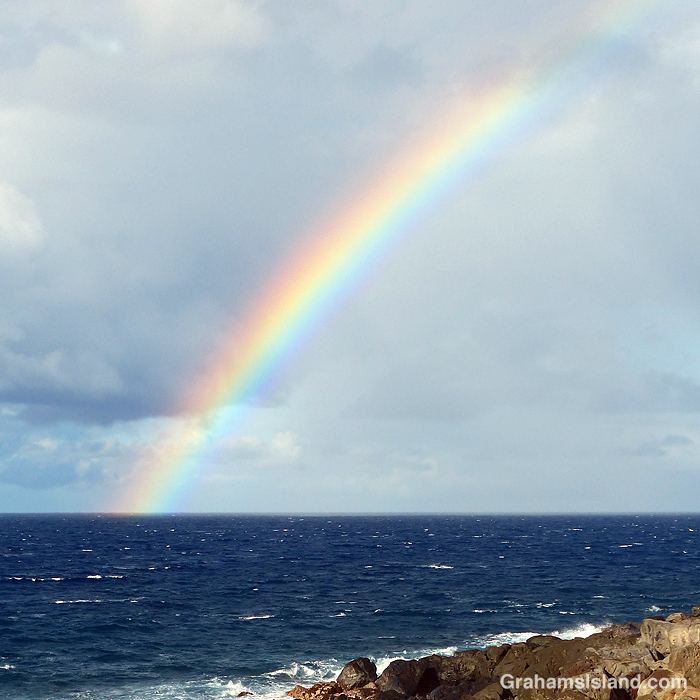
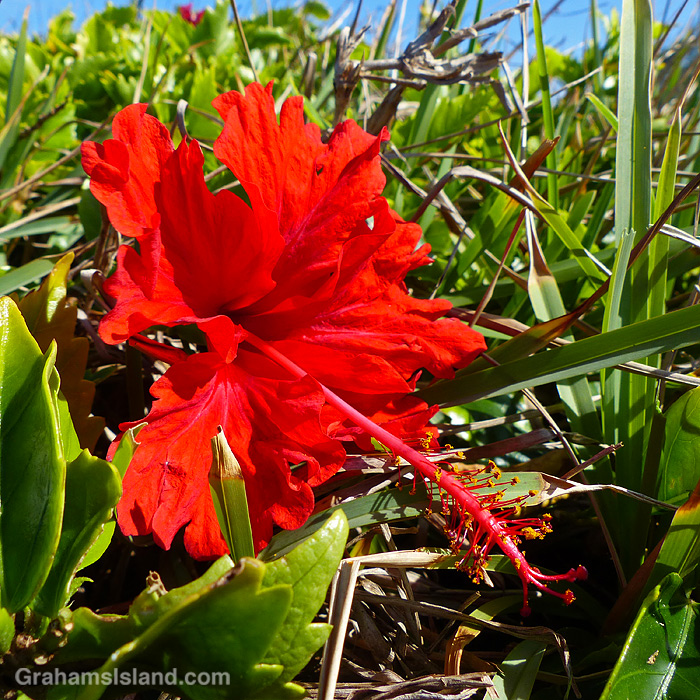
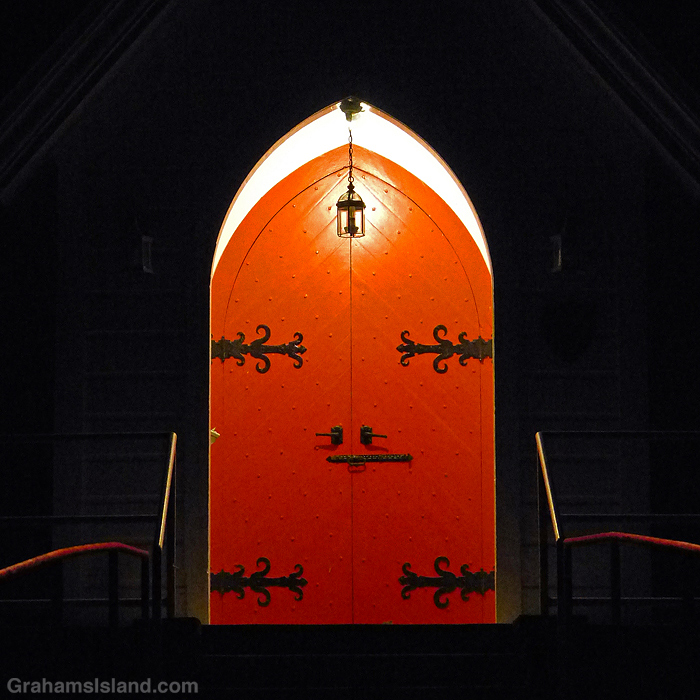
This month’s Becky’s Squares challenge theme is ‘Bright.’ (See more responses here.) Since I plan to post some bright colors in response, I thought I’d do that using a rainbow theme.
I’m starting with a rainbow off the north Kohala coast followed by a bright red hibiscus flower growing wild on that same coast. The third photo shows the front door of St. Augustine’s Episcopal Church in Kapaau, illuminated by a single bright light.
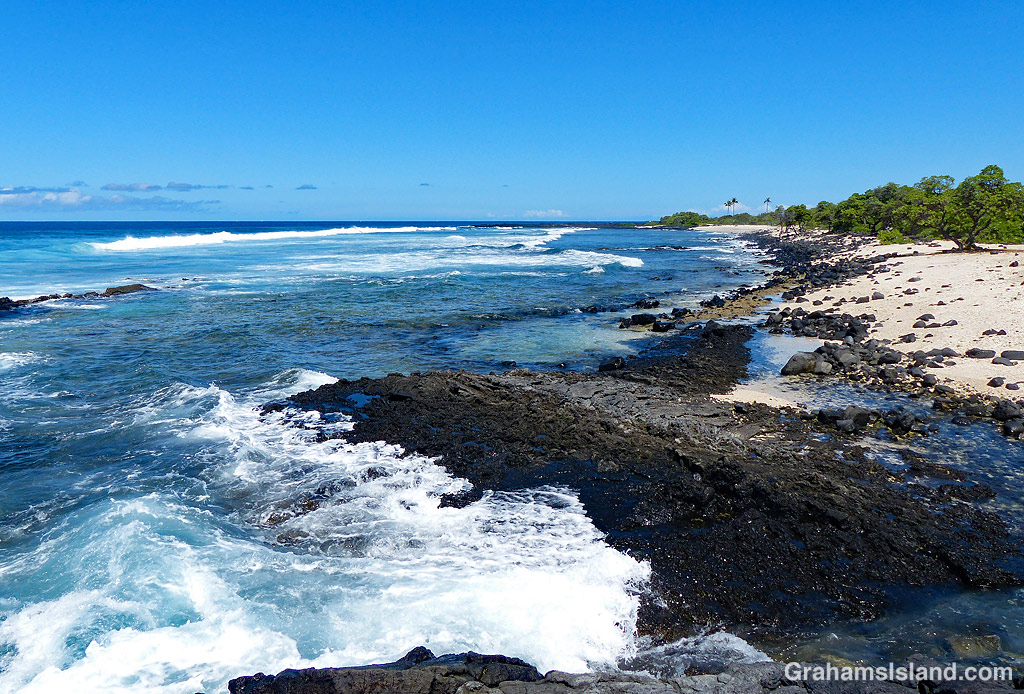
Kohanaiki, located just north of Kailua Kona, is my new favorite park here on the island. It’s the home of a popular surf break known as Pine Trees. There’s a long, sandy beach backed by trees offering shade (not pine trees though). It’s an historic area, too, and at the south end of the park is a variety of old Hawaiian structures as well as a garden featuring native plants.
For more information about Kohanaiki Beach Park, go to https://bigislandguide.com/kohanaiki-pine-trees.