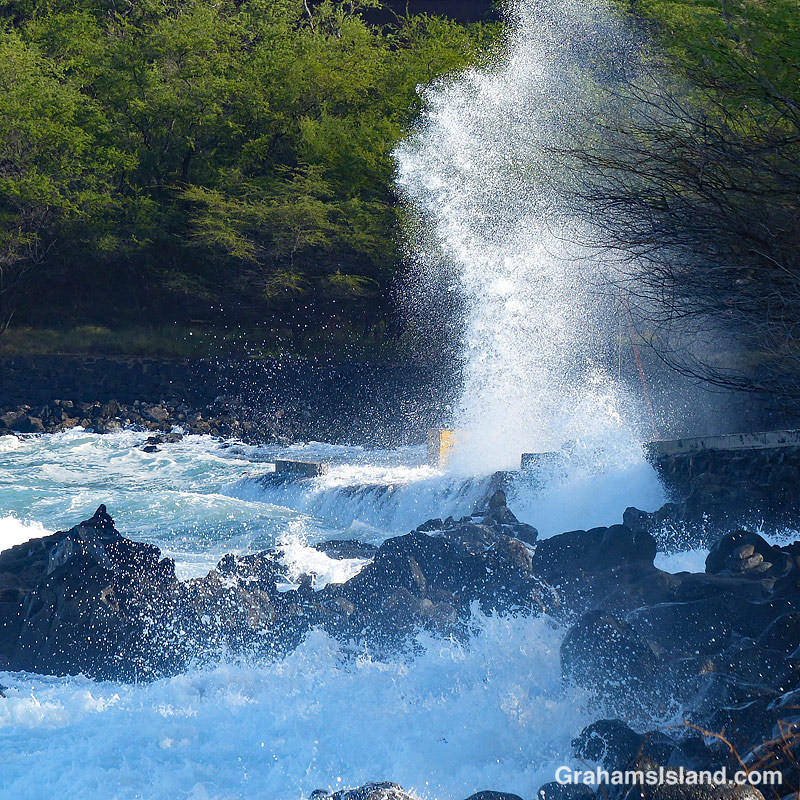
I like to go snorkeling whenever I get the opportunity, but there are some days when that’s not possible. This is a photo of my local snorkeling spot. That’s the parking area on the right, and the place where I generally park my car is right where that tower of spray is.
In other words, this was the kind of day to find something else to do, such as take photos from the shore.
Posted in response to Becky’s October Squares challenge theme of ‘Kind.’ See more responses here.
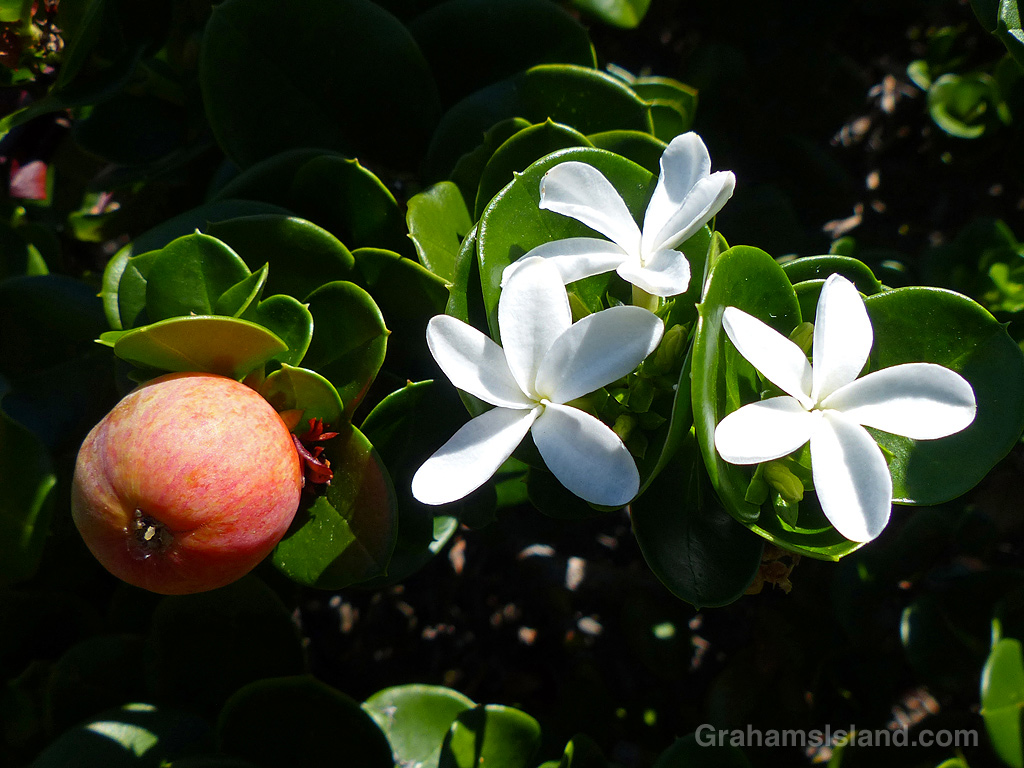
Clerodendrum inerme is a native of tropical Asia and the Pacific. It thrives in full sun and is salt tolerant so it’s a popular plant for landscaping in coastal areas of Hawaii, though it has the potential to become invasive.
This fisherman was waiting for the sea to settle before finding a spot to cast his line. It pays to be careful. People do get washed of the shoreline rocks, but though this photo makes it look like the fisherman is surrounded by breaking waves, he’s actually in a safe spot.
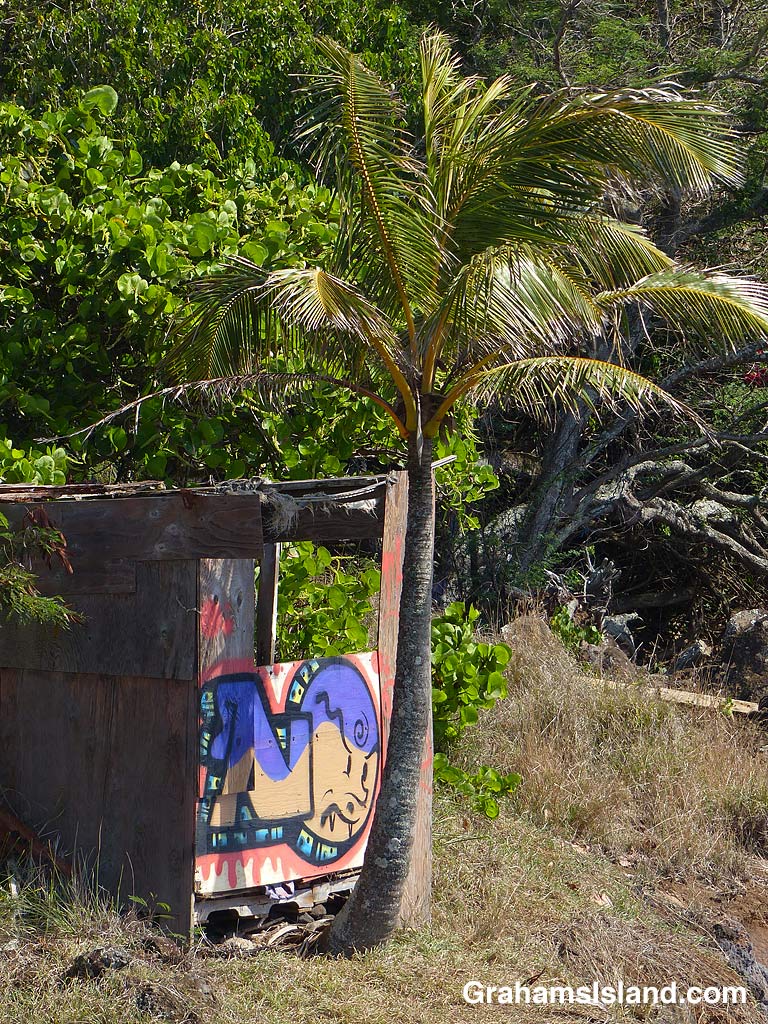
Places and things that have seen better days are likely to be vandalized or tagged with graffiti. On the North Kohala coast, there’s an old fishing shack with a couple of derelict vehicles nearby. At some time in the fairly recent past, the scene has been accessorized with a paint job. I think Noak Dom is the name of the graffiti artist who painted these.
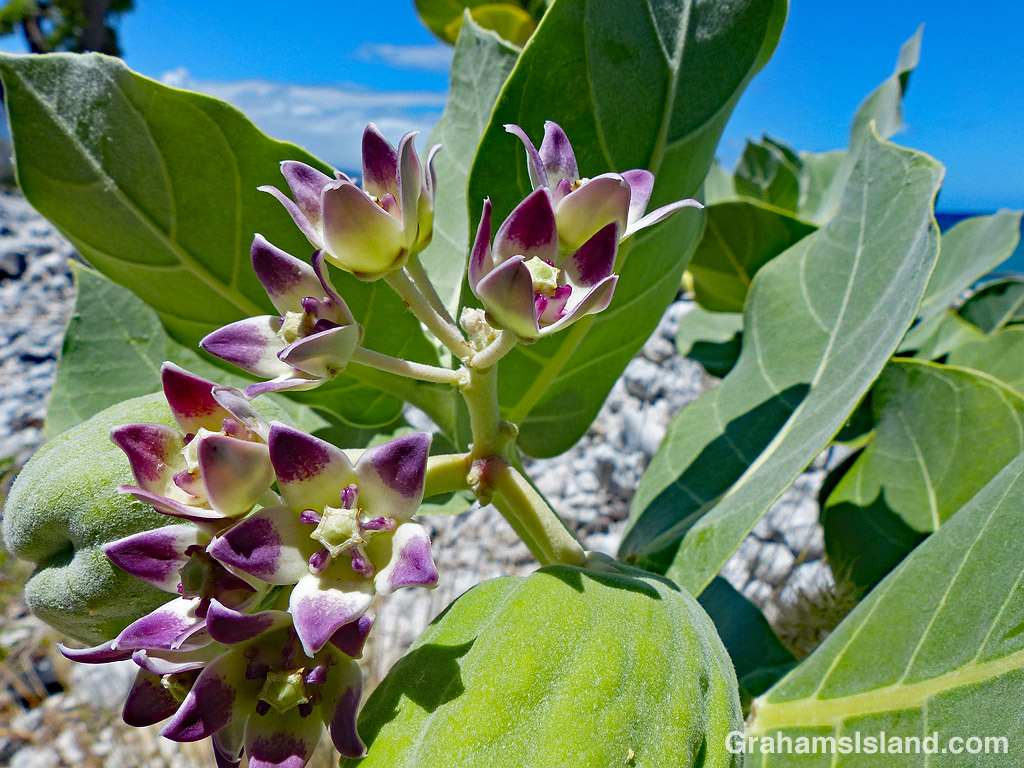
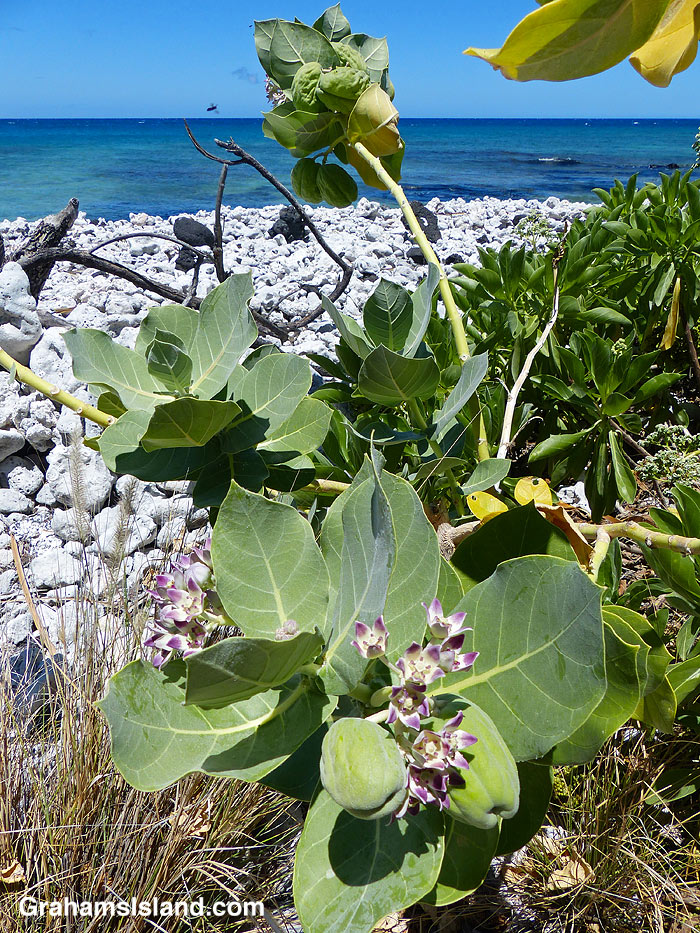
Calotropis procera, also known as Apple of Sodom, is a member of the milkweed family. A native of parts of Africa and Asia, it’s another of the many invasive plants that have found a home in Hawaii. On the plus side, it’s a host plant for Monarch butterfly caterpillars, while the butterflies themselves feed on the flowers.
In these photos, you can see the leaves, flowers, and the large green fruits of the plant.
This evergreen tree, also known as Natal Plum, hails from South Africa. The fruit is edible and the flowers fragrant. In Hawaii, it’s also grown as a hedge, particularly in coastal areas, as it tolerates both salt and wind.
This week’s Sunday Stills challenge theme is ‘Mountains and Valleys.’ See more offerings here.
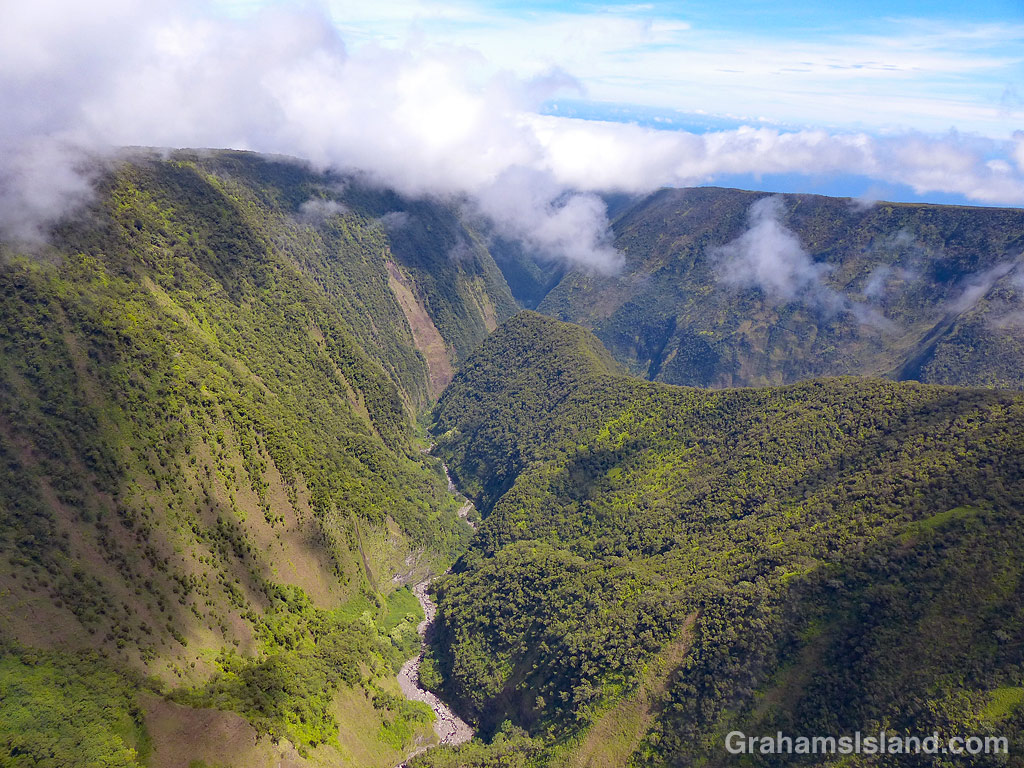
Kohala Volcano is the oldest volcano on the Big Island and has long been extinct, having last erupted around 120,000 years ago. Since then, the various processes of erosion, from rainfall to landslides, have carved deep valleys into the volcano. Waipio, the easternmost of these valleys, is accessible by vehicle (4-wheel drive only), horseback, or on foot. It has permanent inhabitants so access within the valley is restricted.
The other valleys are most easily seen from the air, along the Kohala coast. The top photo shows Waimanu Valley. This can be accessed by foot from Waipio, after a long and arduous hike, and permits are available for camping there. Waimanu River can be seen on the far side of the valley and is one last obstacle to be crossed to reach the camp site, which is in the strip of land between the river and the ocean. The steep sides are typical of these valleys and another consideration to keep in mind when thinking about hiking here.
The middle photo shows a fairly typical view directly into one of the valleys from the ocean. Again, notice the steep valley sides and the abundance of foliage, evidence that this is the wet side of the island.
The bottom photo shows valleys cutting through the mountain farther inland. There’s little or no water running in this view. A few valleys have spring-fed streams, but most depend on rain for water flow. However, when it does rain, it can rain long and hard. Flash floods are common. It’s not a shock when campers in Waimanu Valley are cut off and unable to make the return hike.
I’ll do another post about the water courses for next week’s Sunday Stills challenge.
My regular walk around Upolu Airport almost always occurs in the afternoon when I walk along the coast towards the east. This usually puts the sun at my back and the wind in my face. Last Friday, I went out in the morning and so walked in the other direction with both the sun and wind at my back. I was surprised by how strange it felt to do this. Approaching spots where I tend to stop and look for things in the water felt weird. I guess it shows what a creature of habit I’ve become.
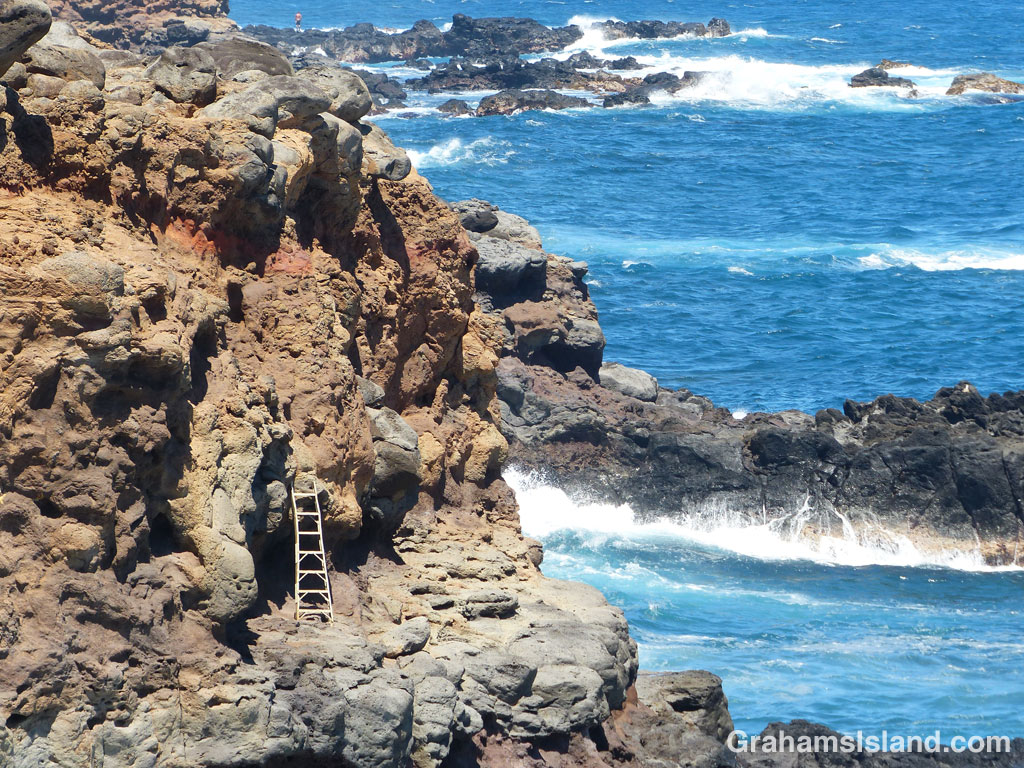
One other oddity was this ladder propped halfway down the cliff face. I’d never noticed it before. Now, it might be a recent addition, but it’s also possible it’s been there for years because it is somewhat hidden when walking in the opposite direction.
The ladder was probably put there by someone who goes down onto the rocks to harvest opihi. The opihi is an edible limpet that is something of a delicacy in Hawaii. It can be eaten raw or cooked. Some people eat them right after they pry them from a rock. It’s a dangerous business though. They’re found on rocks right at the water’s edge and an opihi picker can easily slip or be swept into the ocean by big, breaking waves.
When I got home, I noticed the figure at the top of the photo. I hadn’t seen him at the time, but he’s an opihi picker who I ran into a little later on my walk.
Posted in response to Bushboy’s Last on the Card challenge. See more responses here.






 Graham's Island