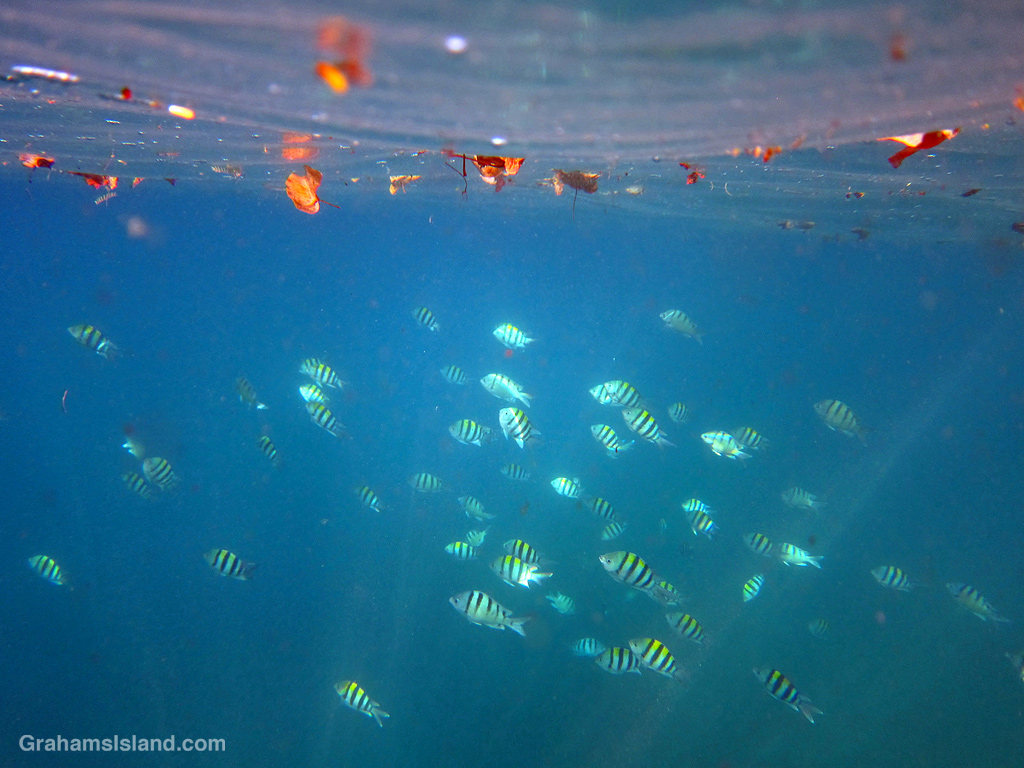
An assortment of sergeantfishes swim beneath floating debris, gathered by a series of big swells. Unlike the fish, I got to swim through the debris, which can sometimes include sizable chunks of wood.

An assortment of sergeantfishes swim beneath floating debris, gathered by a series of big swells. Unlike the fish, I got to swim through the debris, which can sometimes include sizable chunks of wood.
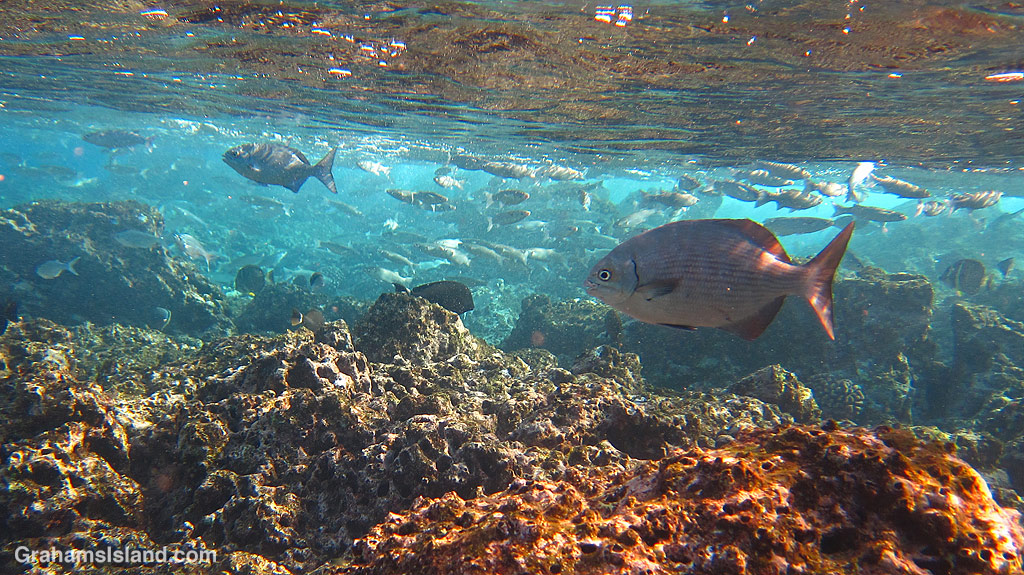
The surge zone is the area above shallow reefs near shore, where incoming swells churn up the water. It’s home to a variety of fish including chubs and flagtails, the turbulent, bubbling water acting as a screen from predators.
Chubs will venture out a ways during the day, but flagtails only emerge at night to feed on plankton.
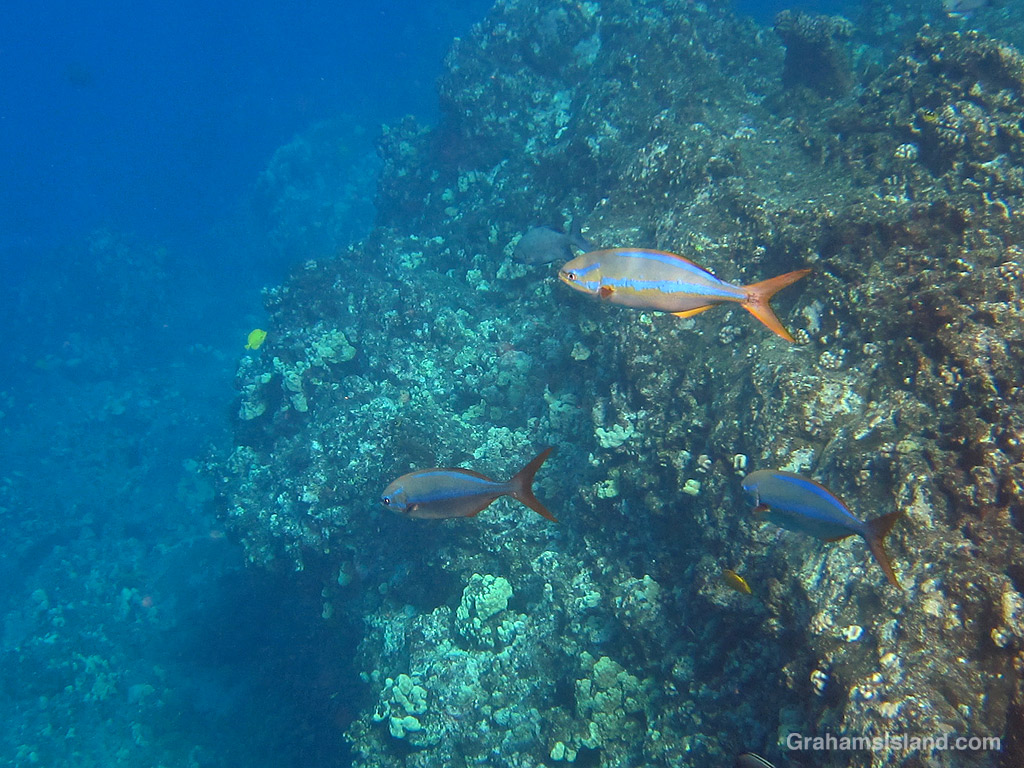
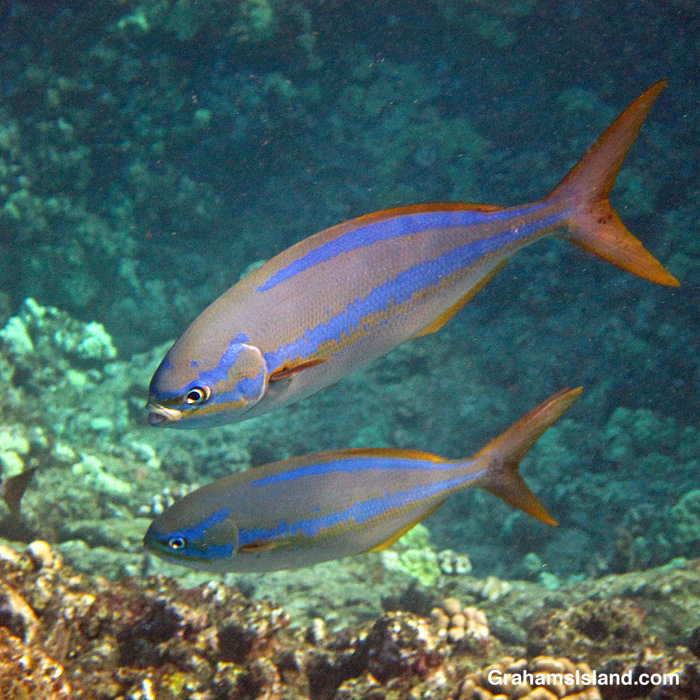
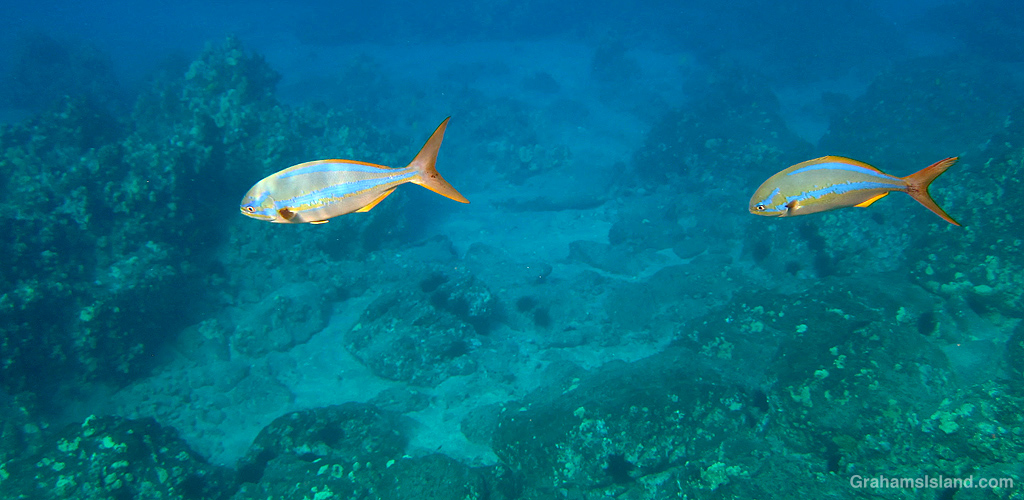
Rainbow Chubs are rare in Hawaii. I’ve seen them before, though not often. These three were in an area where I saw two the week before. My fish book says they drift in as waifs from the Eastern Pacific, but I wonder if perhaps a breeding population is establishing itself in Hawaii.
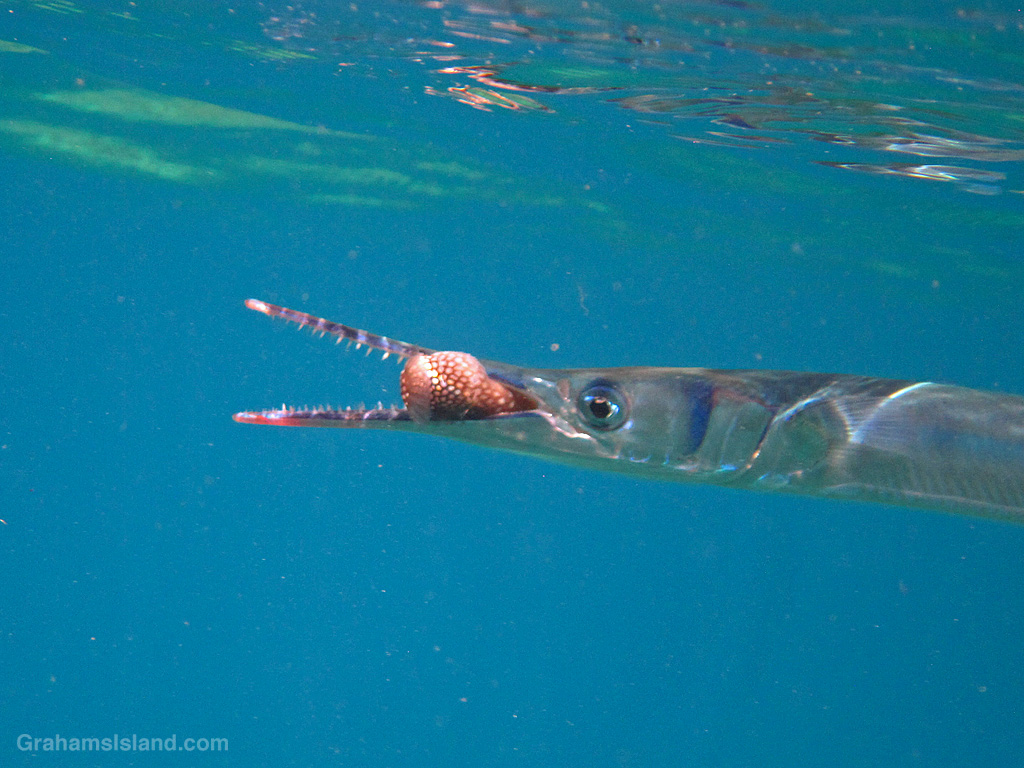
I know this fish as a Crocodile Needlefish (Tylosurus crocodilus), a name explained by looking at the jaws and teeth. Elsewhere, it’s known as a Houndfish. When I first saw it, I thought it might have a bit of fishing gear hooked into its mouth. It was working its jaws up and down, as if it might be trying to dislodge something. But when I got closer, I saw it had a fish in it’s mouth.
The unlucky fish looks like a toby, probably an Hawaiian White-spotted Toby. Except the unlucky fish might be the needlefish because the toby has clearly inflated itself, as they do. Not only that, but the skin of these tobies is highly toxic. My fish book tells of a diver who found a frogfish with one of these tobies inflated in its mouth. The frogfish was dead, though whether suffocated or poisoned he couldn’t tell. He freed the toby, which swam away none the worse for wear!
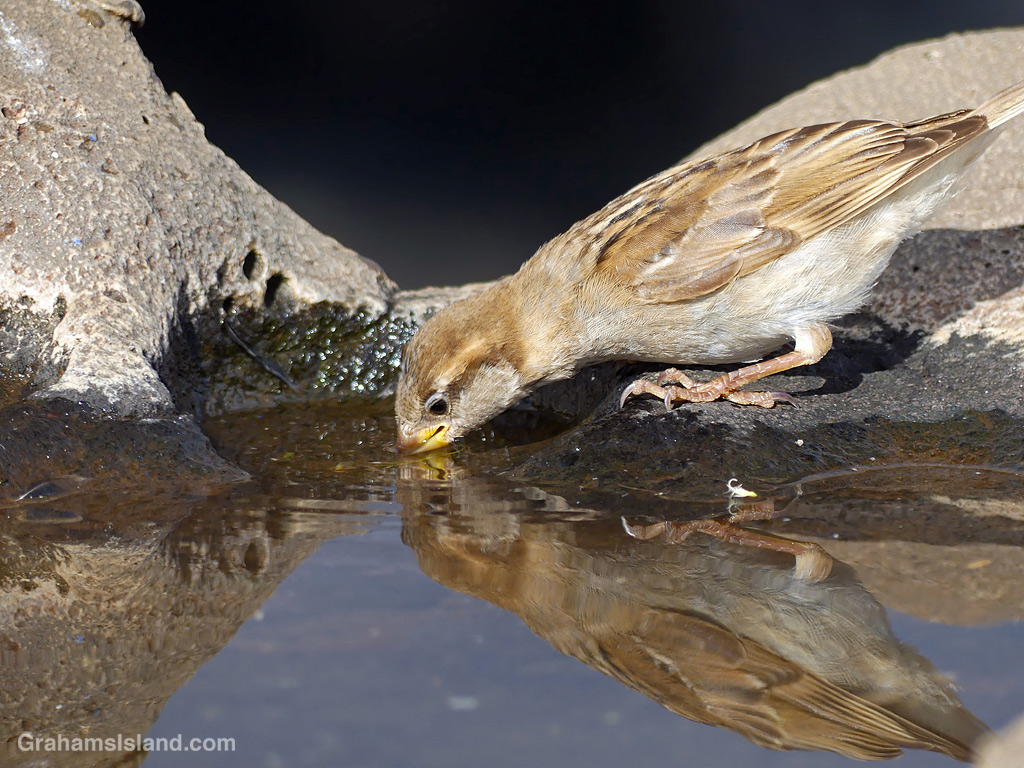
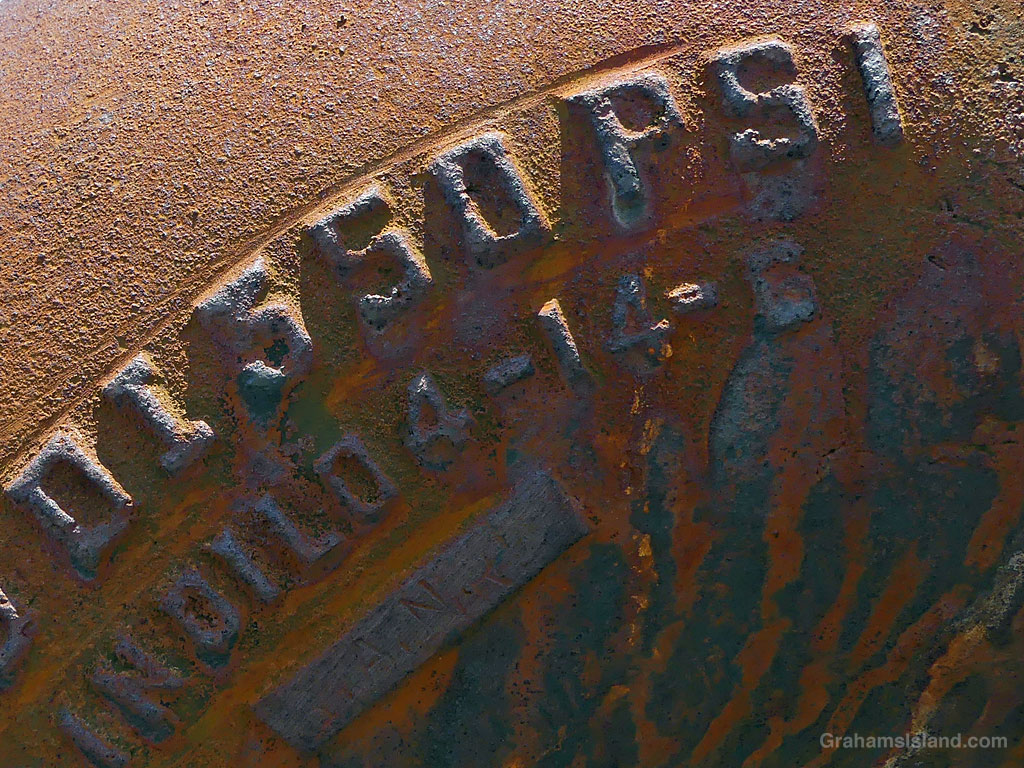
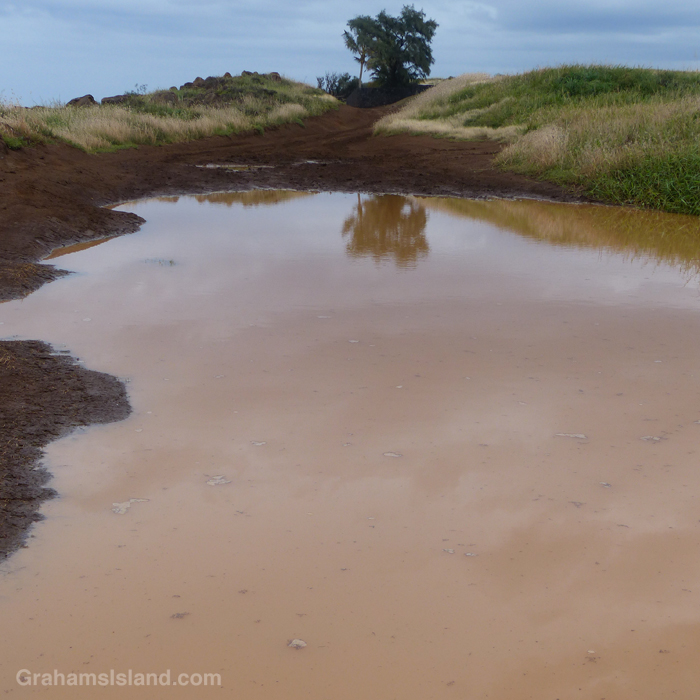
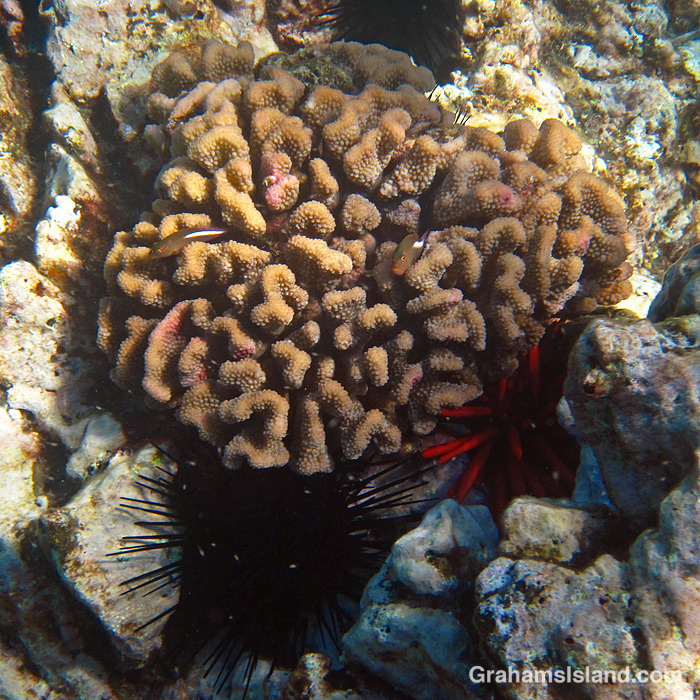
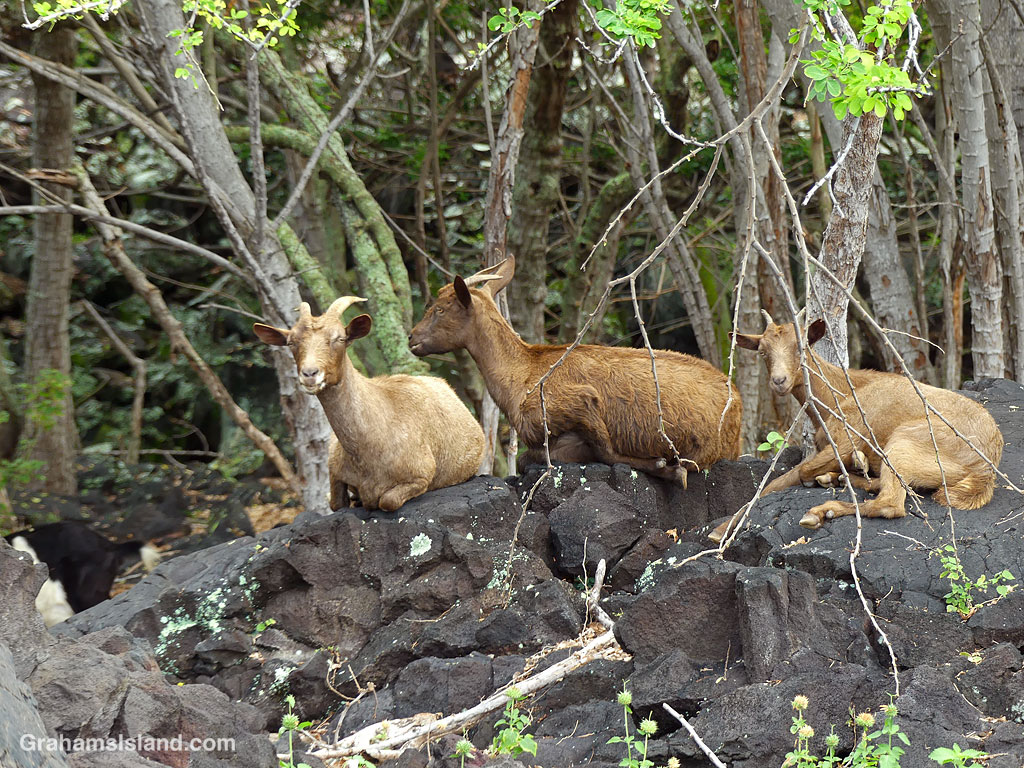
This month’s Sunday Stills color challenge is ‘Auburn or Brown.’ See more responses here. Captions on the photos.
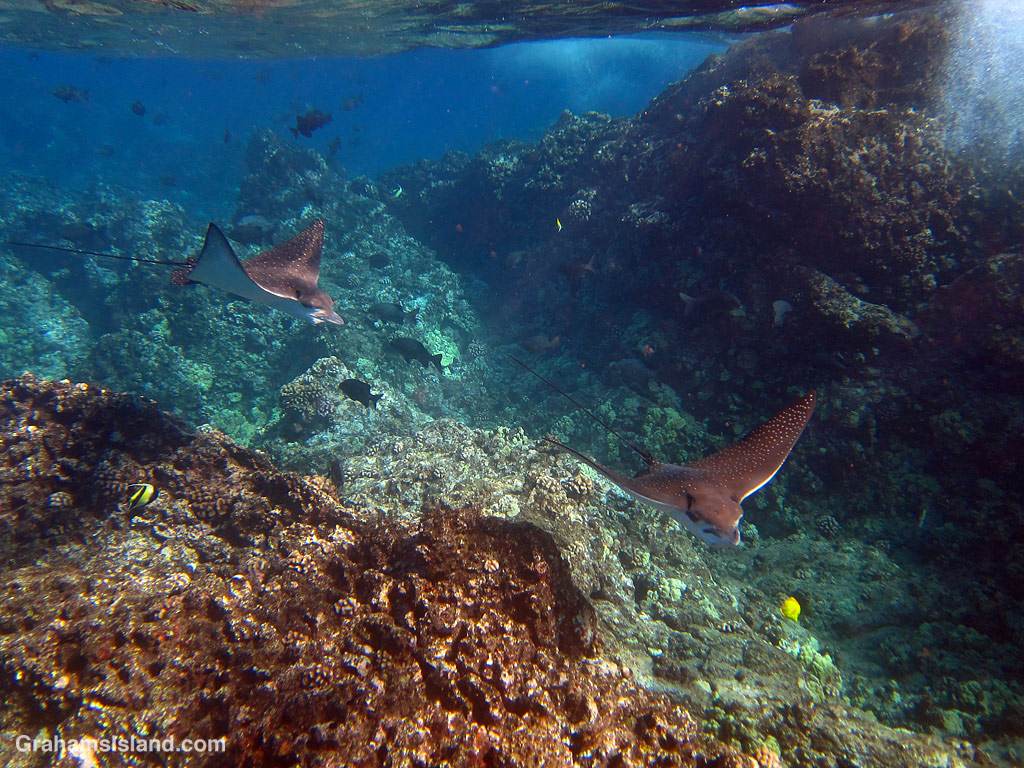
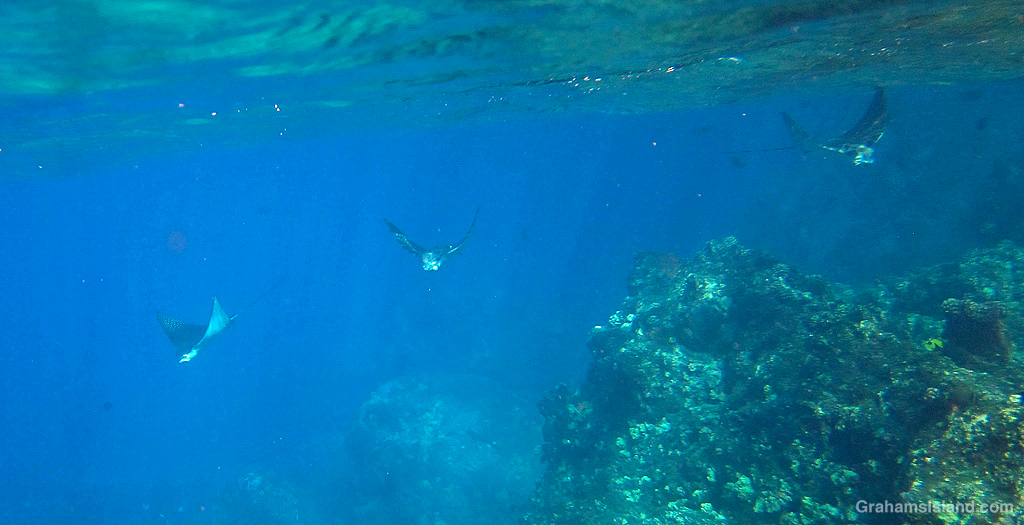
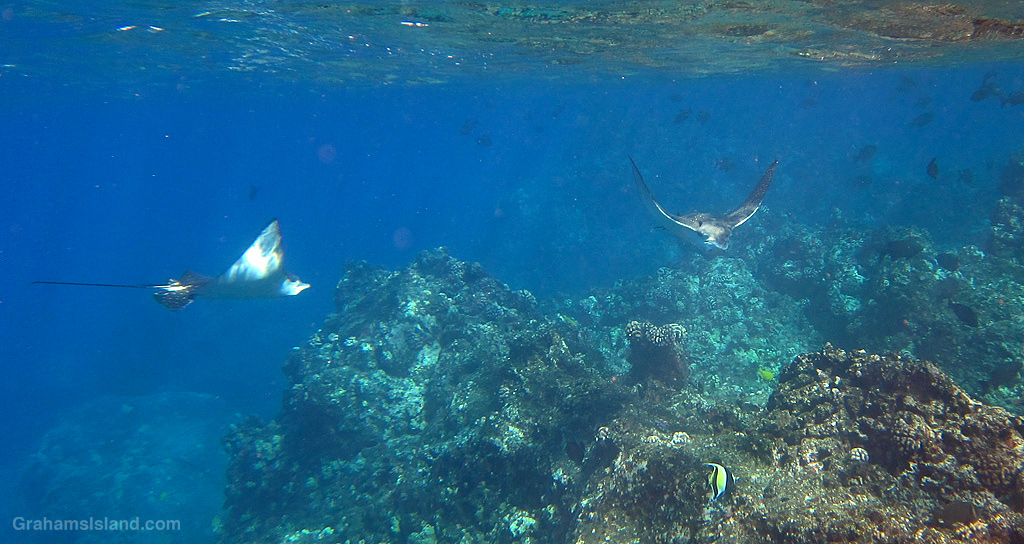
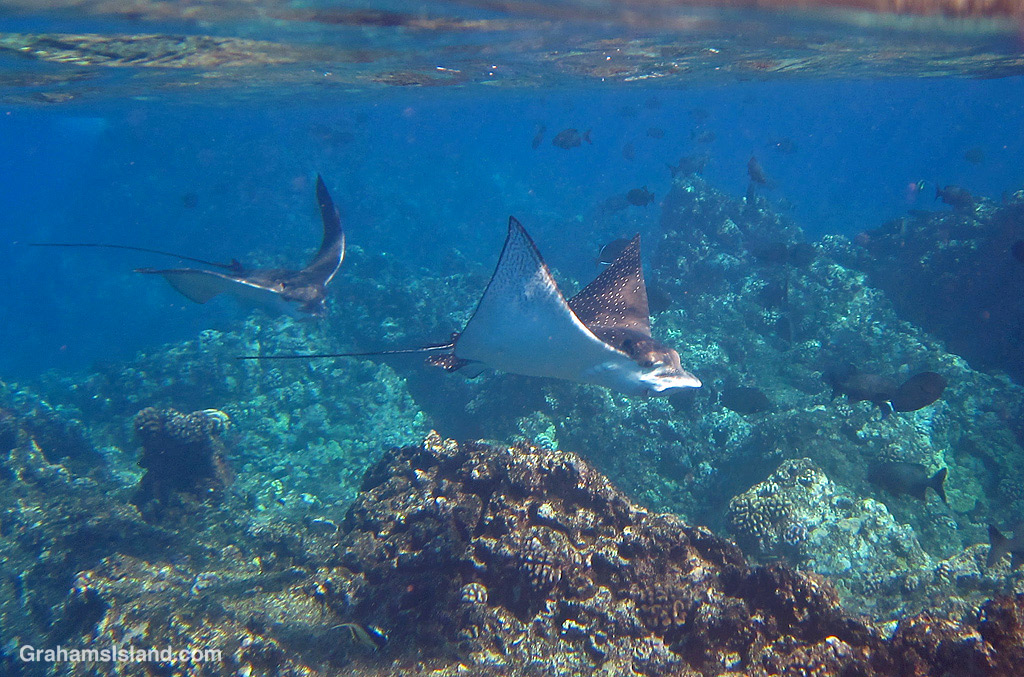
During yesterday’s swim, my wife and I saw five Spotted Eagle Rays. These three (photo below) were the first of them. One swept around and kept going, but two of them came straight on and passed close by. Then they turned around and came back again. They went back and forth for a while before finally heading out after the other one.
Shortly after this, we saw a fourth one apparently following after the others, and a couple of minutes later, a fifth one appeared and zipped by in the same direction. All five were of a similar size and probably juveniles.
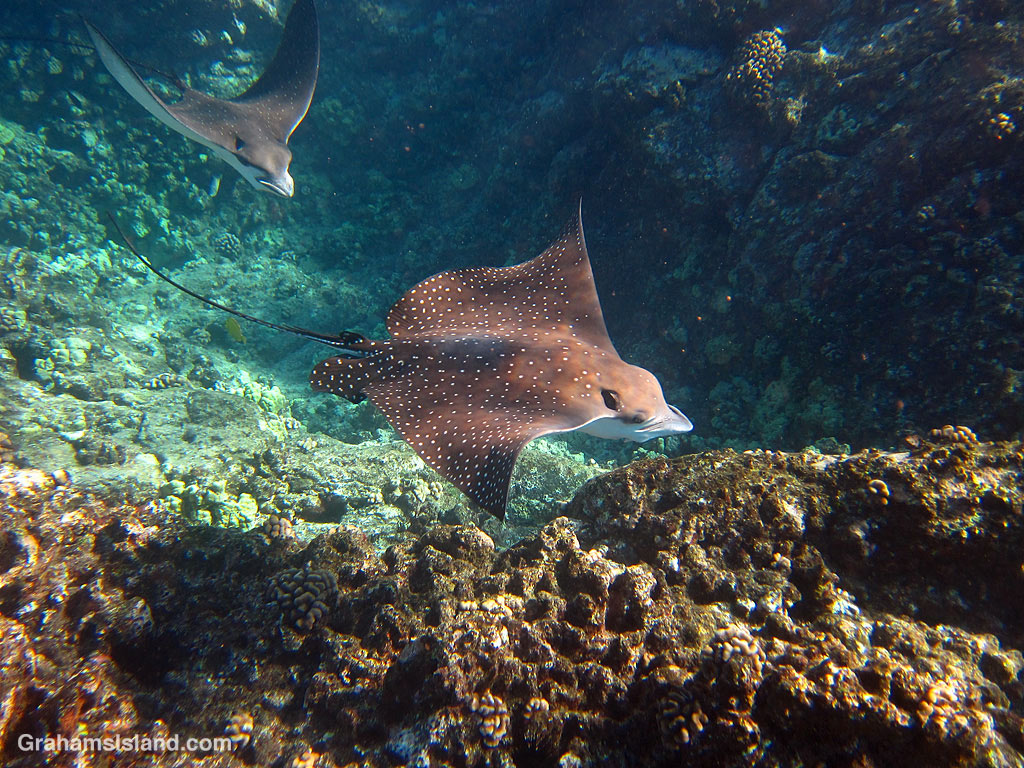
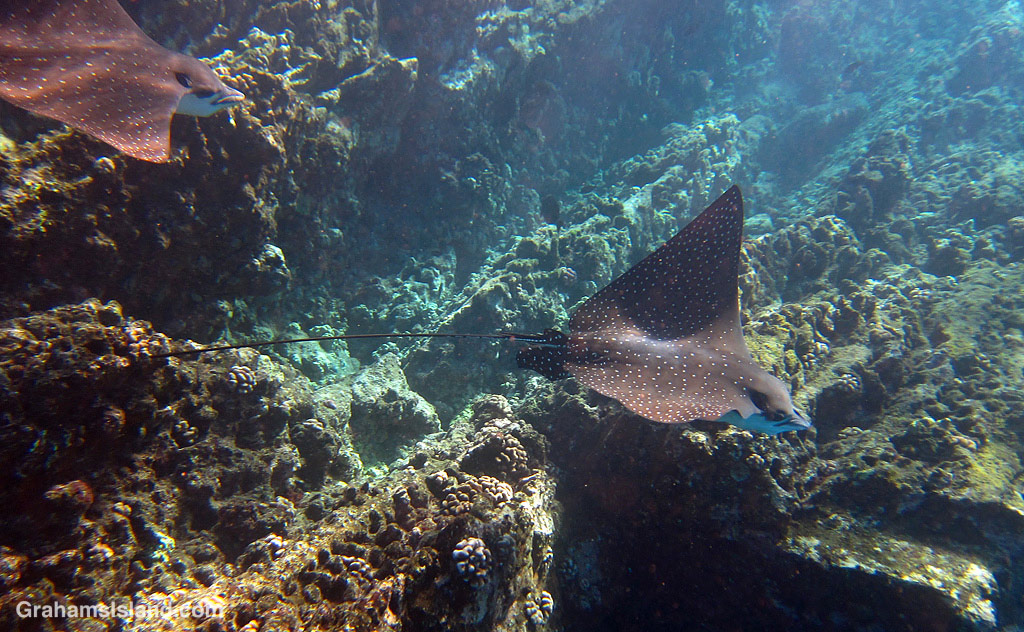
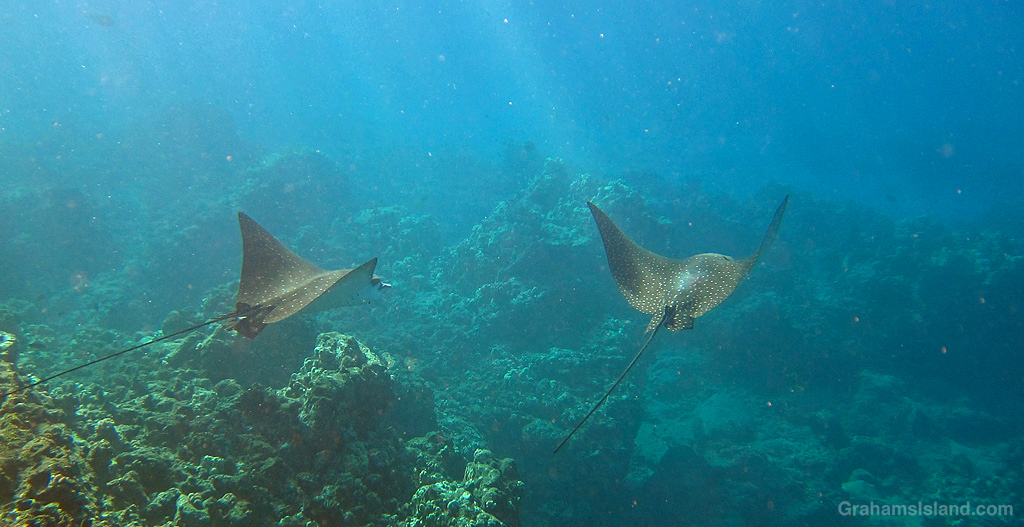
A swim is generally a good way to start the day, but an encounter like this makes it even better.
Last week, my wife and I fled Hawi in the wee hours of the morning to avoid being trapped at home by the Ironman race. The cycling portion of the race goes past our driveway and the road was closed from 7:00am to 3:00pm.
Our first destination was Two Step, more properly known as Honaunau Bay. Arriving before 6:30am, we were the first people there and had the bay to ourselves for a short while. It’s a great spot for snorkeling as it’s generally fairly calm, and the area is a marine reserve, which means the various kinds of fishing aren’t allowed. Experience has shown that fish in marine reserves are less skittish, which makes them easier to see and photograph.
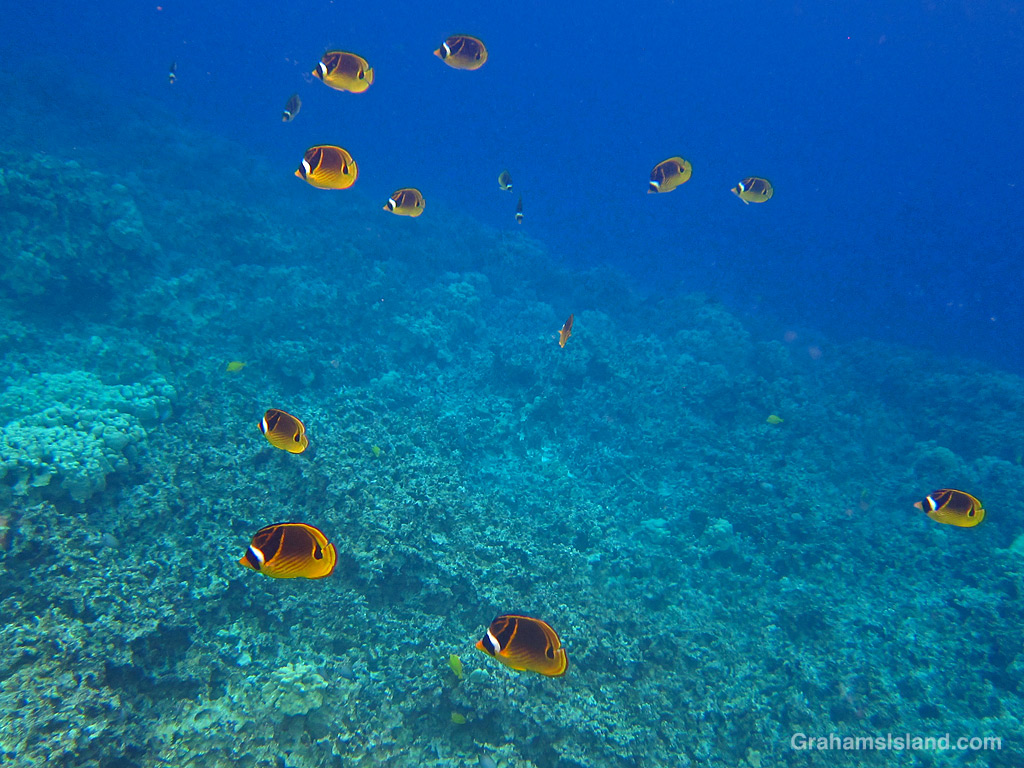
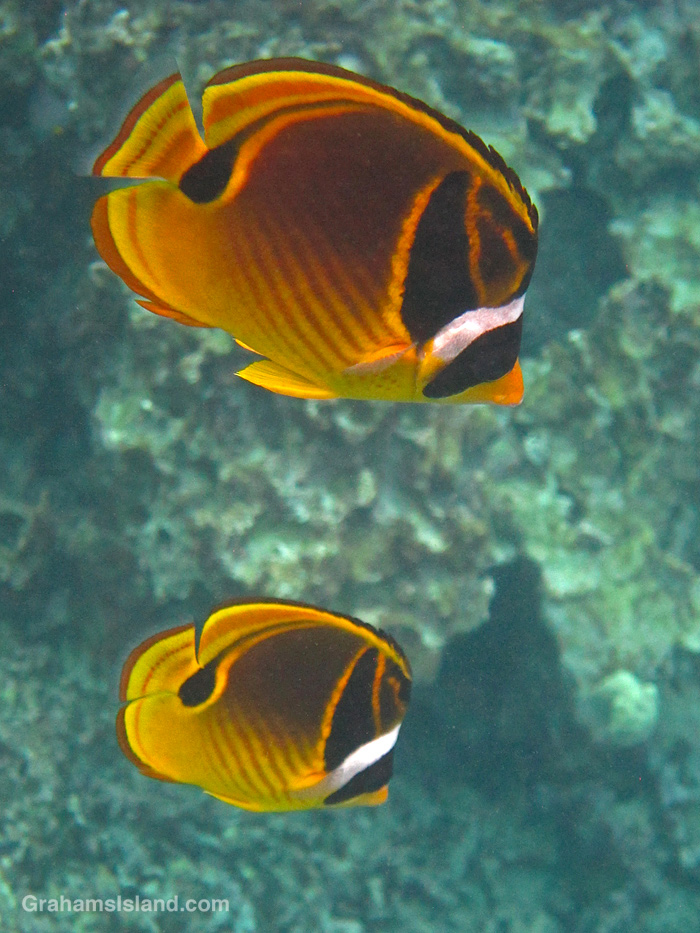
These Raccoon Butterflyfishes are a good example of that. I see them elsewhere, hanging in the water, but if I approach they ease away from me. At Two Step, the fish stay where they are. I’ve had one or two come right up to me, presenting a different photographic challenge as they butt my camera housing.
This small school was drifting above the steep slope bordering the deeper part of the bay.
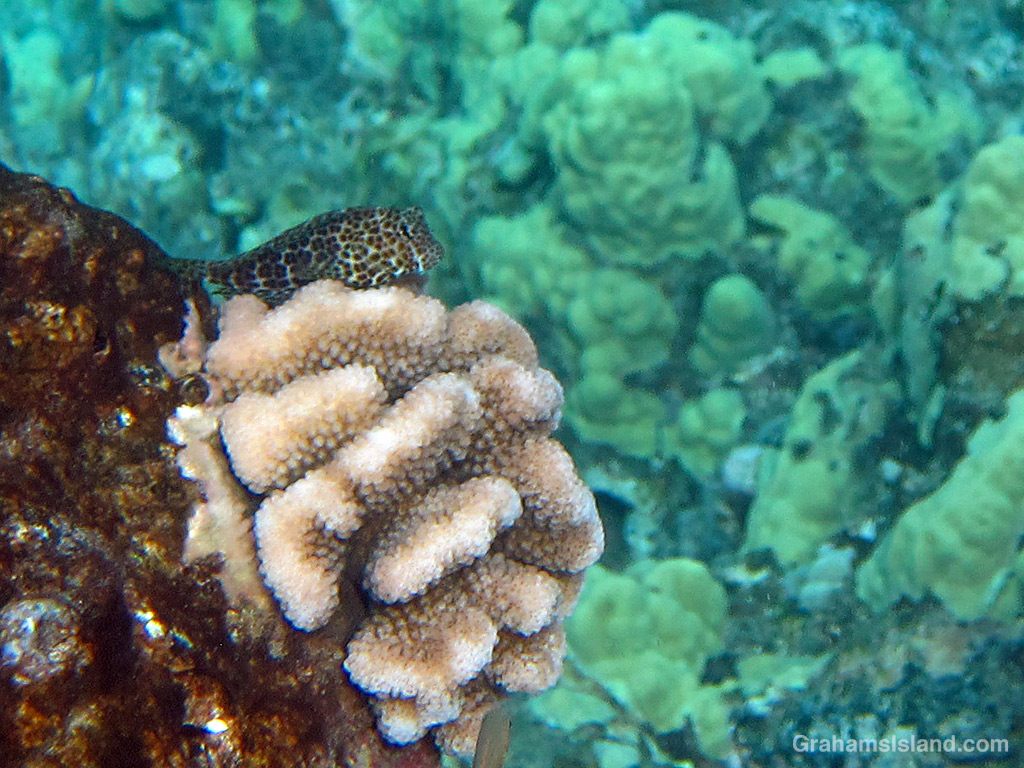
I saw this Spotted Coral Blenny perched on a small coral head, as they typically do. I snapped a quick photo an instant before the fish zipped down behind the rock. I’ve seen the same fish there a few times since, but it disappears before I can try another photo. Given its elusiveness, I was happy this photo turned out pretty well.
 Graham's Island