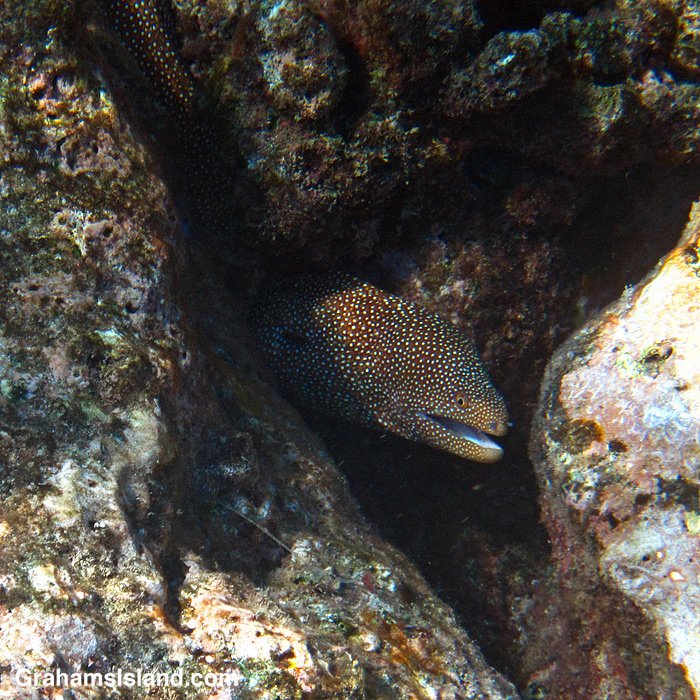
One thing I can rely on when I’m snorkeling is that when I’m looking down into the water there’s a very good chance something will be looking up at me. Most creatures in the water are constantly scanning for predators, or prey.
In this case, this whitemouth moray eel was in a typical position, wedged into a crack, and keeping a watchful eye on my movements.
Posted in response to Becky’s January Squares challenge theme of ‘Up.’ See more responses here.
This week’s Sunday Stills challenge theme is ‘Your Happy Place.’ See more responses here.
There were a few options for this theme, but I went with this collection because I love going snorkeling and because, just a few days ago, my wife and I revisited Two Step for the final time before Hawaii loosened its restrictions on visitors. We got up early, drove down, and were in the water around 7:45 am. There were two other people swimming at that time, no one else waiting to get in.
The top photo was taken after our swim, around 9:30 am. In a ‘normal’ year, at this time of day, this whole area would be dotted with groups of people, and chairs and mounds of towels left by people already in the water. The bay would also be similarly populated with people, cruising around, looking at fish. There would be several snorkeling tour boats out in the bay, dumping people into the water. Two Step is one of the best spots for snorkeling on the island but, truth is, much of the time it’s kind of a zoo.
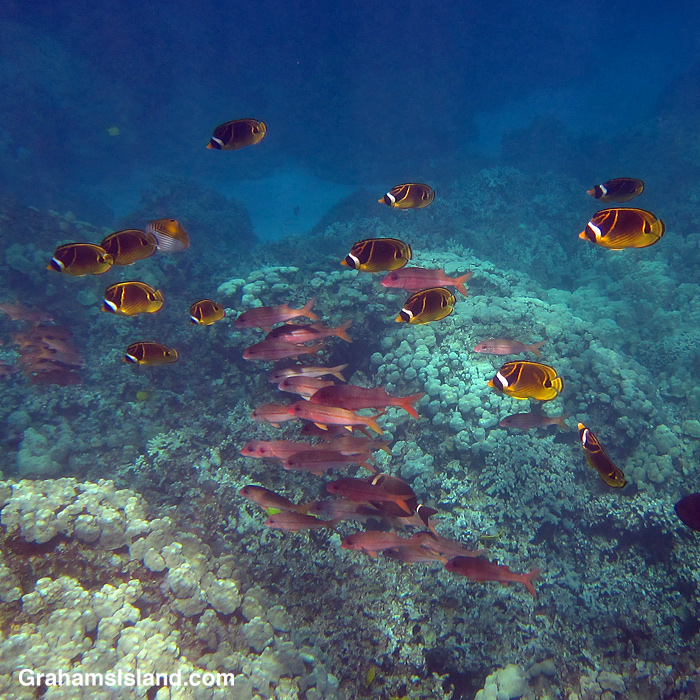
Goatfishes and raccoon butterflyfishes hang, almost motionless.
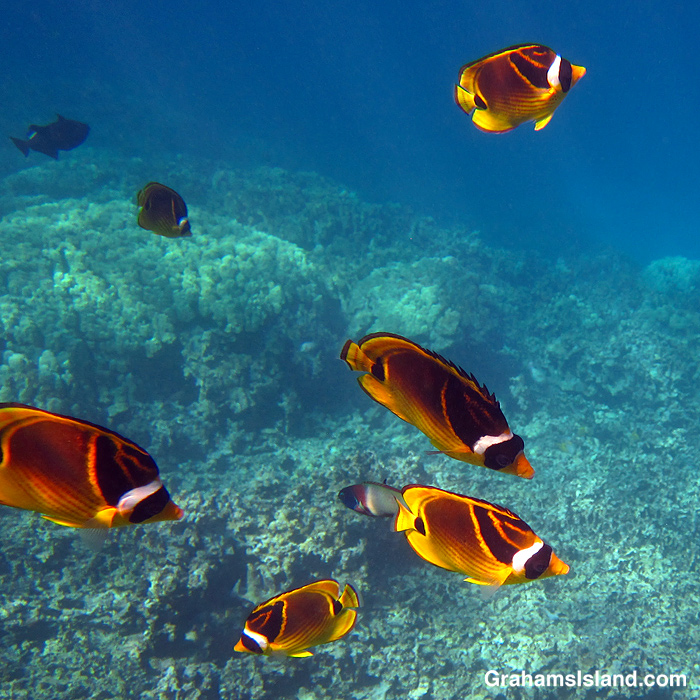
Raccoon butterflyfishes are more curious here …
… although there’s such a thing as too close. This one butted the camera housing.
Pearly soldierfishes hover.
An ember parrotfish catches the light.
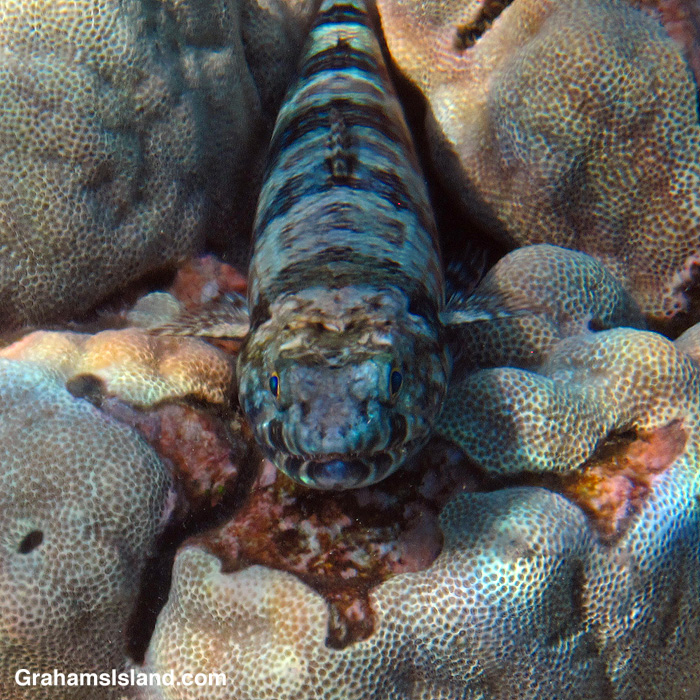
We saw more reef lizardfishes than we’d seen before, including this handsome fellow.
However, one of the nice things about Two Step, that I’ve mentioned before, is that it’s a marine reserve. No fishing is allowed and the fish have figured that out. I can’t emphasize enough how differently the fish there react to people than they do in areas where fishing and spear fishing is allowed. They’re so much more mellow and less inclined to dart away.
Also posted in response to Becky’s October Squares challenge theme of ‘Kind.’ See more responses here.
I took this photo of two reef lizardfishes, waiting in their usual manner. It was only after I got home and looked at the photos that I noticed the third lizardfish lower down, near the right edge of the photo. On this day, they were everywhere.
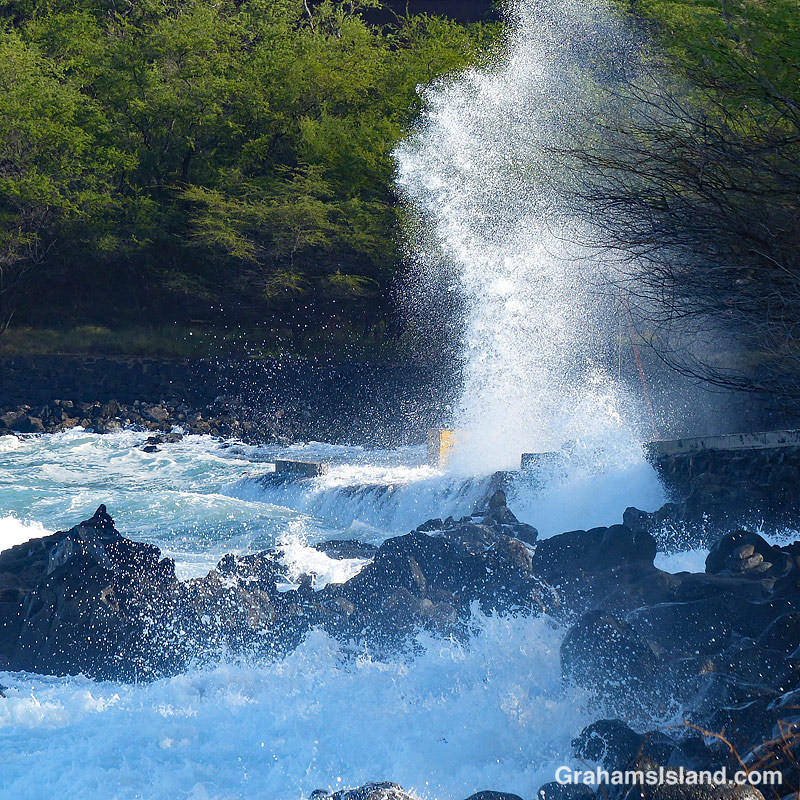
I like to go snorkeling whenever I get the opportunity, but there are some days when that’s not possible. This is a photo of my local snorkeling spot. That’s the parking area on the right, and the place where I generally park my car is right where that tower of spray is.
In other words, this was the kind of day to find something else to do, such as take photos from the shore.
Posted in response to Becky’s October Squares challenge theme of ‘Kind.’ See more responses here.
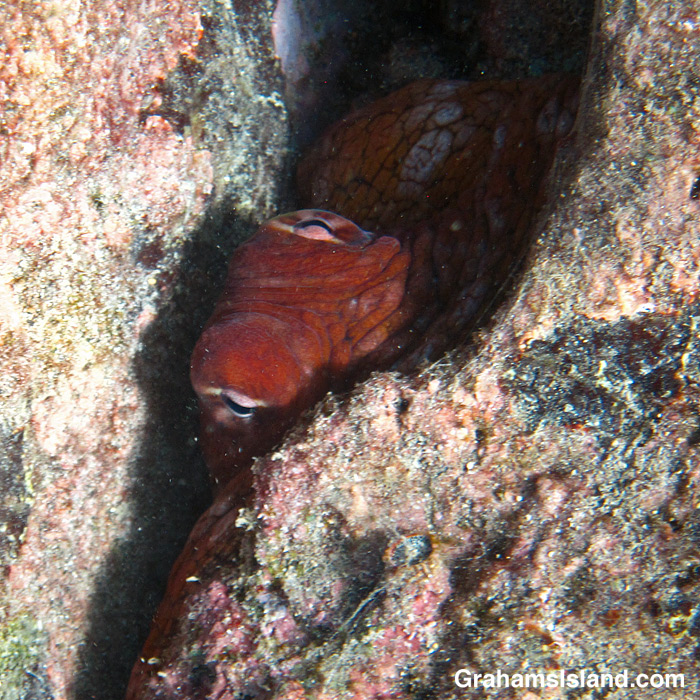
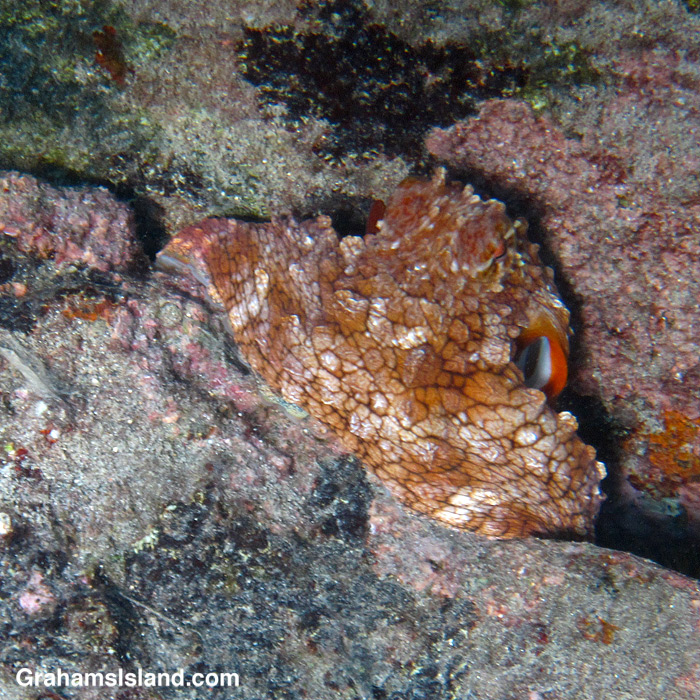
I was almost done with my swim yesterday when I noticed this small day octopus sneaking into this crack. It was shallow there so I got a decent photo of the octopus watching me. Then I swam on a few feet. The octopus, as they do, emerged from its hideaway, so I quickly turned and got the second photo. I can be kind of sneaky, too.
Posted in response to Becky’s October Squares challenge theme of ‘Kind.’ See more responses here.
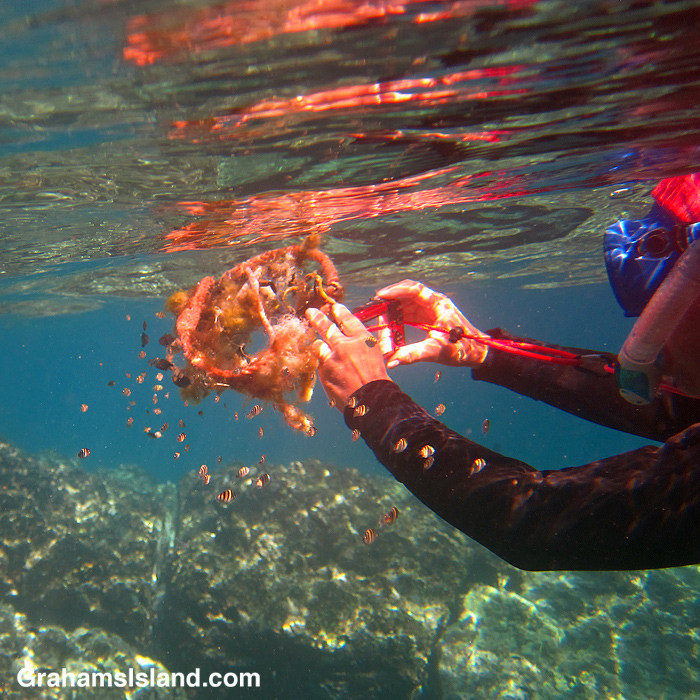
I was out snorkeling with a friend when I noticed her taking photos of a small clump of floating debris. When I headed over to see what was so interesting about the debris, I saw a host of tiny fish swimming around and within the clump. This was a small example of how fish, particularly smaller fish, will use floating objects to give them some cover and security from predators.
Most of the fish appeared to be sergeant fish, probably Indo-Pacific Sergeants, no more than half an inch long, but with their dark bars quite distinct. There were a couple of other species there, too, in smaller numbers, but I’m not sure what they were. (Update: The slightly larger grey fish are freckled driftfish. Thanks to John Hoover for the ID.)
The second photo gives a sense of scale and shows how small this little world was. It also shows the fish migrating across to check out whether this new clumpy thing might make a good new home. They did this with both of us, but returned to the floating debris, figuring wisely that it offered better shelter for them.
Posted in response to this week’s Friendly Friday challenge theme of ‘Quiet Places.’ See more responses here.
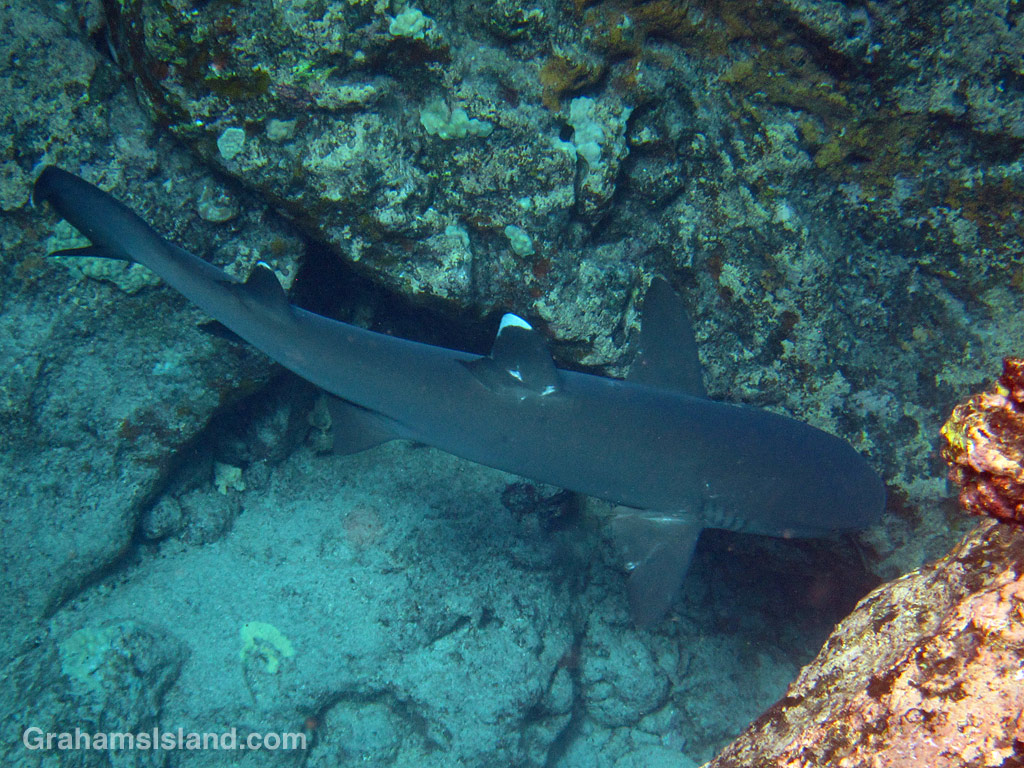
A whitetip reef shark passes below looking, I think, for a quiet place to get some rest.
A fourspot butterflyfish swims by a patch of cauliflower coral, some living, some dead. There are two spots on each side, but this fish was very small so the second spot was still filling in as space allowed.
A blue goatfish cruises by.
A green linckia sea star and lobster molt. Most green linckia have five arms but can have four or six. They’re able to reproduce by detaching an arm which will eventually develop into a new star.
This week’s Friendly Friday challenge theme is ‘Morning Rituals.’ See more responses here.
Most mornings, I try to get in the water, as conditions and schedules allow. Morning is the best time for snorkeling as the water is usually calmer before the wind picks up as the day wears on. Visibility can vary from day to day and it can help to check surf reports to see if there are any swells moving in. But calm water doesn’t guarantee good visibility just as swells don’t always mean bad visibility. There’s only one way to be sure and that’s to jump in.
My favorite thing about snorkeling is that every day is different and I never know what I’ll see. Going to the same spot means I become familiar with some of the regulars, but there are always transient creatures passing through including rays and dolphins. And while those big creatures are great to encounter, it’s equally interesting to watch the activities of smaller fish and marine invertebrates.
It’s a rare day indeed that I don’t emerge prattling on about something I saw while I was in the water. And on those rare days, well, I’ve still had a good swim to set me up for the day ahead.
It wasn’t until I processed this photo of a goldring surgeonfish that I noticed the stocky hawkfish resting motionless below it.
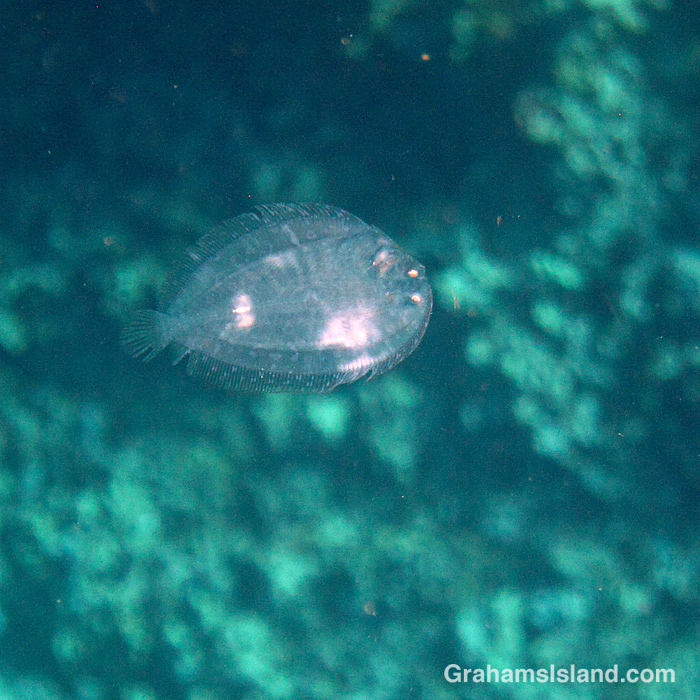
One day, while I was in the water, I ran into a couple of snorkelers who were watching this creature. It was high up in fairly deep water in the middle of the bay. It looked almost translucent and very small, only 2 or 3 inches long. It wasn’t even clear whether this was a live creature or just a bit of floating debris. They took photos, I took photos, but I wasn’t optimistic on how they’d turn out because it’s hard to get the focus right on something like this.
After they left, I hung around and saw the creature swimming, coming up in the water. I took a couple more photos before it descended again. When I got home I was thrilled that, out of the photos I took, this one turned out pretty well. From it, I could see that this was a very small flowery flounder. The general shape and details are a very small version of the adult fish. What’s interesting about this is that flounders start out life looking like regular fish, swimming upright and with an eye on each side of its head. But within a few days, flounders start to lean to one side and one eye begins to migrate to join its partner on the other side.
This tiny, very young flounder has already completed that transition.









 Graham's Island