Tropical plants tend to grow vigorously, which means they’re constantly bumping into, and mingling, with their neighbors in a botanical collage. The prime components here are Alocasia micholitziana and Calathea bella with a few others thrown in for good measure.
Tag Archives: Wordpress Photo Challenge
What the tide washed in
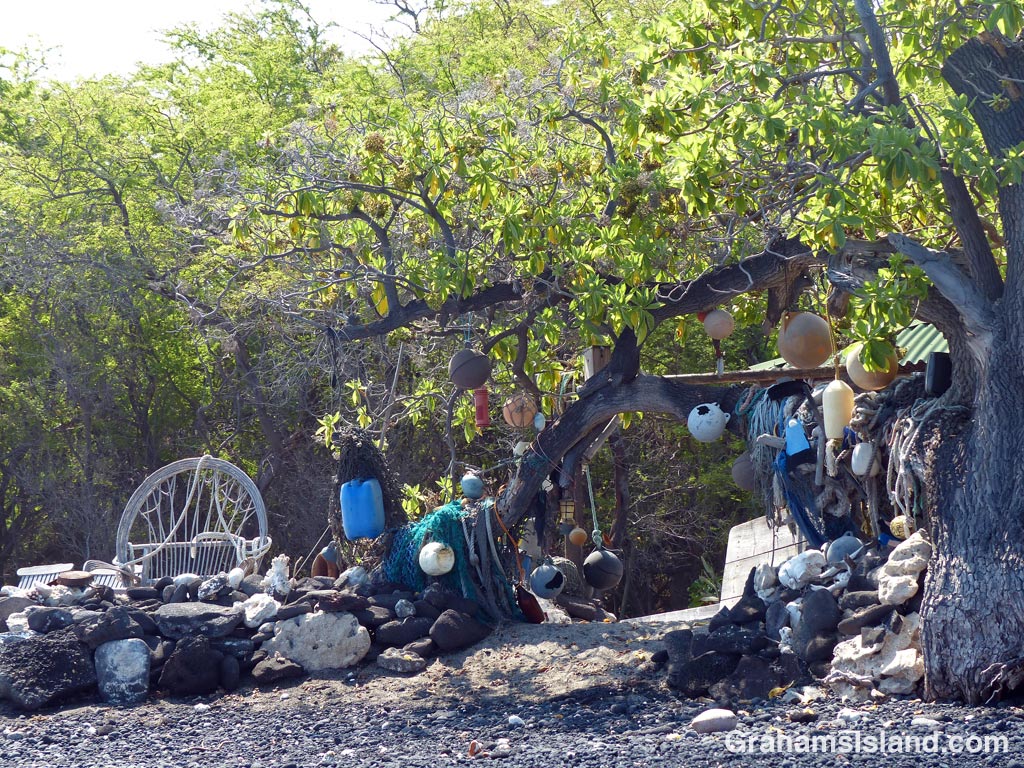
Just above the tide line at Kiholo is this collage of items. Floats, nets, ropes, bits of wood and foam, a plastic jerrycan form a collection that no doubt grows and changes with each passing tide.
Miloli’i swimming entry
Miloli’i is an old Hawaiian fishing village near the southwest corner of the Big Island. A few miles north is Miloli’i Beach Lots Subdivision, a private community with an undeveloped park. Since the name includes the word ‘beach,’ it will come as no surprise to learn that there’s no beach of any description in the subdivision. There is, however, a reasonable spot to get in the water, at the park, which is accessed by crossing this little plank bridge. If you head straight out from there, in no time at all you’ll find yourself in Taiwan.
Green anole bridge
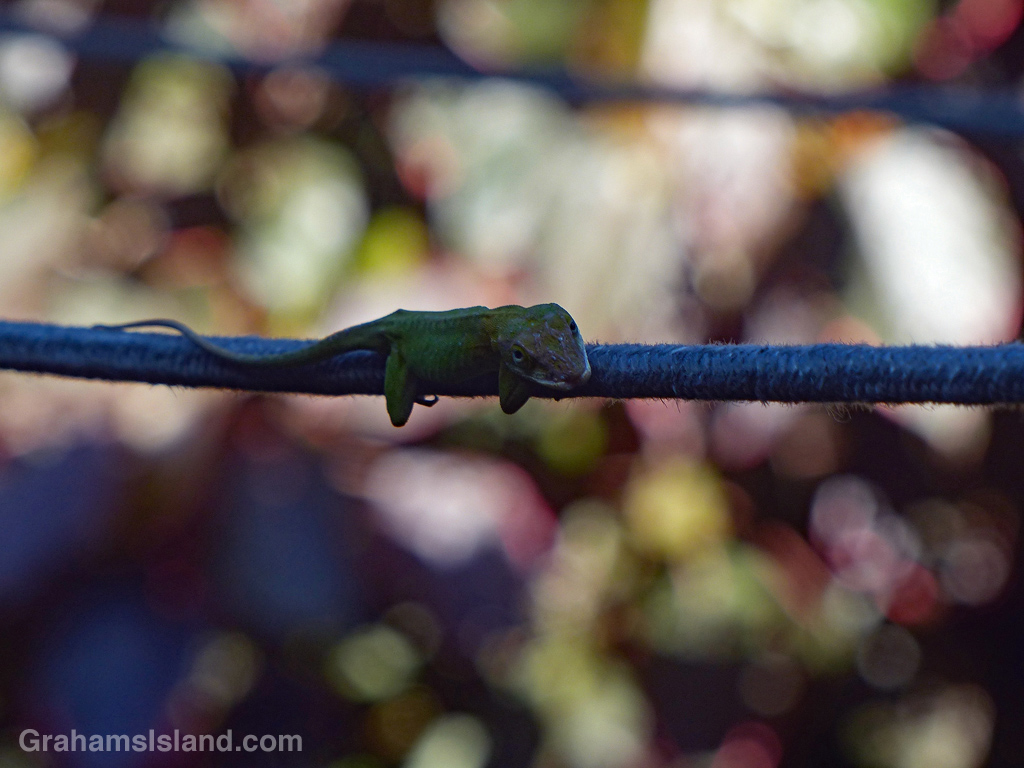
I have a laundry line strung up between the house and a tall hedge. Besides its intended purpose, it also serves as a bridge for geckos and anoles commuting between the house and hedge. They can scurry across the span in a hurry when they want to, but usually they go a little way, pause and look around, then repeat the process. They’re entertaining to watch, the experience sullied only slightly by the knowledge that this rope bridge could also serve as a freeway for rats.
Kiholo fish pond channel
About ¾ of a mile east of the parking area at Kiholo State Park Reserve is this channel or ‘auwai. It connects what remains of Kiholo fish pond with the ocean. King Kamehameha 1 is credited with building the fish pond though he may have actually improved one that was already there. In his day, the pond was much larger than it is today, a lava flow from one of Mauna Loa’s periodic eruptions having filled in a good deal of it.
Turtles and, of course, fish go back and forth through this channel, which also flushes brackish water from the pond. While the pond is on private land, it’s always fun to pause on the little bridge and scan the channel to see if anything is on the move.
For more information about Kiholo fish pond, go to www.nature.org/ourinitiatives/regions/northamerica/unitedstates/hawaii/placesweprotect/kiholo-preserve.xml.
Kauhola Point lighthouse
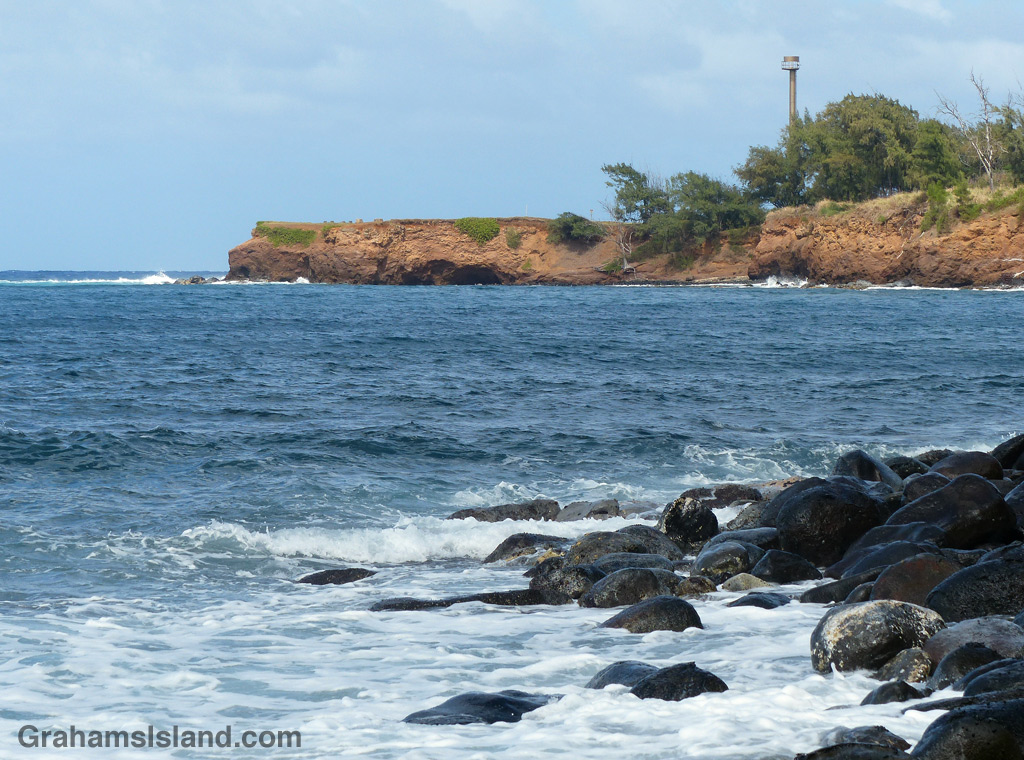
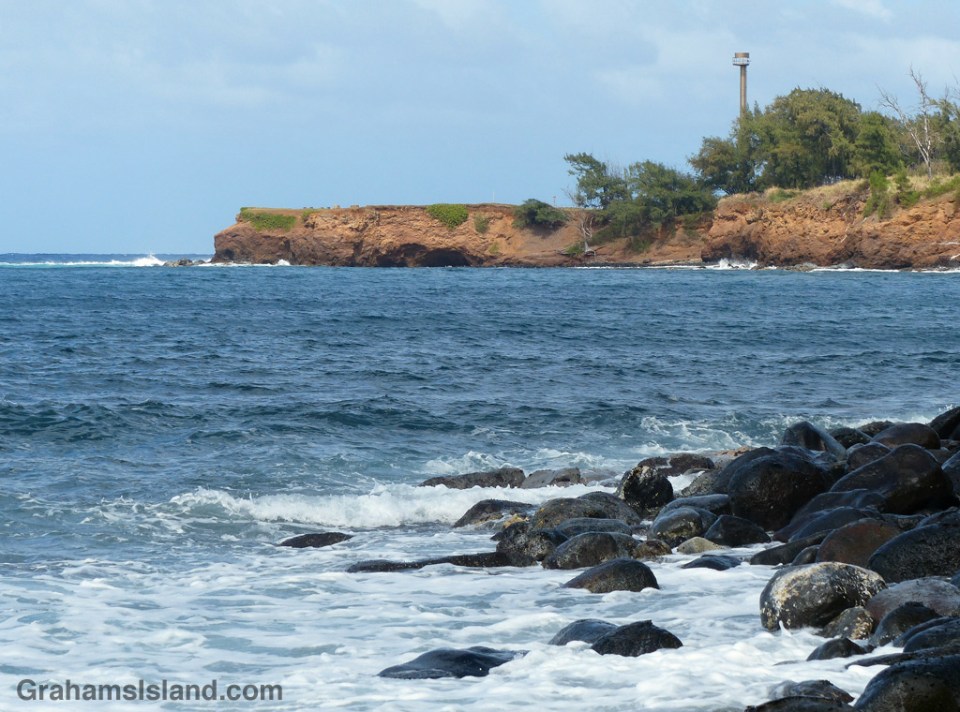
The Kauhola Point lighthouse is a modern affair, an automated light atop a tall metal pole. It replaced the previous, more traditional-looking lighthouse that was demolished in 2009. In the photo, the old base of that lighthouse can still be seen as several small block shapes toward the tip of the point. Therein lies the story.
The old lighthouse was demolished because erosion was eating away at the land near the base. The passing of time will surely remove even these remnants in the next few years.
In a way, this situation is a microcosm of the whole state. Many people think of the state of Hawaii as the eight main islands at the southeast end of the chain, but it encompasses hundreds of islands stretching away to the northwest for more than 1,500 miles. These small islands were formed over the same hotspot that fuels Kilauea Volcano today, but as the tectonic plate beneath the islands moved northwest, so the islands stopped growing and began to shrink under the forces of erosion. Over time, they too will disappear one by one.

Day octopus
A day octopus settles on a patch of coral. It will change its coloration from moment to moment depending on whether it wants to blend in or, perhaps, display an aggressive warning.
Spotting an octopus is a matter of chance. It helps if it’s on the move, but the presence of goatfish (in this photo, a manybar goatfish), is sometimes a tipoff.
Sausage tree
The sausage tree (Kigelia Africana), as its botanical name suggests, is an import from Africa. It’s also one of the easiest trees to identify. Long stems hanging from the branches bear first the flowers, then the large, sausage-shaped fruits. These fruits can be as much as 2 feet long and weigh up to 15 pounds, though usually they’re somewhat smaller. Not the place for a picnic though.
The bottom photo shows stages in the transition from a flower beginning to bloom, to shedding petals, to fruit forming.