The idea of The Numbers Game is to enter a number into the search bar of your computer and then post a selection of the photos that turn up. This week’s number is 175. Captions are on the photos. You can see more responses here.


The idea of The Numbers Game is to enter a number into the search bar of your computer and then post a selection of the photos that turn up. This week’s number is 175. Captions are on the photos. You can see more responses here.


A Giant Porcupinefish waits patiently while a Hawaiian Cleaner Wrasse gets to work. Cleaner wrasses remove dead tissue, parasites and mucus from fish of all sizes that visit their cleaning stations. Watch out for those spines!


Cleaner wrasses establish territories where they remove mucus, parasites, and dead tissue from other fish. These cleaning stations can exist in the same place for years and can have several wrasses performing those services. Their clients can be anything from other small reef fish to eels and sharks.
In these photos, a Hawaiian Cleaner Wrasse services a Whitebar Surgeonfish.

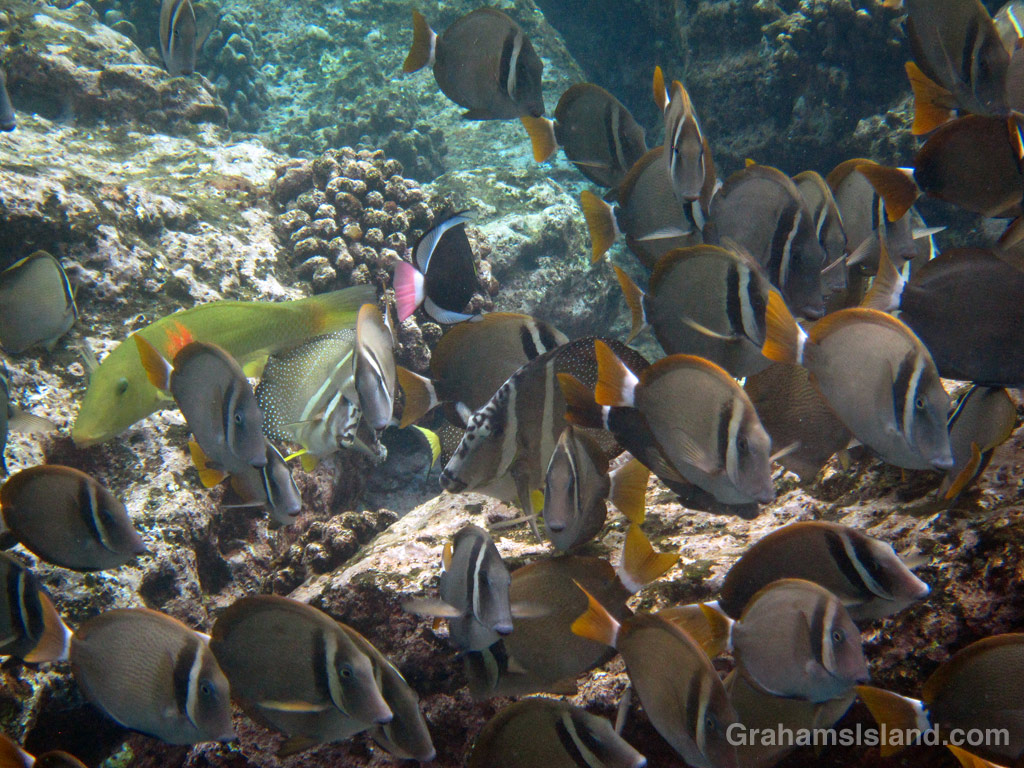
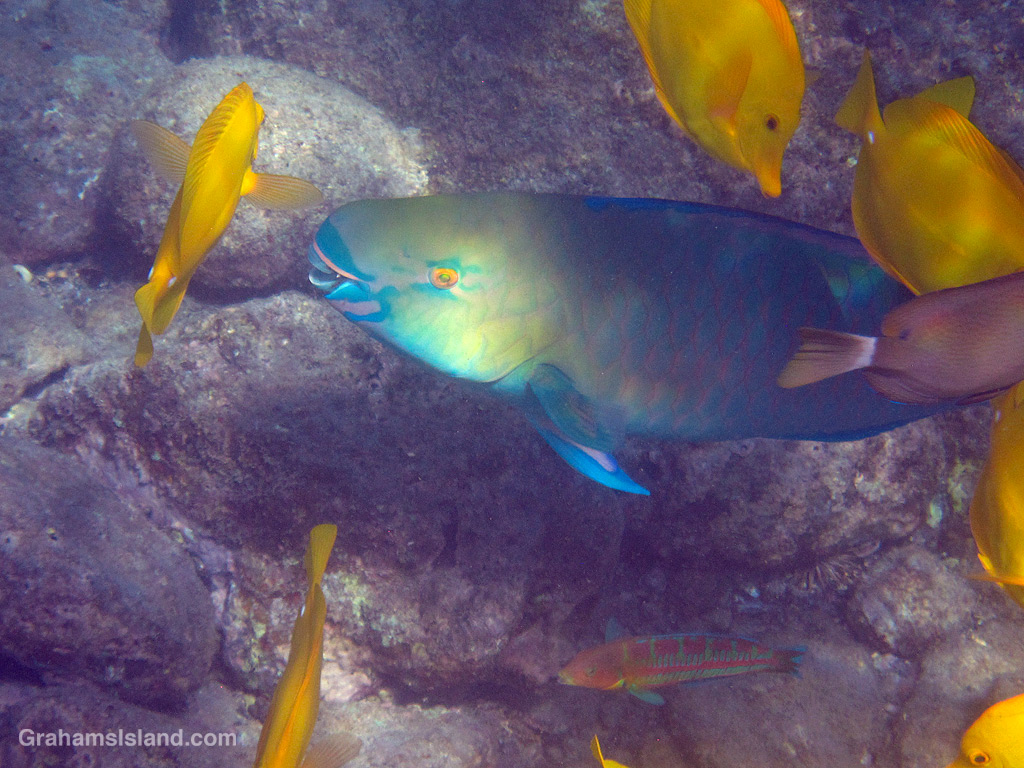
The Ember Parrotfish is the largest parrotfish in Hawaii, but it can often be found in surprisingly shallow water. This one was cruising through a small school of Yellow Tangs in just two or three feet of water. The multicolored fish beneath it is a Christmas Wrasse. These fish will often accompany a parrotfish hoping to snack on creatures dislodged by the larger fish.

… Christmas Wrasse, that is, this one swimming past a ledge occupied by blue-black urchins.


I saw this Undulated Moray Eel out in the open recently and, rather than dart for shelter, it remained where it was opening and closing its jaws. While this looks threatening, it’s typical of most eels, the purpose being to push water over its gills, the equivalent of breathing. However, that’s not to say it’s a good idea to dive down and interact with the eel.
My fish book describes the Undulated Moray Eel as “one of the nastiest.” Its narrow jaws hold three rows of teeth, one running down the middle of its mouth. It’s usual prey includes small fish, but this eel was accompanied by a changing group of fish, and neither seemed too bothered about the other.
In Hawaii, this eel is often called the chainlink eel, for obvious reasons.


The Blackstripe Coris is known as Hilu in Hawaii. According to legend, two gods who were brothers appeared as Hilus. One got caught and ended up on a grill, but the other took human form, rescued his brother, and returned him to the ocean. However, the stripes from the grill remained and can still be seen on the Hilu to this day.

I was snorkeling recently when I saw this Dwarf Moray Eel hunting with a small Saddle Wrasse. It promptly disappeared under a rock and I didn’t expect to see it again. But I was in no hurry, so moved away a bit and kept watch. After a while the eel poked its head out, hesitated, then swam out.
I snapped these two photos, the first as it emerged and the second as it disappeared again. I like how, in the top photo, the eel oozes out of a hole no bigger around than it is, which is less than an inch! These small eels typically are less than a foot long.