This week’s Sunday Stills challenge theme is ‘Yellow Autumn or Leaves.’ (See more offerings here.)
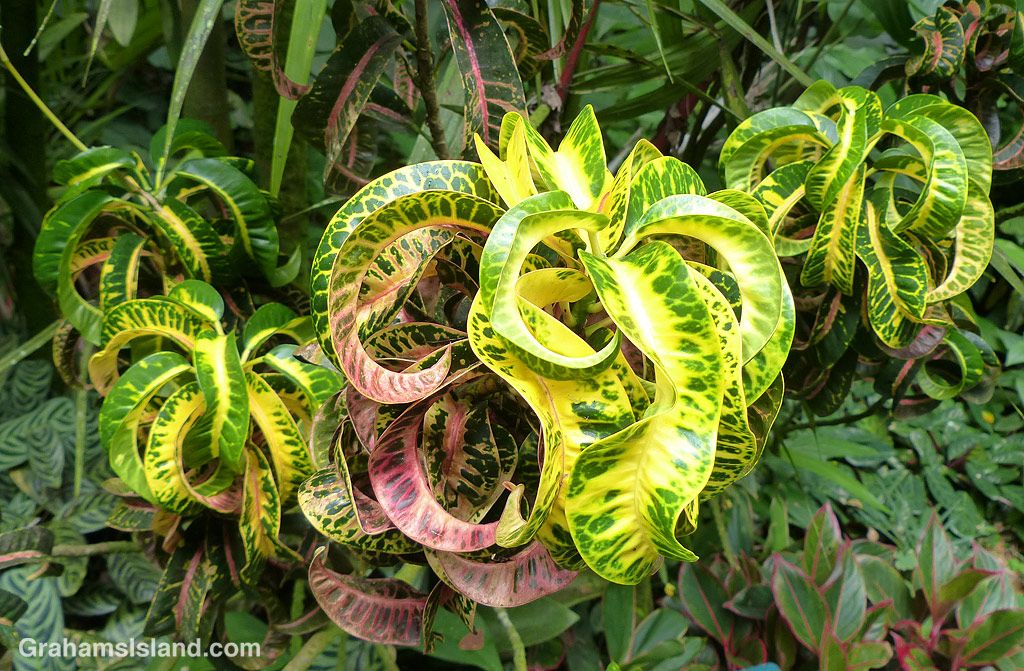
These leaves might not be Autumnal, but they still feature a good portion of yellow. They’re ramshot crotons (Codiaeum variegatum) and I don’t know if this is why they got their name, but the shape of the leaves is reminiscent of rams’ horns.
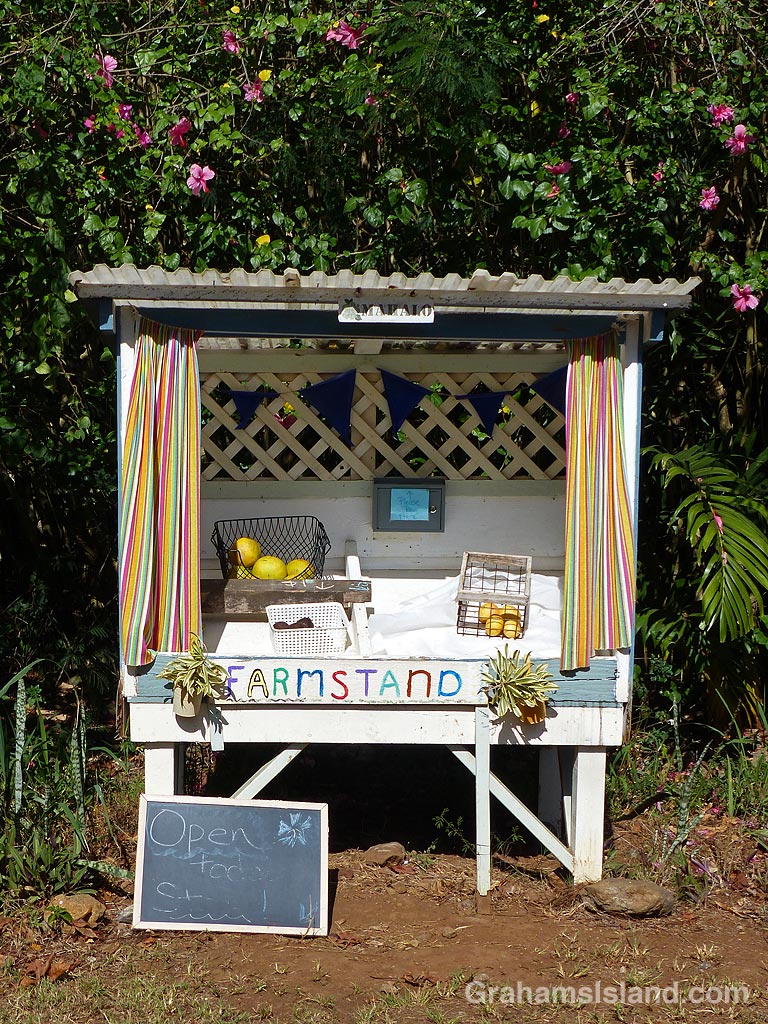
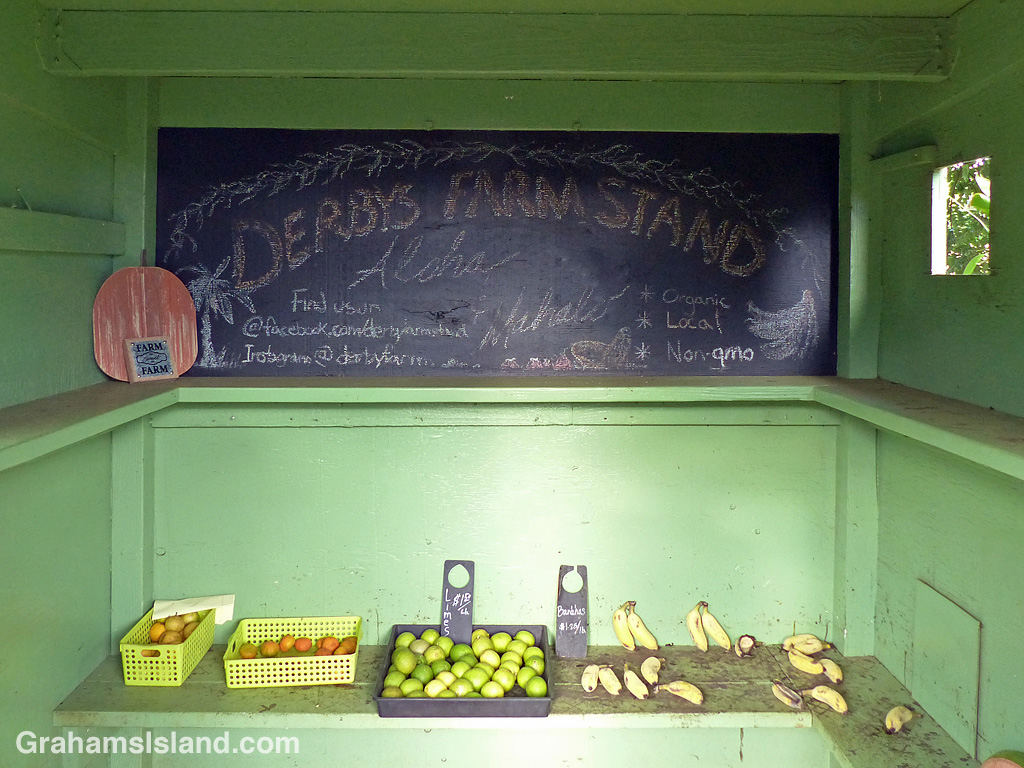
There’s a good deal of small scale agriculture on the Big Island. Many of these enterprises grow fruits and vegetables, which are sold to local restaurants, grocery stores, and at farmers markets. Several of these small farms also sell direct to the public. One or two have setups much like regular stores, but most have small farm stands.
The farm stands operate on the honor system. Fruits and veggies are displayed, a price list is posted, often on a chalk board, and buyers leave their money in some kind of small cash box. I don’t know how often those cash boxes are emptied, but even if it’s only once a week, no one’s going to make a killing by stealing one. There’s rarely a lot on offer at these smaller stands, but what there is is fresh, organic, reasonably priced, and very local.
Posted in response to this week’s Friendly Friday challenge on the theme of ‘Fruit.’ See more responses here.
On a recent swim I saw these two fish passing by. They looked like chubs, but not ones I’d seen before. I snapped a quick photo, not expecting it to be great, but hoping it would help me identify the fish. I need not have worried.
After they passed, they made a series of approaches and retreats. They appeared as curious about me as I was about them, which is something of a characteristic of chubs. Eventually, they moved away and I carried on, catching up to two others I had been swimming with. I asked them if they’d seen these fish and they said no.
I was describing what they looked like when the two of them showed up again. Once more they looped around, checking out these new people before finally heading south, not to be seen again.
When I got home it was easy to identify them as rainbow chubs, also known as blue-stripe chubs, with their distinctive blue markings. What was interesting is that their home is the Eastern Pacific, from Ecuador north to California. But some can get carried over to the Central and Western Pacific. As such, they’re rare in Hawaii, so this is one of those fish I might never see again. A matter of being in the right place at the right time.
In my attempts to identify what I see in the water, I use John P. Hoover’s book The Ultimate Guide to Hawaiian Reef Fishes, Sea Turtles, Dolphins, Whales, and Seals. His website is hawaiisfishes.com.
Recently, I walked around the Palila Forest Discovery Trail on the slopes of Mauna Kea without seeing any palilas. The mamane seeds that they feed on were either dry and brown or just starting to form, so a return in a few weeks might bring more luck. But there were other birds flitting around, usually easier to hear than see, especially in some areas where the tangle of branches make it hard to see anything.
This endemic Hawaii Amakihi was one of them, but then it landed on part of a branch where I happened to have a clear view. I snapped two photos before it once more vanished. I like how this photo makes it looks like the bird is settled in for the long term rather than the momentary landing and take off that actually occurred.
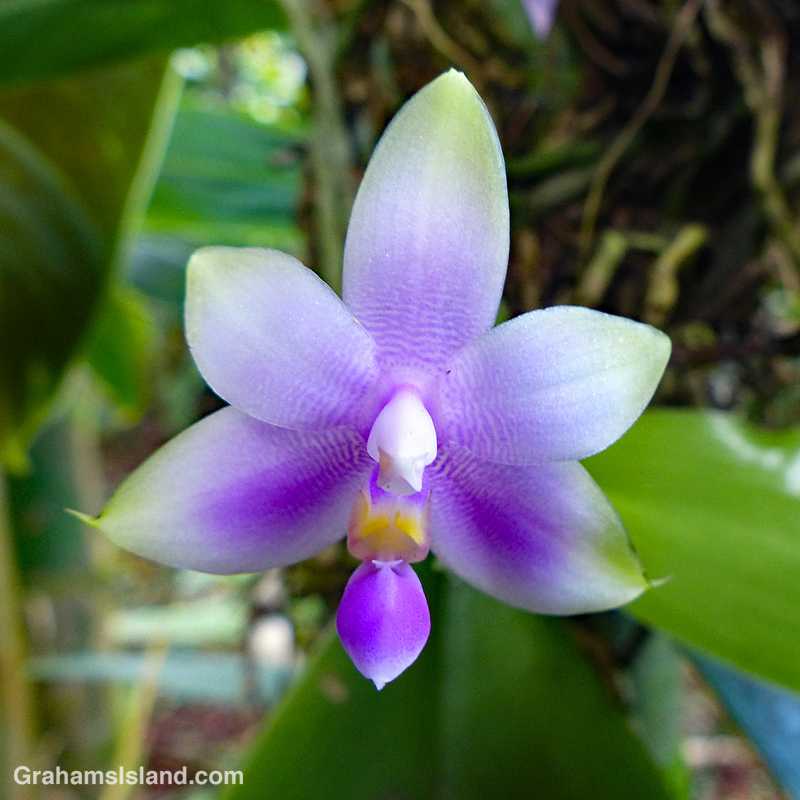
This orchid hails from Sumatra and other nearby islands. It’s notable for its small flowers, with a violet center fading to white. Some varieties, such as this one, also have green edging.
This one was at Hawaii Tropical Botanical Garden. For more information about Hawaii Tropical Botanical Garden, go to htbg.com.
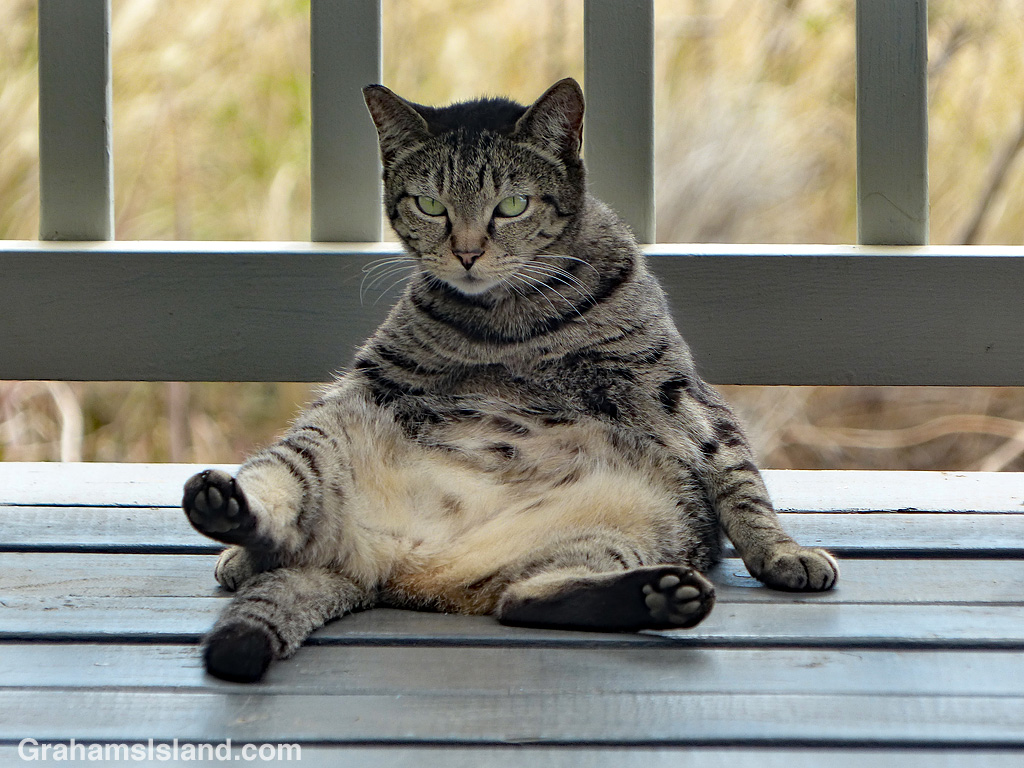
This week’s Sunday Stills challenge theme is ‘All About Pets.’ (See more offerings here.) I don’t currently have a pet, but at work, we have several cats, formerly feral, but now fixed, shot, and chipped.
One of these cats is Sunshine. I’ve posted photos of her here. In this photo, she’s about to do a little personal grooming and looks none too pleased to have someone pointing a camera at her.