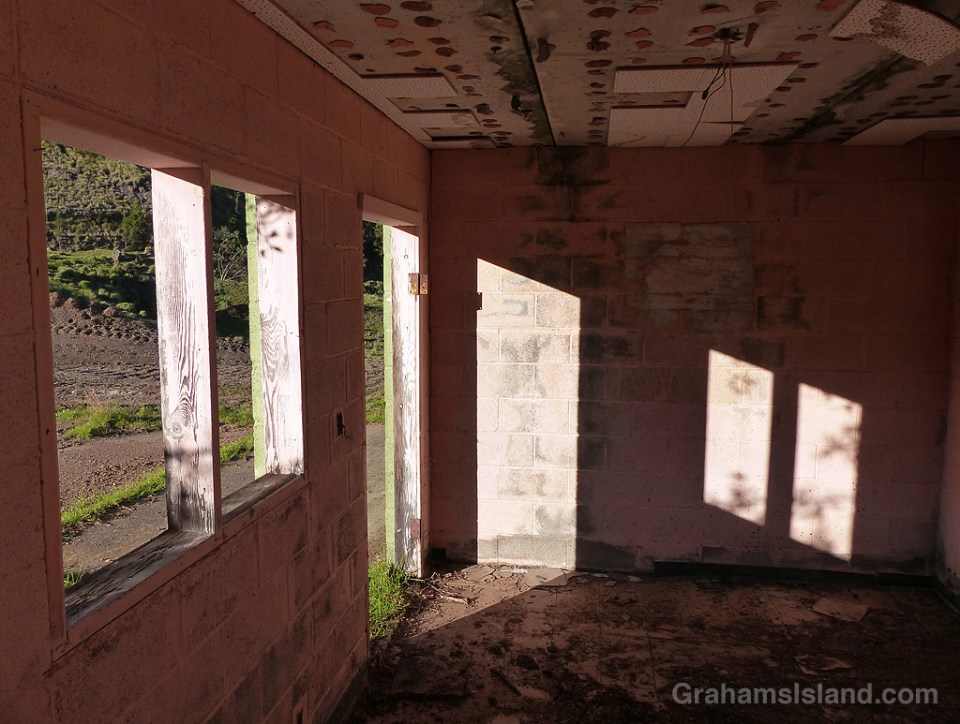
A view into the old blockhouse on the slopes of Pu’u Wa’awa’a. Stripped of doors and windows, it now serves as a shelter for livestock.


A view into the old blockhouse on the slopes of Pu’u Wa’awa’a. Stripped of doors and windows, it now serves as a shelter for livestock.

 Hawi is the northernmost town on the Big Island. Together with Kapa’au, two miles to the east, it’s the main population center in North Kohala. This area was a center of sugar production from the mid 1800s to the early 1900s. Today, it’s geared towards tourism and agriculture.
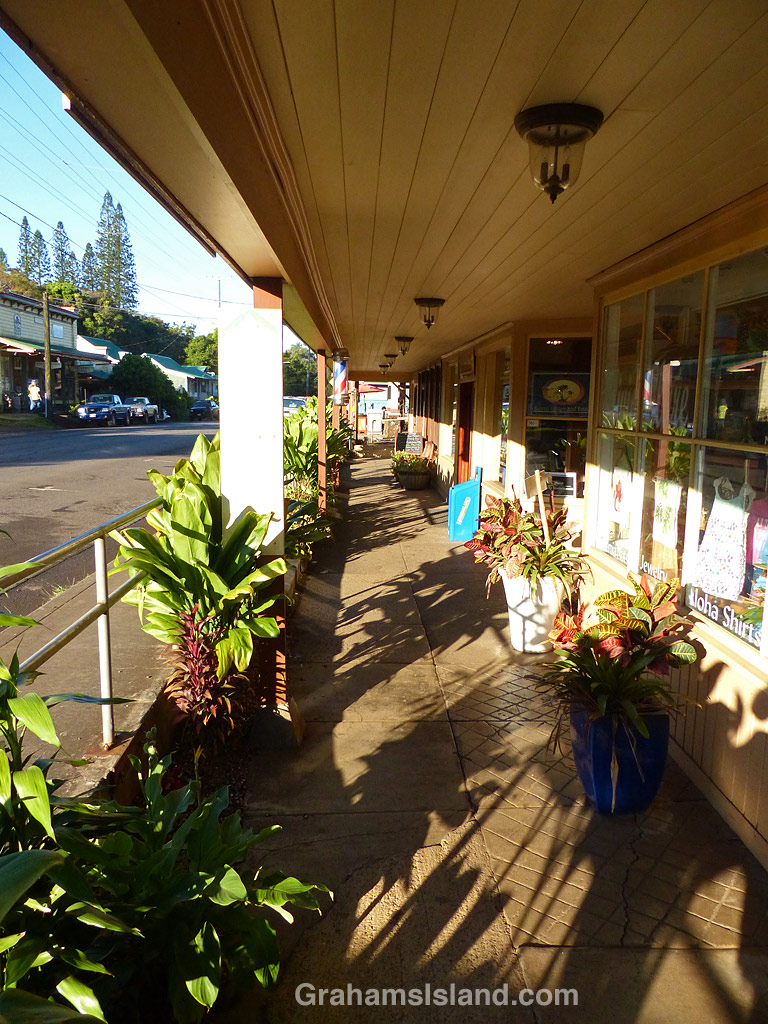
Hawi’s population of around 1,000 is mostly located in areas above or below Akoni Pule Highway, which is the main road through town. The highway itself is where commercial activities are found, as seen in these photos.
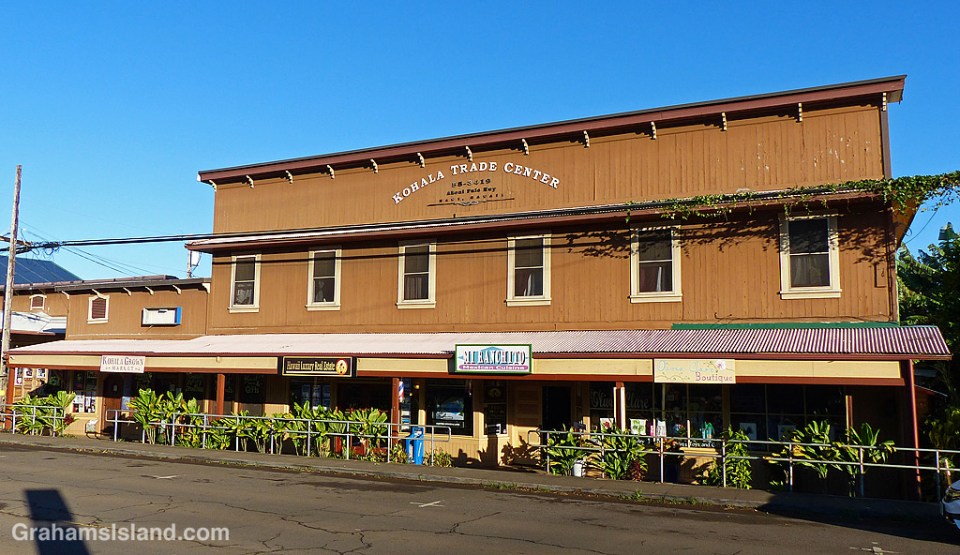
In the top photo, the blue building houses the Bamboo Restaurant. This was the former home of K. Takata Store, the area’s main grocery store, which now occupies a newer building midway between Hawi and Kapaau. On the right of this photo is a vine climbing up a pole and along the power lines. I’m not sure what this vine is, but it’s everywhere, and periodically workers from the power or phone company pass through and hack at the lower reaches of it, killing off the higher parts engulfing the wires – at least until it (very quickly) grows back.
The Kohala Trade Center building is home to several smaller businesses and features the covered walkway at right which passes by the storefronts lining the street, but slightly below street level.
For its size, Hawi is quite a bustling place, popular with tourists and with a strong local community. But it’s also the kind of place where a person can ride a horse through town and not be considered unusual or out of place, and I like that quite a bit.
Posted in response to this week’s Sunday Stills challenge on the theme of ‘In Your Town.’ See more responses here.
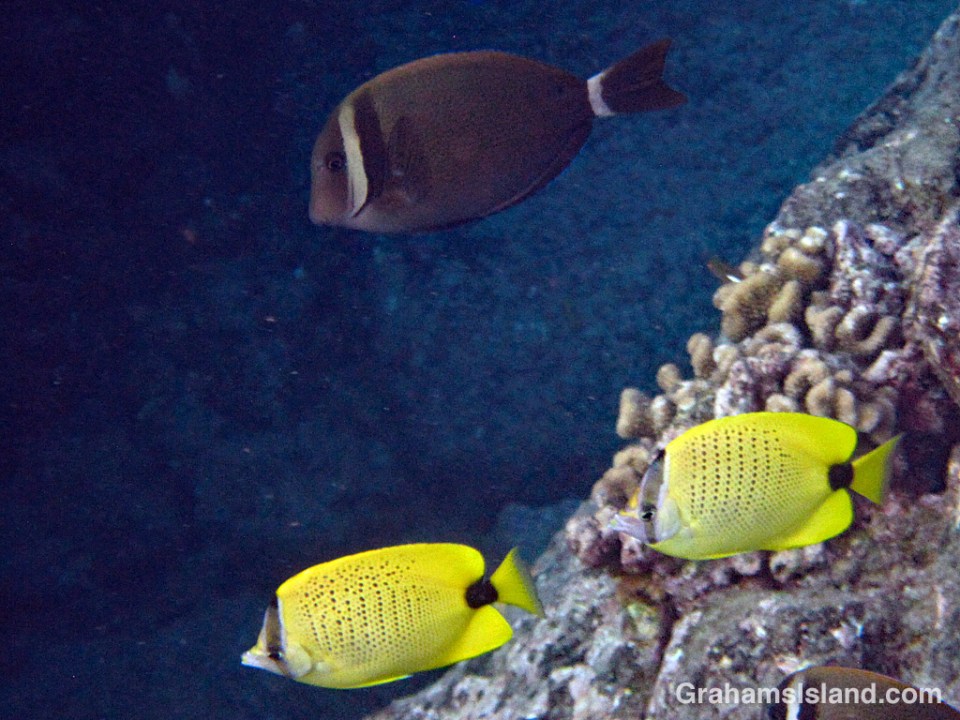
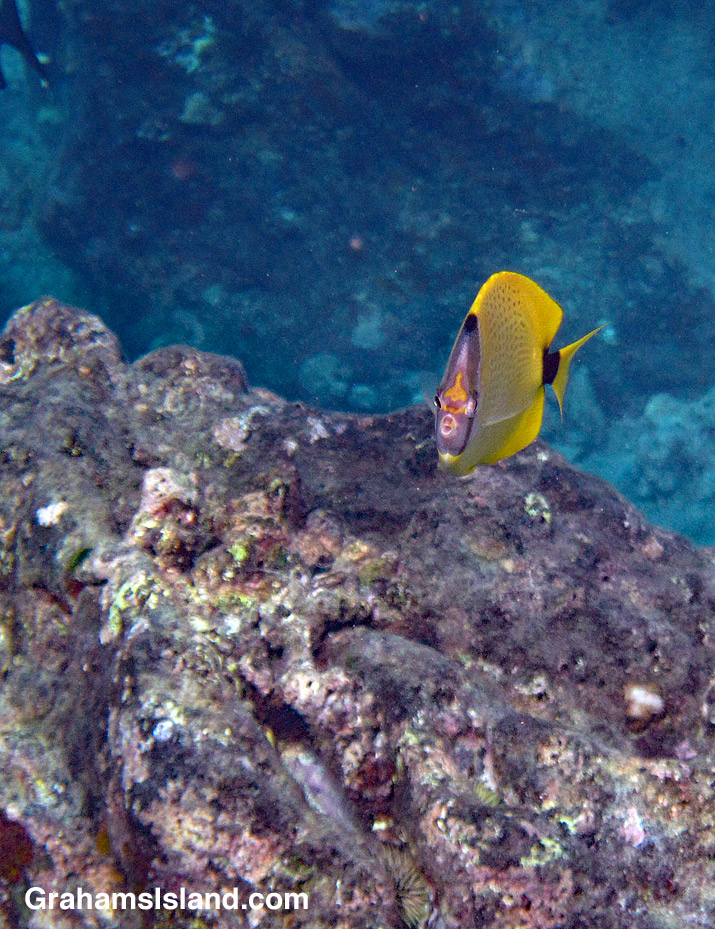 Milletseed butterflyfish get their name from their markings, a series of dark dots along their sides. Of course, the markings could be morse code and they could be trying to communicate something to us, if only we’d listen.
I was quite pleased to get a shot of this fish looking my way, for the fish’s expression and for how it shows how slender these fish are. When people approach, most fish, wisely, turn away.
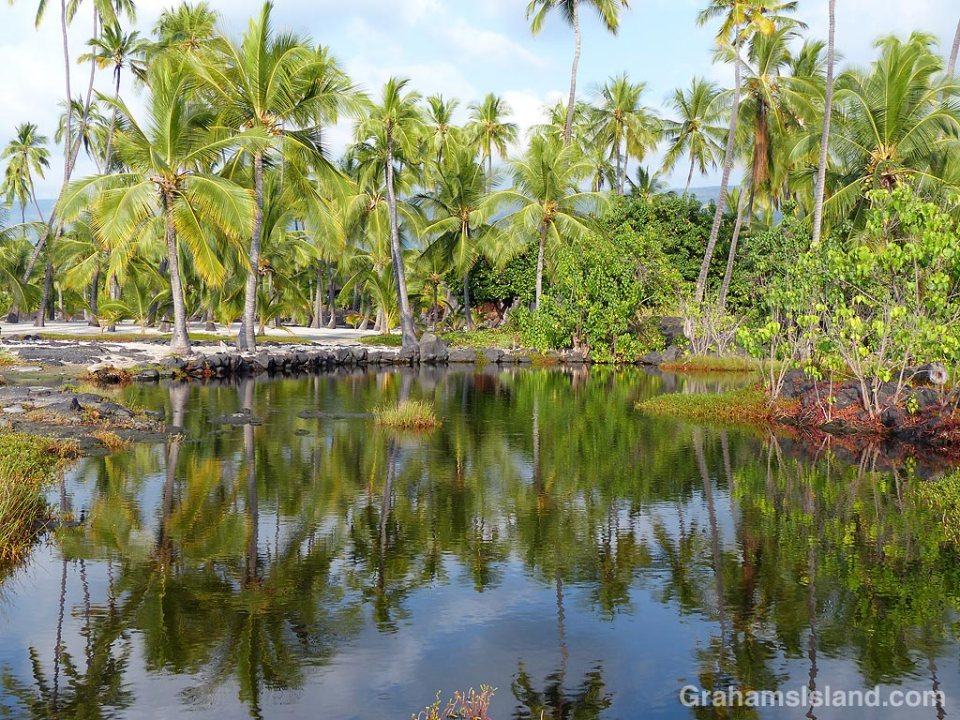
Palm trees are reflected in still waters at Pu’uhonua o Hōnaunau National Historical Park, otherwise known as Place of Refuge. This is one of the royal fish ponds, an anchialine pool in which fish were held for consumption by Hawaiian royalty.
For more information about Pu’uhonua o Hōnaunau National Historical Park, visit https://www.nps.gov/puho/index.htm.
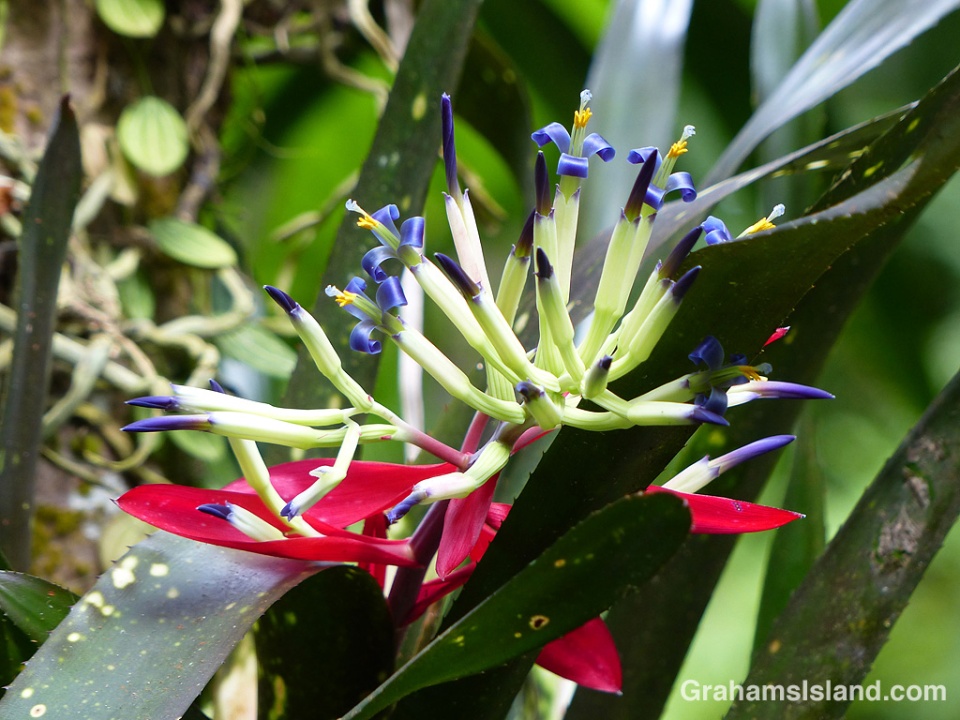
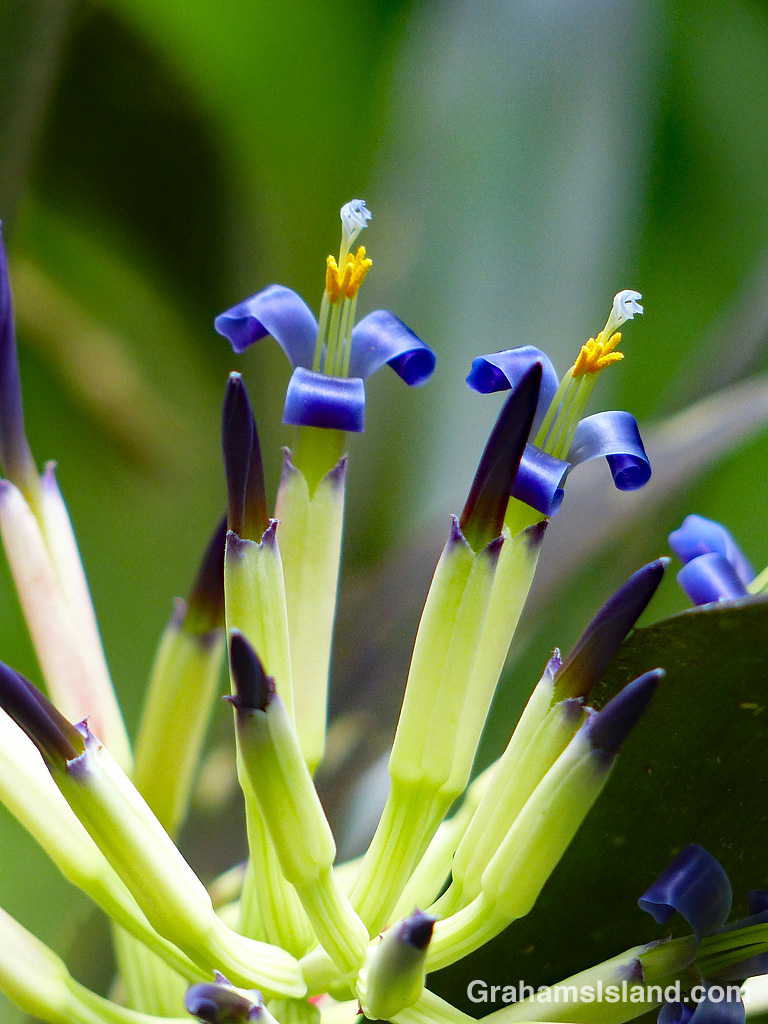 I took these photos on a recent visit to Hawaii Tropical Botanical Garden. The plant looked somewhat familiar to me, but I couldn’t put a name to it. After rummaging through the garden’s plant database, I finally identified it as billbergia nutans. That name sounded even more familiar and a quick check revealed it was a plant I grew in my (tropical) garden in Washington State. There, it was an annual or one to be overwintered indoors. Here, it grows year-round.
Billbergia nutans is native to South America. It’s commonly known as queens tears or friendship plant, the latter because it is an easy plant to split and share. It’s an epiphytic bromeliad, meaning it is shallow rooted and gets most of its moisture and nutrients from the air and from rainfall through the leaves and flowers.
For more information about Hawaii Tropical Botanical Garden, go to htbg.com.
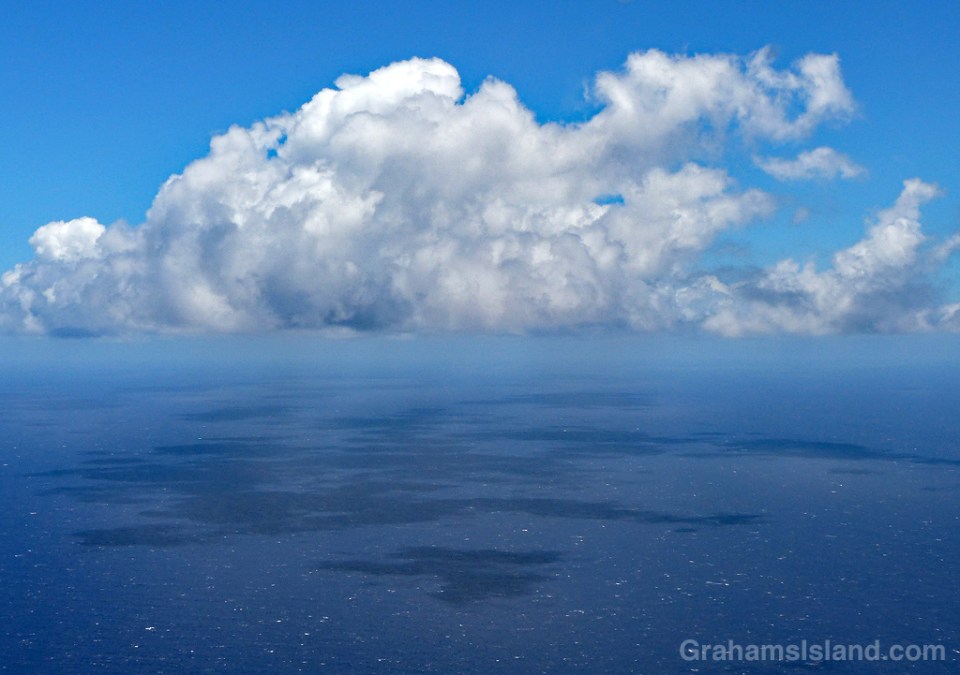
Another photo from my helicopter trip to Maui a few weeks ago. This shows clouds casting shadows on the choppy waters of the ʻAlenuihāhā Channel, between the Big Island and Maui.

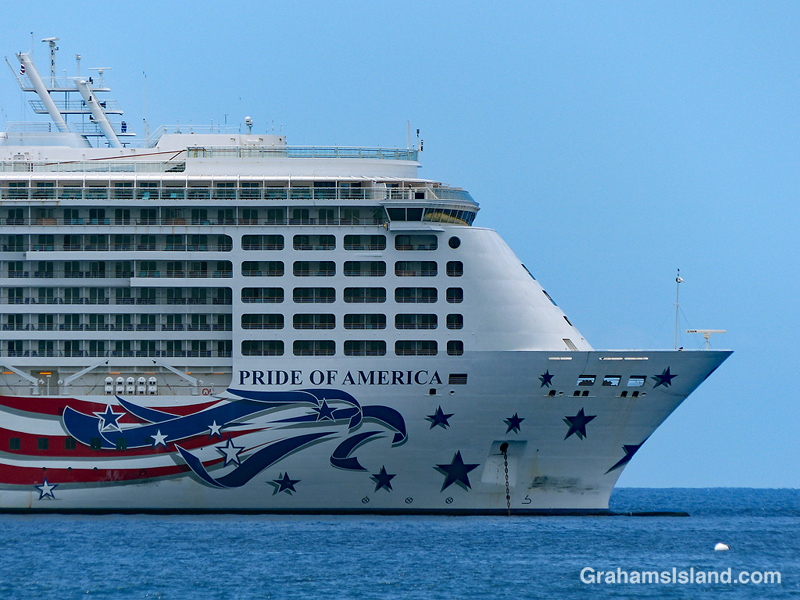 Every Wednesday, the cruise ship Pride Of America drops anchor off Kailua Kona and ferries people ashore to explore the offerings of the town and of the Big Island.
What I like most about the ship is how the name is reflected in the paintwork – all red, white, and blue, and stars and stripes. Indeed this ship was built in the U.S.A. and sails under an American flag. And even though the name of the company that operates the ship is Norwegian Cruise Line, it’s now an American company. Best not to mention that Norwegian Cruise Line’s parent company is based in Bermuda, and not because it’s warm and sunny there.

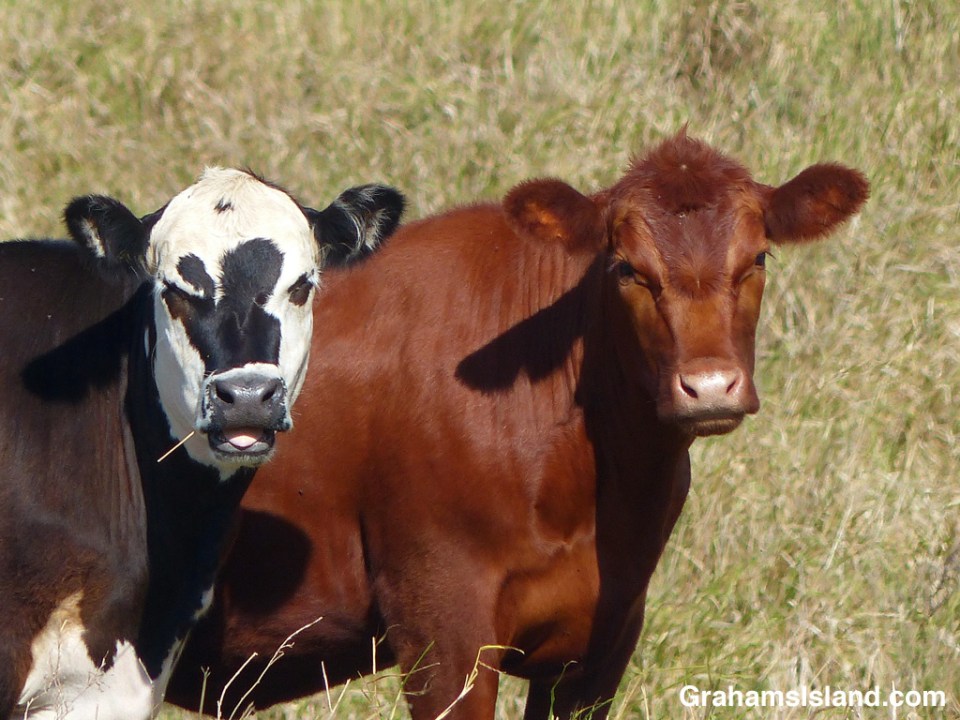
There are a great many deeply meaningful and insightful blogs out there, but this isn’t one of them. Instead, here’s a photo of two beef cattle in a field. The reason I like it is for the stem of dry grass sticking out of the one on the left. I imagine him saying something along the lines of, “You ain’t from around these parts, are you?”

