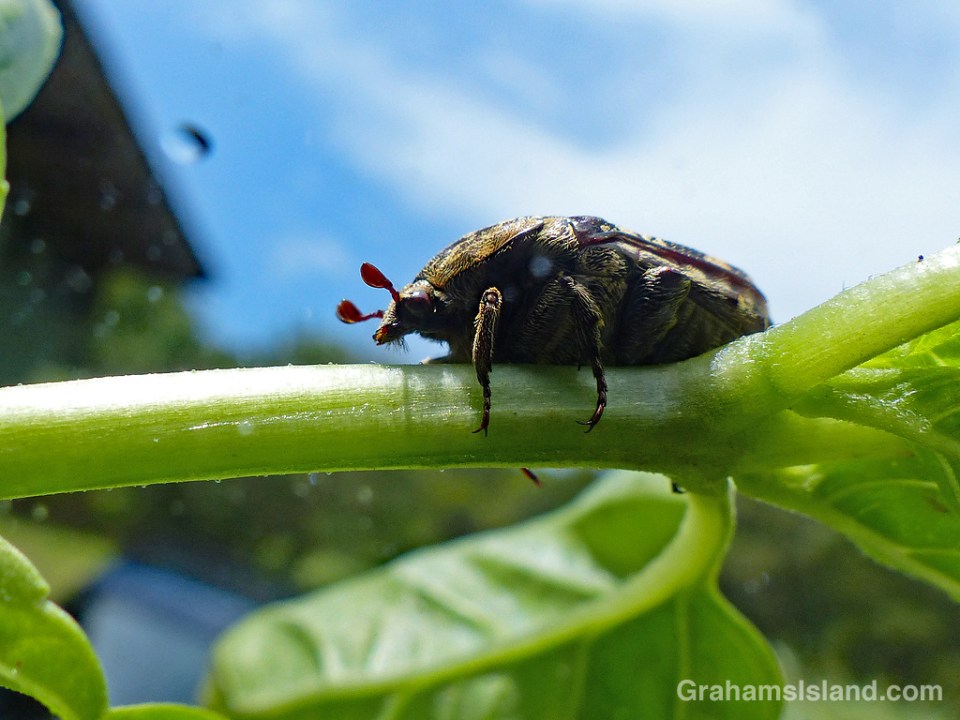
This mango flower beetle wasn’t on a mango flower, but on a basil plant. It wasn’t exactly lost though. A giant mango tree looms over the deck where the basil plant is growing.


This mango flower beetle wasn’t on a mango flower, but on a basil plant. It wasn’t exactly lost though. A giant mango tree looms over the deck where the basil plant is growing.

Cutting through the lava between Mauna Kea and Mauna Loa are these two roads. The lower one is Saddle Road, the upper one a road leading to the military base at Pōhakuloa Training Area.

I could have used this photo for last week’s Sunday Stills challenge on the theme of ‘In Your Town,’ but it also works for this week’s theme of ‘Traditions.’ (see more offerings here.)
These two giant banyan trees are half a block up from the main highway through downtown Hawi. Each Saturday, a farmers market is held on the grassy area beneath these trees. That event is part grocery shop, part social gathering.
The rest of the week, the location is the traditional meeting place for the area, particularly for people carpooling. If someone says to meet under the banyans, or at the banyans, the location is immediately understood.
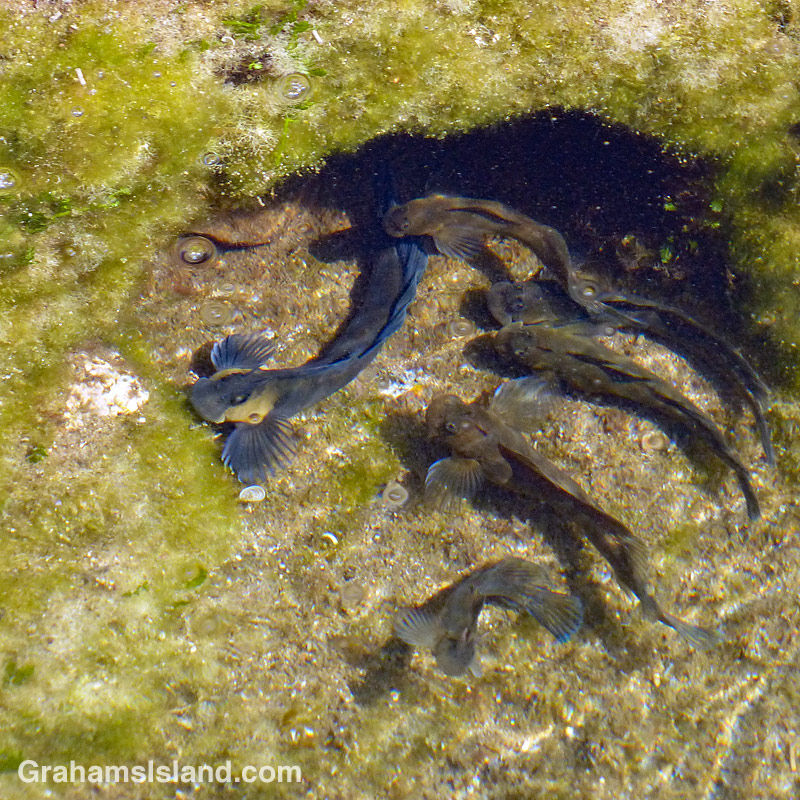
This is a group of Hawaiian zebra blennies that I came across in a tide pool one day. The largest of them, with the blue highlights and yellow cheeks is the breeding male. The others are likely females that he has won over.
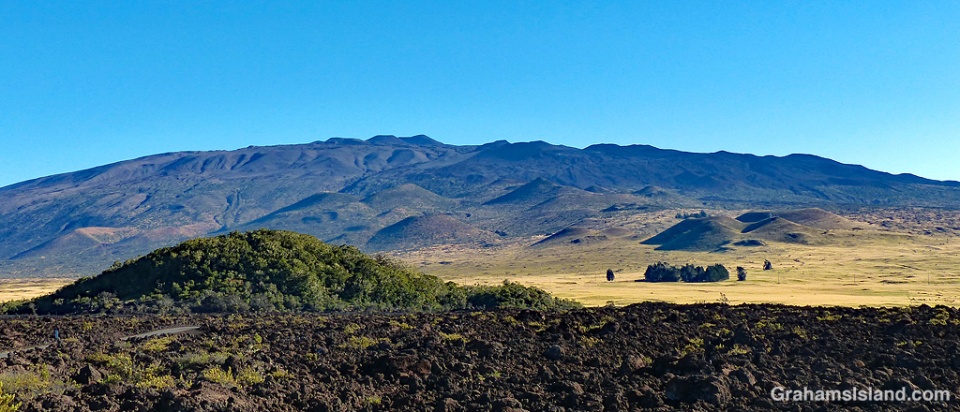
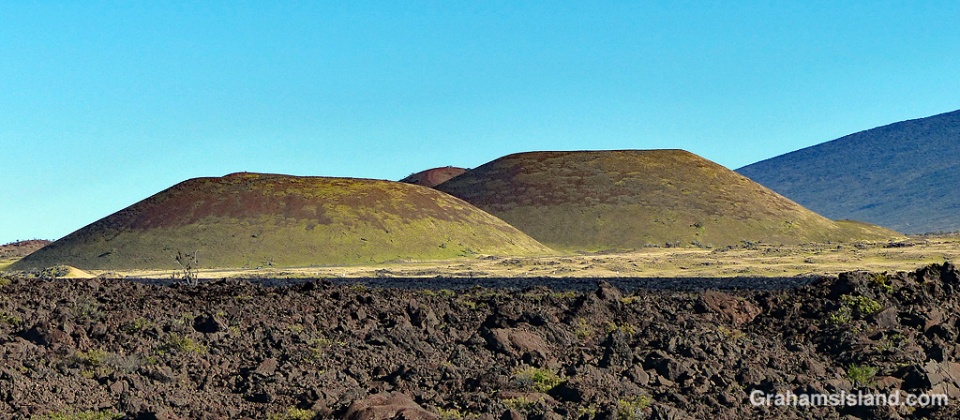
In Hawaii, one meaning of the word ‘pu’u’ is ‘a protuberance of some kind.’ This can be anything from a pimple to a hill, but ‘hill’ is the most common usage I encounter, as a general reference or in place names.
Pu’u O’o is the cinder cone that is home to the vent on Kilauea Volcano that was active from 1983 until earlier this year. Pu’u Wa’awa’a is an old cinder cone that is now managed by the Division of Forestry & Wildlife. A common thread is that, in Hawaii, a hill is a cinder cone because all of Hawaii is volcanic and the landscape is liberally dotted with cinder cones.
The top photo shows Mauna Kea and the large array of pu’us on its southern slopes. In the foreground is Pu’u Huluhulu, which means hairy hill. There’s a trail to the top of this pu’u which offers good views of Mauna Kea and Mauna Loa.
The bottom photo shows grassed over pu’us in Pōhakuloa Training Area, which is a military base located in the region between Mauna Loa, Mauna Kea and Hualālai volcanoes.
On the Big Island, several pu’us are accessible to hikers, usually with a trail curving up to the top and then around the rim of the pu’u. Even if the pu’u isn’t that high, it invariably stands out from its surroundings and offers good views.

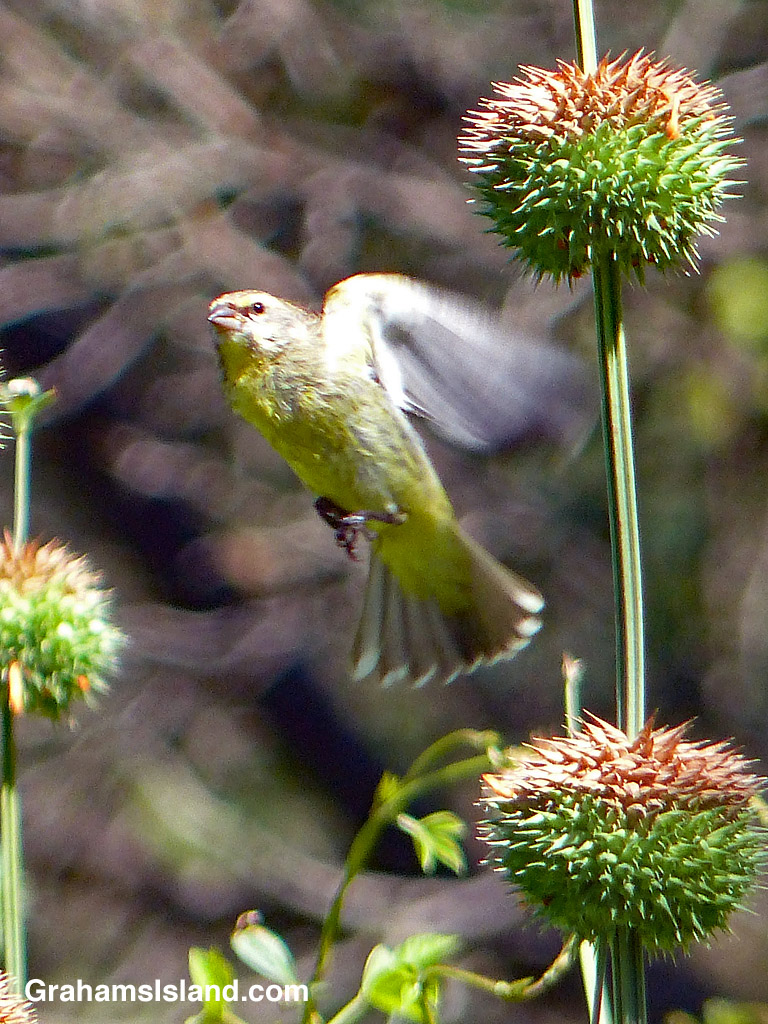 A yellow-fronted canary perches on a Leonotis leonurus plant before taking off again. Leonotis leonurus is also known as lion’s tail, lion’s ear or wild dagga. it’s native to South Africa.
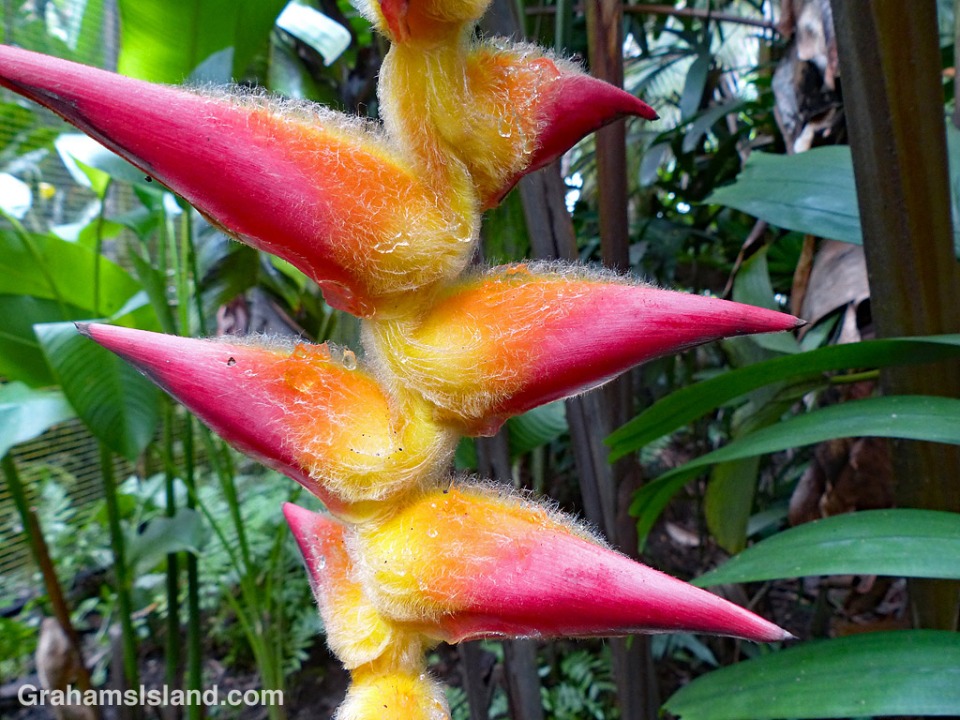
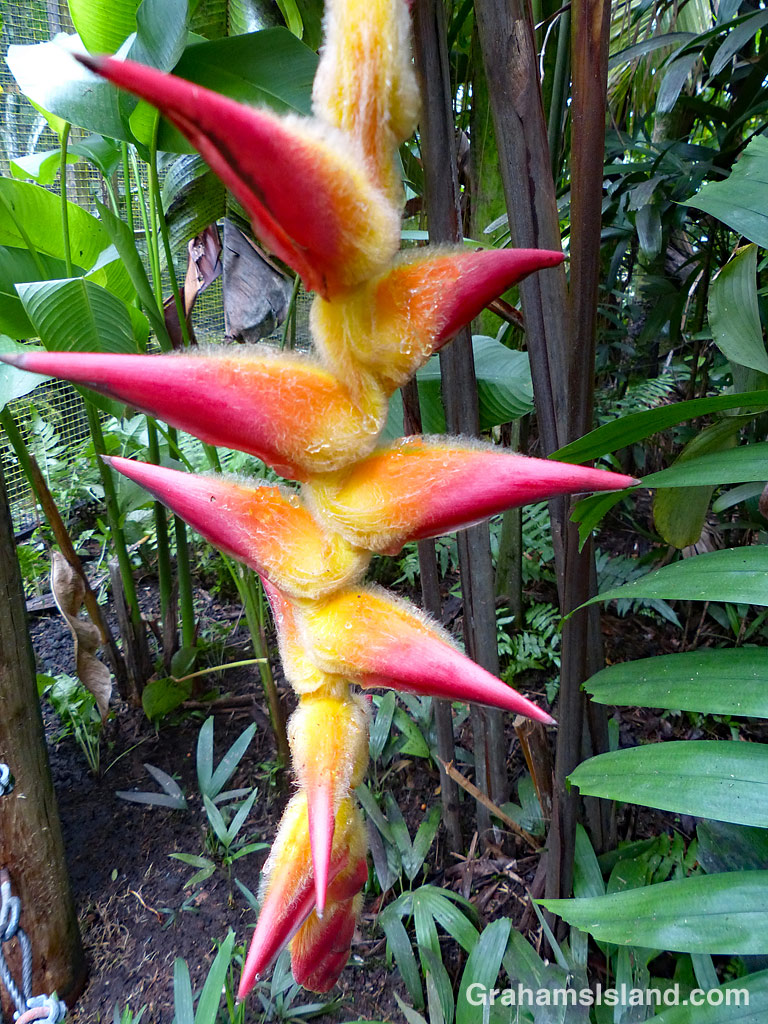 Let’s face it, heliconias are weird looking. Long hanging flowers, bit sticking out all over, neon colors. This heliconia is Heliconia caribaea X Bihai ‘bubblegum’ and it’s notable, not just for the bright pink, yellow and orange, but for the soft, downy texture on the flower.
 Several weeks ago, when the Big Island had a couple of hurricanes in the vicinity, we were inundated with rain. Tired of staying indoors or slogging through mud, I headed down the road a few miles, to the dry side of the island, in the hopes of finding somewhere I could go for a walk.
I stopped at Lapakahi State Park, which holds the remains of an ancient Hawaii fishing village. It was dry and warm, though the trails there were still slick with moisture and closed to the public.
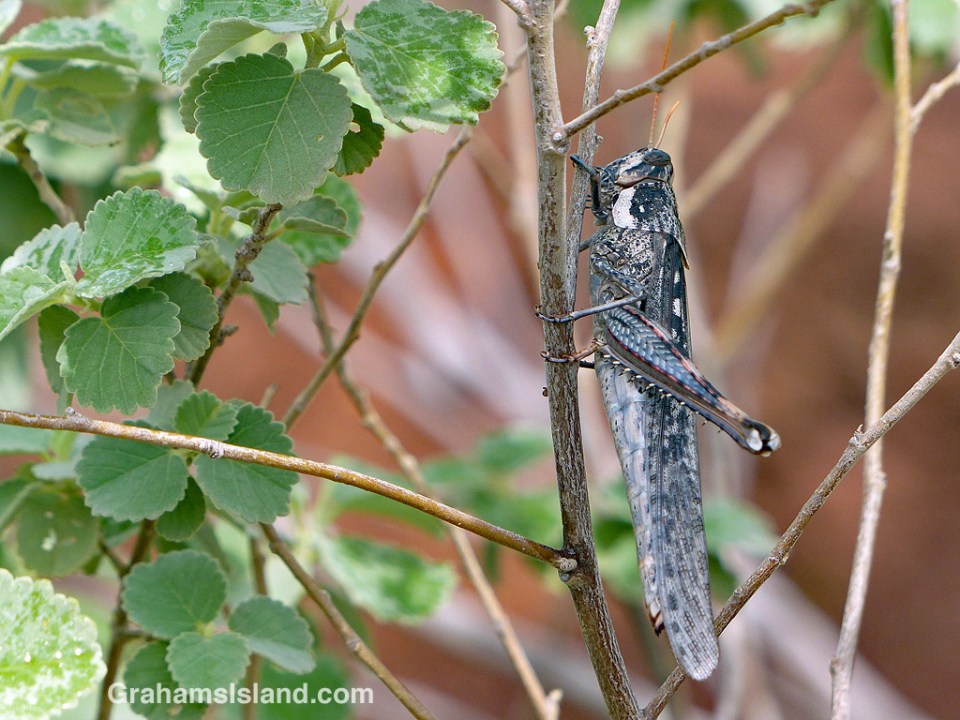
While I soaked up the warmth, I noticed this grasshopper (Schistocerca nitens I think) on a plant. It was hanging onto the stem and, despite my presence, seemed not in any hurry to move. It took me a while to realize there was something odd about it, but eventually I noticed that it was missing one of its hind legs. It’s not the first grasshopper I’ve seen in this condition and I always wonder how it affects them. The hind legs are the ones that launch them, so if they’re missing one do they ping off to one side? Do they end up going in circles? Or are they able to compensate?
I didn’t find out on this day as the grasshopper remained in roughly the same position the whole time I was there. Eventually I gave up watching and headed back into the gloom.

