
A tide pool shimmers with greens and golds.
Author Archives: Graham

Bristle-thighed curlew
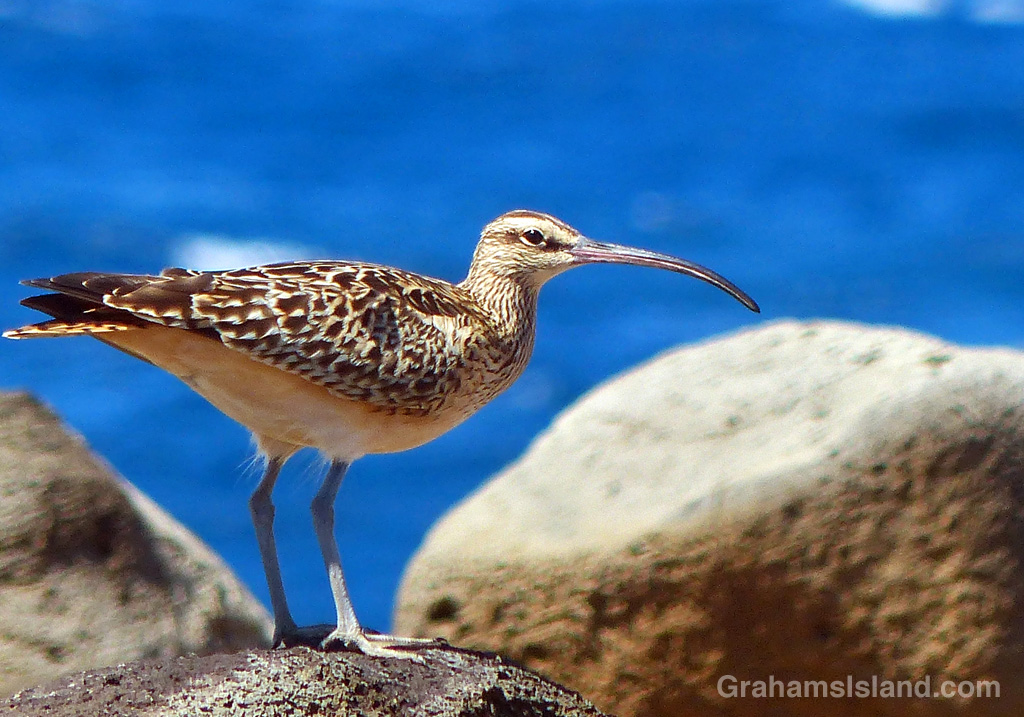
Bristle-thighed curlew (Numenius tahitiensis) isn’t the most flattering bird name I’ve ever heard. In Hawaii it’s called Kioea, which sounds nicer. In May, these curlews migrate to Alaska (a jaunt of 2480 miles) to breed. They return to Hawaii (and other Pacific islands) in July and August. Since this particular bird was still around at the end of May, it may not be making the trip north this year.
For more information about bristle-thighed curlews, go to dlnr.hawaii.gov/wildlife/files/2013/09/Fact-Sheet-Bristle-thighed_Curlew.pdf.
Green anole on red leaves

This green anole does not blend in well on these red leaves, but that’s the point. He’s vigorously declaring this territory to be his.
For more information about green anoles, go to en.wikipedia.org/wiki/Carolina_anole.
Sunset silhouette

Sunset silhouettes a tree on the Kohala coast.
Mars simulation mission site

This little dome is where simulated Mars missions take place. Currently there’s a crew of six living in the dome on a 365-day mission, the longest such experiment to date. The previous crew lived in the dome for eight months.
The dome, at around 8,000 foot on the north side of Mauna Loa, is situated a little way off the Mauna Loa Observatory road. In the photo below it can be seen about ¾ of the way up in the center.
For an interesting article on the Mars simulation mission and its context in history see newyorker.com/magazine/2015/04/20/moving-to-mars. For information about the current, and former, missions, see hi-seas.org.

Ash grey lady beetle

I’ve always thought of lady beetles as little red creatures with black dots on their backs. So I was enlightened to see this one, also known as the ashy grey lady beetle (Olla v-nigrum). Apparently, this species can also have a completely different coloring. I learn something every day!
For more information about ash grey lady beetles, go to bugguide.net/node/view/8874.
Donkey tree?

I’ve heard of monkey trees, but is this a donkey tree? Donkey in a tree? Actually, it’s a donkey under a tree, staying out of the sun.
Helmet urchins
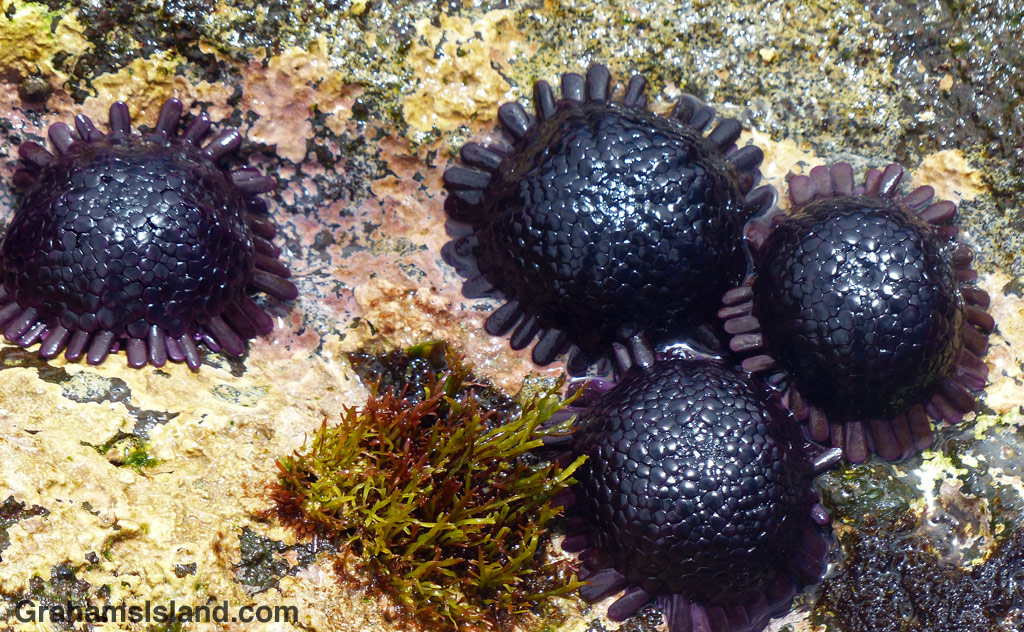
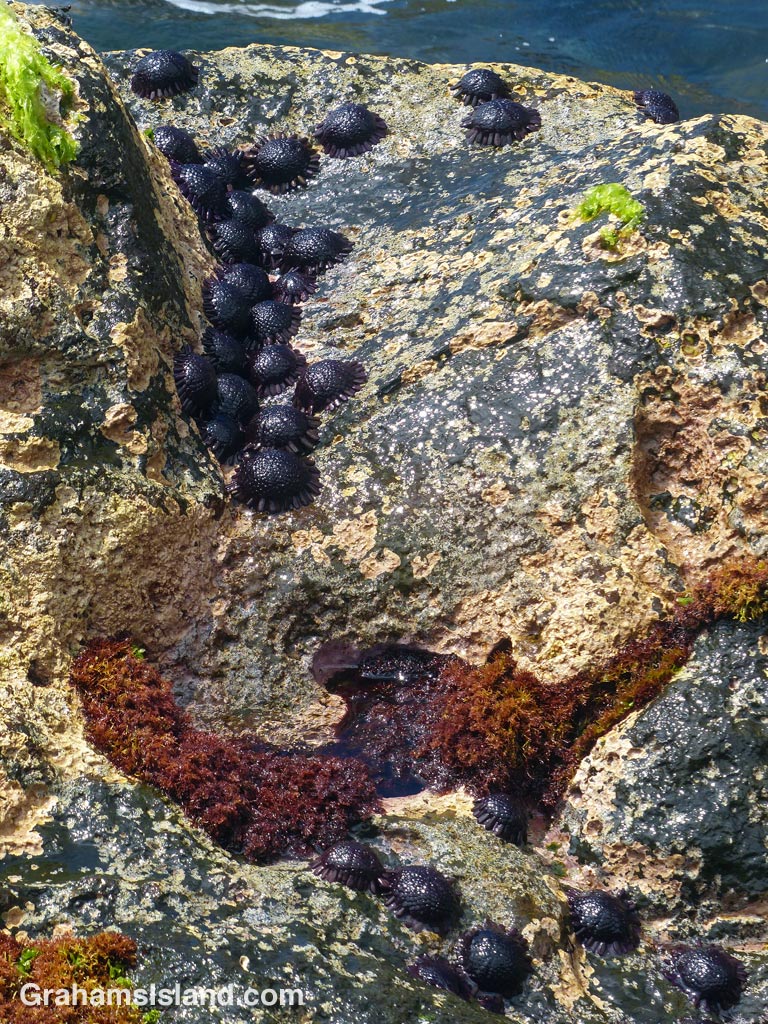
Helmet urchins feed on algae at the water’s edge where they move about on little tube legs. I can’t claim to have witnessed any such activity, but for creatures that apparently just sit there, I find them quite cheerful and entertaining. Perhaps I should get out more.
To identify this, I used John P. Hoover’s book Hawai‘i’s Sea Creatures: A Guide to Hawai‘i’s Marine Invertebrates. His website is hawaiisfishes.com.

