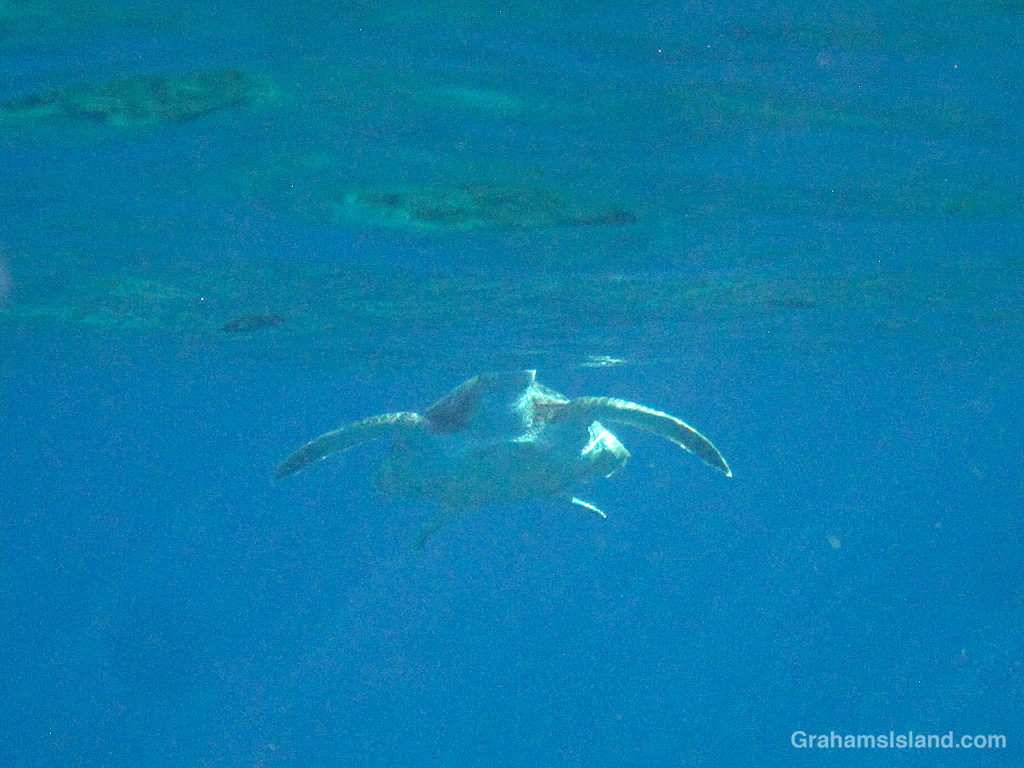
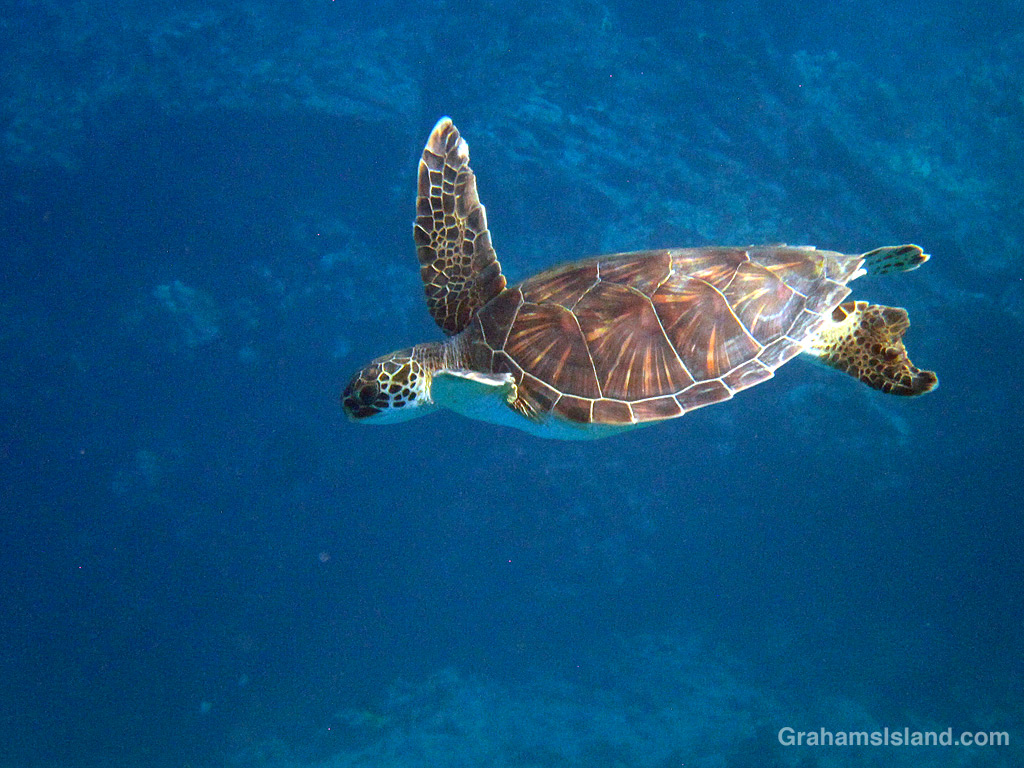
On a recent snorkel, I saw this headless creature a little ways off. I took me a few moments to realize that this was a green turtle getting a breath of air. When it dipped back below the surface, it kept coming towards me. I thought it might come really close, but it decided that it didn’t like what it saw and glided down to deeper water.
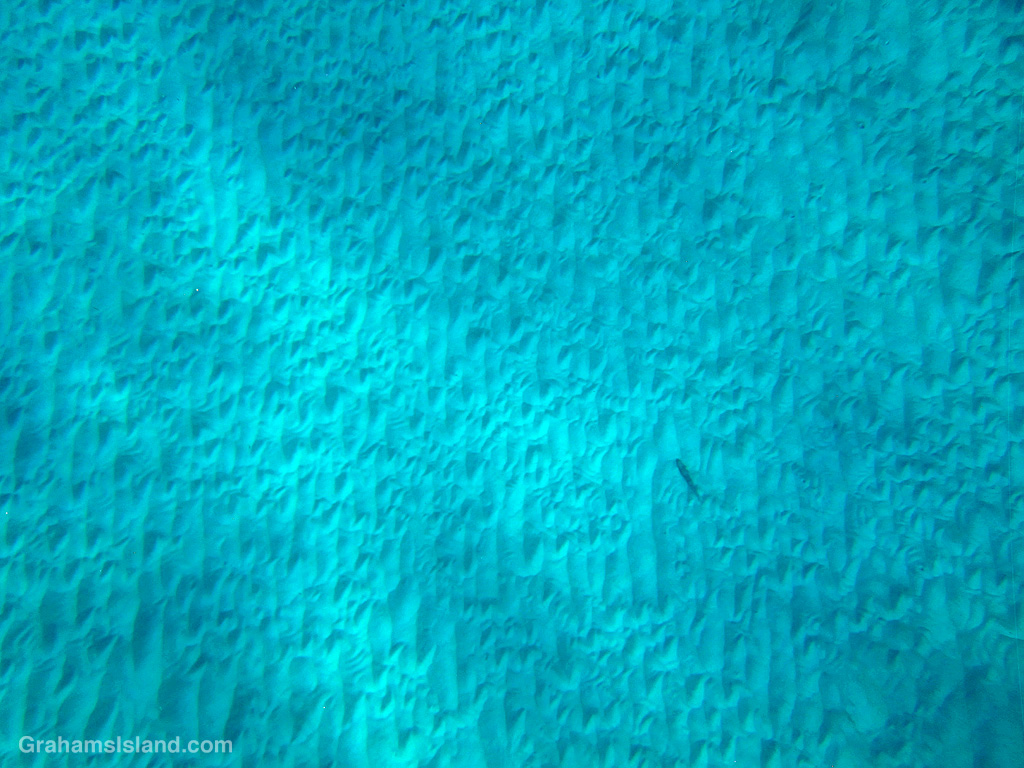
A large patch of sand is sculpted into patterns by the water movement over it. Sometimes these patterns can last quite a long time. Other times they change from day to day. Sandy areas tend to have less fish activity, but there is one fish in this photo.
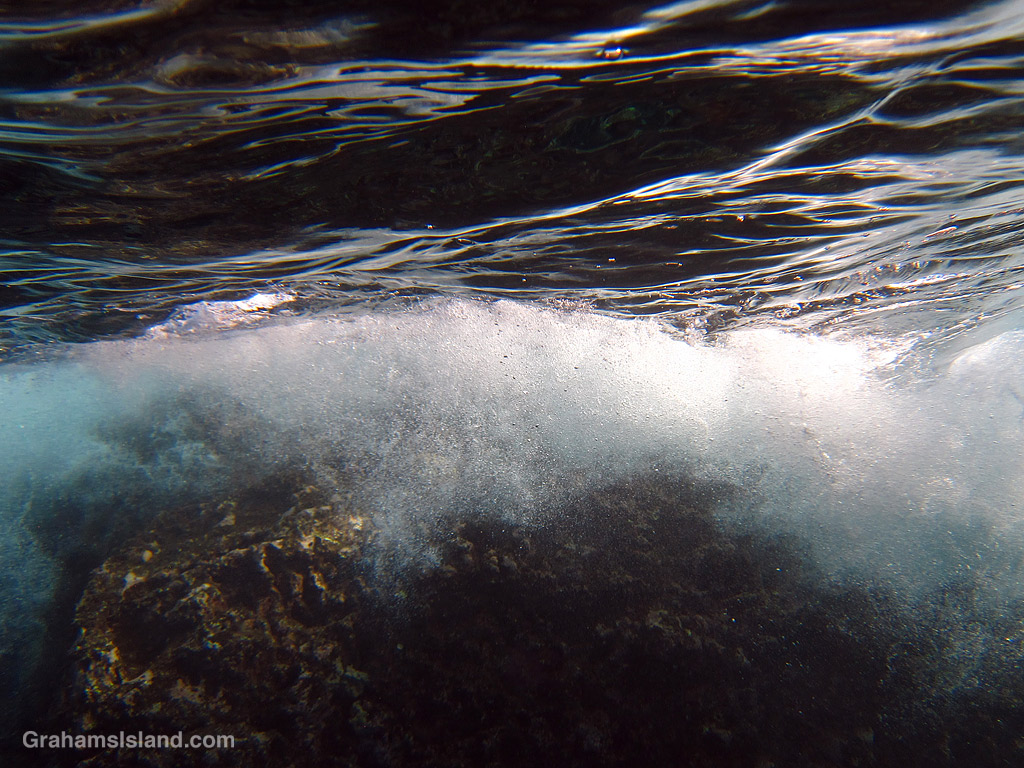
One of the things I enjoy when snorkeling is watching the turbulence that occurs when swells encounter rocks in shallow water. The trick for this activity is to find a safe spot to observe it without getting caught up in it, and being slammed against the rock.
When I go snorkeling, one of the first fish I’m almost guaranteed to see are needlefish. The often congregate in the shallows just below the surface of the water. I can often get very close to them before they scoot to one side or part in the middle as I go through.
At my local snorkeling spot, a lot of trees on the shoreline have suddenly sported fall colors. I’m sure this has nothing to do with the season. Rather, I think a series of large swells has battered the trees with more salt spray than they’re used to and this is the result. Hopefully, they will bounce back when things settle down again, although swells in Hawaii were large enough last weekend for The Eddie Aikau Big Wave Invitational surf competition to be held for the first time since 2016.
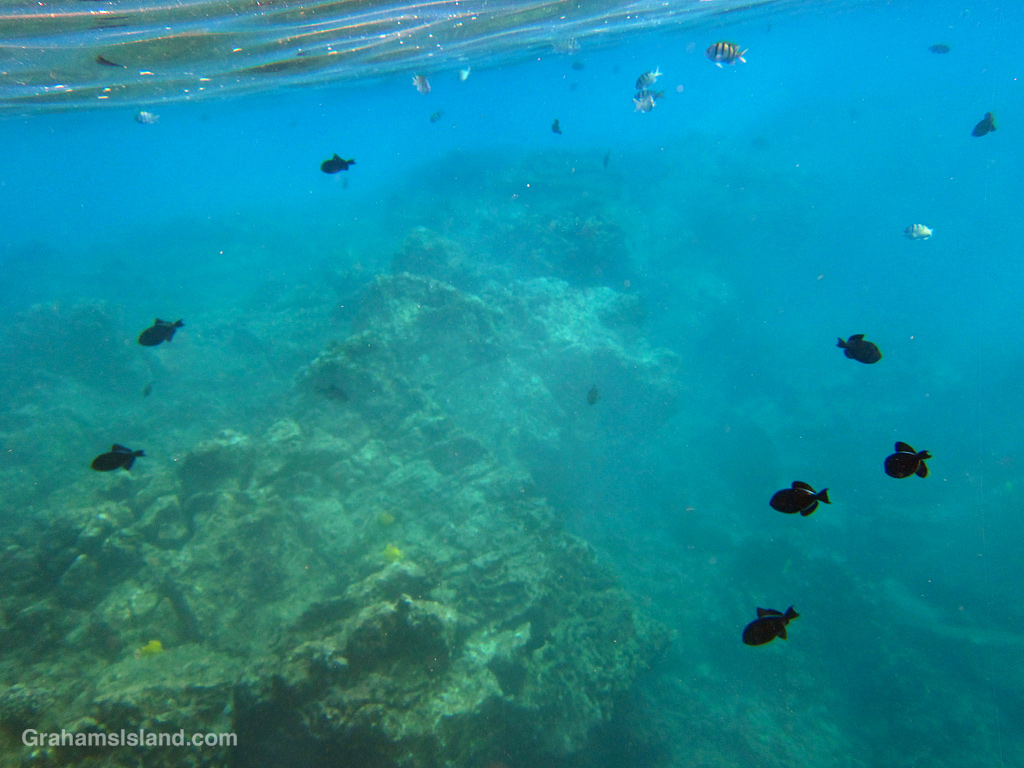
These days, when I go snorkeling, it’s not unusual to encounter hazy water like this. 10 years ago this would have been unusual. Today, it’s closer to the norm. I don’t know why this is, but warmer water is likely one factor.
From a snorkeling perspective, I have to be a lot closer to fish to hope to get a decent photo of them.
This week’s Sunday Stills challenge theme is ‘Silence.’ See more responses here.
The current eruption at Kilauea has been putting out a considerable amount of vog. This volcanic haze can make life difficult for people, causing respiratory and other medical complications. But it can also cause colorful skies.
I was driving home from work last week on a day when the vog was heavy and the sky glowed. There wasn’t much wind – another reason the vog has been hanging around – so the ocean was calm. I’d stopped to take photos once, but when I saw this little boat heading for this band of sunlight, I pulled over again.
I’d lucked into a quiet break in the traffic and was far enough from the coast that there was no sound from waves coming ashore or from the boat’s engine. I watched for a while until the boat crossed the glittering band, before returning to my car and heading home.