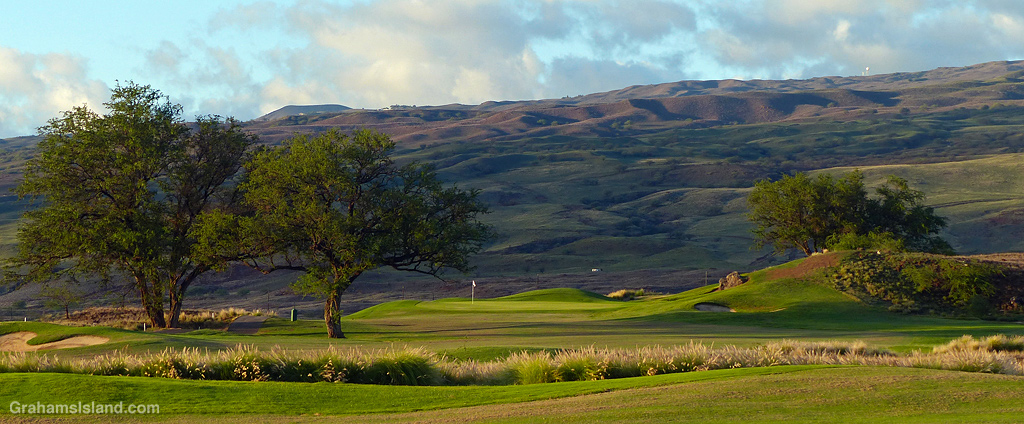
I haven’t played golf in a long time and wasn’t any good when I did. But then, as now, I still appreciate that golf courses can afford some lovely scenes, such as this one.

I haven’t played golf in a long time and wasn’t any good when I did. But then, as now, I still appreciate that golf courses can afford some lovely scenes, such as this one.

I’d just got in the water recently when I saw this Whitemouth Moray Eel hunting with some Bluefin Trevallies. The trevallies carried on, but the eel was torn between joining them and retreating into the crack it was emerging from. In the end it did neither and I got a few photos before carrying on with my swim.

On a recent snorkeling trip I saw the big eyes of this small Giant Porcupinefish looking up at me.

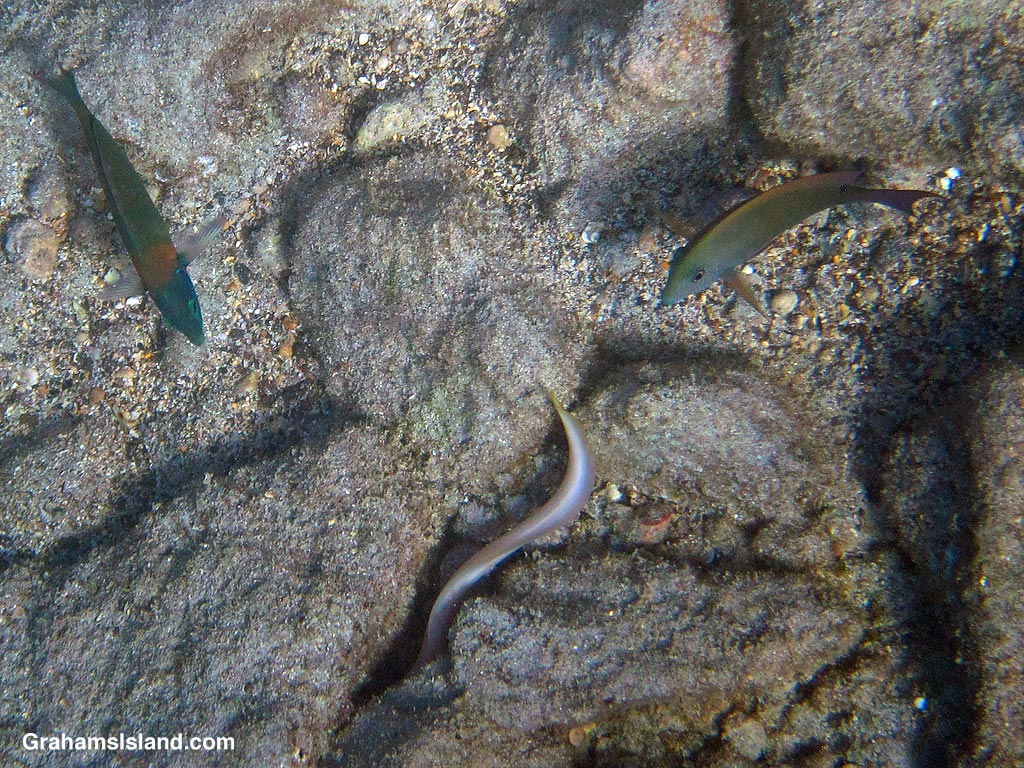
I was snorkeling recently when I saw this Dwarf Moray Eel hunting with a small Saddle Wrasse. It promptly disappeared under a rock and I didn’t expect to see it again. But I was in no hurry, so moved away a bit and kept watch. After a while the eel poked its head out, hesitated, then swam out.
I snapped these two photos, the first as it emerged and the second as it disappeared again. I like how, in the top photo, the eel oozes out of a hole no bigger around than it is, which is less than an inch! These small eels typically are less than a foot long.

These robust steps lead into the water at the small park between the Port of Kawaihae and its small boat harbor. They’re nice and wide so surfers can get in and out on their way to the surf break in the vicinity. I was hoping that a large shape might pass by the steps, which is not unreasonable since there are a lot of sharks in this area.
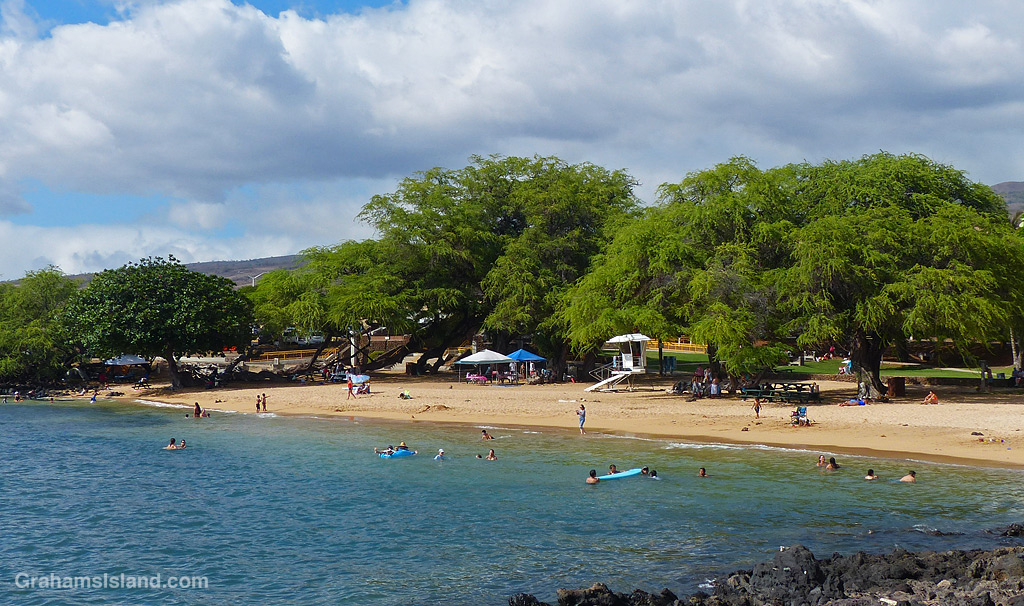
This week’s Sunday Stills challenge theme is ‘Vacation or Staycation.’ See more responses here.
I can’t remember the last time I actually went anywhere on vacation so I’m opting for staycation, which is staying home for your holidays. In Hawaii, a fine staycation doesn’t require a great deal to make it work.
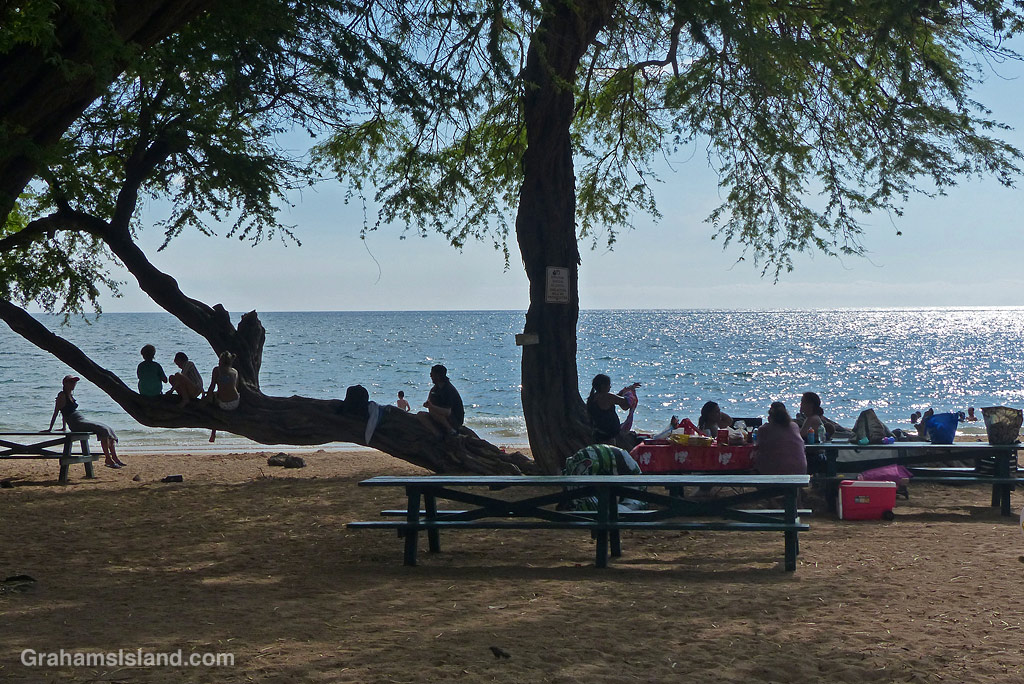
A nice beach is a good start. Some shade, either from trees or a decent portable canopy. Tables and chairs are a plus, or a convenient branch to sit on. A variety of coolers suitably stocked are welcome, a barbecue even better. And of course, some warm sunny weather and calm blue waters make it a staycation to remember.

This endemic damselfish is mostly black or brown with a mottled distribution of light and dark scales, but it’s easily identified by its yellow eyes. It eats filamentous algae and is said to ‘farm’ the algae in its territory, which it defends vigorously against other algae-eaters after its crop.
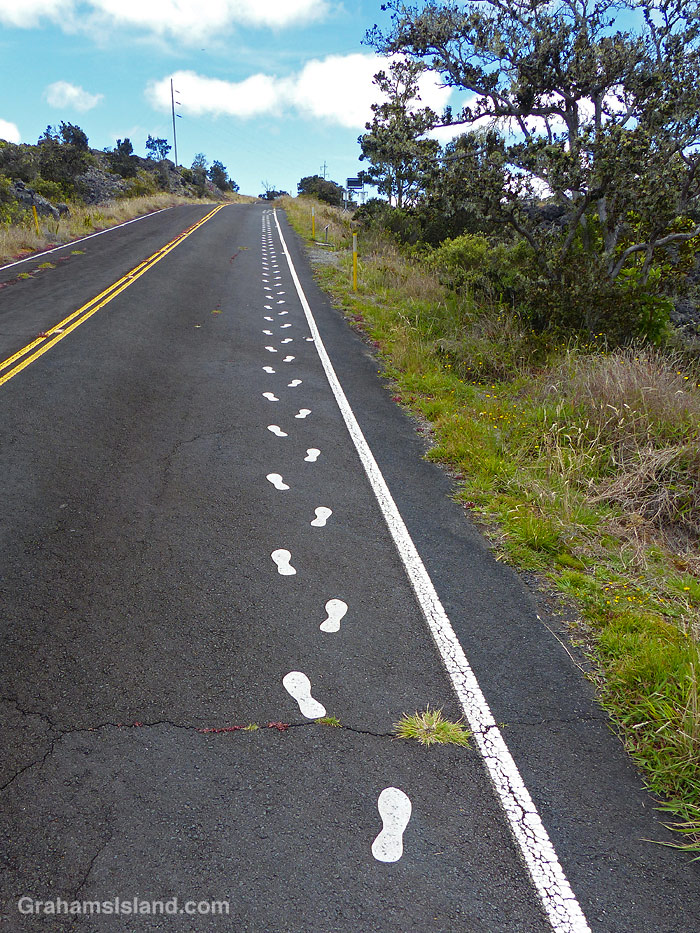
I posted here about the spiffy new Kaulana Manu Nature Trail facilities. This is another feature of the upgrade. The actual trailhead is 100 yards or so up the old road from the parking area. I would have thought that negotiating this stretch safely could have been achieved by the placement of a map (which is there) and a couple of clear, but not ostentatious arrows.
Apparently, the trail planners have less faith in the public being able to negotiate the simple transition from car park to trail. Instead we have this solution, a series of footprints to guide even direction-challenged walkers.
There’s a problem though. I tried walking in these footsteps and it made me tired and fearful that I was going to pull a muscle somewhere. Plus, it seems very discriminatory to pigeon-toed people.