I was photographing this school of Convict Tangs when I saw this initial phase Surge Wrasse swimming in the opposite direction. This is not a fish I see too often and it’s one which my fish book describes as ‘one of the most difficult Hawaiian fish to photograph.’ I think this is because of its scarcity and it’s tendency to spend a lot of its time close to shore in shallow, surging water.
It’s been quite a while since I last saw a Manta Ray while snorkeling, so I was thrilled a few days ago when I saw a familiar shape heading towards me. It was low down in the water and when it saw me it veered away a bit, carrying on at a good clip despite swimming into the current running that day.
The manta was big, with a 10 to 12 foot wingspan, and a lot of pale markings on top. It seemed in good shape though its left wingtip appeared to be permanently curled up. I hoped it might slow down or turn, but that was not to be and it soon disappeared to the south.
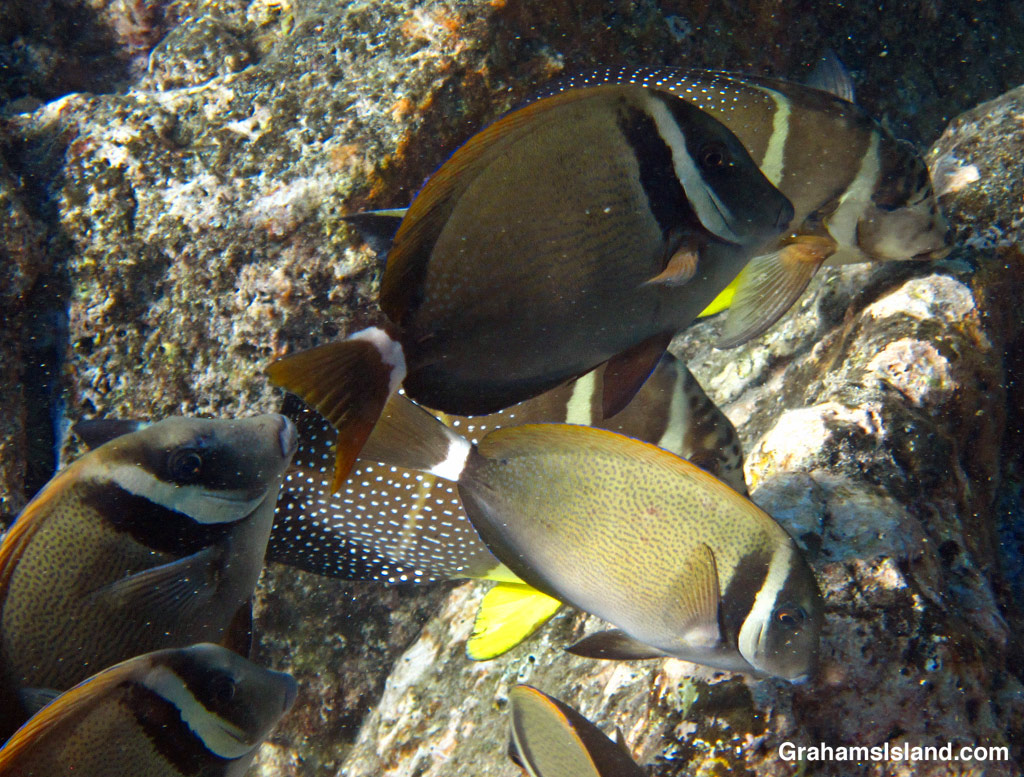
Schools of Whitebar Surgeonfishes are fairly common where I snorkel most. They cruise around rocky areas, feeding on algae. Often they can be seen with other reef fish such as Convict Tangs or Whitespotted Surgeonfish, seen in the background of the lower photo.
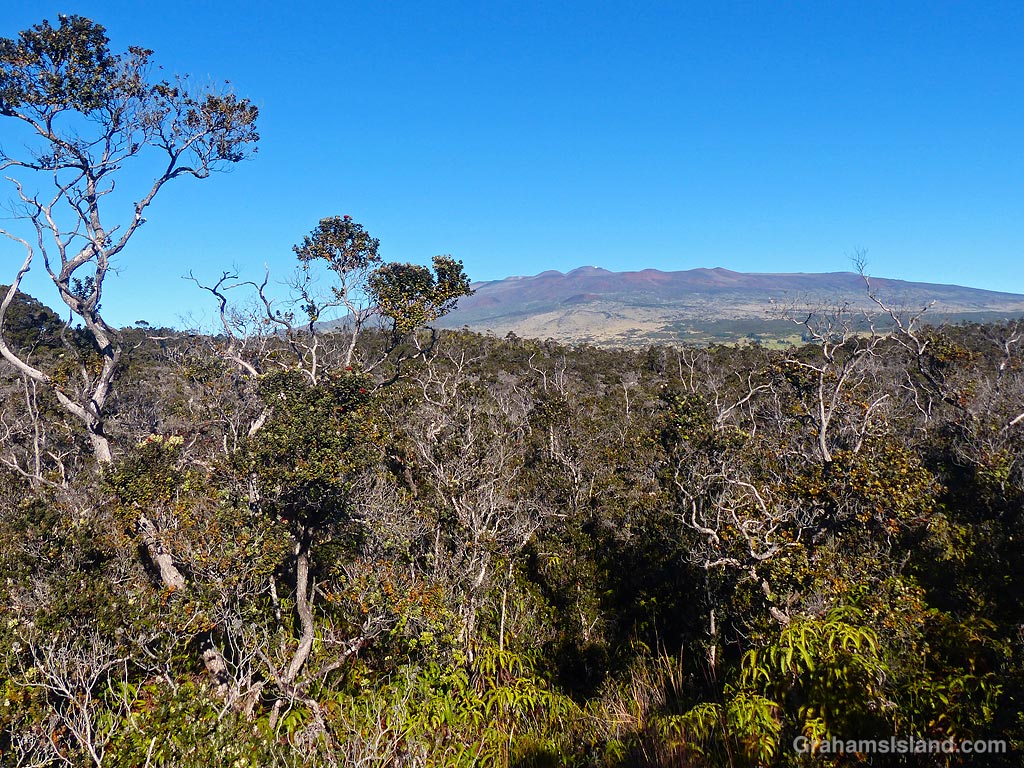
Kaulana Manu Nature Trail used to be known as Kipuka 21. A kipuka is an area of land that has been surrounded by lava and the 21 referred to the fact that this one was located at the 21 mile marker of the road across the middle of the island.
It has been renamed Kaulana Manu Nature Trail, presumably to reflect its new grandeur since the trail has been renovated, which is a good thing. However, a new toilet facility and parking lot, featuring space for three large buses, has also been built, which is not necessarily a good thing.
The trail is a one mile loop through a fragile environment, where native endangered birds can sometimes be seen. I’m not clear on how disgorging busloads of people into this area is going to help preserve things. If three buses did arrive, there would be gridlock on the trail, which is narrow and winding.
Fortunately, when I’ve visited, the place has been pretty much deserted. Long may that continue.
The skydiving plane that operates out of Upolu Airport, has lately been making some lower level takeoffs. A couple of times I’ve been walking up from the coast, east of the runway, when the plane suddenly zoomed into view and whizzed over my head.
On the third occasion, I was ready for it and got this photo. In this case, it was the pigeon that was startled and made a sudden takeoff of its own.
On the coast where I snorkel, there’s a spot known locally as Viper Rock. This is where a very large Viper Moray Eel used to reside in a recess in the rock. I haven’t seen him lately, but it’s also a good spot for a variety of fish so I go down there regularly.
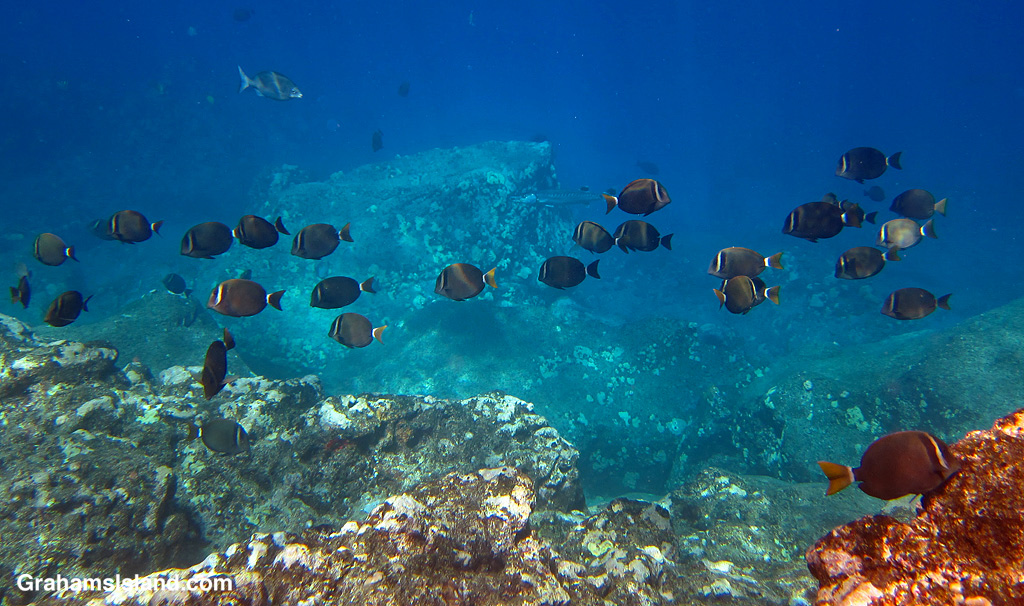
On this day, I approached the rock from the shore side and noticed these Whitebar Surgeonfishes swimming by. Then I noticed the Great Barracuda that can be seen in the background against the edge of the farther rocky outcropping. A few moments later I saw another one, and then a third.
It appeared that the barracuda ohana that frequents that area was around in force. Rather than cross to the other side of the ridge by Viper Rock, where the barracudas were, I returned the way I came. A couple of barracudas looked like they might follow, but quickly lost interest. Their interest in people appears to be related solely to the possibility that those people will snag some fish which the barracudas will then hope to steal.