Category Archives: Animals

Hawaiian garden spider

Hawaiian Garden Spiders

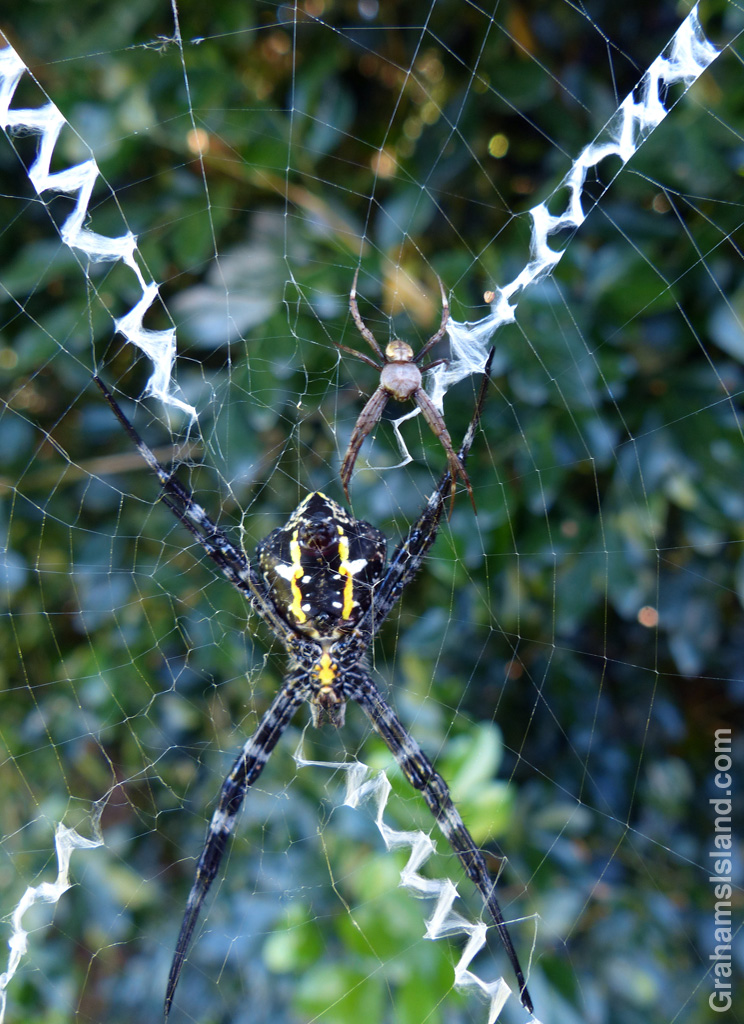
Sorry arachnophobes, but there are spiders in Hawaii. These are Hawaiian garden spiders (Argiope appensa), which came from Asia originally. Mostly it’s the female spider, the large, colorful one in the center of this web, that is seen. Indeed, this was the first time I’ve noticed a male, the much smaller, brown spider. Another web nearby also sported a male and female pair.

Their distinctive webs usually feature one or more broad zigzag lines of silk, called stabilimentum. I’ve read that this is to stabilize the web, but might also serve to lure prey or as a marker to birds and the like, so they don’t fly in to it.

For more information about the Hawaiian garden spider, go to insectidentification.org.

Baby mourning gecko

Baby Mourning Gecko

This little mourning gecko has already been in the wars, having lost most of its tail. The tail will grow back. Geckos can shed their tails as a defensive mechanism, the idea being that the discarded tail, still wiggling, distracts an attacker long enough for the gecko to escape.

There seems to be a regular gecko cycle in the house. A new batch of eggs hatch and the number of baby geckos jumps. They can be seen scurrying over the walls and ceilings with great industry, if no apparent purpose. Over the next few days, their numbers decline until only an odd one or two are seen. Then, a couple of weeks later, a new batch hatches and off they go again.

They seem to succumb to three things: failure to find enough food, getting eaten by larger geckos, and being squashed by the large feet of yours truly. They’re hard to spot on the floor, especially in low light.

For more information about geckos, go to geckoweb.org.

Feral cats at a county park

Feral CatsFeral Cats

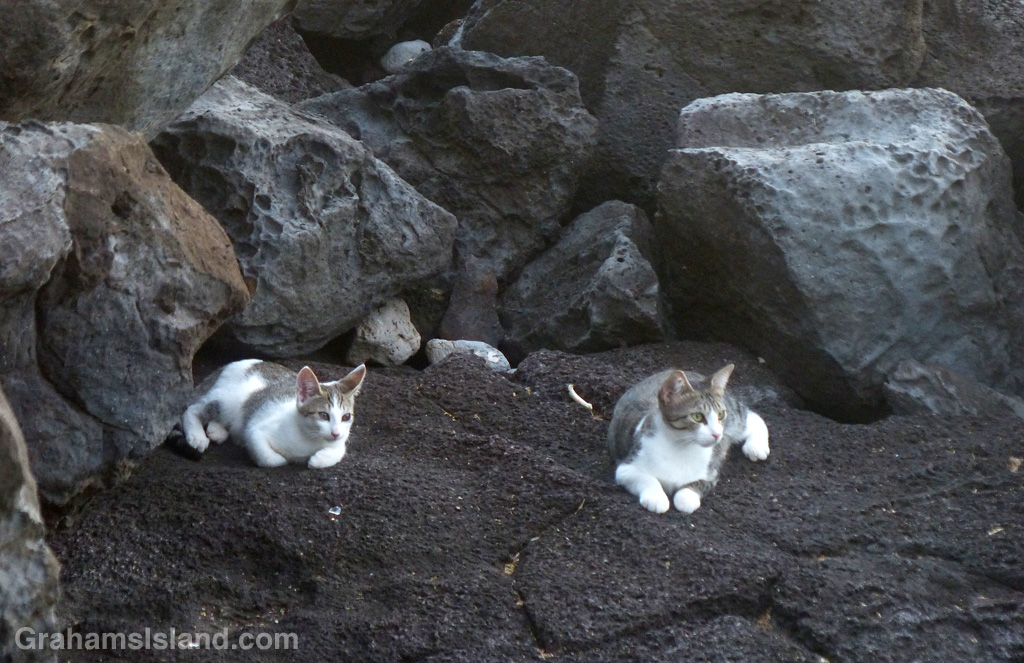
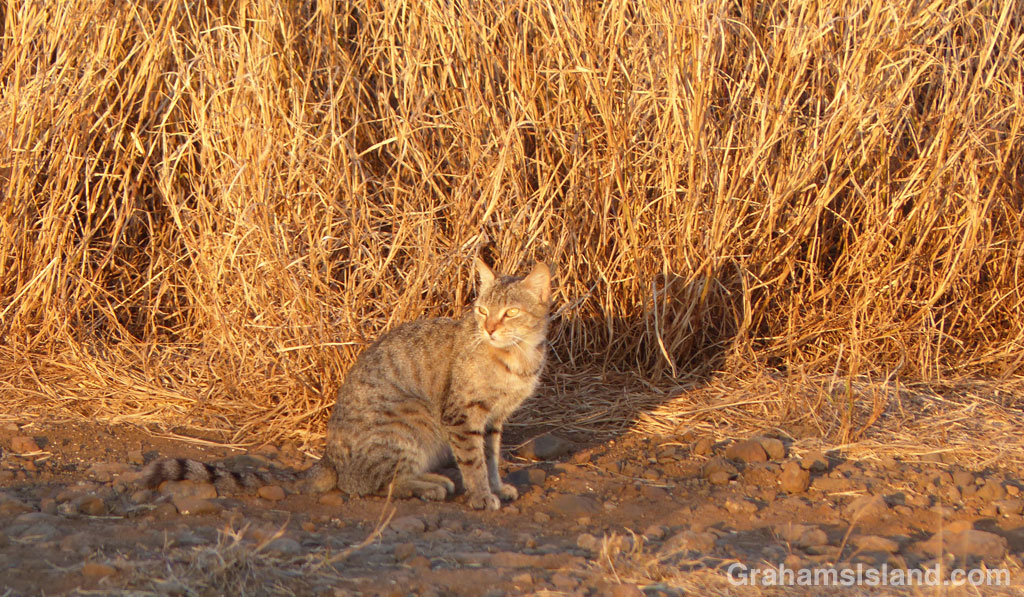
These cats look cute, but they’re wild and feral cats are something of an issue on the island. Besides the usual problems, their feces can carry Toxoplasma gondii, a microscopic protozoan parasite, which can be washed into the water in runoff. This parasite is potentially fatal to monk seals with several deaths attributed to it.

Feral Cat Mahukona

Anole rush hour

Anole rush hour

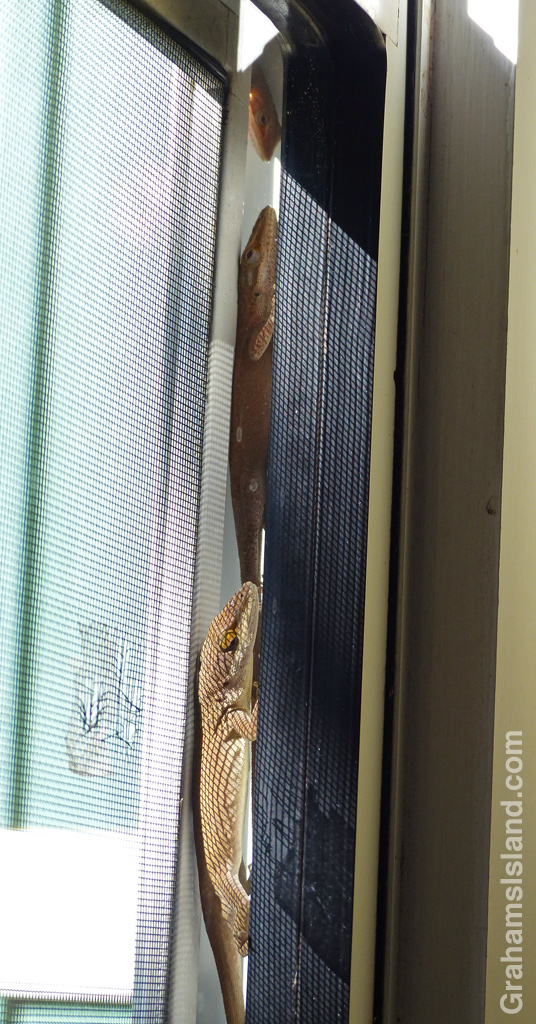
I previously posted about the anoles who live in one of the windows (here). They’re still very much in residence and on a recent morning things got a bit backed up in there. Their entry and exit point is in that top corner of the window. At the bottom of this threesome is the alpha male of the group who looked like he was getting a mite ticked off. I didn’t stick around to see what happened since, from experience, I know these encounters can take a good while to resolve.

For more information about green anoles, go to en.wikipedia.org/wiki/Carolina_anole.

Hawaiian monarch butterfly

Hawaiian Monarch Butterfly
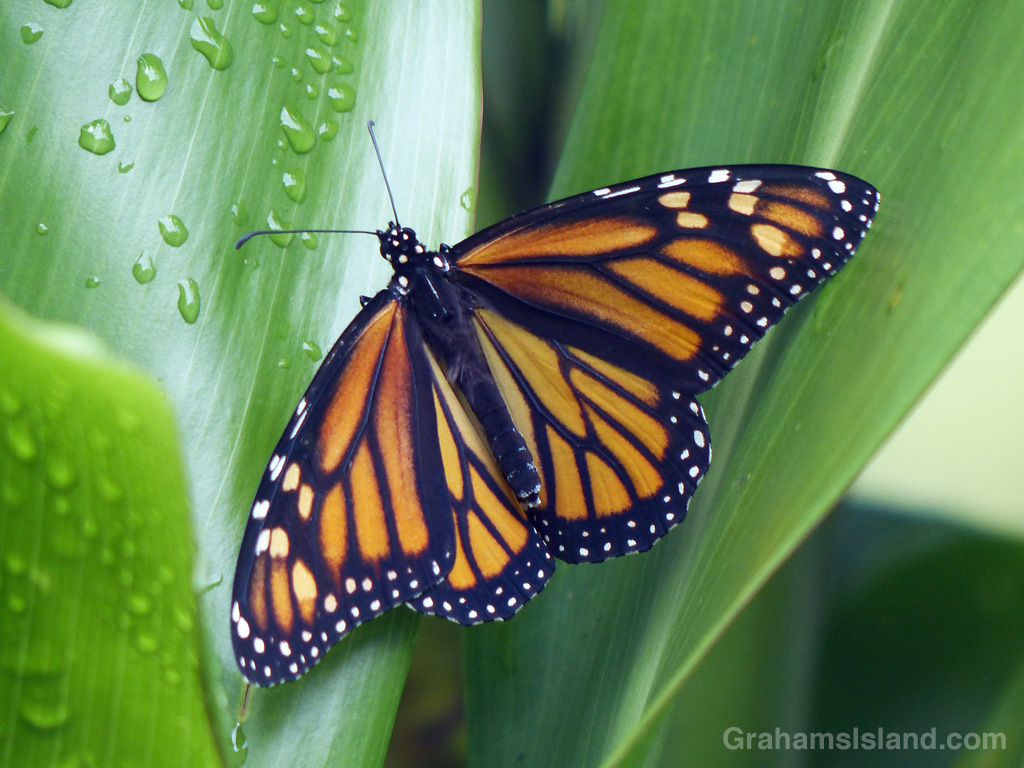
The Hawaiian monarch butterfly comes from the same stock as the mainland variety. It made its way to Hawaii in the mid 1800s, shortly after the milkweed plant (one of the Monarch’s host plants) was introduced. There’s a white variant that’s been seen on Oahu, but not on the Big Island as far as I know.

Anole striptease

Green Anole Shedding

Green Anole shedding


OK, so the headline is just clickbait (well, for some strange people maybe), but the big anole that lives in one of the windows recently shed his skin. The old layer had a lovely lacy look as it peeled away in the morning sun. When I next saw him, a couple of hours later, he was all done and looking splendid in his new outfit.

For more information about green anoles, go to en.wikipedia.org/wiki/Carolina_anole.

Green Anole shedding

Gold Dust Day Gecko and Black Witch Moth

What's this then?

What’s this then?

Perhaps it hasn't seen me.

Perhaps it hasn’t seen me.

Should I or shouldn't I?

Should I or shouldn’t I?

Alright then.

Here goes.

So far, so good.

So far, so good.

Rats!

Rats!


This gecko initially wasn’t quite sure what to make of such a large moth (that’s a 2×4 the moth is sitting on). But geckos are nothing if not optimists and dreams of glory spurred him on (well, I like to think so.). Ultimately a case of so near, and yet so far.