This moth appeared on the back door of the house a few days ago. It remained there through the afternoon and evening, posing a bit of a problem when going in and out. We didn’t want it to fly into the house, but it appeared unconcerned at our coming and goings. Next morning, it was gone.
The praying mantis had been on the rail for some time when the sparrows arrived. I feared for its chances, but it remained very still and the sparrows never seemed to notice it, even though they hung around for a while.
This week’s Sunday Stills Monthly Color Challenge is ‘Purple.’ See more responses here.
I’d like to say I have some kind of theme going here, but I don’t, outside the color.
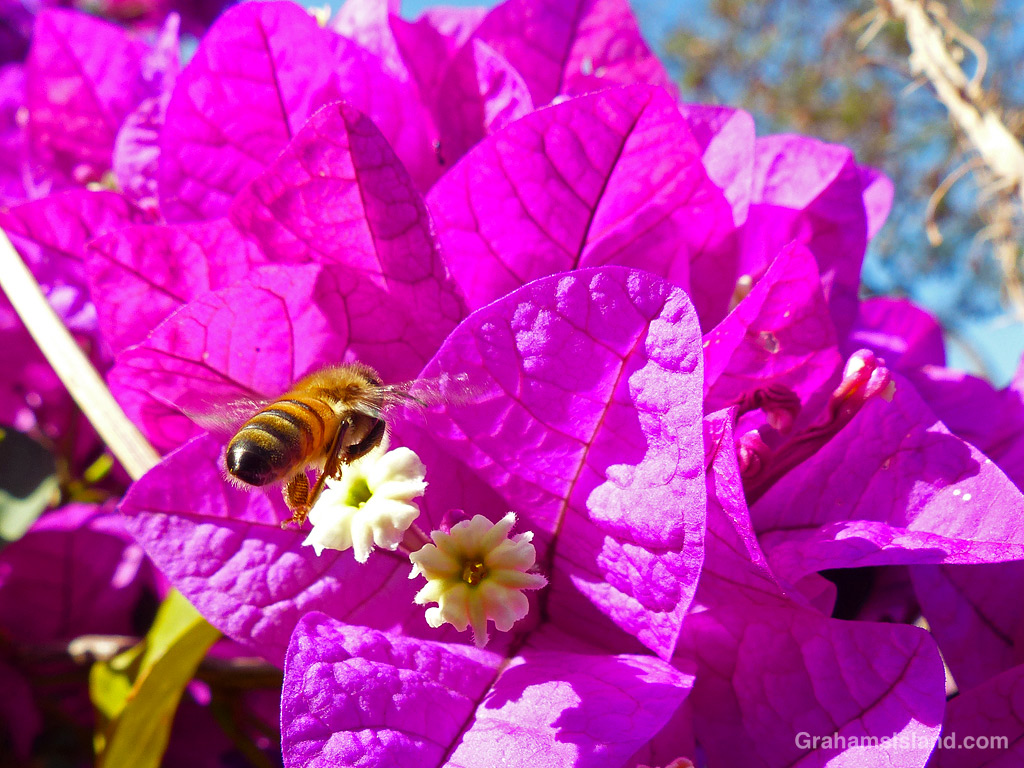
First up is a bee approaching a very purple bougainvillea.
In the gallery, we have a Fiery Skipper butterfly feeding on a Blue Heliotrope (Heliotropium amplexicaule) flower, a purple and white spider lily, and some dark purple Helmet Urchins clinging tenaciously to a rock.
Then there’s a sign advertising purple ice cream. Not sure what flavor that is, but I’m a bit wary.
I noticed that in the front border of the house, the ferns and Mother-in-Law’s Tongue or Snake Plant (Sansevieria Trifasciata) needed weeding and cutting back as there was foliage up against the house, a handy highway for ants and centipedes and who knows what else. The only problem is that, at this time of year, this little garden is guarded by a wall of spiders.
These three Hawaiian Garden Spiders are just a few of that kind there, and they’re accompanied by the usual mass of crab spiders and one or two others I’m not familiar with. I wouldn’t mind moving the crab spiders, whose main activity seems to be to build webs in places that mean they’ll end up wrapped around my head. But the garden spiders, I have a soft spot for. The females are quite beautiful and the males, while drab and tiny, are very watchable as they try to mate with the mighty females.
I guess the weeds can wait for another week or two.
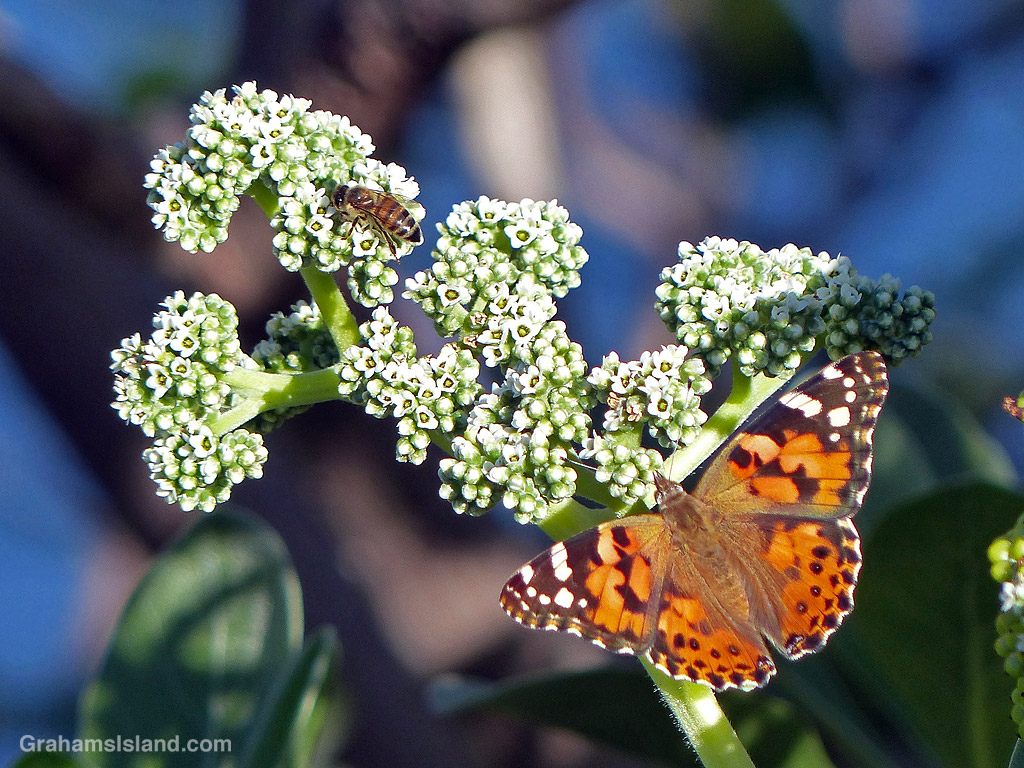
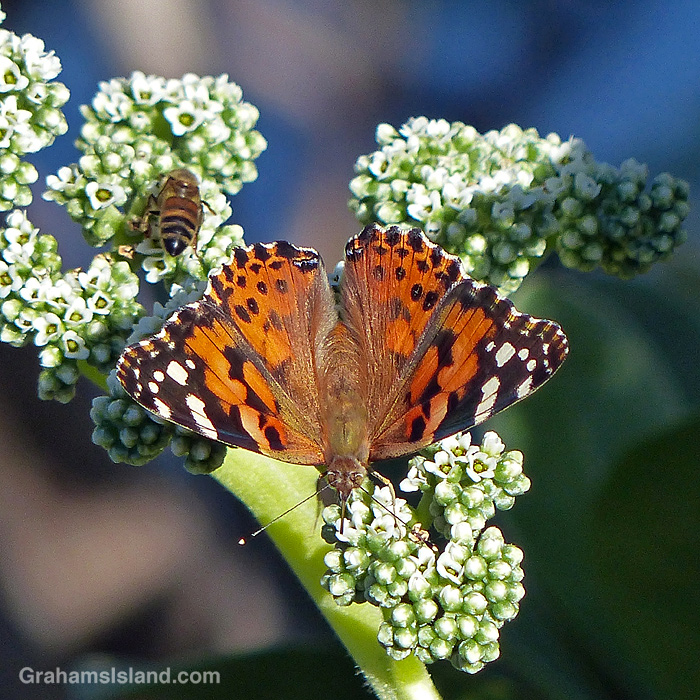
I saw this Painted Lady Butterfly and bee feeding on Tree Heliotrope flowers. Mostly, the various insects at work seem to accommodate each other, but I’ve seen occasional flurries of activities when one insects behavior disturbs the others. These two were very harmonious.
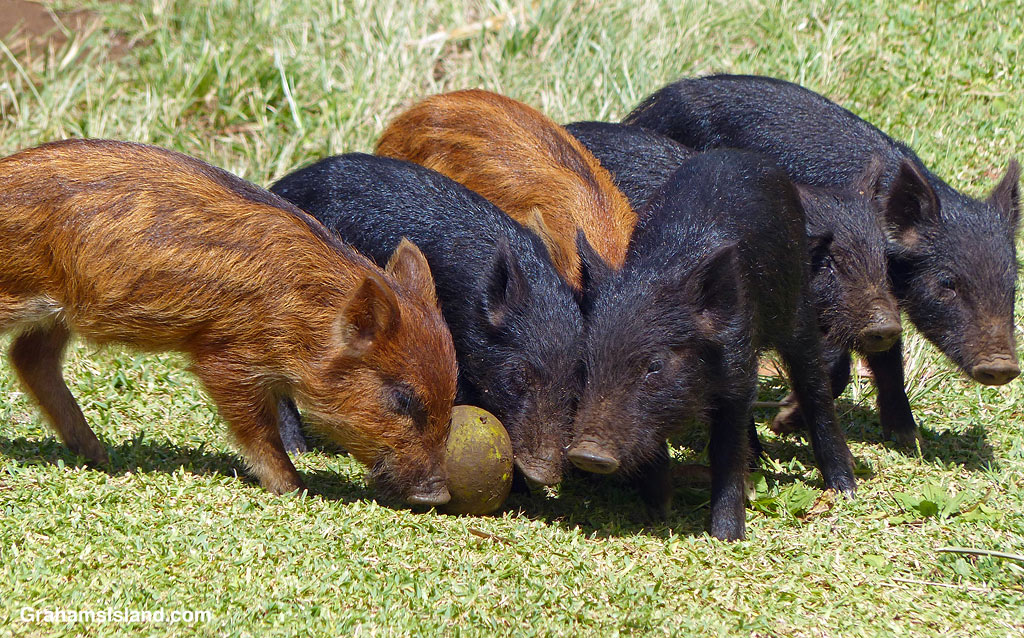
Leave one large unripe mango on the ground and wait for the arrival of seven small piglets. Watch them bat the mango around, trying to snare it in their small jaws. There are no rules in this game, so pushing and shoving is common, as is running around for no clear reason.
The winner is the one who snags and keeps the mango.
It’s a strenuous activity so a post-game rest is advised.










 Graham's Island