This week’s Sunday Stills Monthly Color Challenge is ‘Purple.’ See more responses here.
I’d like to say I have some kind of theme going here, but I don’t, outside the color.
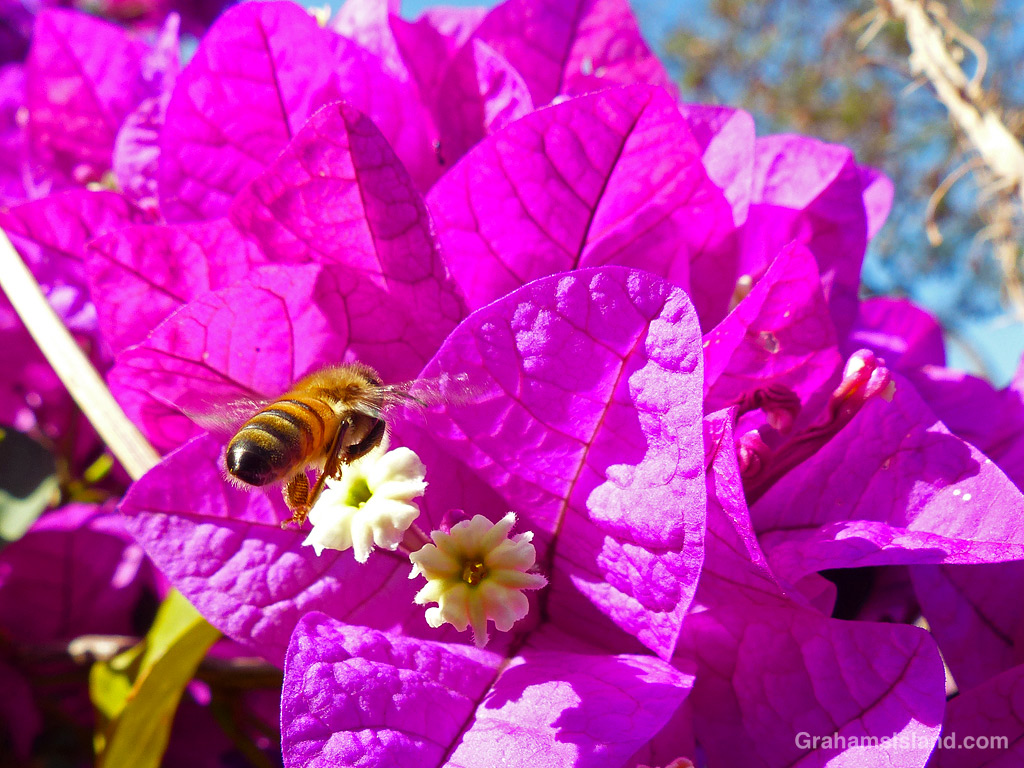
First up is a bee approaching a very purple bougainvillea.
In the gallery, we have a Fiery Skipper butterfly feeding on a Blue Heliotrope (Heliotropium amplexicaule) flower, a purple and white spider lily, and some dark purple Helmet Urchins clinging tenaciously to a rock.
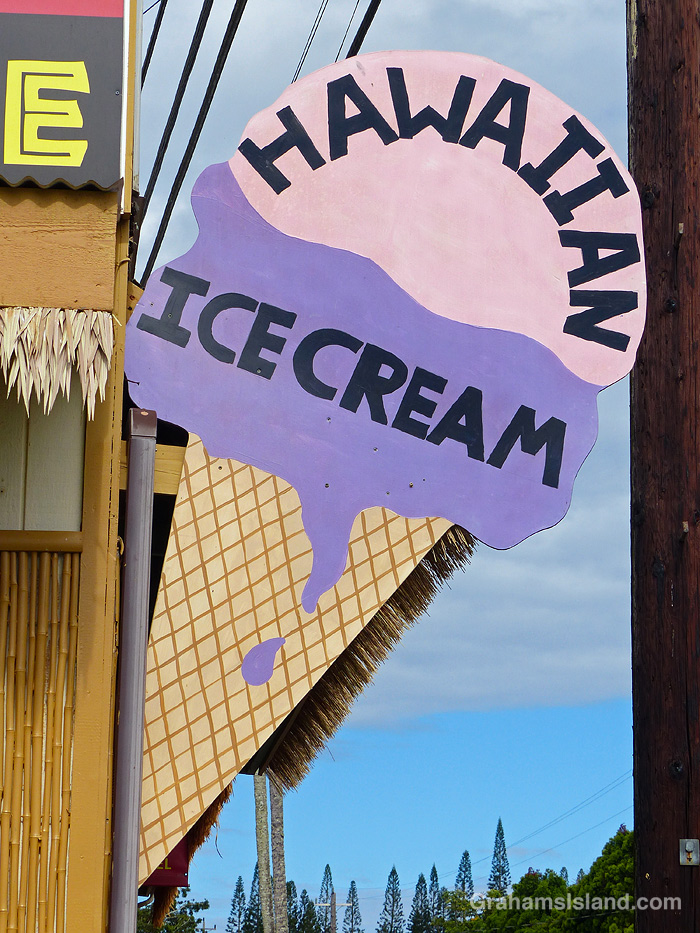
Then there’s a sign advertising purple ice cream. Not sure what flavor that is, but I’m a bit wary.
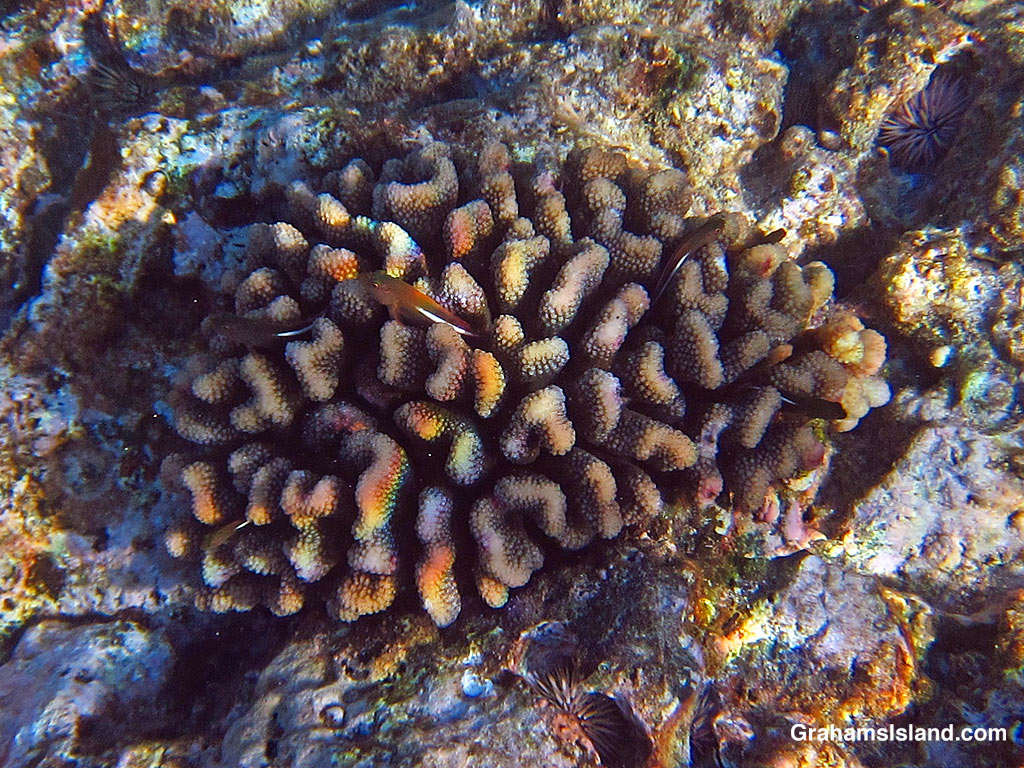
How many Arc-eye Hawkfishes can you fit in a head of Cauliflower Coral? I count six here, though there could be more, and who knows what else besides. Corals like this offer vital shelter for small fish and other creatures seeking to avoid the many predators out hunting.
Recently, I was sitting on a rock, preparing to get in the water. There were a lot of little black bumps on the rocks, which I’ve seen before, but never really paid attention to. Except, this time, I noticed some of the bumps were moving.
These bumps are Black Nerite Snails which live just above the waterline. They’re about half-an-inch long and graze on small plants that grow in that zone.
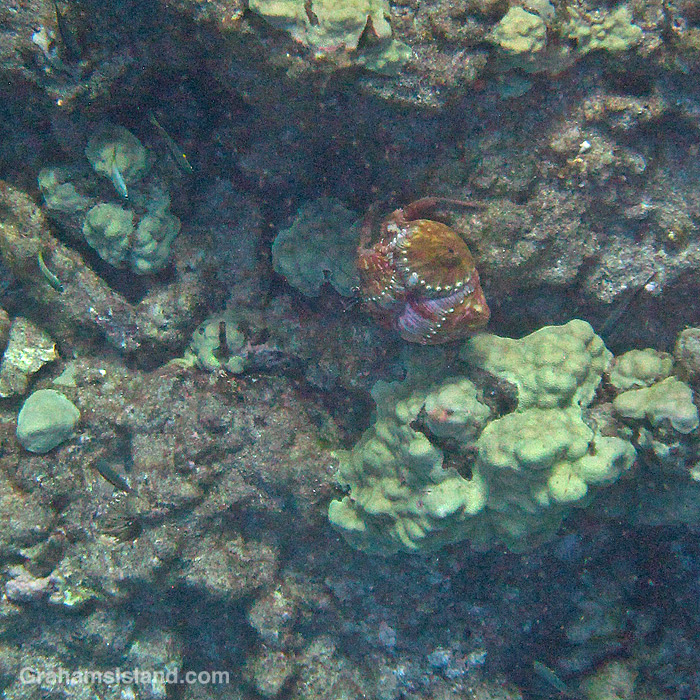
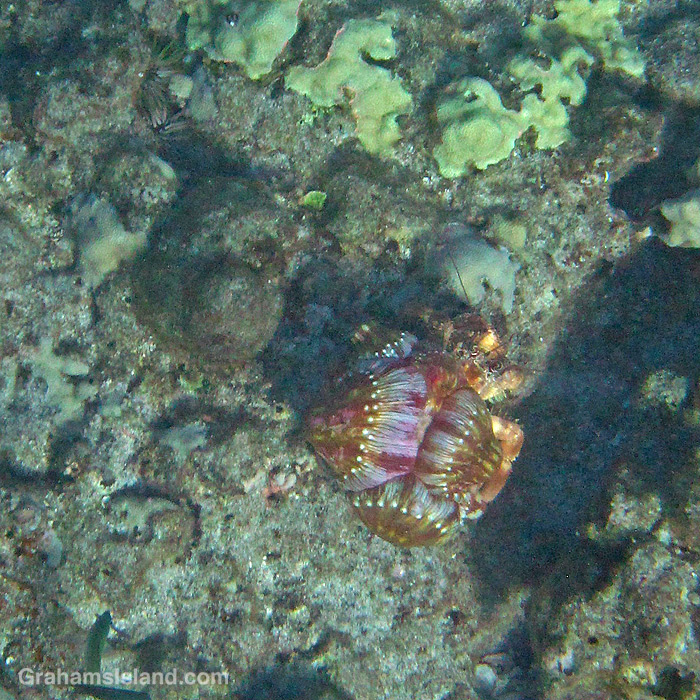
I spotted this Jeweled Anemone Crab scuttling over some very uneven rock and coral, but it was still able to move at a pretty good pace. The Jeweled Anemone Crab is a hermit crab, meaning it lives in a snail shell, either one it found unoccupied, or one from which is evicted the current tenant.
This one looks to have found a colorful shell, but looks are deceiving. The shell isn’t visible at all, because it’s covered by at least four large anemones! These are Calliactis polypus anemones. They give the crab some protection because, if disturbed, they shoot out stinging threads. In return, they get transportation and possibly scraps of food from the crab.
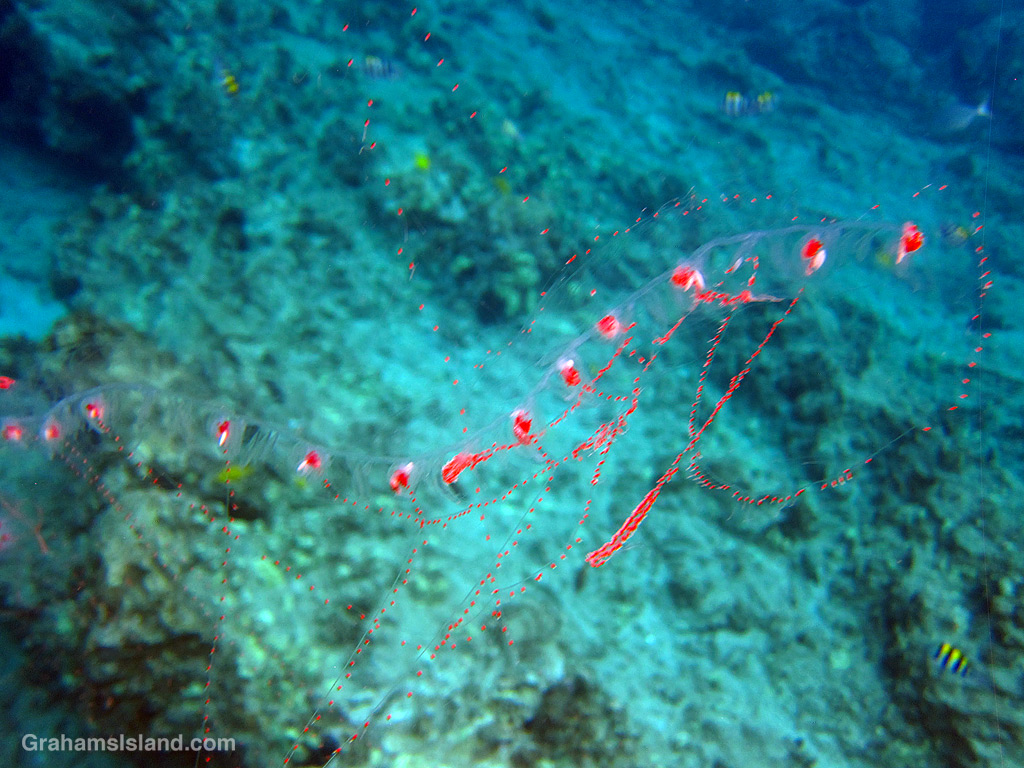
I was snorkeling recently when I saw this strange tubular stringy thing. That’s not a scientific term. My first thought was that it was a Chained Salp, a tunicate that is a colony of individual Salps. But this one seemed a bit different. There was the main tube, but also thinner strings hanging off it.
I started taking photos, which was a bit of a trick in the lumpy swell. I wasn’t worried about getting too close since Chained Salps are harmless. I wasn’t worried until I got too close and realized I’d been stung on the hand by some those tendrils! That was enough for me and I headed to shore.
Back at the house, I couldn’t identify it in my book so I emailed a fellow snorkeler who is well-versed in these sort of things. She had encountered these before and identified it as a Siphonophore (Thanks, Wendy.). Like the Chained Salp, this is a colony of individuals, but unlike the harmless salps, siphonophores have stinging tentacles which they use to catch prey.
Possibly the best known Siphonophore is the Portugese Man-Of-War, one of which had stung a fellow snorkeler just a few days earlier. His wounds were very painful, but I got off easily, with just red welts and a mild burning sensation for a couple of hours.
A pair of Fourspot Butterflyfishes disturbed a pair of Arc-eye Hawkfishes perched in a head of Cauliflower Coral, as they often do. The coral head is doing OK, but areas of it have died off, probably during one of the coral bleaching events that have happened in the past few years, where the water gets too warm.
I can get chilly fairly easily when I go swimming, but for me, it’s more distressing when the water feels oddly warm because I know this is bad news for the corals.
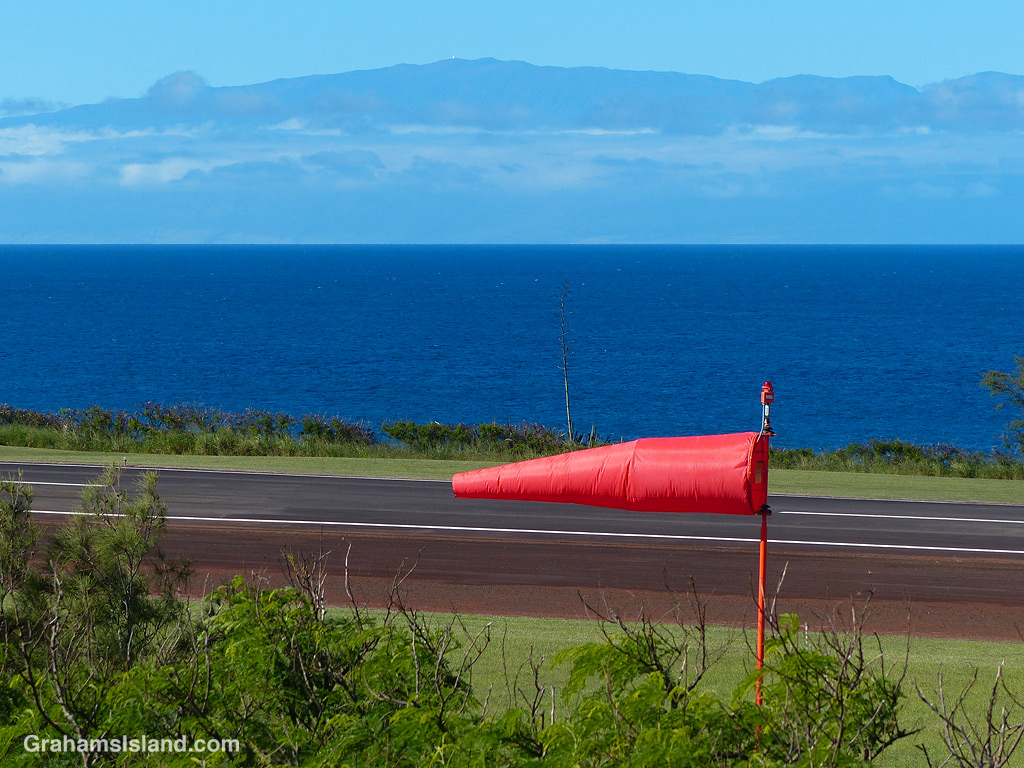
The windsock at Upolu Airport with Maui in the background.
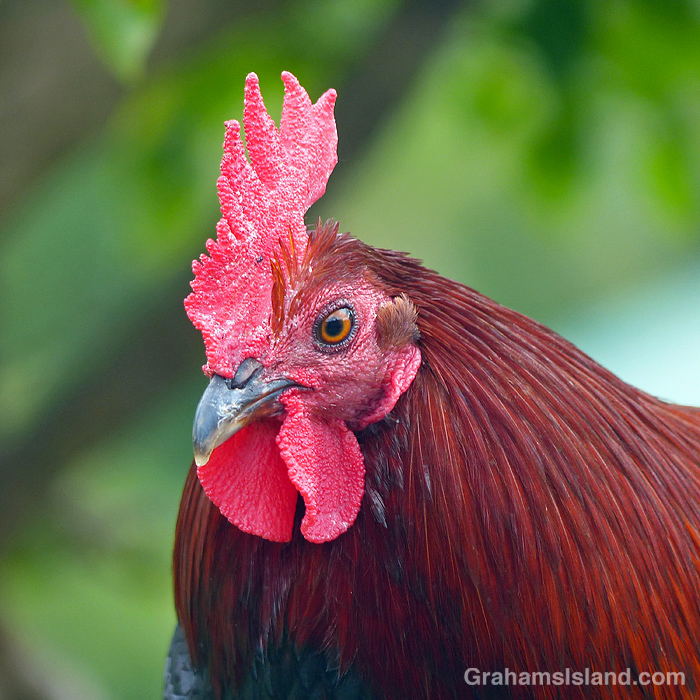
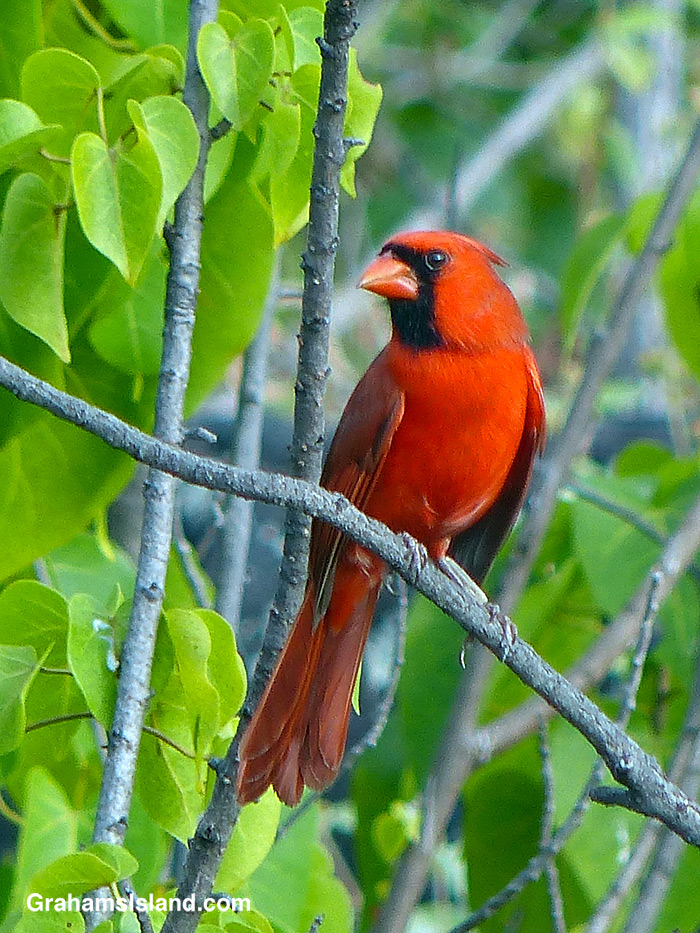
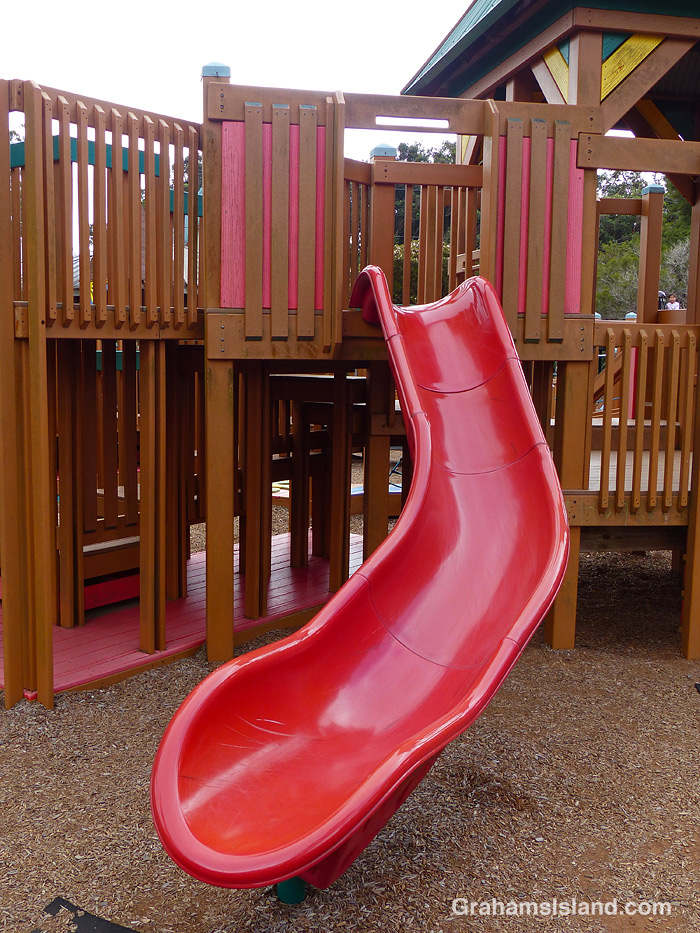
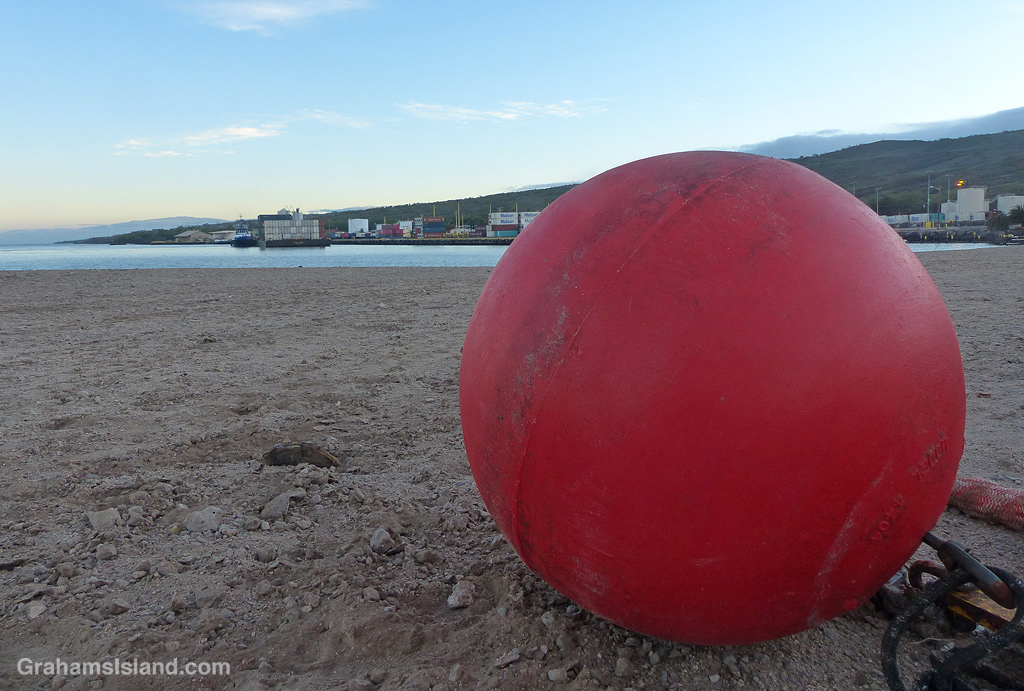
This month’s Sunday Stills Color Challenge is ‘Red.’ See more responses here. A variety of subjects for this one!
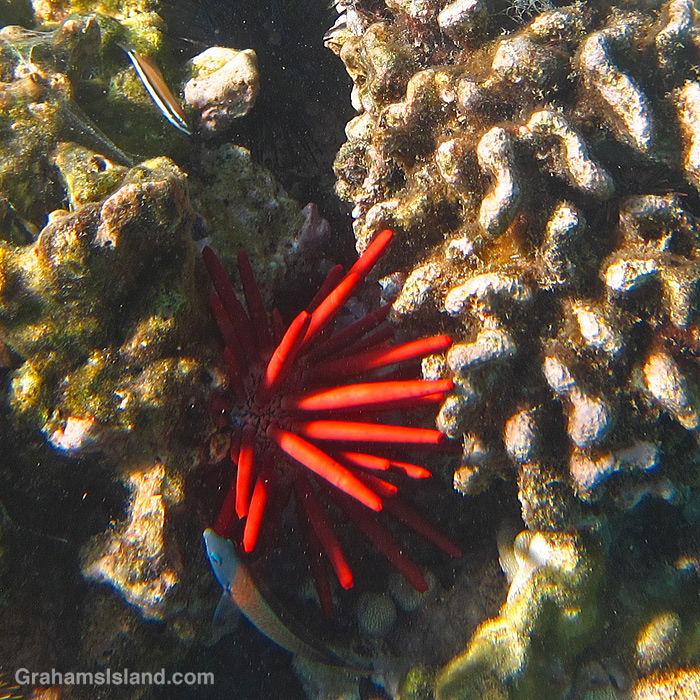
A Red Pencil Urchin in the shallows off Kohala.The red crest of one of the many chickens roaming free around here.A Northern Cardinal in a tree near the South Kona coast.A slide at a kid’s playground in Waimea.A large buoy on the beach at Kawaihae Harbor with an inter-island barge arriving in the background.








 Graham's Island