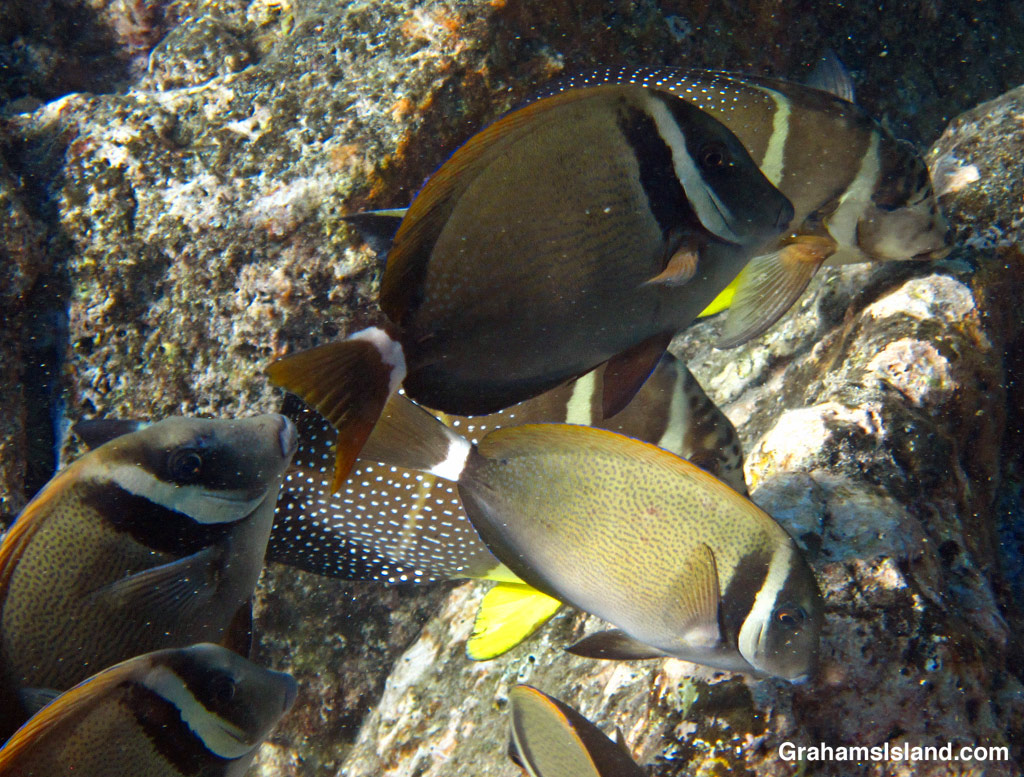
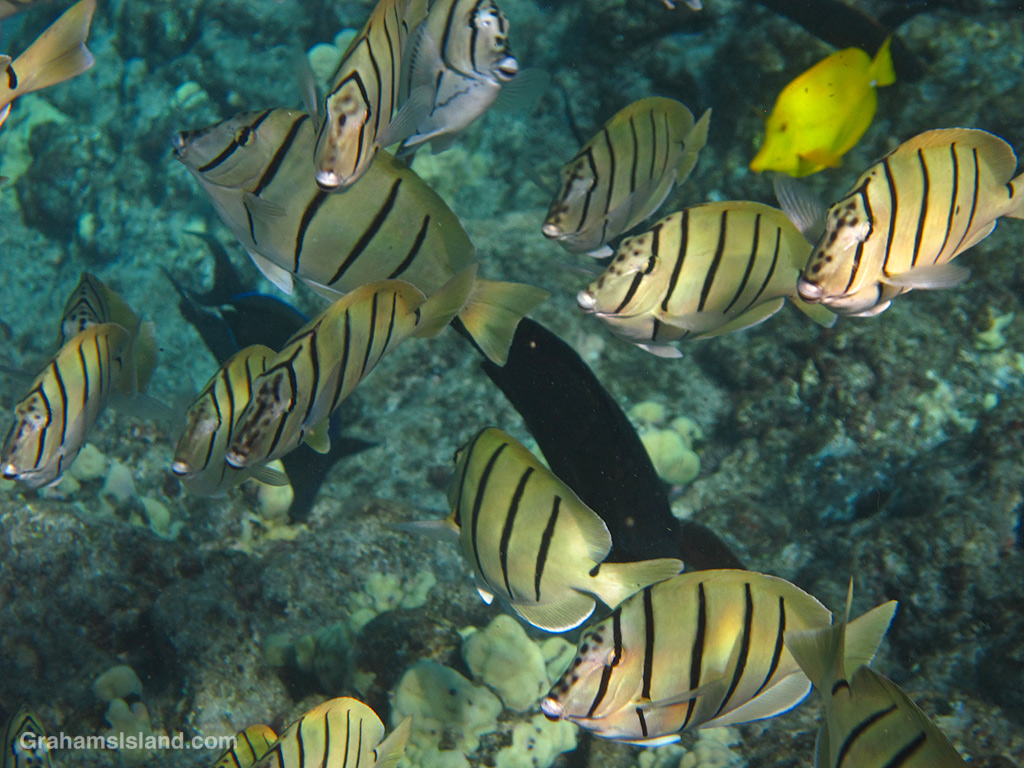
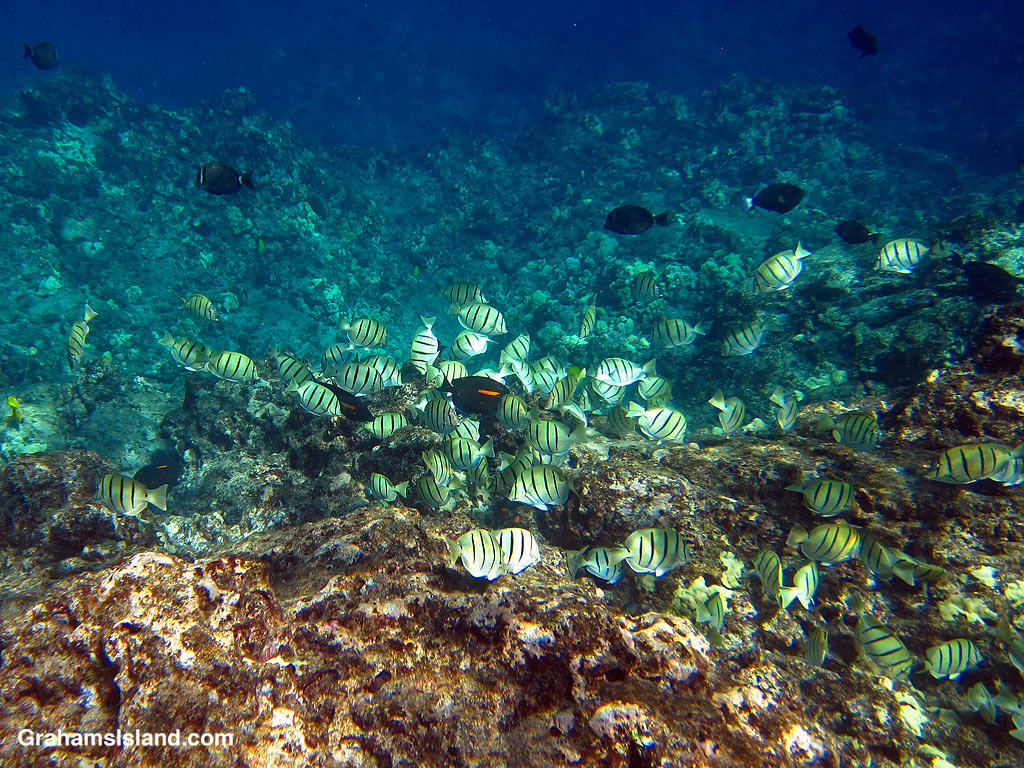
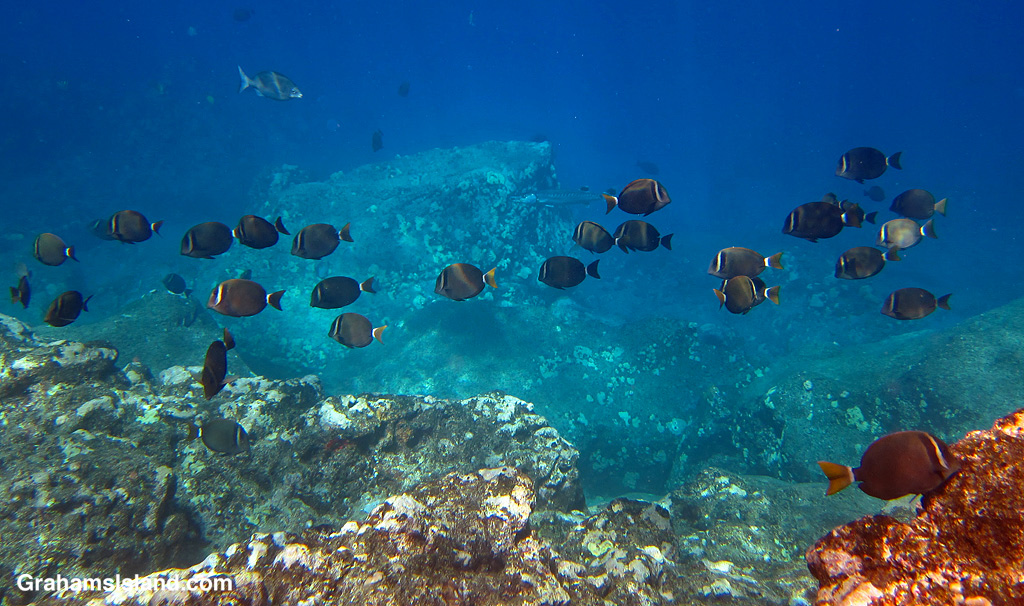
Schools of Whitebar Surgeonfishes are fairly common where I snorkel most. They cruise around rocky areas, feeding on algae. Often they can be seen with other reef fish such as Convict Tangs or Whitespotted Surgeonfish, seen in the background of the lower photo.
Most of the fish in this photo, with five vertical black bars, are Indo-Pacific Sergeants. But there are a few fish where the bars fade away and these are endemic Hawaiian Sergeants. The two species sometimes interbreed, so some of these fish might be hybrid sergeants. Regardless, they’re a familiar sight in the water, usually swimming in large groups and feeding high in the water.
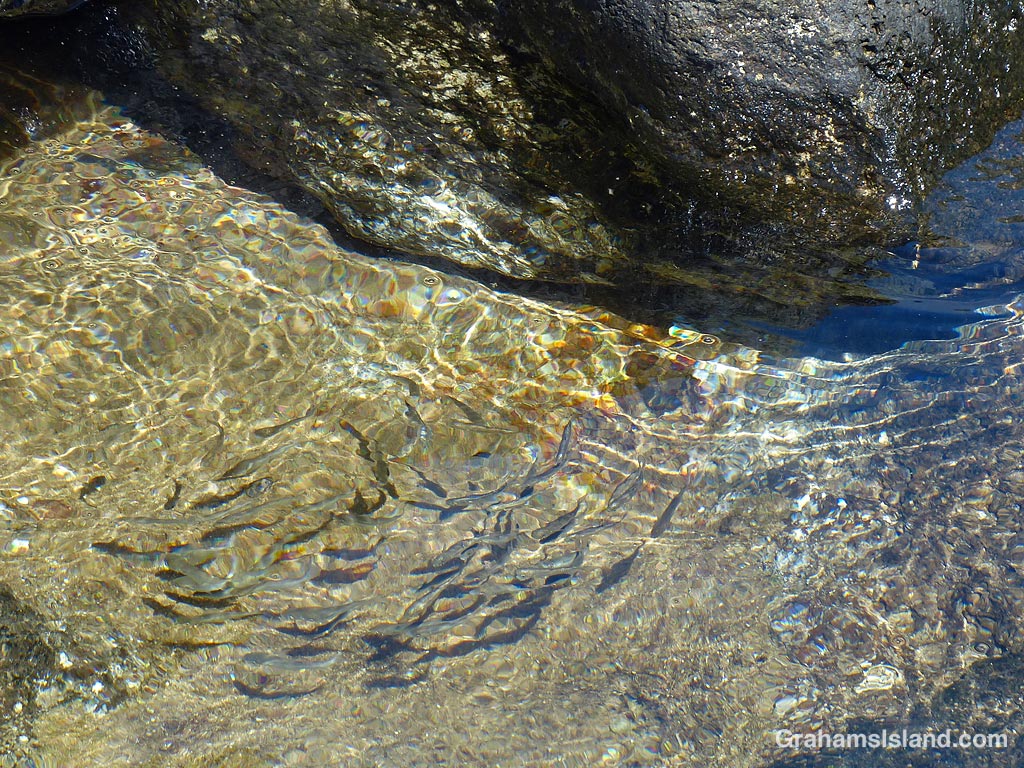
I was taking photos of Tahitian Prawns in the stream at Hawai’i Tropical Bioreserve & Garden, but when I looked at them later, I mostly liked the abstract effect of the light and water. But, yes, there is a Tahitian Prawn in this photo.
For more information about Hawai’i Tropical Bioreserve & Garden, go to htbg.com.
This week’s Sunday Stills color challenge theme is ‘Ruby Red.’ See more responses here.
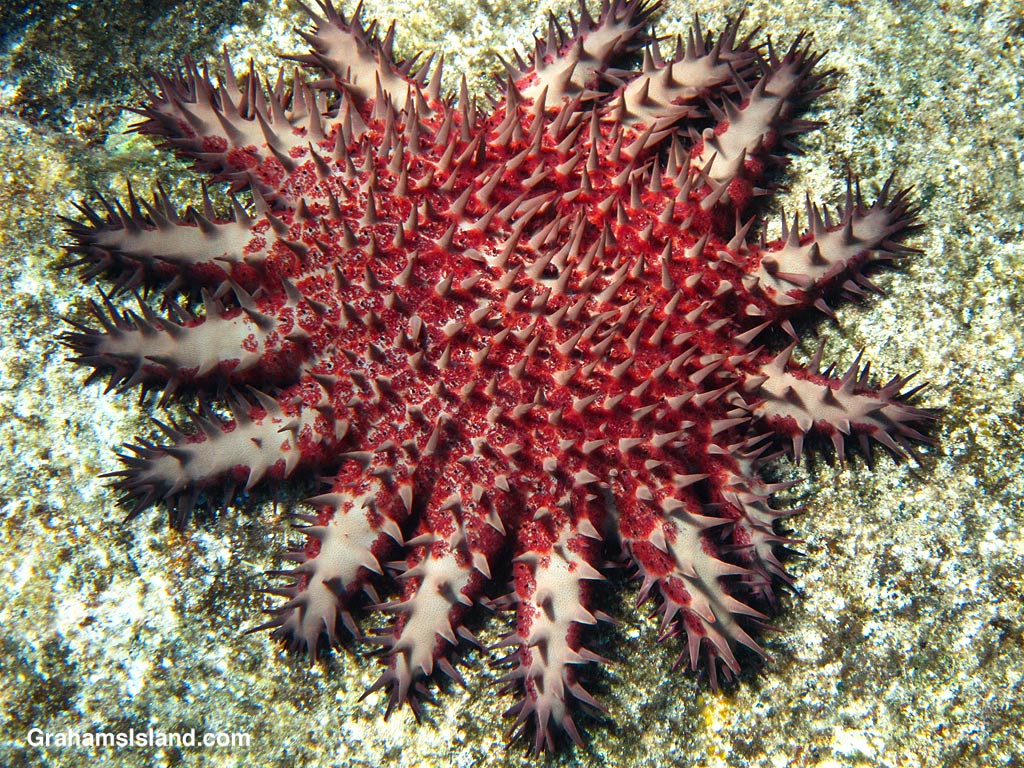
The top photo shows a Crown of Thorns sea star, which feeds on coral, though not to a problematic extent in Hawaii.
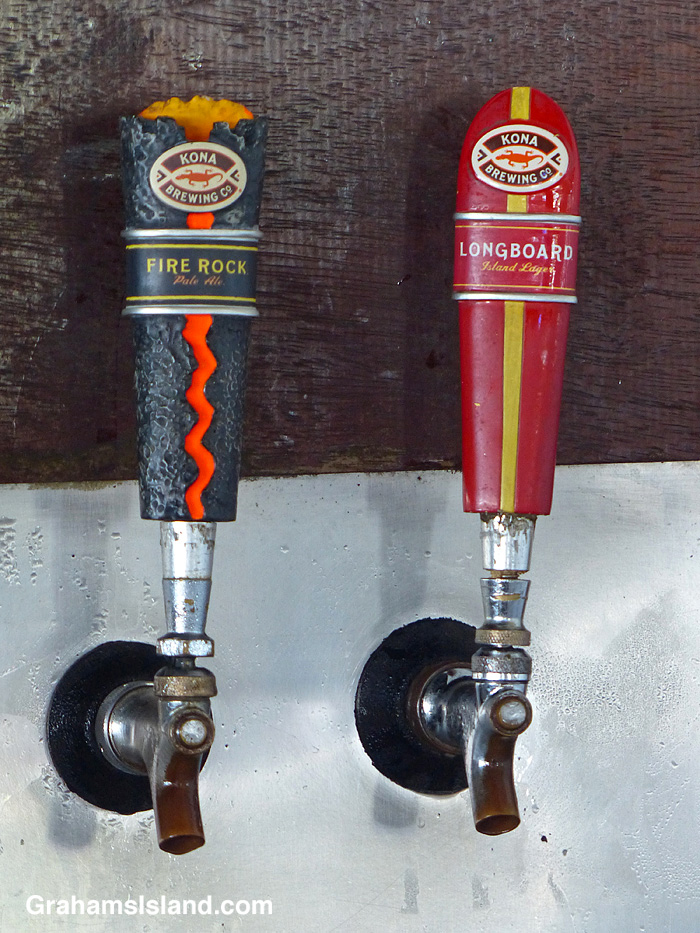
The second photo illustrates a definite problem. When I stopped by the Harbor House restaurant at Honokohau, these were the only two Kona Brewing taps available. I was told the company has discontinued their Castaway IPA, which, if true, is a sad state of affairs, it being by far their best beer in my humble, but completely correct opinion.
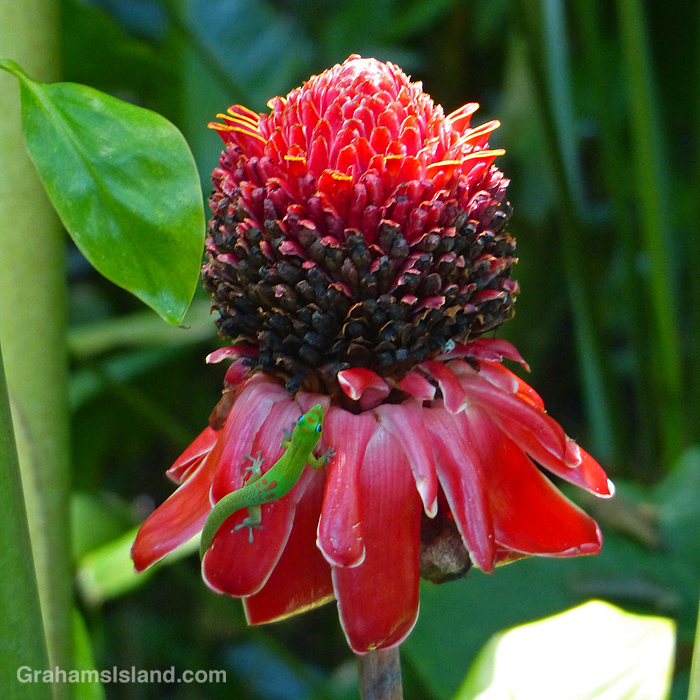
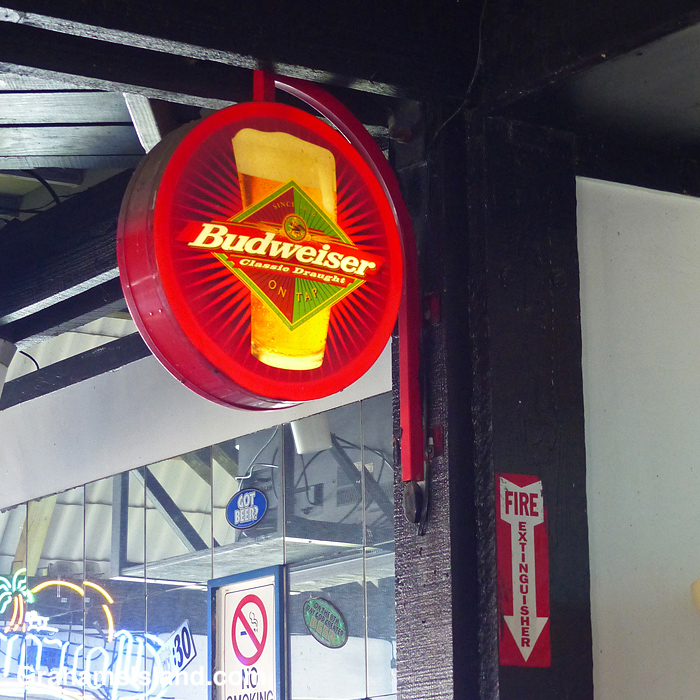
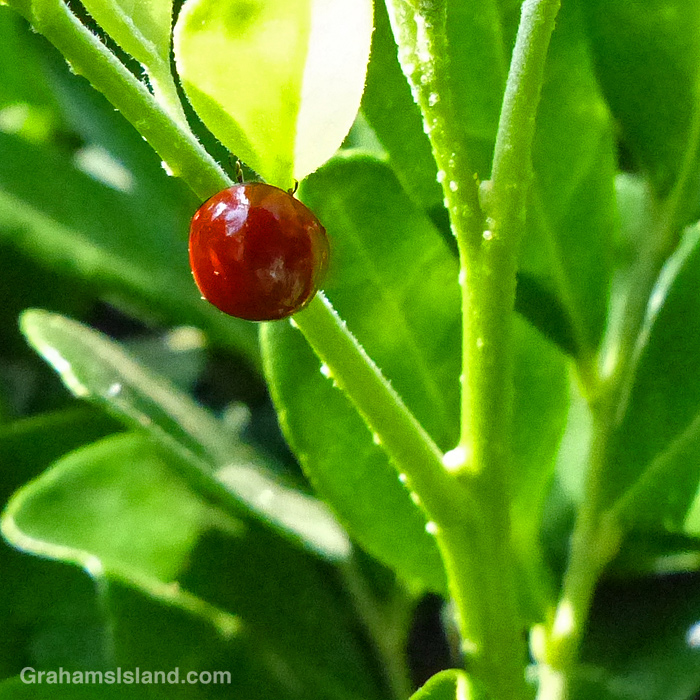
The bottom three show a Gold Dust Day Gecko on a torch ginger, a Budweiser (not my beer of choice) sign at the Harbor House, and what I think is a Western Blood-red Lady Beetle.
The top photo looks like a single eel, but a closer look shows some color variation. It’s really two Whitemouth Moray Eels. I noticed the first one, with its head on the right of the photo, and took a few photos. Then a second, smaller Whitemouth swam into the picture. It was nearer to me, but then retreated into the crack angling at 45 degrees to the first eel.
It popped out of the other end of the crack, and the two eels looked at each other for a moment. The smaller eel then headed toward the other one, only to be greeted by a nip on the head. Chastened, it retreated back into its crack and that’s the way I left them.
The aptly named Convict Tangs are distinguished by six vertical black bars against a yellow-green background. One of these bars crosses the eyes, a feature common in many fish, which is thought to help confuse possible predators.
Convict Tangs are usually seen in large schools, again a tactic to deter predators.
On the coast where I snorkel, there’s a spot known locally as Viper Rock. This is where a very large Viper Moray Eel used to reside in a recess in the rock. I haven’t seen him lately, but it’s also a good spot for a variety of fish so I go down there regularly.
On this day, I approached the rock from the shore side and noticed these Whitebar Surgeonfishes swimming by. Then I noticed the Great Barracuda that can be seen in the background against the edge of the farther rocky outcropping. A few moments later I saw another one, and then a third.
It appeared that the barracuda ohana that frequents that area was around in force. Rather than cross to the other side of the ridge by Viper Rock, where the barracudas were, I returned the way I came. A couple of barracudas looked like they might follow, but quickly lost interest. Their interest in people appears to be related solely to the possibility that those people will snag some fish which the barracudas will then hope to steal.






 Graham's Island