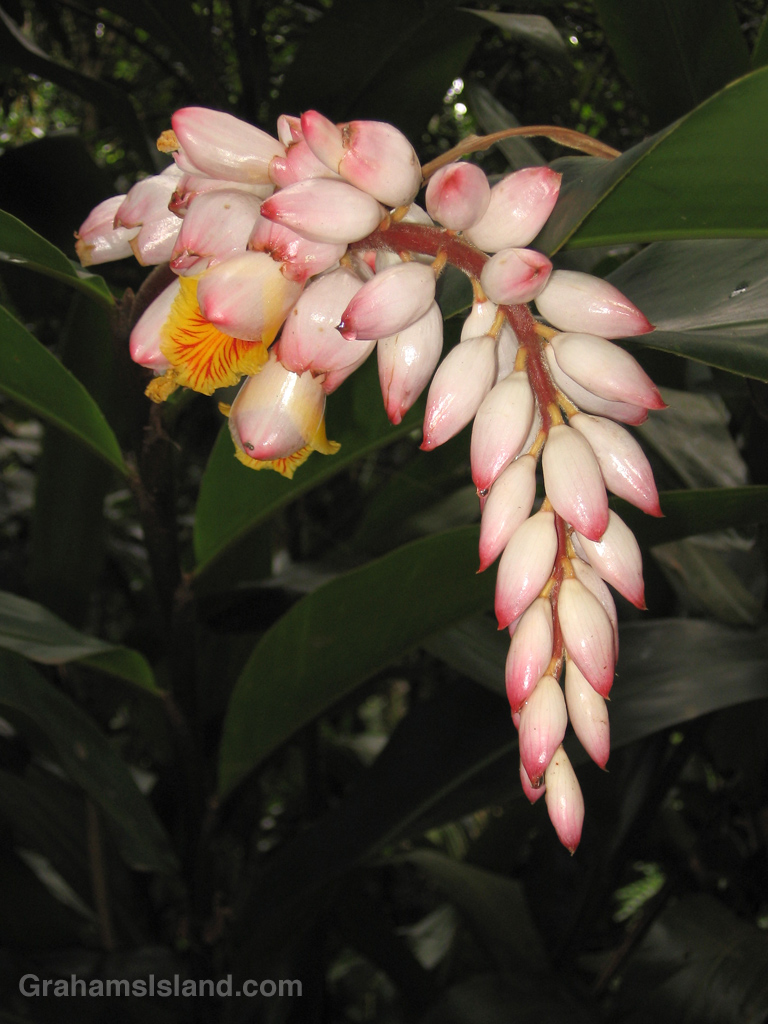
Originally from Asia, the shell ginger and its sensuous flowers is quite common in wetter areas.
For more information about Hawaiian flowers, go to wildlifeofhawaii.com/flowers/.
Originally from Asia, the shell ginger and its sensuous flowers is quite common in wetter areas.
For more information about Hawaiian flowers, go to wildlifeofhawaii.com/flowers/.

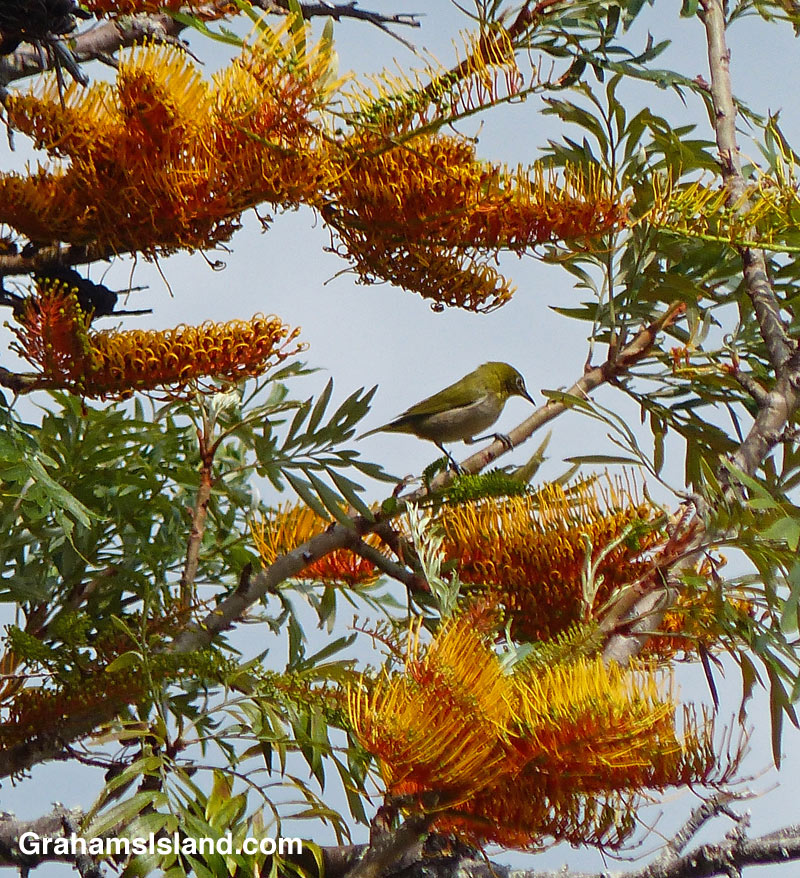
The brilliant orange flowers of silk oak trees not only catch the eye, but are rich with nectar, making them a favorite of birds such as Japanese white-eyes. There were several flitting through this particular tree.
For more information about silk oaks, go to wildlifeofhawaii.com/flowers/1368/grevillea-robusta-silk-oak/.

Originally from South America, Lantana camara is a shrubby plant that can grow to 6 feet. Its cheerful, multicolored flowers are followed by berries that are a favorite of birds. The birds, in turn, disperse the seeds which lead to the plant being common in many places. Too many perhaps. It’s another of those invasive weeds here, this one particularly problematic because it’s poisonous to livestock.

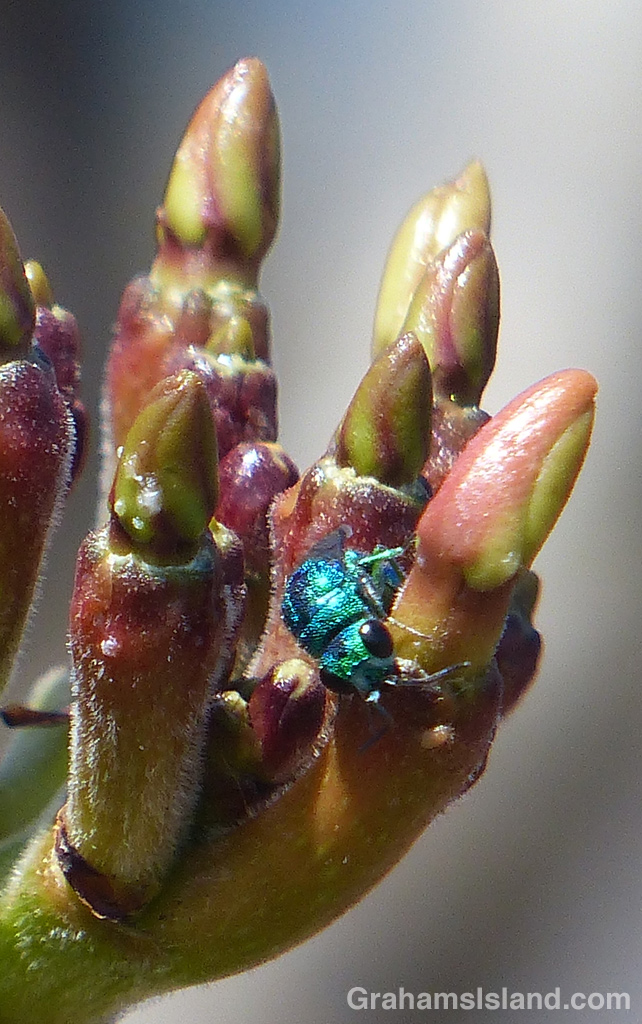
I saw this small, bright insect flitting about on the new growth of a plumeria. The cuckoo wasp gets its name from its practice of laying eggs in the nests of other wasps and bees. Once hatched, the cuckoo wasp eats the host wasp or bee larva. Then it eats the food placed in the nest for the host’s offspring. Probably not an insect to invite to your next dinner party.
For more information about cuckoo wasps, go to bugguide.net/node/view/6946.
 I believe these striking plants are purple anthuriums, which I saw at the Hawaiian Tropical Botanical Garden on the Hilo side of the island.
For more information about Hawaiian flowers, go to wildlifeofhawaii.com/flowers/. For more information about Hawaii Tropical Botanical Garden, go to htbg.com.
 I saw this vanda orchid (v. Robert delight) while having lunch at Waipio Cookhouse. Love the blooms and hanging roots.

This bamboo orchid was all by itself in a sea of grasses.
For more information about Hawaiian flowers, go to wildlifeofhawaii.com/flowers/.
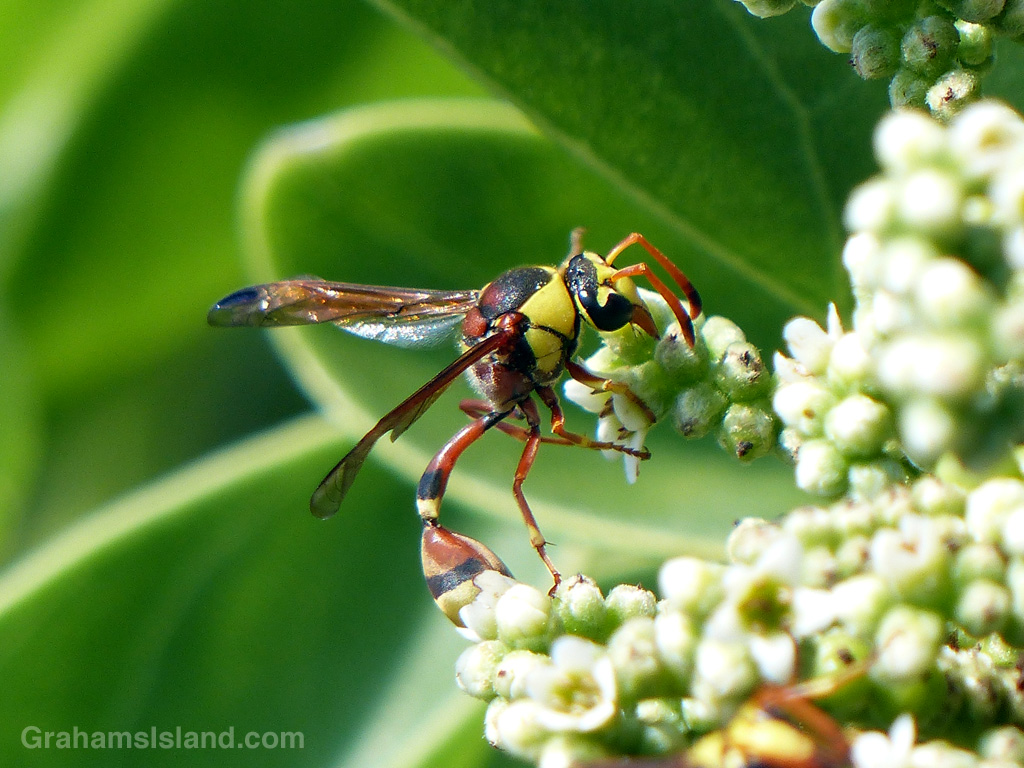
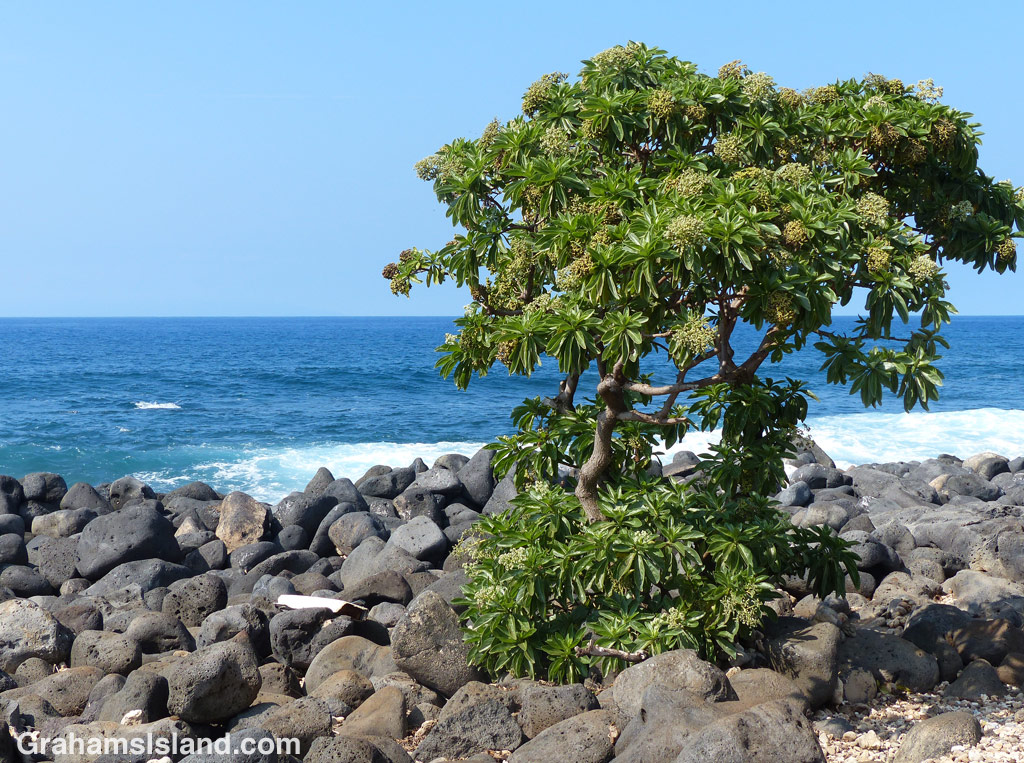
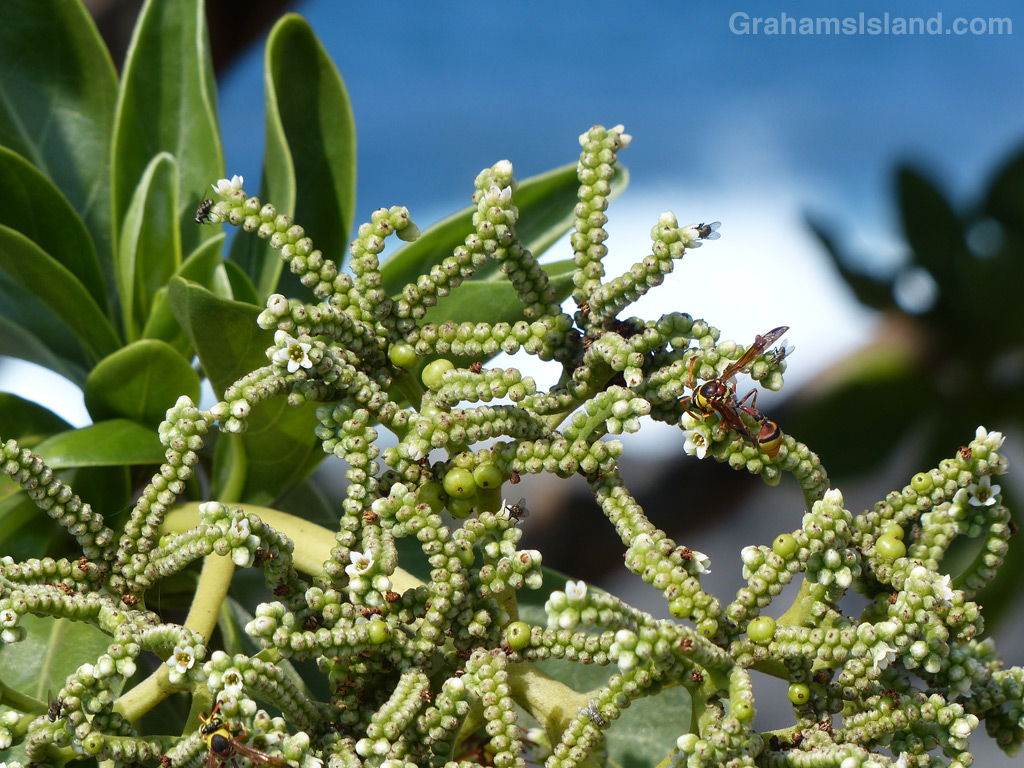
On one of my coast walks I was surprised to find a tree that I visit regularly, abuzz with wasps and other insects. The tree is a Tree heliotrope (Heliotropium foertherianum) which, as the photos suggest, is hardy and salt tolerant. This was the first time I’d seen it with striking tentacles of flowers and berries, hence it’s other common name of Octopus bush.
The majority of the wasps attracted to the tree were potter wasps, specifically Eumenes bollii I think. They were focused on their task for which I was grateful, since I was shoving my camera quite close to them on occasion.