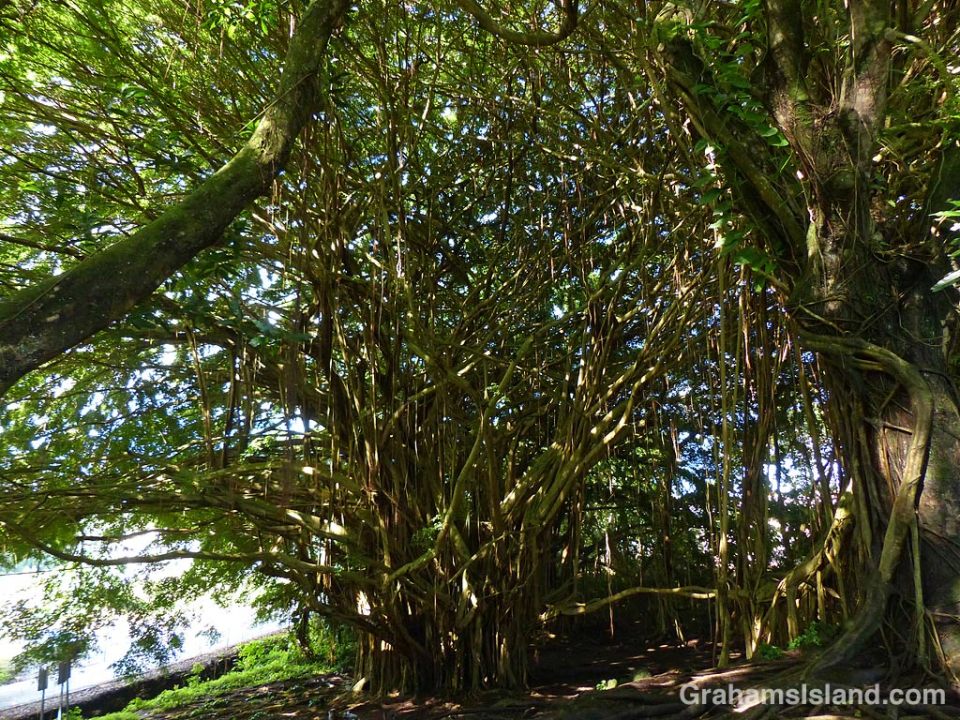
 The main attraction of Wailuku River State Park, in Hilo, is Rainbow Falls. But at the top of the hill are these huge banyan trees.
Banyans are not just a huge sprawl of branches, but a sprawl of roots, too. As epiphytes they begin life growing on other trees, from seeds dispersed there by birds. Over time, they send roots down to the ground, known as prop roots, which help support the mass of branches.
Banyan trees are also known as strangler figs because their roots and branches will ultimately overwhelm the host tree and kill it. Eventually, the dead host will decay and leave a hollow center to the banyan tree that’s left.
By continuing to send down prop roots, banyans grow out as well as up. Very old trees can cover a huge area. For example, the Great Banyan Tree in Kolkata, India is more than 250 years old. Its covers around four acres and has more than 3,500 prop roots. Here in Hawaii, the largest banyan grows in Lahaina on Maui. Planted in 1873, it now has 16 main trunks and covers two thirds of an acre.
The Rainbow Falls trees aren’t that large, but they’re coming along nicely.


 Clerodendrum paniculatum is known as the pagoda plant. When I last visited Hawaii Tropical Botanical Garden in mid July it seemed like there were fewer plants in bloom than when I’ve visited at other times of the year. But the pagoda plants were rampant and putting on quite a show.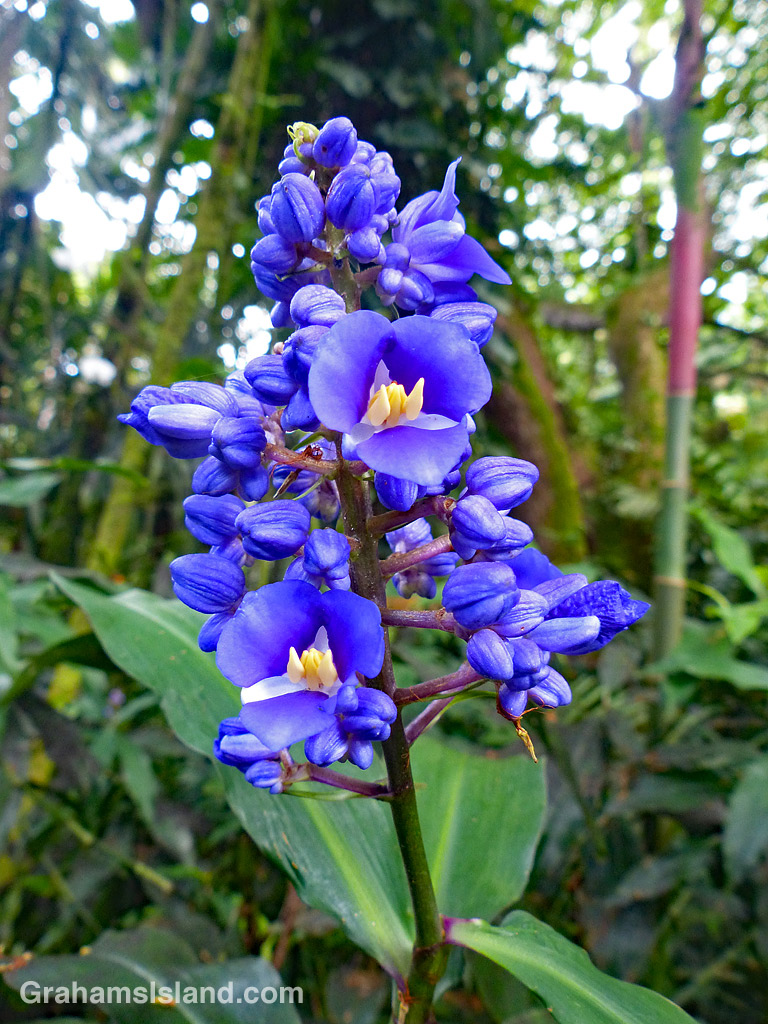
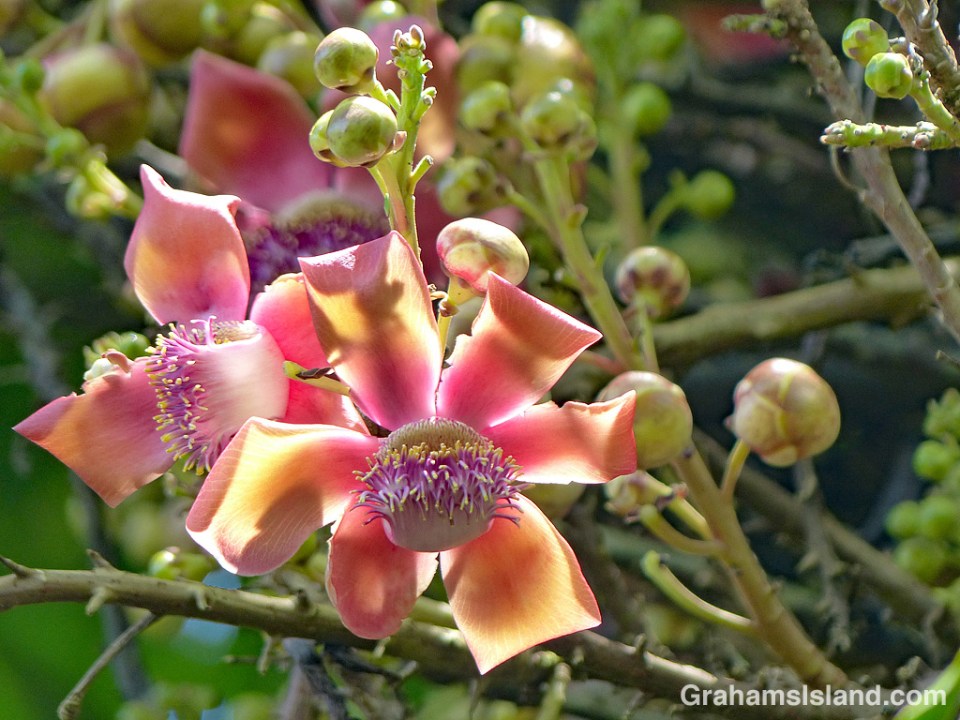
 I’ve posted a photo of a cannonball tree (Couroupita guianensis) before,
 Graham's Island