
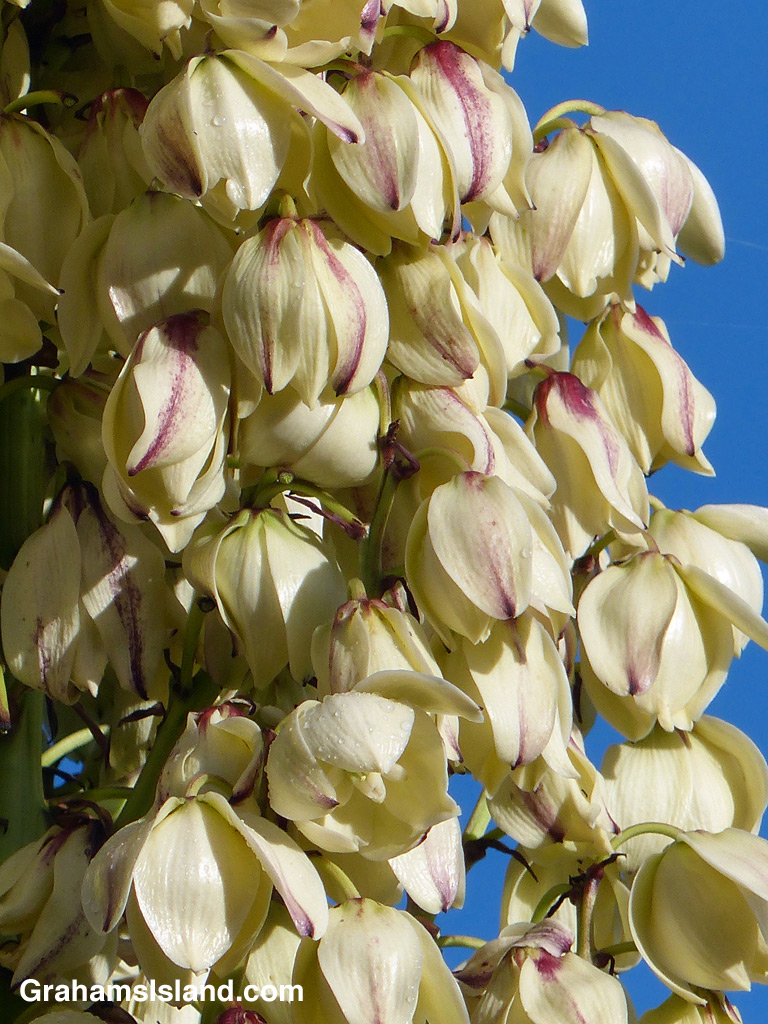
This yucca plant grows beside the road into Waimea. I don’t know exactly which yucca it is, but it’s blooming now. I particularly like the contrasting textures of the soft, creamy flowers and spiky leaves.

This yucca plant grows beside the road into Waimea. I don’t know exactly which yucca it is, but it’s blooming now. I particularly like the contrasting textures of the soft, creamy flowers and spiky leaves.
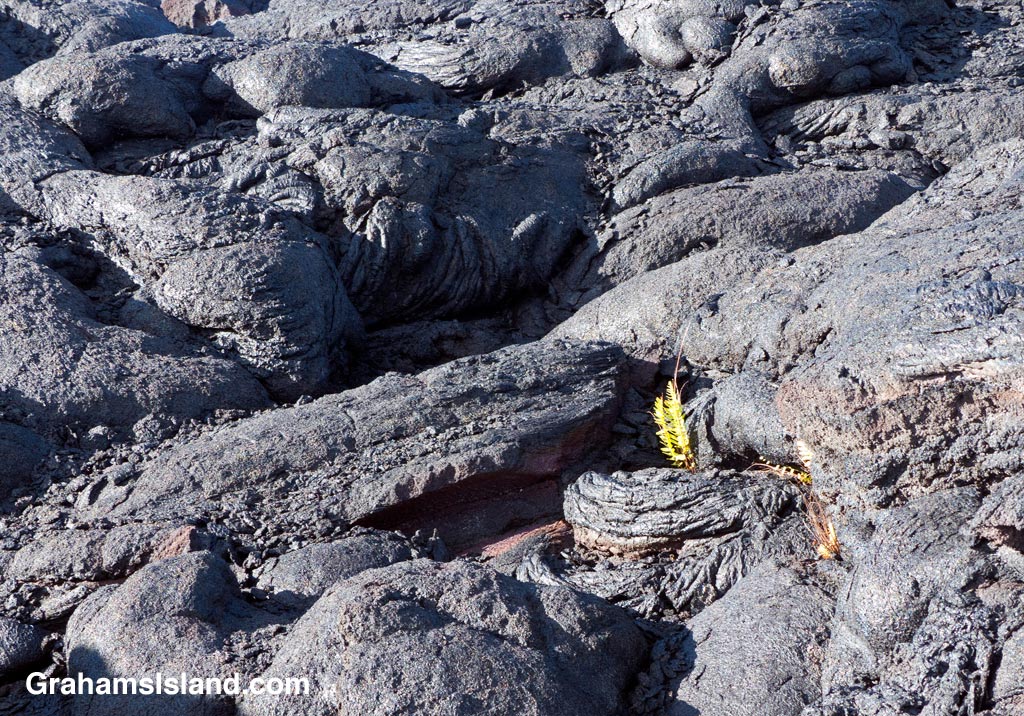
A fern gets a toehold in a field of lava. I like the resilience of the fern, daring to grow in such a hostile place. I also like the texture of the lava, a hard rock and yet crumbly as well. I can almost hear it crunching underfoot.

This caladium leaf is all bold shapes and colors.

A lot of the plants, fish, and birds that I see on the Big Island are new to me, but I find it satisfying to identify them. It’s often not straightforward. Striking colors or patterns that I think will be easy to place can often prove elusive. Juvenile birds and fish might look nothing like their parents. Other times, a mostly undistinguished look might pop up first in my search.
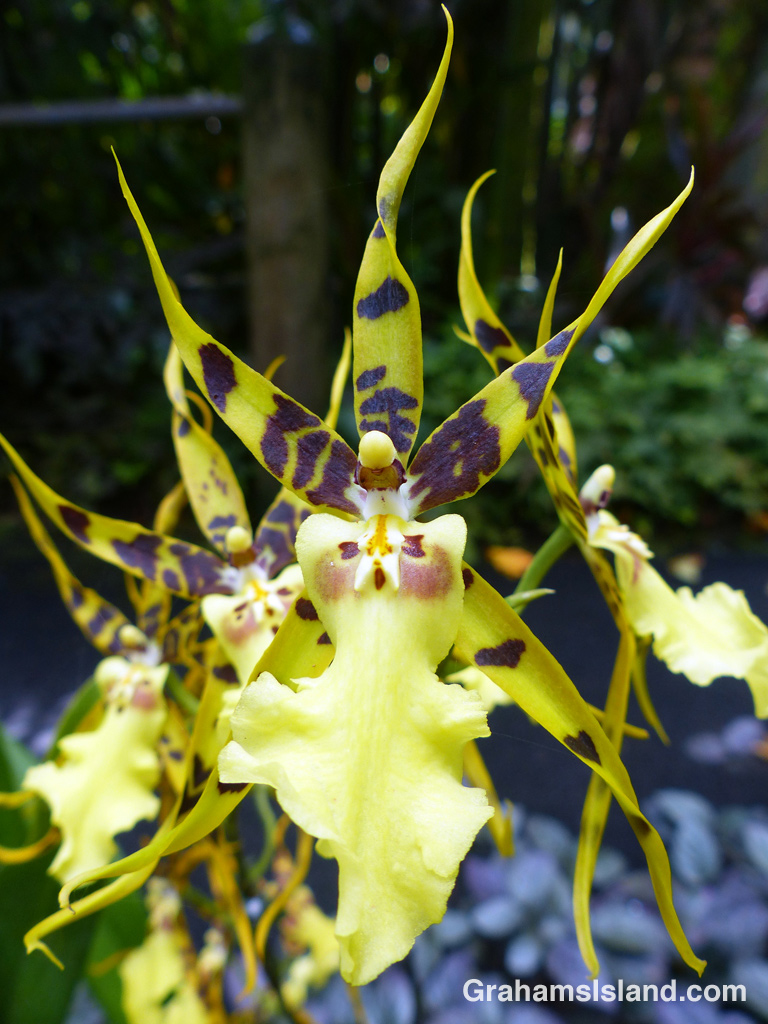
Orchids are a big challenge since there are numerous hybrids. I’m pretty confident this is Aliceara Pacific Nova not just because it matches photos online, but also because there was a tag at the base of the plant, a useful search tip I’m happy to pass along here.
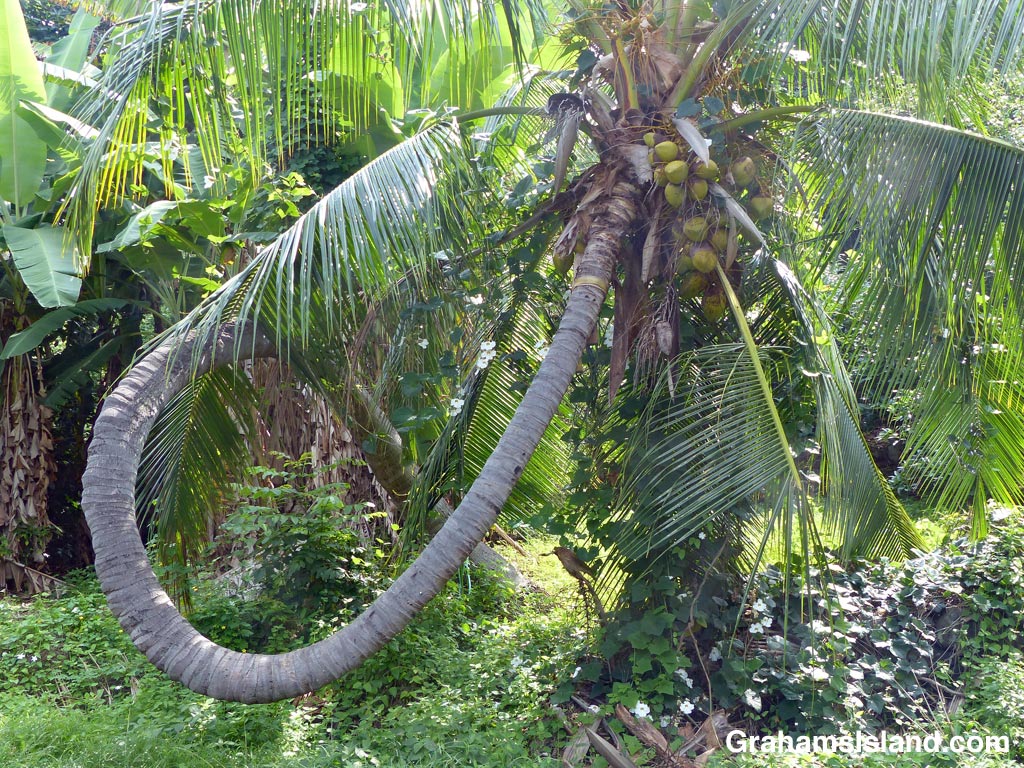
Most people are familiar with the image of palm trees towering over golden Hawaiian beaches. This is not one of those. It’s taken an unusual path, twisting down and around and up again, but none the worse for its circuitous route.

The tree poinsettia (Warszewiczia Coccinea) is the national flower of Trinidad and Tobago. It’s not related to true poinsettias (Euphorbia pulcherrima), but is equally showy with its brilliant red bracts.

Tropical plants tend to grow vigorously, which means they’re constantly bumping into, and mingling, with their neighbors in a botanical collage. The prime components here are Alocasia micholitziana and Calathea bella with a few others thrown in for good measure.

This passion flower was drawing great attention from various bugs including a fiery skipper butterfly, a variable lady bug, and a host of flying ants, or possibly parasitic wasps.

