
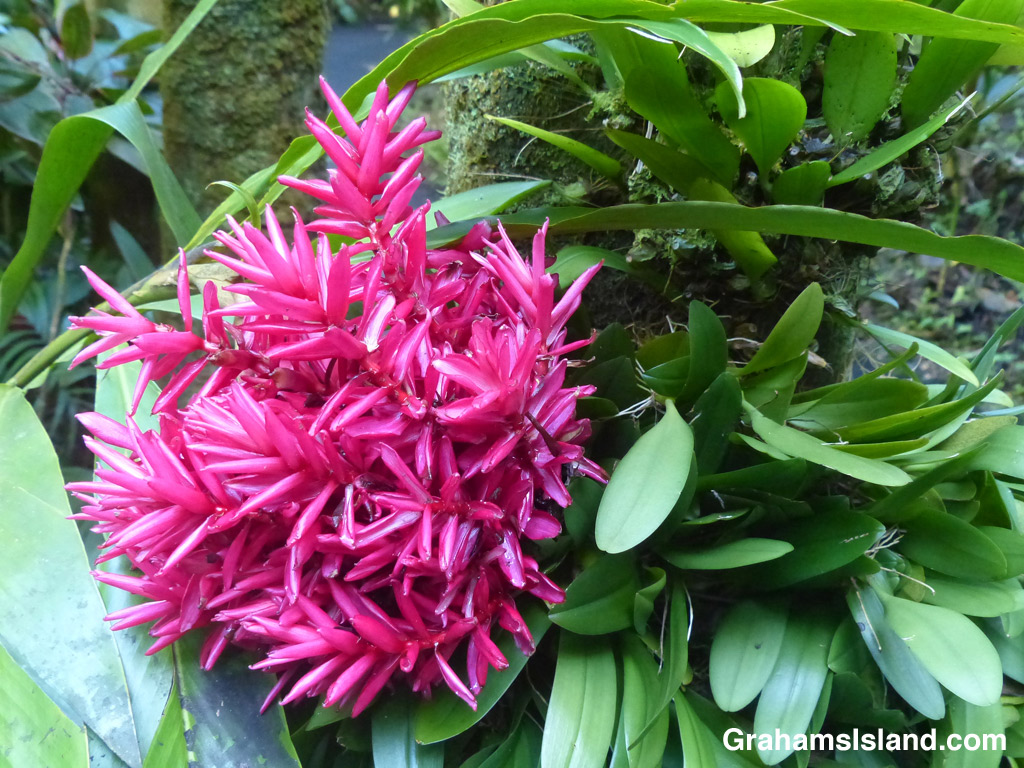
Alpinia purpurata is also known as red ginger. This bright red display is not actually the flower, but the bract. The flowers are small and white and will appear on the top of this.
Category Archives: Plants
Tangled trunks

For dense foliage, the east side (otherwise known as the wet side, or Hilo side) of the Big Island can’t be beat. Here the trunks of two trees are entwined by a tangled vine, surrounded by exotic foliage.
Coconut palms line the beach
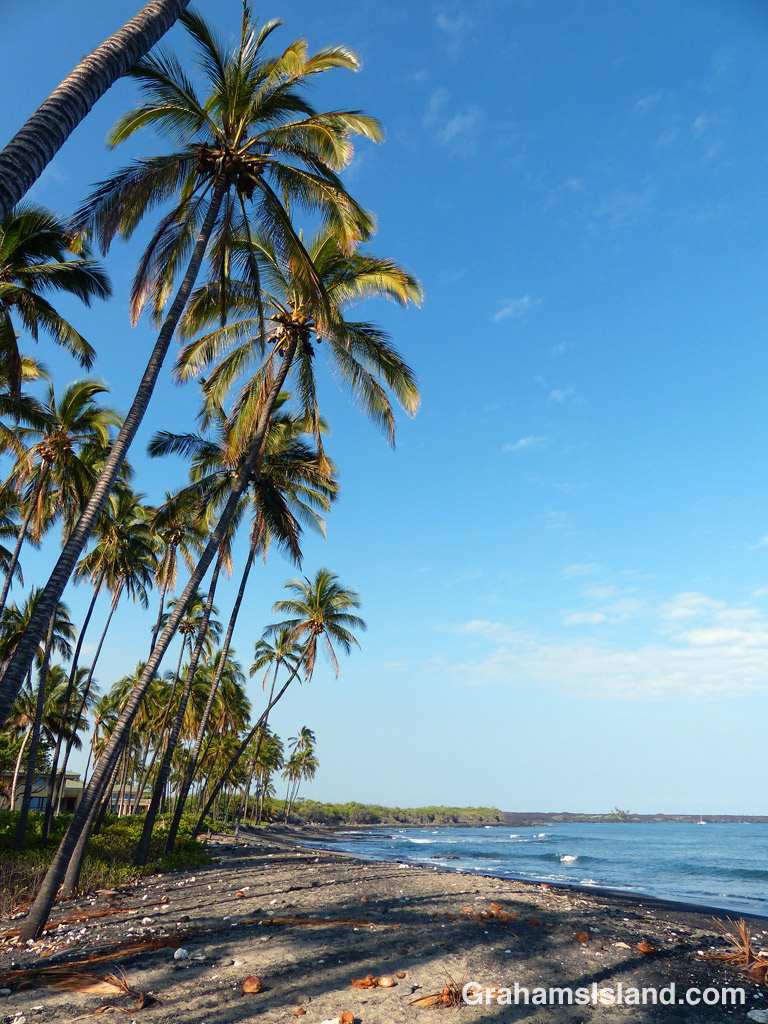
Think of Hawaii and chances are coconut palms and golden beaches spring to mind. These were north of the park at Kiholo. Head south from there instead and the beaches will be black sand.
New Guinea creeper

New Guinea creeper (Tecomanthe dendrophila) is a vigorous vine that grows up to 80 feet high here. The lovely bicolor flowers grow on the plant’s woody stems and will appear on the same stems year after year.
Gold dust day gecko drinks from a bird of paradise flower
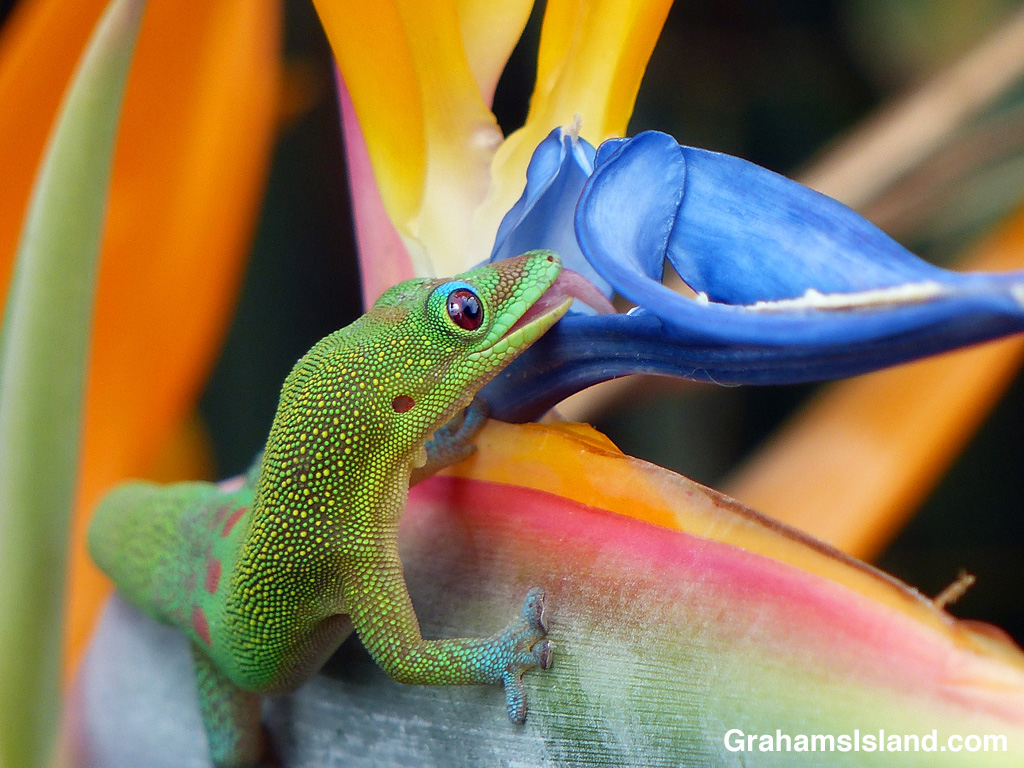
If you like color, it’s hard to beat the bird of paradise flower. Red, orange and yellow, blue and green. It has it all.
The same could be said about the bright markings of a gold dust day gecko – green and yellow, red and powder blue, oh and that pink tongue.
Put them together and it’s time to don shades.
A passion vine butterfly lays her eggs

I watched this passion vine butterfly flitting around on a hedge, laying eggs atop the leaves of, you guessed it, a passion vine growing in the hedge. Typically, she deposits a single egg on each leaf, but this butterfly laid two on this one.
The butterfly is selective about which leaves to use. She chooses ones that have no eggs on them yet, since this will reduce the competition for her offspring. On the leaf she’s using in the photo are some yellow spots. I thought these might be where eggs had been laid previously, but some passion vines produce these colored bumps to make it look like eggs are already there and thus discourage the butterfly.
Not that laying eggs on unoccupied leaves guarantees survival. I saw a number of small parasitic wasps checking out the yellow bumps on several leaves. I have no doubt they do the same with the real eggs. I also saw a very small passion vine butterfly caterpillar snacking on what looked suspiciously like a newly-laid egg. And there’s always the possibility that someone will come along and trim the hedge. Not sure what the vine or the butterfly can do about that.
Satin pothos
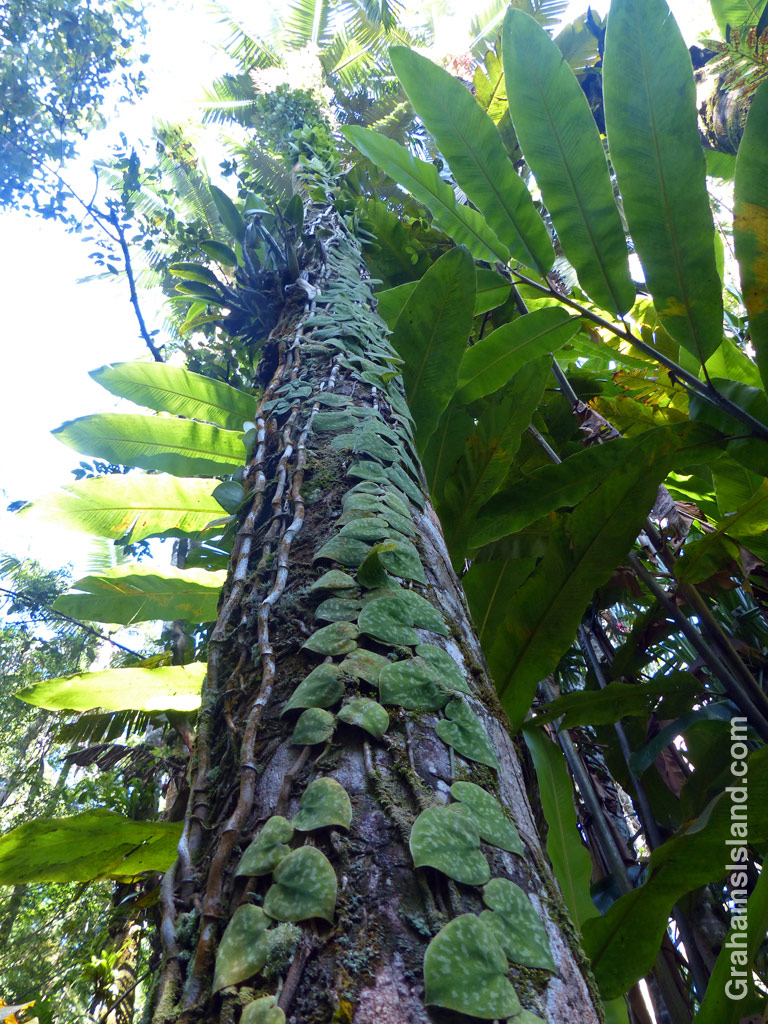
A satin pothos (Scindapsus pictus) climbs a tree in Hawaii Tropical Botanical Garden. While rampant in tropical climates, this plant is quite popular as a houseplant elsewhere. It’s poisonous to dogs and cats though, so that’s something to consider.
For more information about Hawaii Tropical Botanical Garden, go to htbg.com.
One drop of rain

A raindrop on a passion flower vine.

