
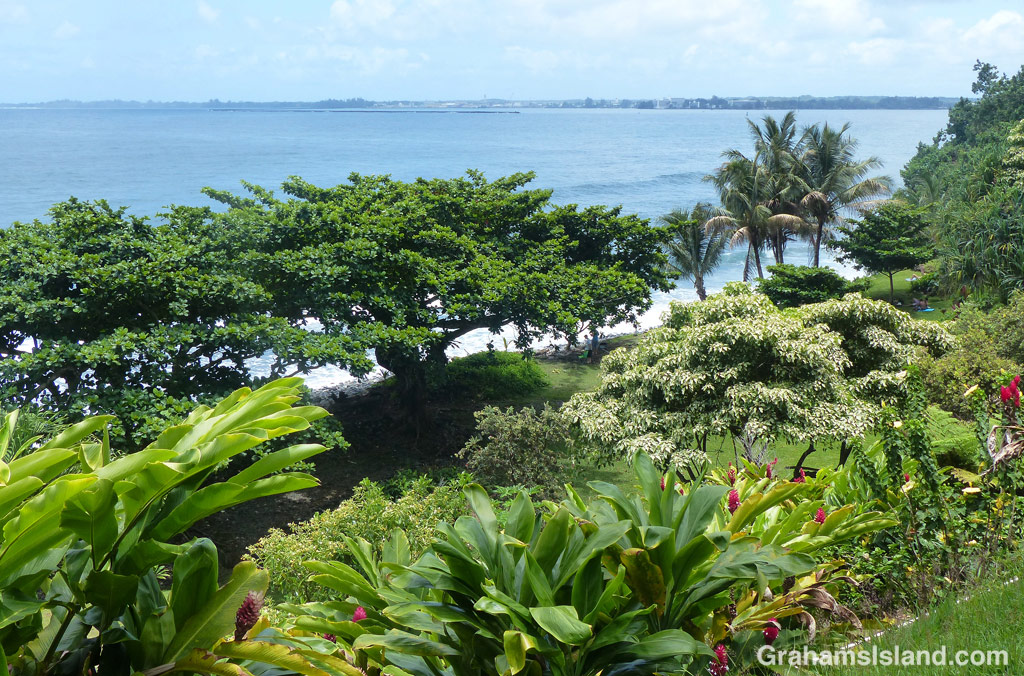
A view of Honoli’i Beach Park with Hilo Bay in the background. I do love the lush vegetation on the east side of the island.
Category Archives: Plants
‘Ilima papa

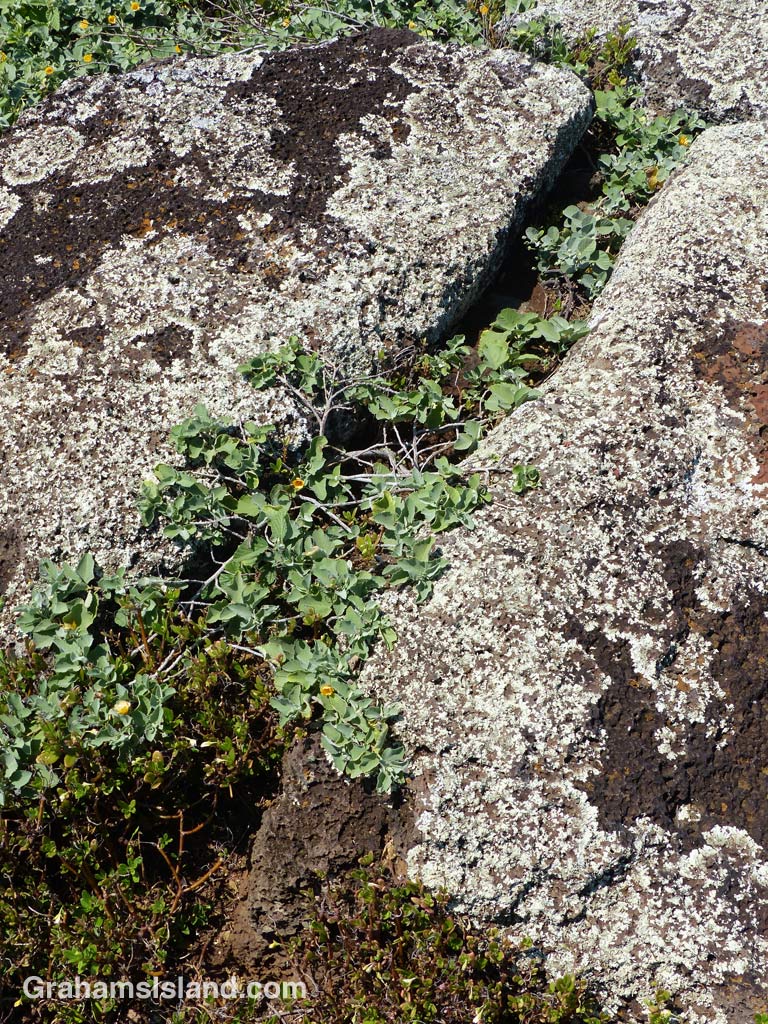
This plant, officially called Sida fallax, does well in tough coastal growing conditions, hugging the ground as it spreads. In other situations, it can grow as a shrub.
For more information about this plant, go to www2.hawaii.edu/~eherring/hawnprop/sid-fall.htm.
Shell ginger
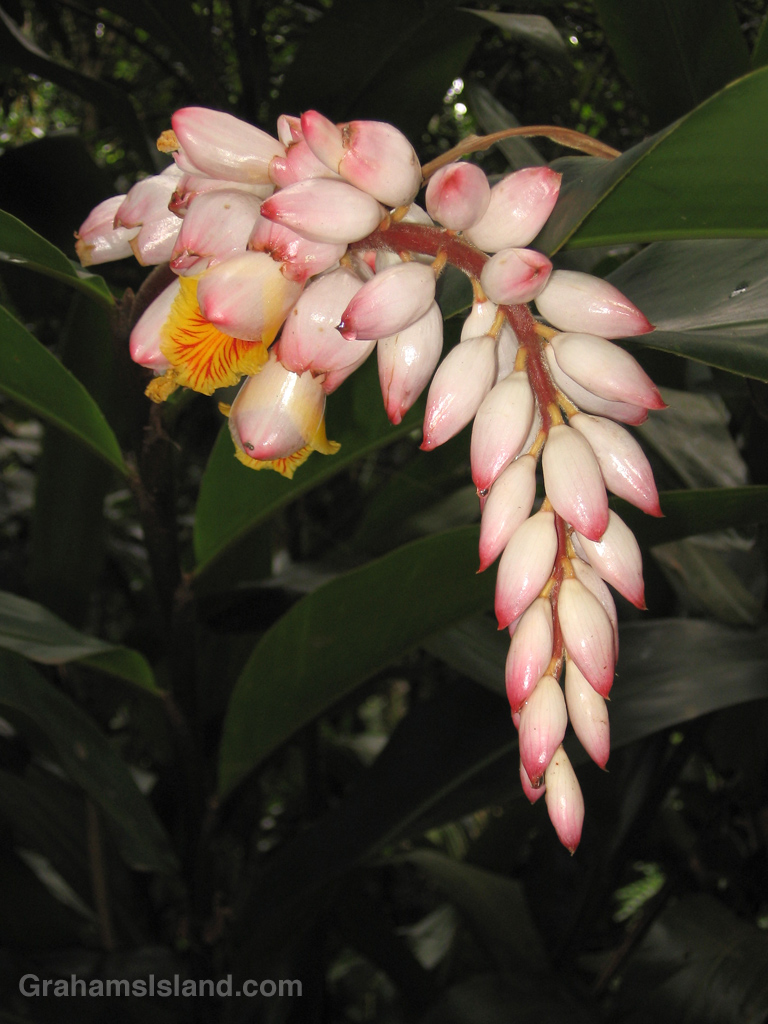
Originally from Asia, the shell ginger and its sensuous flowers is quite common in wetter areas.
For more information about Hawaiian flowers, go to wildlifeofhawaii.com/flowers/.
Japanese white-eye in a silk oak

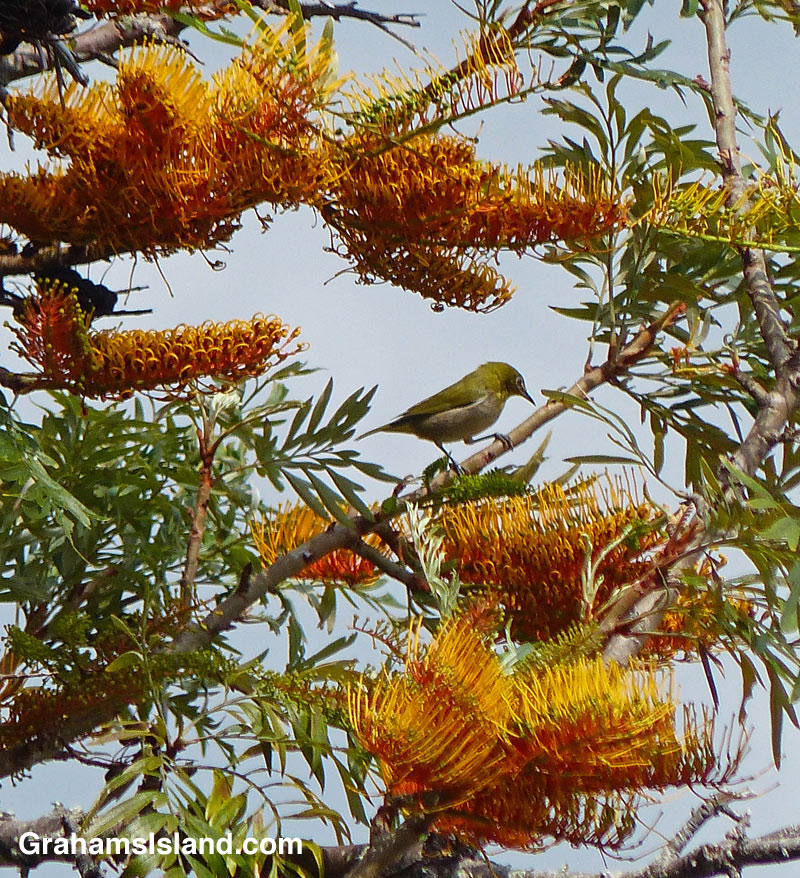
The brilliant orange flowers of silk oak trees not only catch the eye, but are rich with nectar, making them a favorite of birds such as Japanese white-eyes. There were several flitting through this particular tree.
For more information about silk oaks, go to wildlifeofhawaii.com/flowers/1368/grevillea-robusta-silk-oak/.
No fly zone


Crab spiders (also known as spiny-backed spiders) came to Hawaii in 1985. They spread through all the islands and are especially numerous here in the winter months. They build dense thickets of webs such as these between two tangerine trees. They look threatening, but aren’t particularly. People do get bitten, mostly if a spider falls on them or gets lodged in clothing.
I usually encounter them when I miss spotting a web and end up with it wrapped around my head. Their webs, which often span a 10 or 20 foot gap, seem especially strong and sticky.
For more information about crab spiders, go to gardenguyhawaii.com/2011/12/crab-spiders.html.
Lantana

Originally from South America, Lantana camara is a shrubby plant that can grow to 6 feet. Its cheerful, multicolored flowers are followed by berries that are a favorite of birds. The birds, in turn, disperse the seeds which lead to the plant being common in many places. Too many perhaps. It’s another of those invasive weeds here, this one particularly problematic because it’s poisonous to livestock.
Abstracts: Areca palm
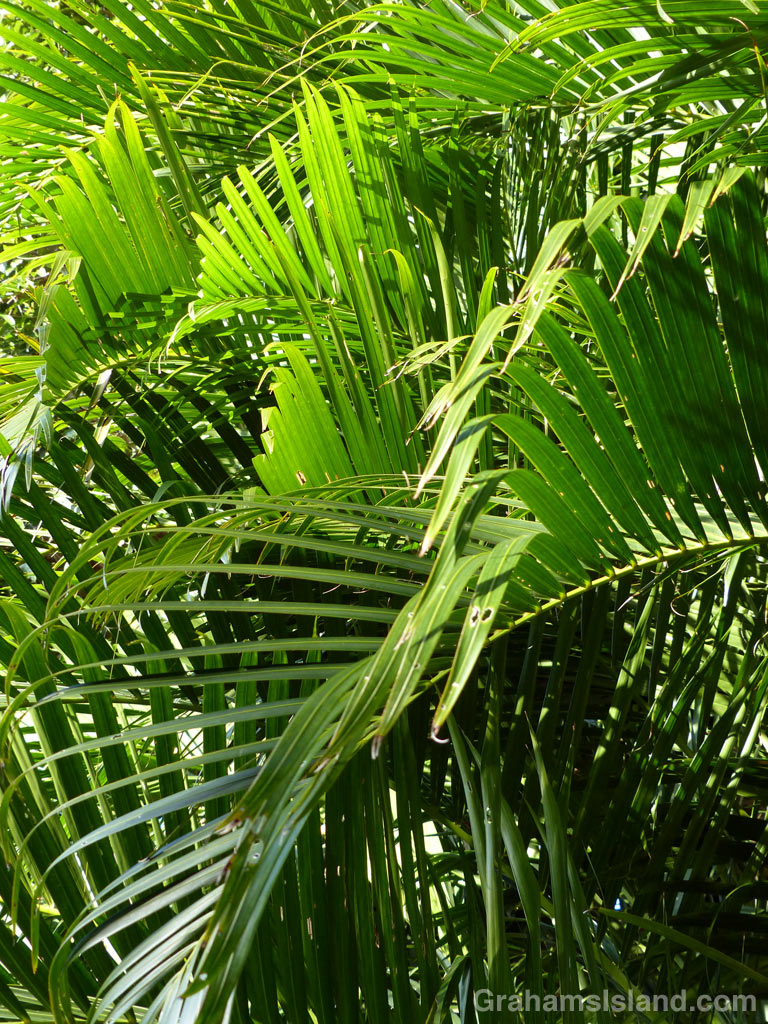
The overlapping fronds of an areca palm create patterns of light and shadow.
Cuckoo wasp

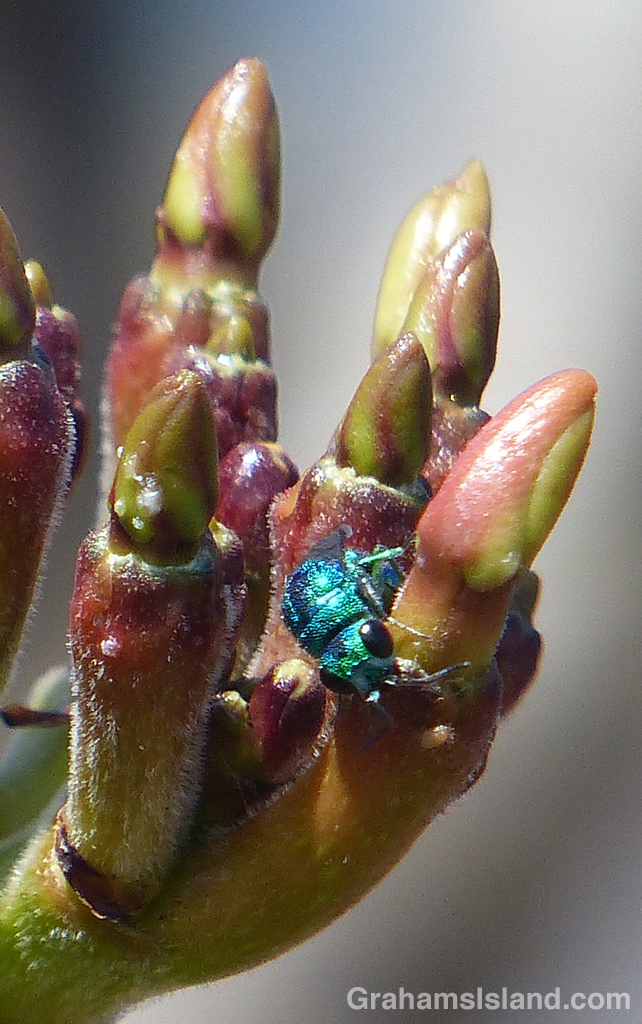
I saw this small, bright insect flitting about on the new growth of a plumeria. The cuckoo wasp gets its name from its practice of laying eggs in the nests of other wasps and bees. Once hatched, the cuckoo wasp eats the host wasp or bee larva. Then it eats the food placed in the nest for the host’s offspring. Probably not an insect to invite to your next dinner party.
For more information about cuckoo wasps, go to bugguide.net/node/view/6946.
 Graham's Island