Nutmeg mannikin (Lonchura punctulata) is also known as scaly-breasted munia and spice finch. They feed on grass seeds. Here, a mannikin is feeding on cane grass seeds. It will work its way up the stem until the whole plant is stripped and the farther up it goes, the more the stem bends.
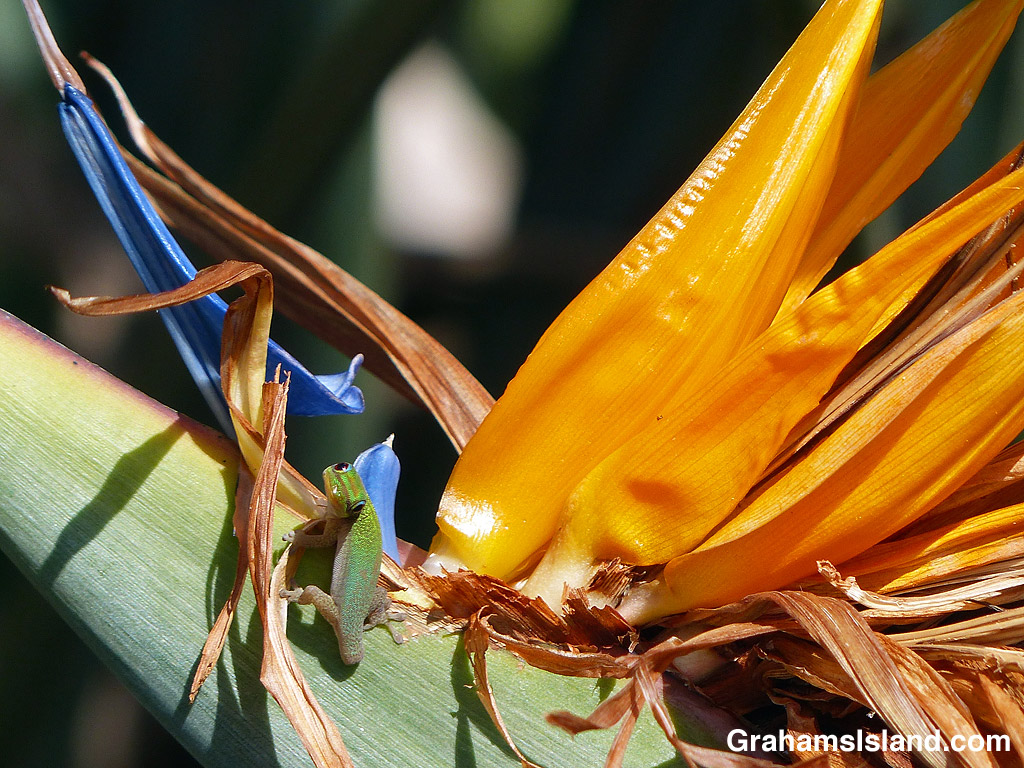
Last month, I posted (here) a photo of a gold dust day gecko drinking from a bird of paradise flower. This photo, taken last week, is from that same clump of plants. This flower is past its prime, but the gecko has not yet reached adulthood and has already had at least one narrow escape judging by its missing tail. It kept its eyes on me, probably wondering if I represented another threat.
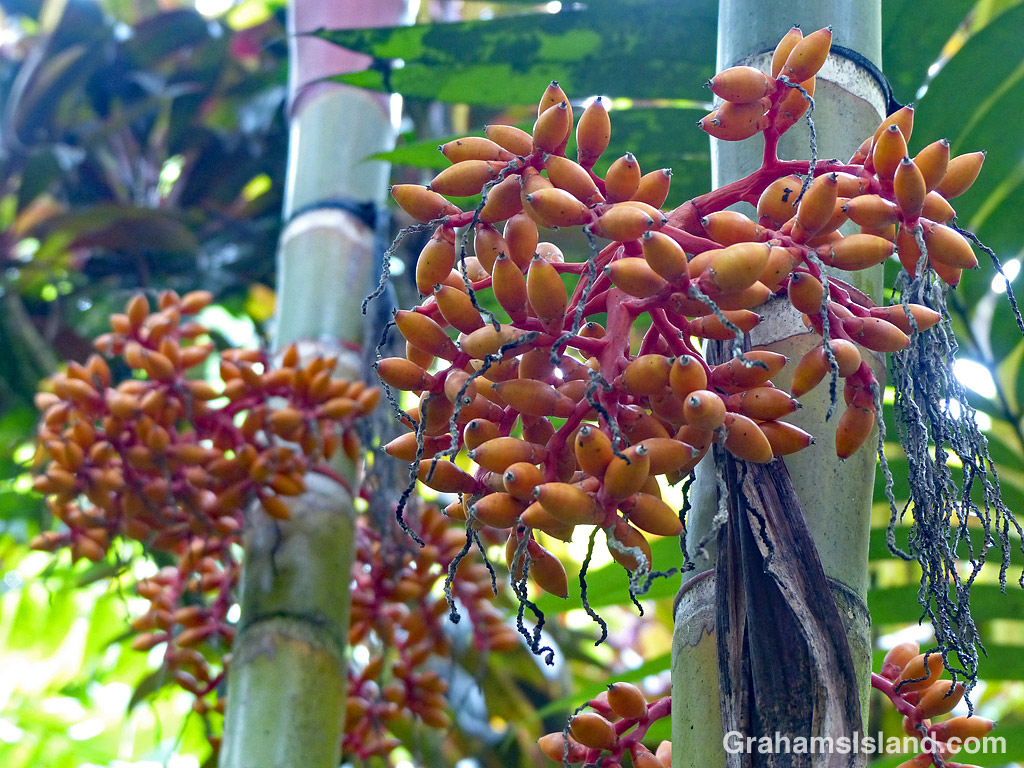
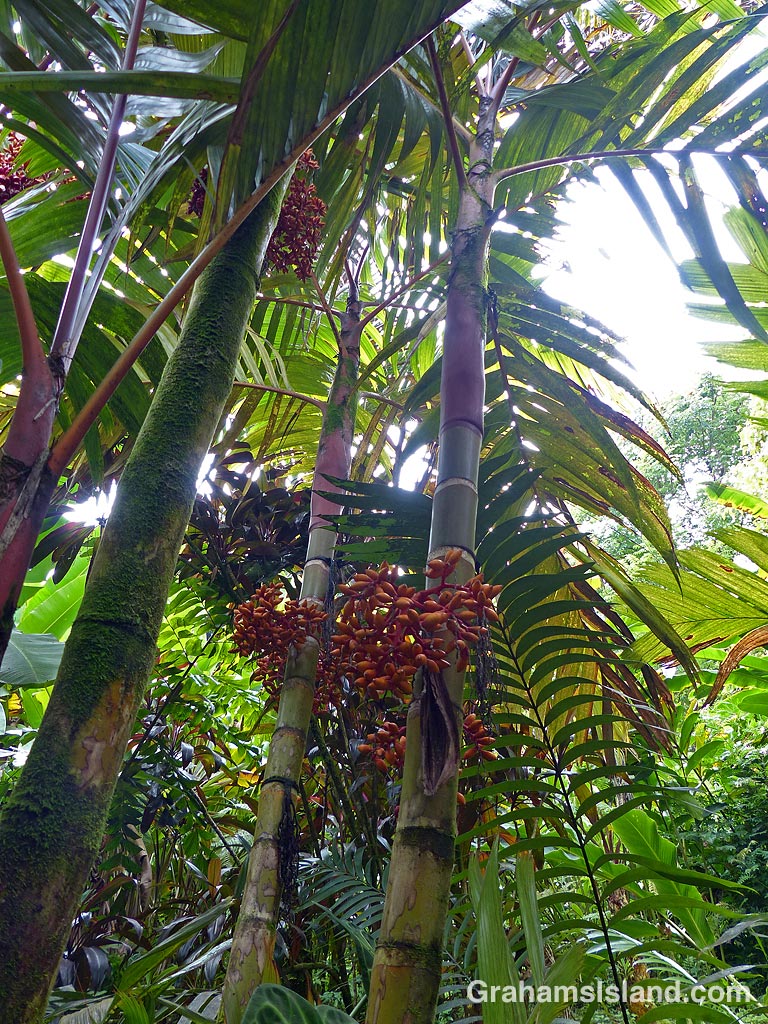
Pinang Yaki (Areca vestiaria) is originally from eastern Indonesia. With its red crownshaft and orange fruits, it’s a colorful palm. But these colors vary depending on the tree’s elevation with a higher elevation leading to more vibrant colors.
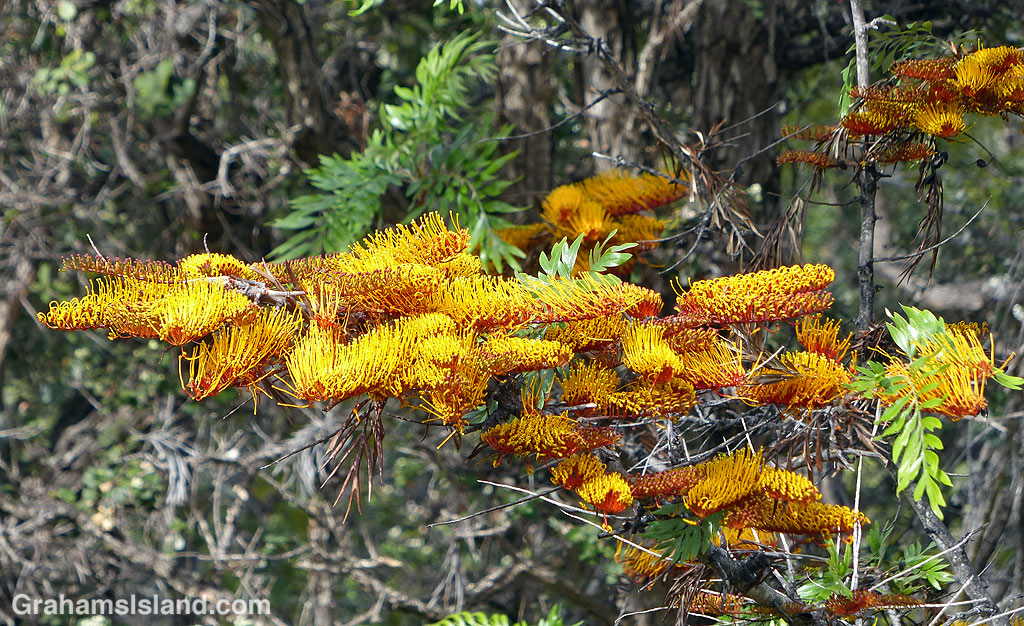
Silk oaks (Grevillea robusta) come from Australia’s east coast, but are well established here. Rather too well actually. They’re fast growers and can outcompete native species, in particular ohia trees. In some places, silk oaks will have their trunks ringed to kill the tree in order to give those native species a better chance of survival.
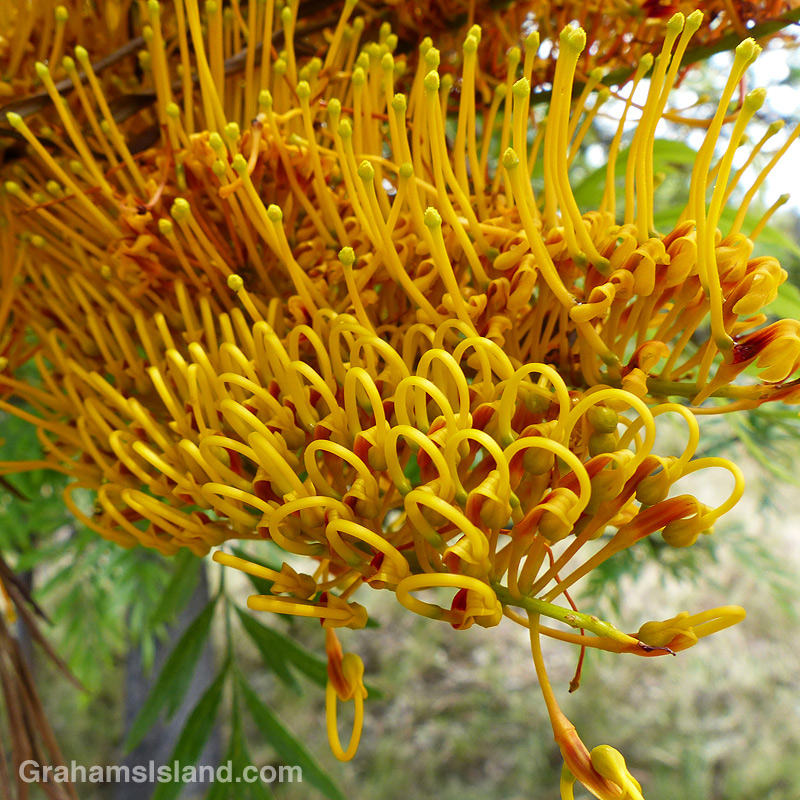
At this time of year, silk oaks are blooming and their orange flowers put on a brilliant display. They look like giant toothbrushes, or rather groups of flowers look like that, for the toothbrushes are made up of many individual flowers. The flowers themselves are popular with birds, bees and other insects, but both the flowers and wood can cause allergic reactions so have to be handled with caution.
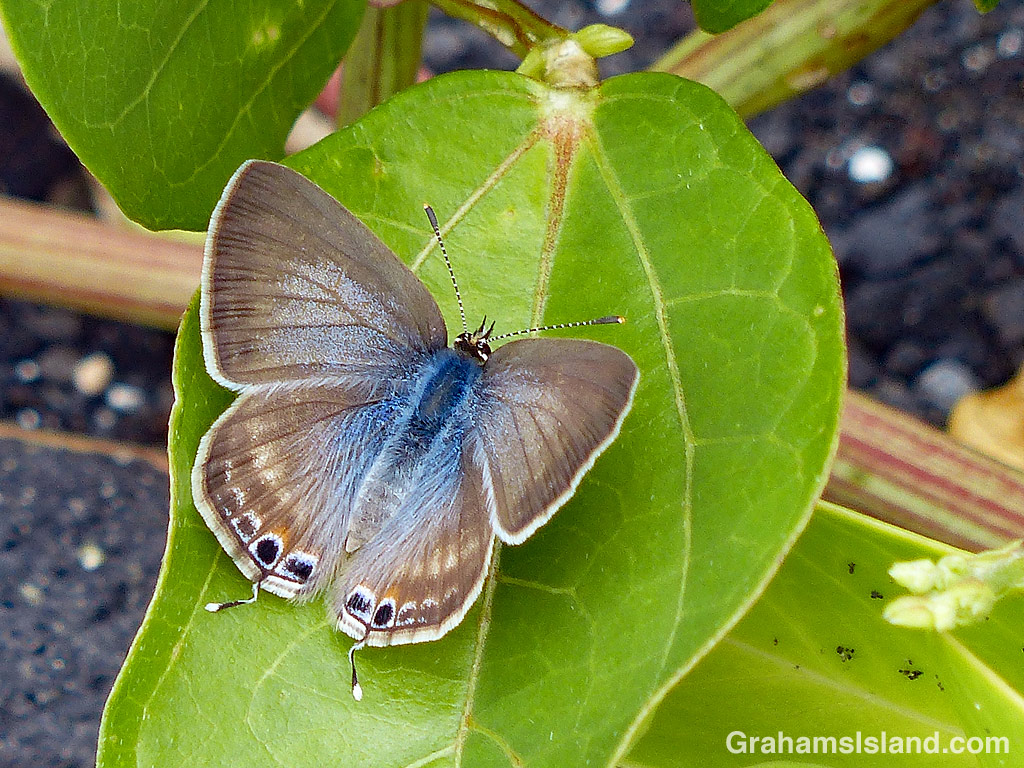
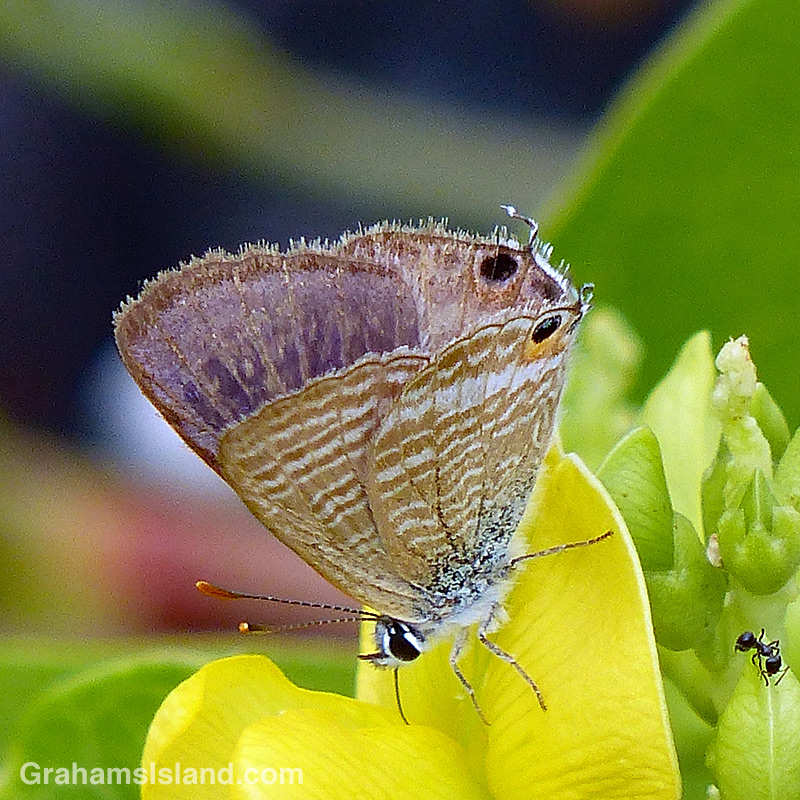
The long-tailed blue butterfly (Lampides boeticus) is believed to have been accidentally introduced to Hawaii in the 1880s. Accidental or not, it wasn’t a good thing. Its common name, bean butterfly, gives a clue as to the problem. It damages a wide variety of bean and pea plants, both domestic and commercial.
These photos were taken on the Puna Coast Trail in Hawaii Volcanoes National Park. The plant is Vigna marina or beach pea, an indigenous plant that grows well in the harsh, exposed coastal area that the trail passes through.
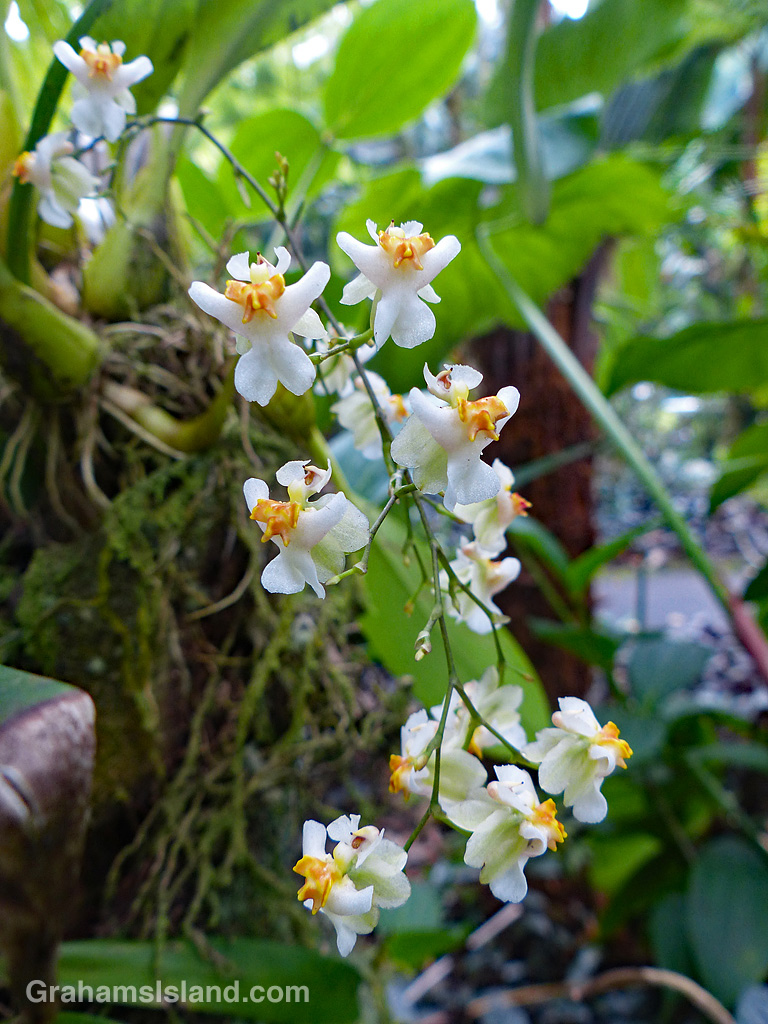
The tag on this orchid read Onc. ‘Tsuiki Margaruite’ #1, but I see it mostly described as ‘Tsiku Marguerite,’ so take your pick. But it’s a delicate looking orchid with cream to apricot flowers that are highly fragrant.
This one was at Hawaii Tropical Botanical Garden. For more information about Hawaii Tropical Botanical Garden, go to htbg.com.
The tropical-looking bird of paradise plant (Strelitzia reginae) is actually a native of sub-tropical South Africa. But it certainly has the pizzazz of a tropical plant, especially when being visited by a colorful gold dust day gecko seeking to sup on the flower’s nectar.
Posted in response to Becky’s April Squares challenge theme of ‘Top.’ See more responses here.



 Graham's Island