The latest Bushboy’s Last on the Card photo challenge is for April 3, 2020. (See challenge rules and more responses here.)
I saw this seven-spotted ladybug on my usual walk along the coast (which is still permitted here). Its bright red elytra jumped out against the largely green background. I’m not sure what the weed in seed was that it was clambering over.
The top photo was the last on my card for that day. The other two were taken earlier in the same encounter and have been cropped and adjusted.
This week’s Sunday Stills challenge theme is ‘Fantastic Florals.’ See more offerings here.
This seemed like a good theme to post a few photos, of different colored flowers, from my last visit to Hawaii Tropical Botanical Garden, back in February.
Top photo: It took me a while to identify this as Petrea volubilis, also known as purple wreath, queen’s wreath, and sandpaper vine, because the long blue parts are actually calices, not petals. The flowers are the smaller darker blue centers most easily seen on the blooms to the left side.
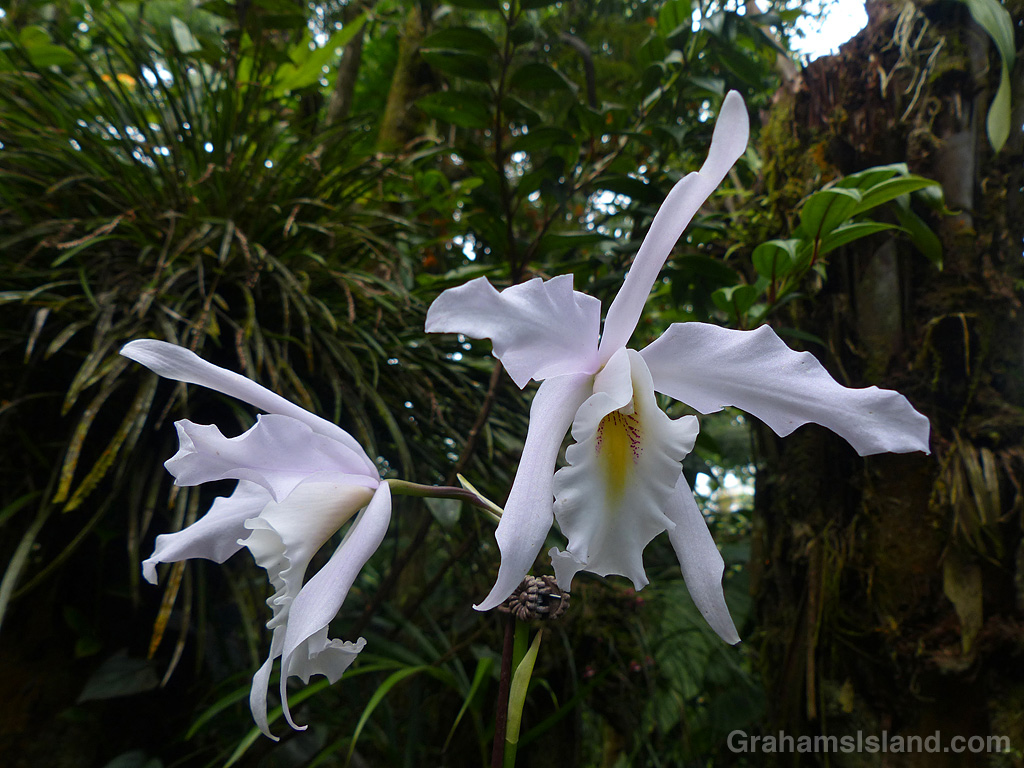
Second Photo: A lavender version of the cattleya maxima orchid was first found in Ecuador in 1777. The yellow stripe down the center of the lip is characteristic of all forms of cattleya maxima, of which this alba variation is one. For more information about the history of cattleya maxima, visit chadwickorchids.com/content/cattleya-maxima.
Third photo: Yellow plume flower (Justicia aurea) is a blaze of color in a sea of green.
Fourth photo: Yes, there are green flowers, including this Anthurium ‘Princess Alexia Jade.’
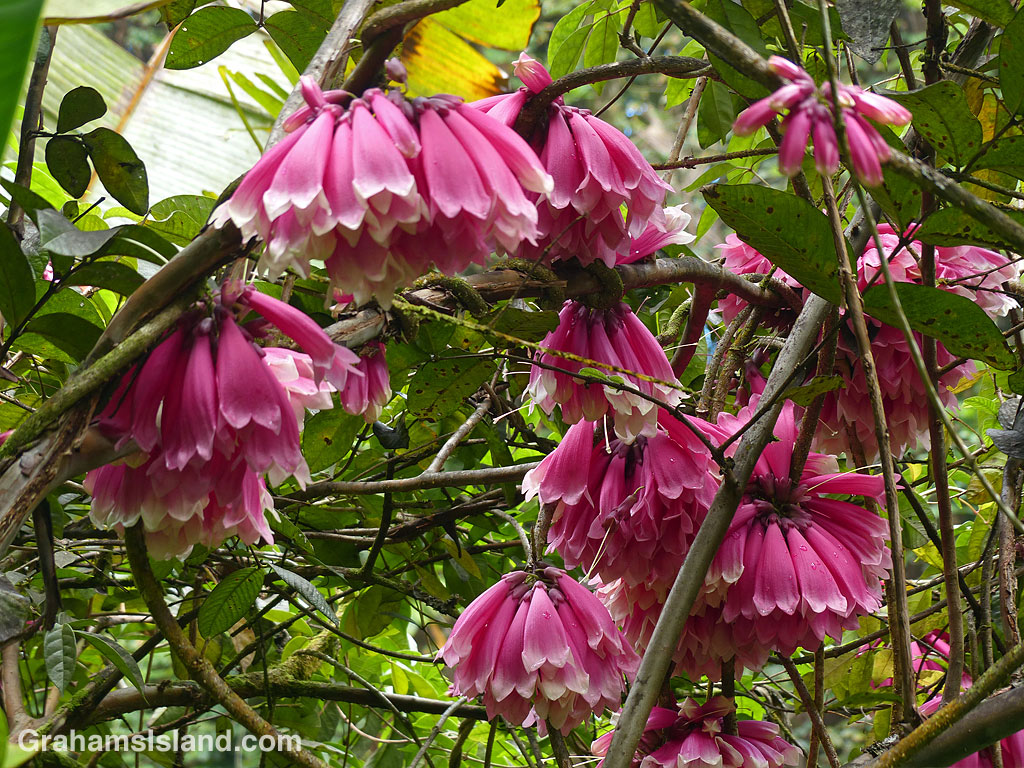
Bottom: New Guinea Trumpet Vines (Tecomanthe dendrophila) produce a fantastic array of white-tipped pink flowers.
For more information about Hawaii Tropical Botanical Garden, go to htbg.com.
The rather showy display of a heliconia colgantea at Hawaii Tropical Botanical Garden. For more information about Hawaii Tropical Botanical Garden, go to htbg.com.
This week’s Friendly Friday challenge theme is ‘Yellow.’ See more responses here.
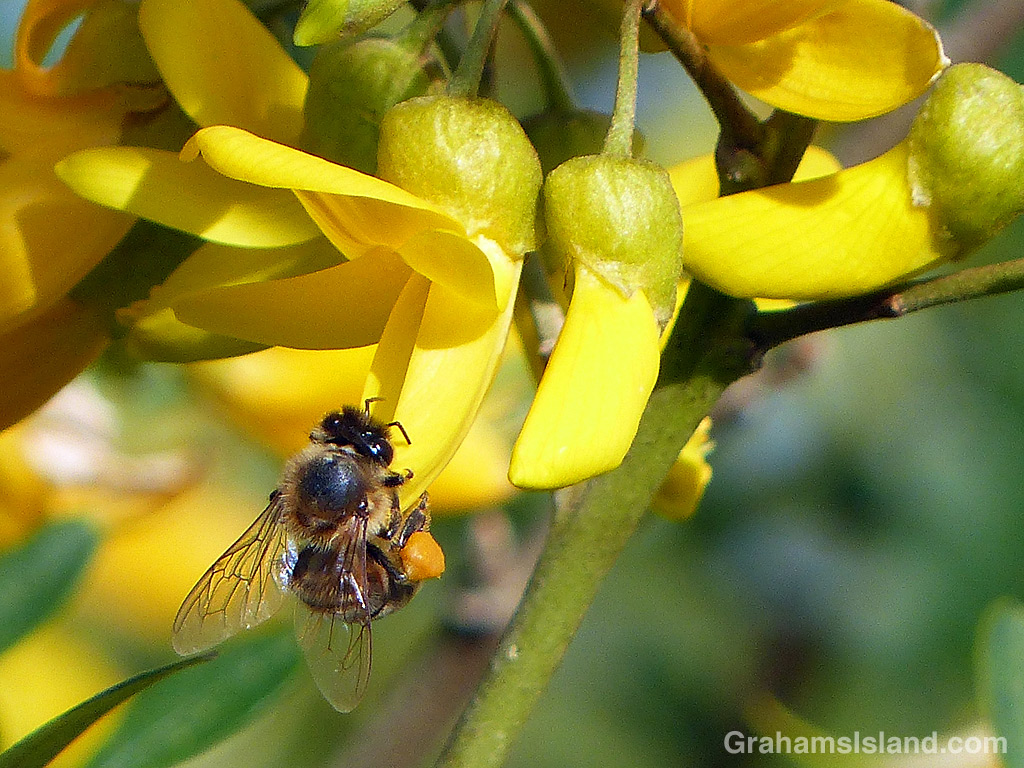
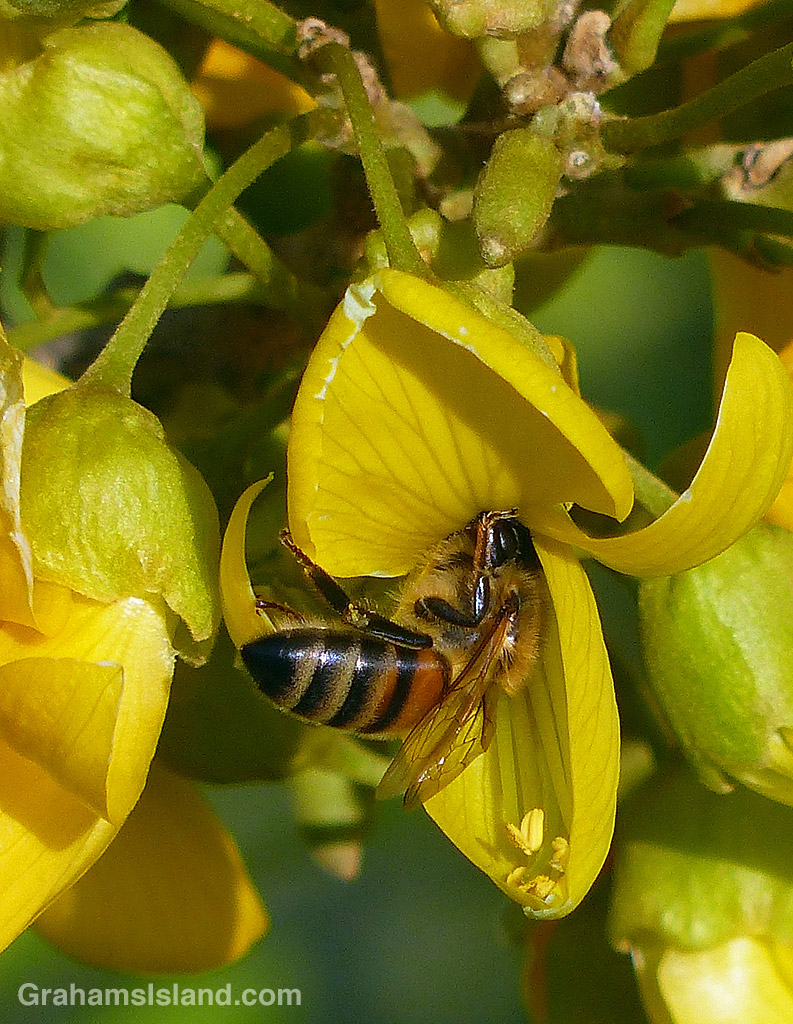
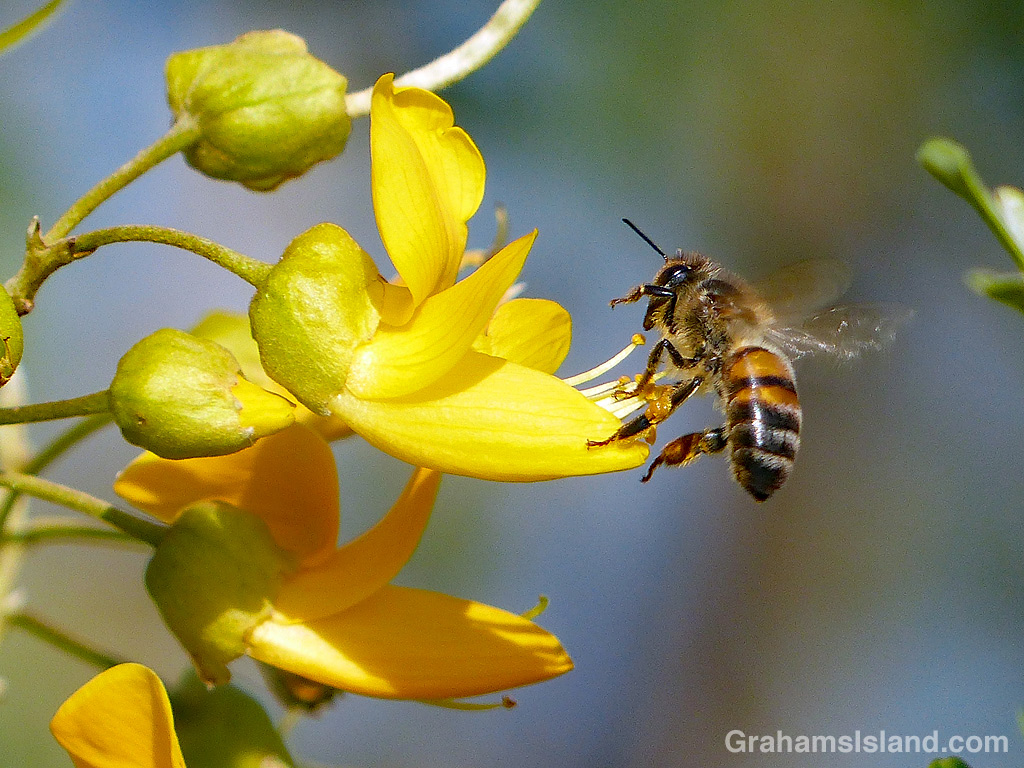
This is a good excuse to post more photos of bees foraging on bright yellow māmane flowers. Māmane (Sophora chrysophylla) is endemic to Hawaii, but while its flowers attract many insects, the seeds are highly toxic. The endangered palila, one of the last endemic Hawaiian honeycreepers, is a bird that feeds mostly on the māmane’s immature seed pods without any ill effect.
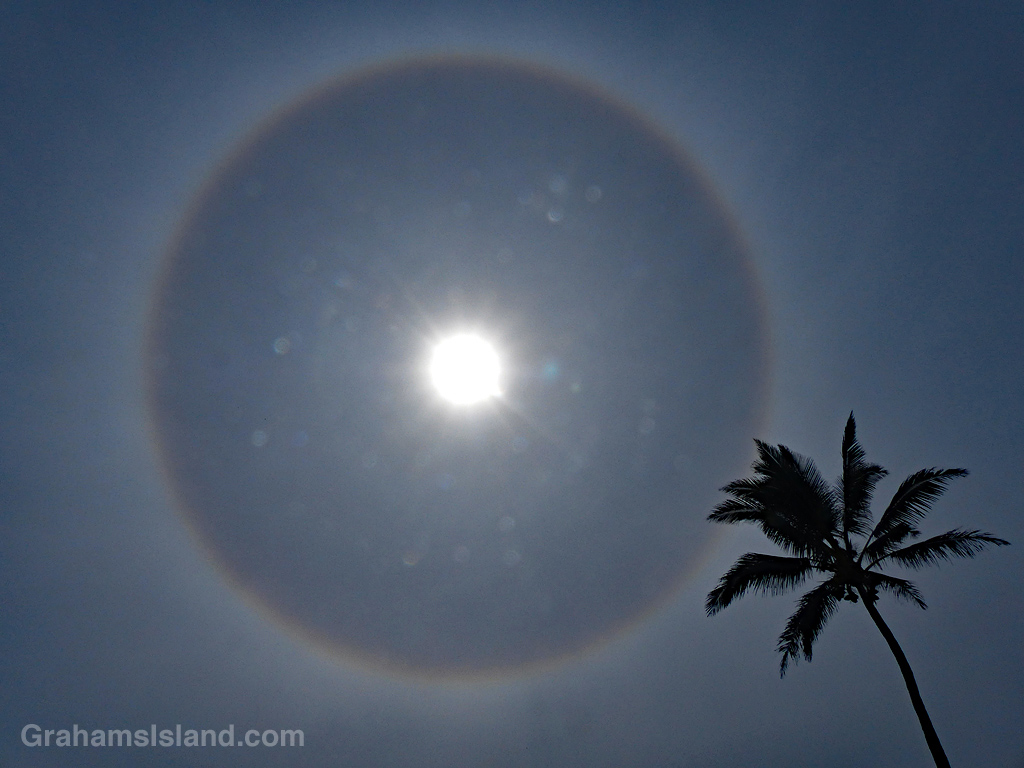
I was about to set out on one of my regular walks at Upolu, when I looked up and saw this halo around the sun. It’s the first I’ve seen here (which doesn’t mean there haven’t been others).
In days of yore, halos were considered a sign of impending bad weather. In this case, there’s some evidence to back that up. The ice crystals that cause halos are found in clouds, high in the troposphere, and these clouds are often a sign of an approaching weather front. Sure enough, the next day was fairly wet though, ironically, not in the area where I saw the halo.
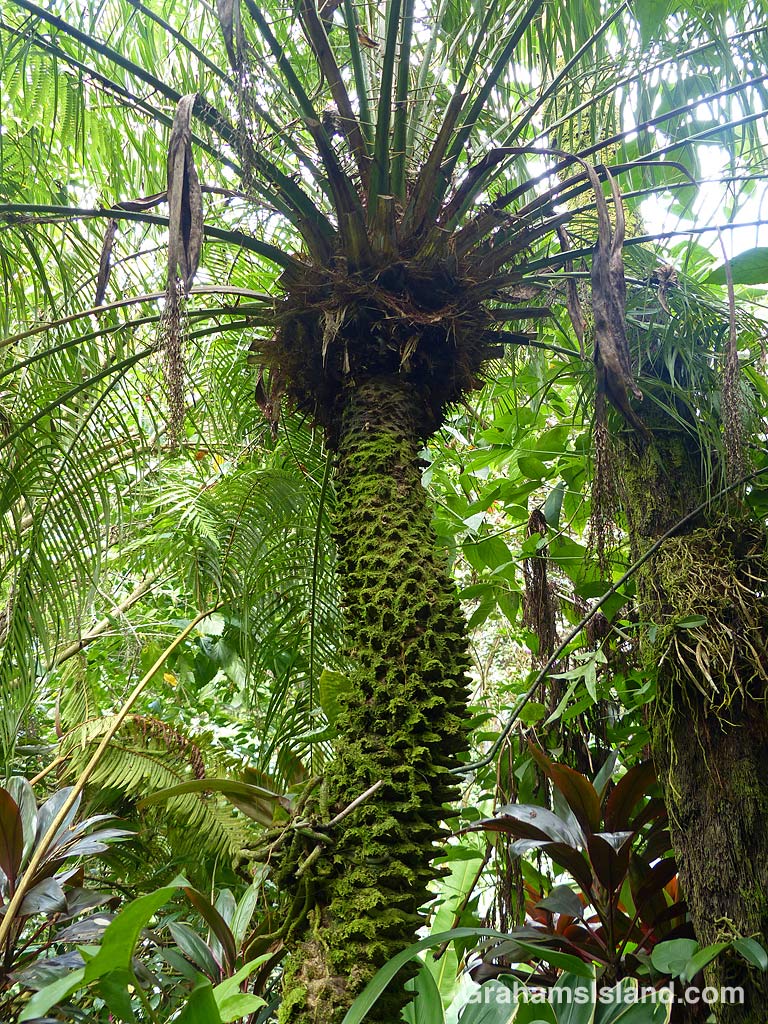
This is a dwarf date palm (Phoenix roebelenii), which I like particularly for its nobbly trunk. It hails from Vietnam and Thailand an is also known as pygmy date palm or miniature date palm
This week’s Sunday Stills challenge theme is ‘Green Macro or Close-Up.’ See more offerings here.
Here’s a green anole (Anolis carolinensis) perched on a green ti leaf so that I could take its photo (possibly). Light greens in the sun, dark greens in the shadow. With all this, I can forgive the anole its powder blue eye-shadow.