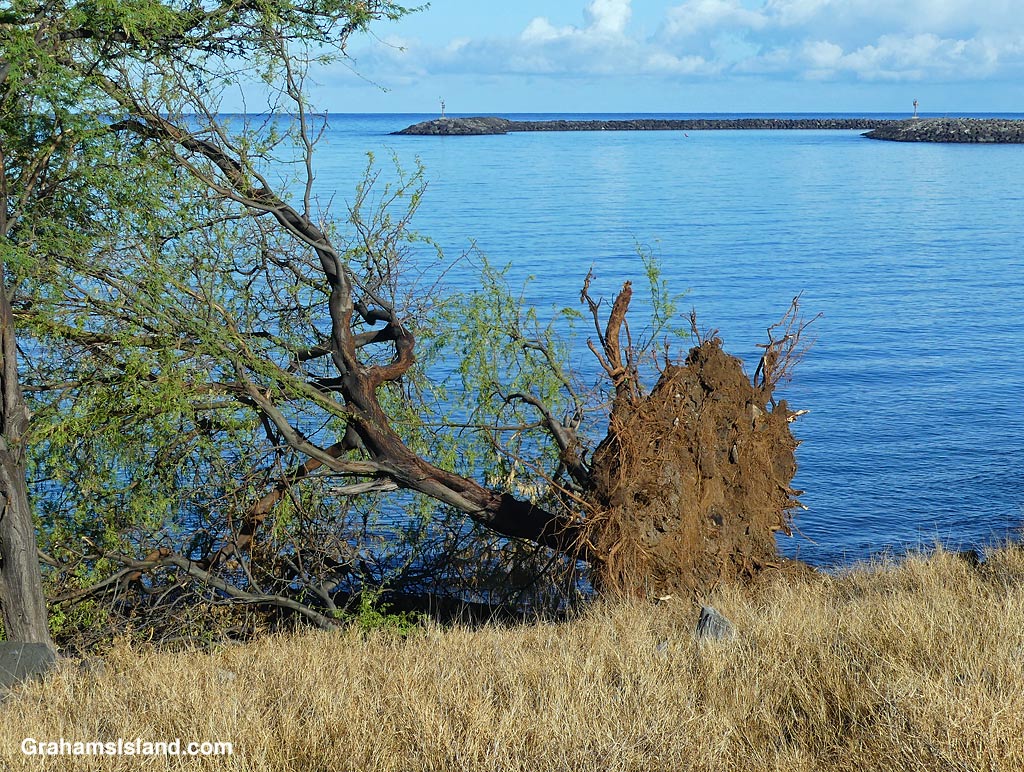
Since the big windstorm of a few weeks ago, I’ve seen a number of Kiawe trees looking like this, on their sides with a disc of roots and dirt exposed. They’ll get cut up and probably used for smoke meat, but it will take a while to clear all of them. This one was below the trail at Pu’ukohola Heiau National Historic Site in Kawaihae.
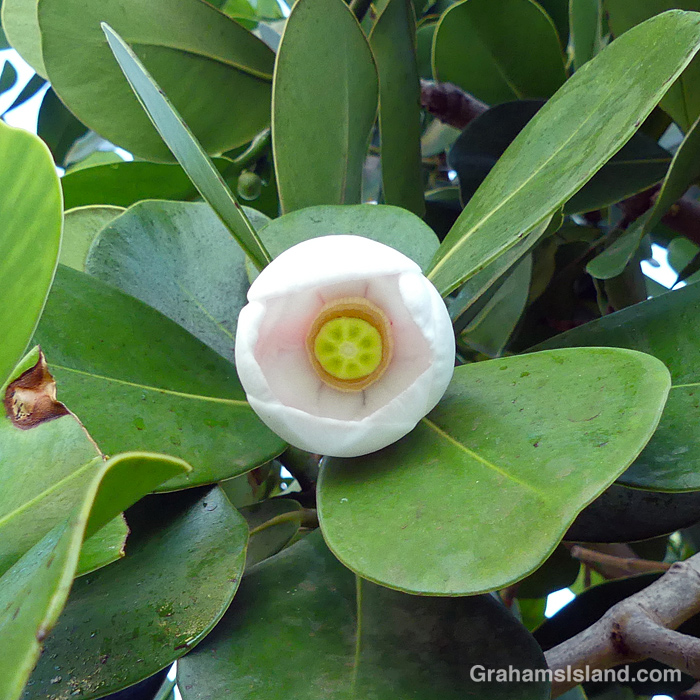
The Autograph tree (Clusia rosea) is native to Florida and the Caribbean. Its curious name stems from the fact that, when its leaves are scarred, the marks remain visible for a long time. So if someone scratches their name into a leaf, it will stay there!
In Hawaii, it’s popular with commercial landscapers because it’s hardy and salt tolerant, so does well on the coast and in other difficult areas. But like all popular things it has a downside. It’s considered an invasive species here because it spreads prolifically and can crowd out native plants. It often starts out as an epiphyte and strangles its host plant. Anything else? Oh yes, the fruit and sap are poisonous, so getting rid of them requires considerable care.
This week’s Sunday Stills challenge theme is ‘Hints of Autumn.’ See more responses here.
What’s more Autumnal than fallen leaves. OK, so this leaf fall has little to do with the season, and the leaves have already been replenished on the tree, but the top photo certainly looks the part!
This week’s Sunday Stills challenge theme is ‘Celebrations.’ See more responses here. Since I rarely take photos of people, the usual options for this one were off the table. So I’ve gone with some photos from Pu’uhonua o Hōnaunau National Historical Park.
This site is also known as Place of Refuge and it represented guaranteed forgiveness for those who had broken kapu. The park’s website (here) notes, “Kapu (sacred law) regulated fishing, planting, and the harvesting of other resources. Any breaking of kapu disturbed the stability of society, and the punishment was often death. Any fugitive who had broken kapu could seek refuge and forgiveness within the walls of the Puʻuhonua.” The refuge is bordered by a huge L-shaped wall on land and by the ocean on the other sides.
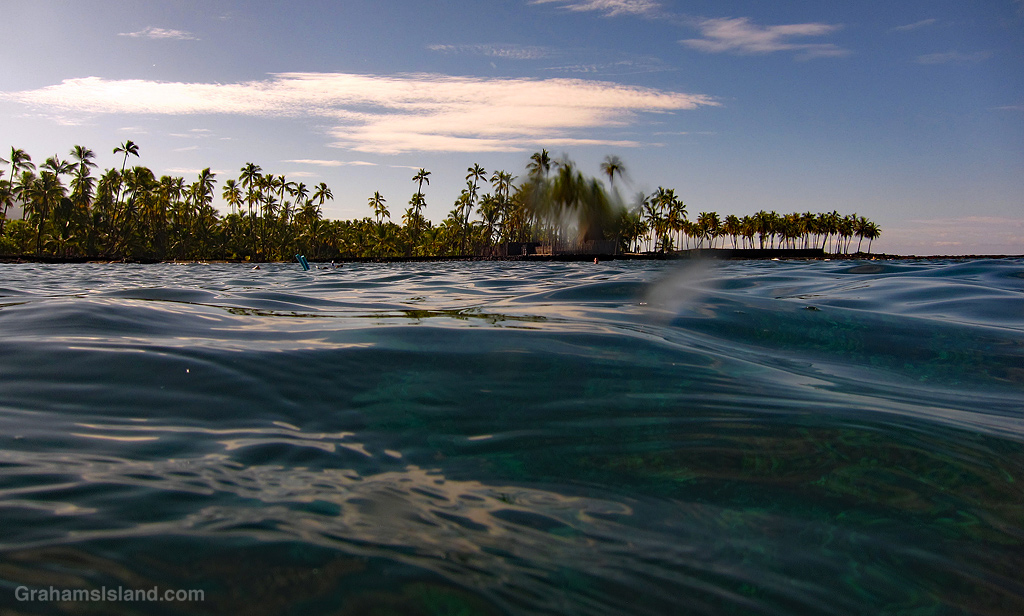
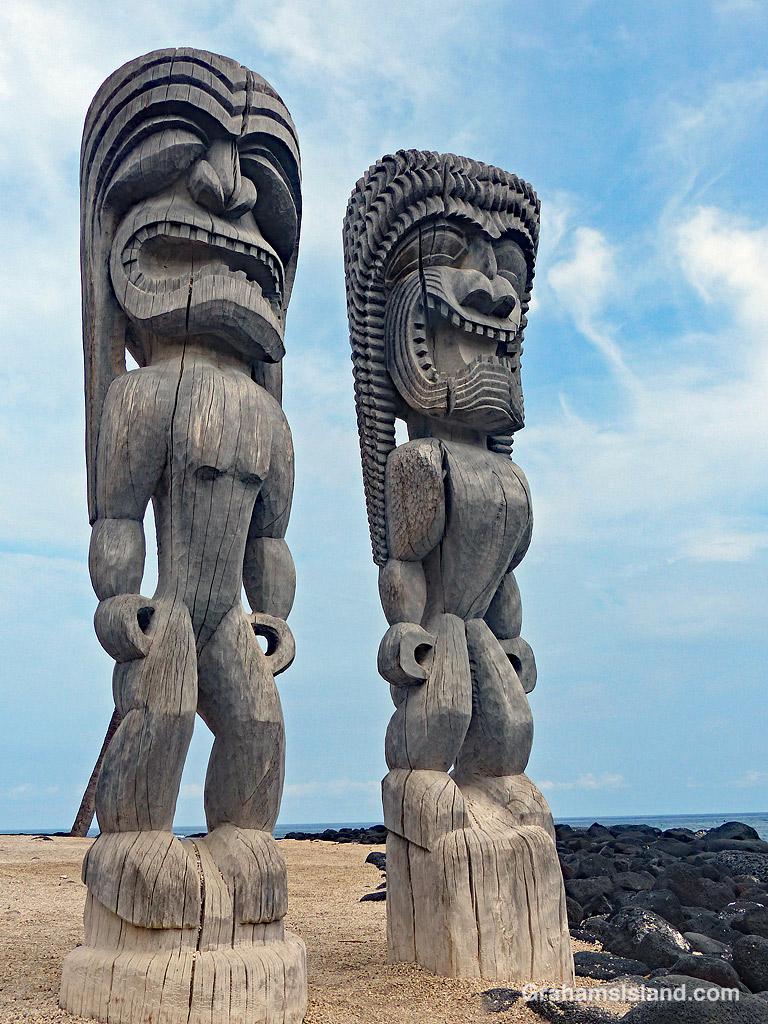
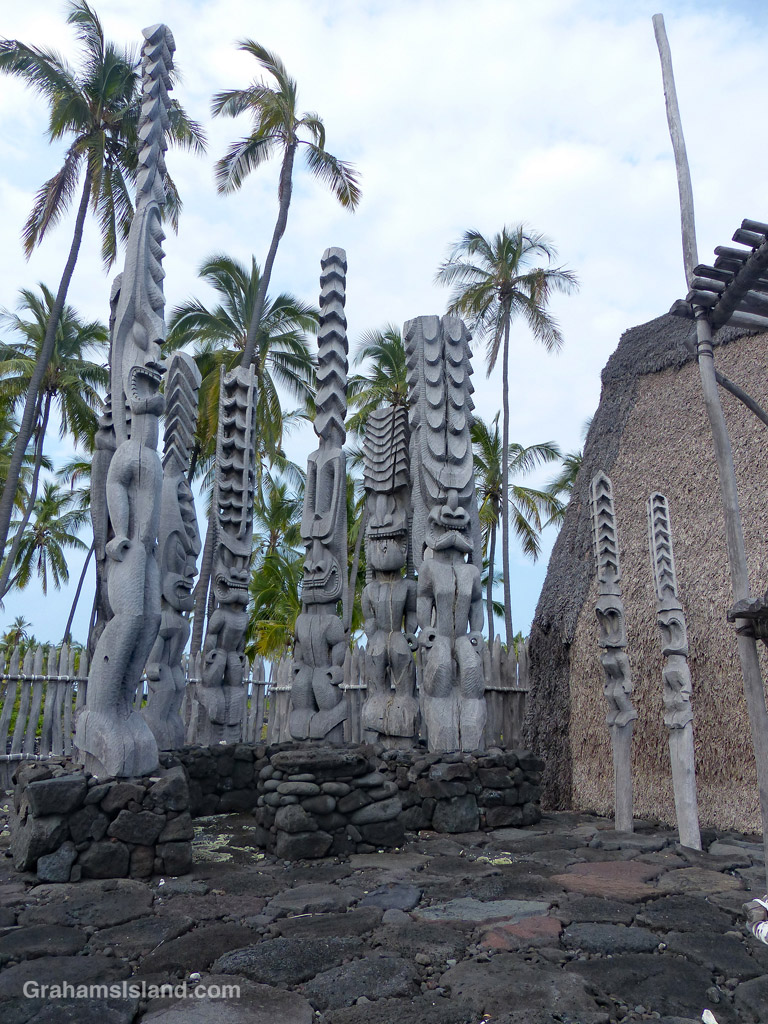
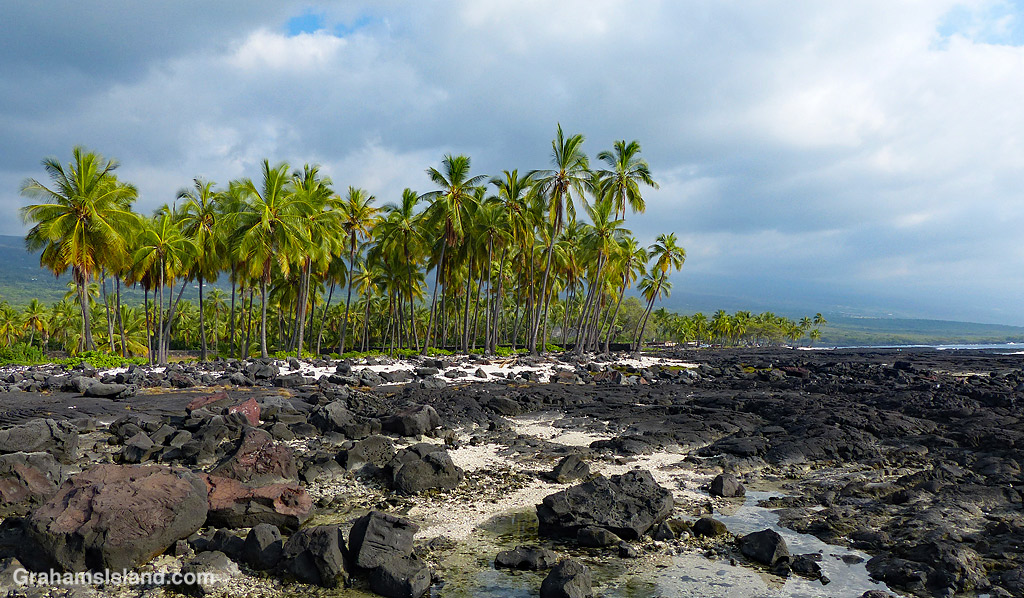
I imagine some such unfortunate swimming across Honaunau Bay. The palm trees look welcoming, but this is a sacred place, home to Hawaiian royalty, and to important ceremonial sites. One of these is Hale o Keawe, situated at the northern end of the wall, a place of powerful mana, or divine power. It is home to many ki’i, representations of “the akua, or the multitude of Hawaiian gods, deities, and venerated ancestors.” The refuge is on the other side of the Hale.
These ki’i would look down on the miscreant swimming toward them, growing in size as they got closer. But so too would the welcoming palm trees and though it is a rocky shore, a few cuts and scrapes would be a small price to pay for salvation.
Once ashore, forgiveness was guaranteed and the person was free to reenter society and rejoin family and friends, who would no doubt celebrate the return.







 Graham's Island