I often see the skydivers operating out of Upolu Airport. I see the plane take off and I see the brightly colored parachutes descending. But I’ve wanted to get a photo of the skydivers jumping out of the plane for some time. This photo isn’t it, but it’s the closest I’ve come.
Here, the skydiver has just jumped, but the main chute hasn’t yet opened. They typically drop for a while before opening the main chute, as this one did a minute or so later.
I like old signs like this one on the South Kohala coast. These coastal dirt roads can get a lot of traffic from people fishing or just off-roading so that’s probably why the gate was put in. However, I didn’t see much in the way of vehicles or people when I was there.
I saw this anole down at Honokohau Harbor in Kailua Kona. It was asserting its rights to a patch of territory there, though it didn’t look particularly promising as far as harboring much in the way of food. It’s also an area that tends to be thick with house sparrows, hanging around to snag leftover French fries at the Harbor House restaurant, which is where these photos were taken from.
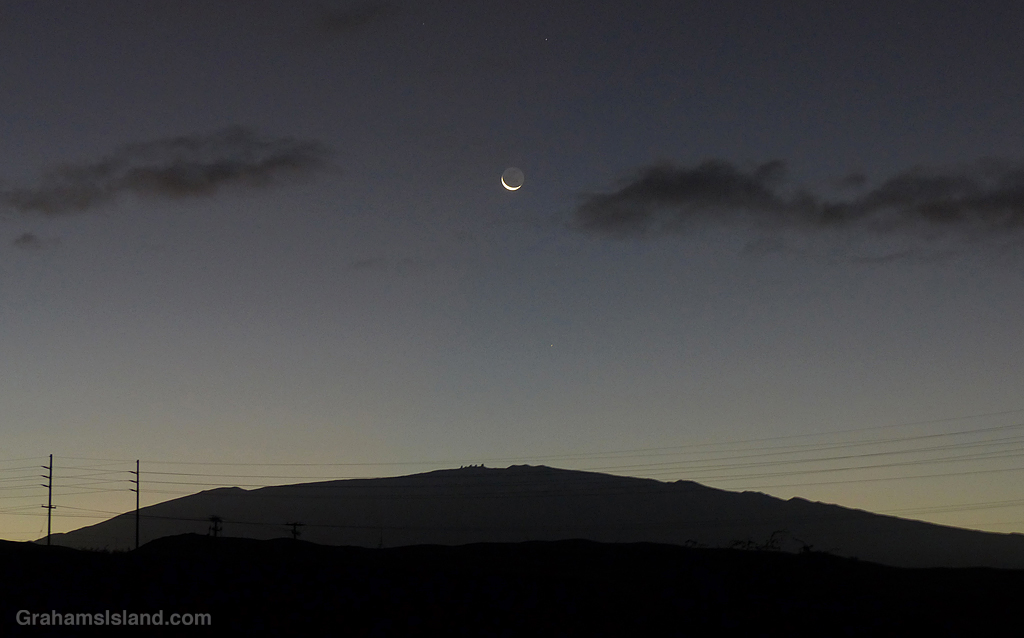
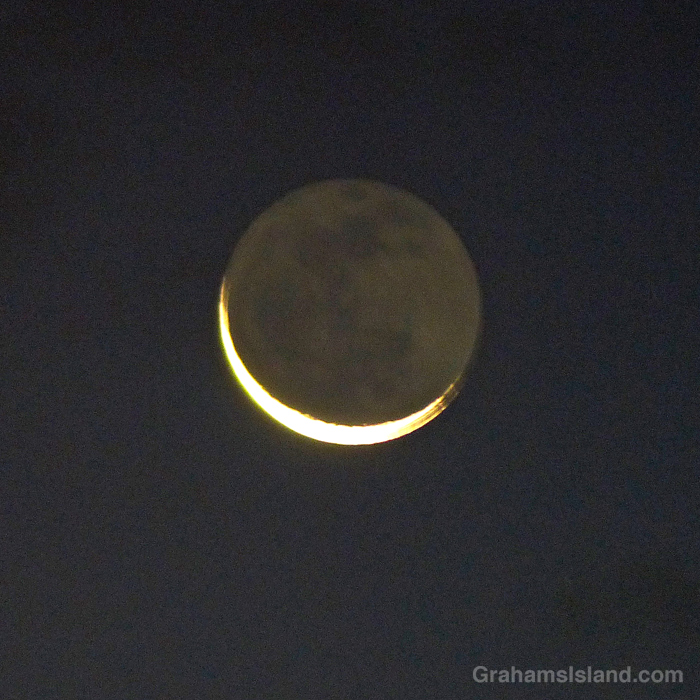
I like going for an early morning walk at Spencer Beach Park when I get the chance. Recently, I was down there the morning after a full moon. The moon was out and it was a tranquil morning, which set me up for the hustle and bustle of the day ahead.
June 11 was King Kamehameha Day in Hawaii, celebrating the birthday of the king who first united the Hawaiian Islands under one rule. The day is marked by parades and ceremonies in several places, including here in North Kohala, which is where King Kamehameha was born. The past couple of years, the ceremonies didn’t take place because of Covid restrictions, so this year’s event was the first since then.
I was working on the day, but after work I stopped by to see his statue, which was draped in leis during the ceremonies. It seemed like there was even more floral decoration this year than in previous events, making for a colorful spectacle. But even more striking than the color was the wonderful aroma from the profusion of plumeria flowers in the leis.
The leis are left in place for two or three days before they’re removed. Even when I was there on the first day, some of the flowers were starting to wilt.
Waimea was the site of Camp Tarawa from 1943 to 1945. The camp was built by the 2nd Marine Division which had just fought the battle of Tarawa, hence the name of the camp. Those marines then trained there for their next campaigns before moving on in spring of 1944.
They were replaced by the 5th Marine Division, who used the area to train for the attack on Iwo Jima. After that campaign, those marines returned to the camp for further training, but the war ended before they were called into action again.
The camp was closed in November 1945 and returned to Parker Ranch, which had leased the land to the U.S. government for a nominal fee, with the proviso that it be returned to them in its original condition. This meant that few buildings from that time remain, but the land between Waimea and the South Kohala coast was littered with unexploded ordinance and shrapnel, some of which remains to this day.
Fishponds were places where the early Hawaiians used to raise fish for consumption. Lahuipua’a Fishpond at Mauna Lani is a very large pond which holds many Milkfish. Awa is their Hawaiian name.
These Milkfish were congregated at the entrance gate, no doubt hoping for someone to open it and let them out. The gates can be used for either purpose, but the idea of the ponds is that small fish can enter, but as they get bigger, they can’t get out. The fish in the top photo are far too big to escape through the grill.
There is another way out, as the sign in the second photo notes. Jacks and barracudas sometimes manage to get into the pools and will feed on the juvenile fishes. There are supposedly a couple of very large barracudas in this pool that have so far evaded capture and they’re probably living well off the inhabitants there.