Category Archives: Places

Growth in the lava

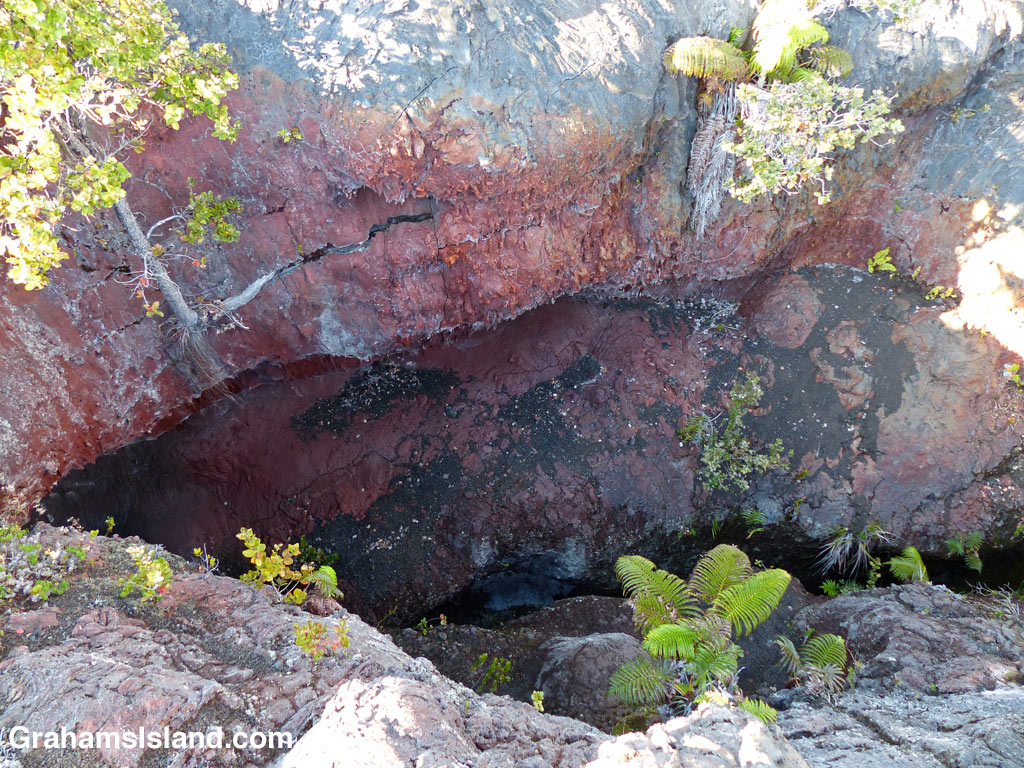
Vegetation has reclaimed a section of the original 1969 fissure of the Mauna Ulu eruption of 1969.
In May of 1969, a series of earthquakes opened a large fissure alongside Chain of Craters Road in Hawaii Volcanoes National Park. This was the beginning of what is known as the Mauna Ulu eruption. For five years, lava poured forth in a series of eruptions. Chain of Craters Road, completed only a few years earlier, was buried for several miles. Landmarks along the road were destroyed or irrevocably altered. A swathe of forest disappeared in flame.

When the eruptions finally ceased, life soon began to reappear on the barren lava landscape. In this photo, vegetation has reclaimed a section of the original 1969 fissure. Roots are anchored in cool, moist cracks in the lava. The tree on the left is particularly striking. Having started out in a crack on a vertical face, it has reached up to the light and is going strong. I like to think it shows how resilient nature can be.

For more information about Hawaii Volcanoes National Park, go to nps.gov/havo/. For more information about Kilauea Volcano and it’s eruptions, go to hvo.wr.usgs.gov/kilauea/history/main.html.

Hibiscus tiliaceus

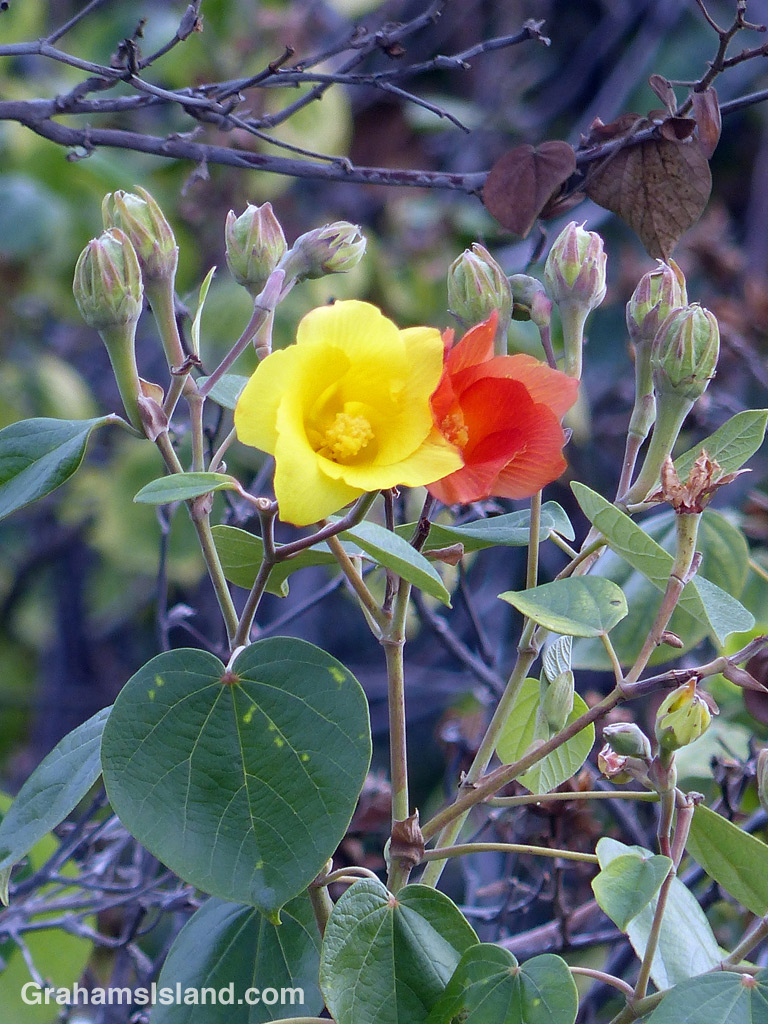
A hibiscus tiliaceus at the Golden Ponds of Keawaiki on The Big Island of Hawaii
Hibiscus tiliaceus is called hau here. This large shrub was growing at the Golden Ponds of Keawaiki, which is a little oasis in a wasteland of lava. The different colored flowers, on the same plant, occur because the flowers only last for a day. They start out yellow and turn to red or orange as the day progresses.

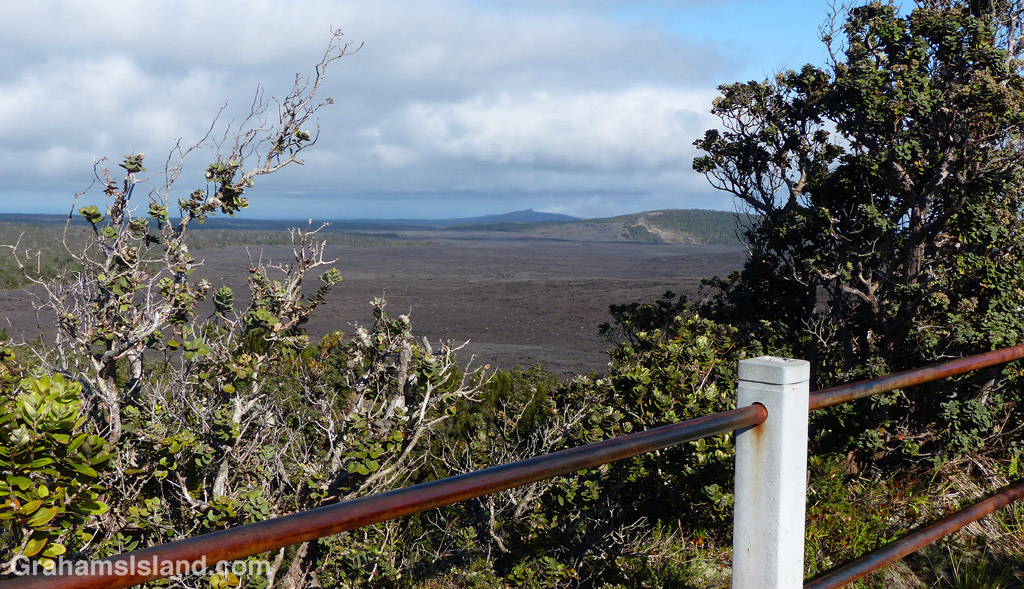
Kilauea Volcano’s Pu’u O’o vent

Pu'u O'o vent on Kilauea Volcano
Pu’u O’o is one of two active vents on Kilauea Volcano. It sits on the eastern border of Hawaii Volcanoes National Park. Continuously active since 1983, Pu’u O’o is currently pouring lava into the ocean around Kamokuna on the south-eastern coast of the Big Island. These views of the vent were taken from Pu’u Huluhulu cinder cone.

For more information about Hawaii Volcanoes National Park, go to nps.gov/havo/. For more information about Kilauea Volcano and it’s eruptions, go to hvo.wr.usgs.gov/kilauea/history/main.html.
Pu'u O'o vent on Kilauea Volcano

Mongoose and dead turtle

A mongoose about to feast on a dead green turtle on the Big Island.
I pondered about posting this photo. I’d emailed a contact at a marine animal facility with the news that I’d found a dead turtle with a broken shell washed up among some rocks. I asked if anyone would be interested in that information, thinking some marine biologist might want to check the remains to determine the cause of death, that sort of thing.

He asked me to send a photo, which I did. Then I got a response in which he said not to send more. He’d been expecting a ‘happy turtle photo.’ I suspect he’d missed the bit about it being dead with its shell broken in two.

This is a less graphic photo taken a day later, by which time mongooses had discovered the remains. My appearance distracted them, but not enough for them to flee. The mongoose is the poster animal for catastrophic invasive species, but in this case, it’s performing something of a service in cleaning up the remains. Probably other creatures, such as crabs, also gathered for the feast.

I don’t know what happened to the turtle. Possibly it was attacked by a tiger shark or it could have died for some other reason. I doubt the ocean caught it by surprise and swept it to its death. Turtles are very good swimmers.

Pueo on a post

A Pueo, or Hawaiian short-eared owl, sits on a post beside Old Saddle Road on the Big Island.
Thus endeth the first year of this blog, 367 posts so far (I screwed up my scheduling one day). To mark the occasion I thought it would be appropriate to post this pueo on a post, one of my favorite recent photos.

The Pueo, or Hawaiian short-eared owl, is endemic and hunts during daylight hours. Old Saddle Road, on the way from Waimea to Hilo, is a good place to see them since they like the open pasture land that borders the road.

I noticed this one as I was driving home one day, and quickly pulled over. The pueo noted my arrival, but didn’t seem unduly perturbed. Even though I see pueos regularly, I always feel lucky to do so. Ancient Hawaiians regarded the pueo with reverence and I can understand that.