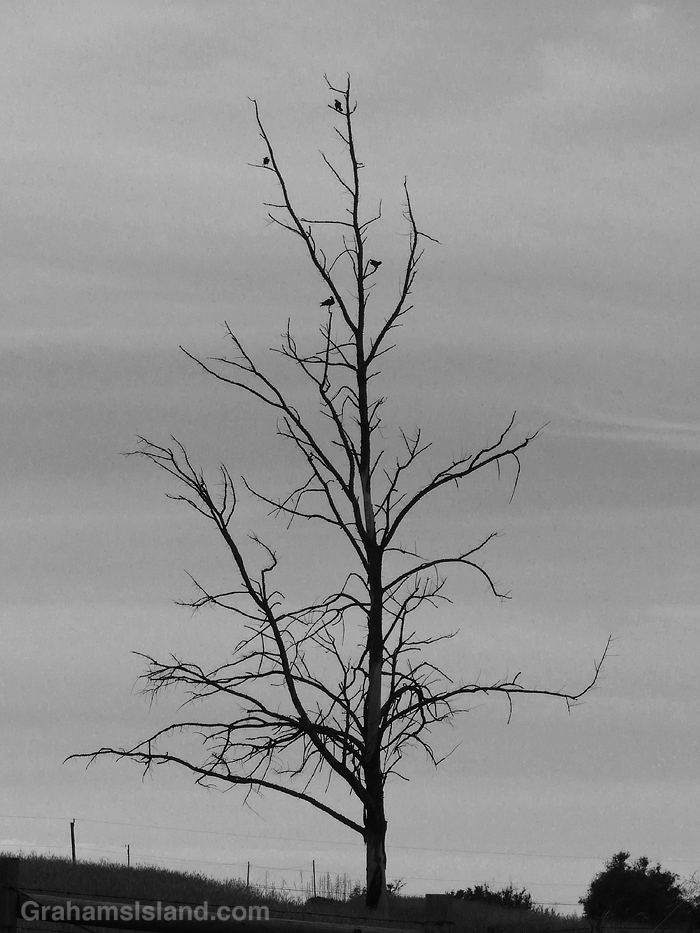
This photo doesn’t look much different in black and white than it does in color. Happy Halloween!

This photo doesn’t look much different in black and white than it does in color. Happy Halloween!
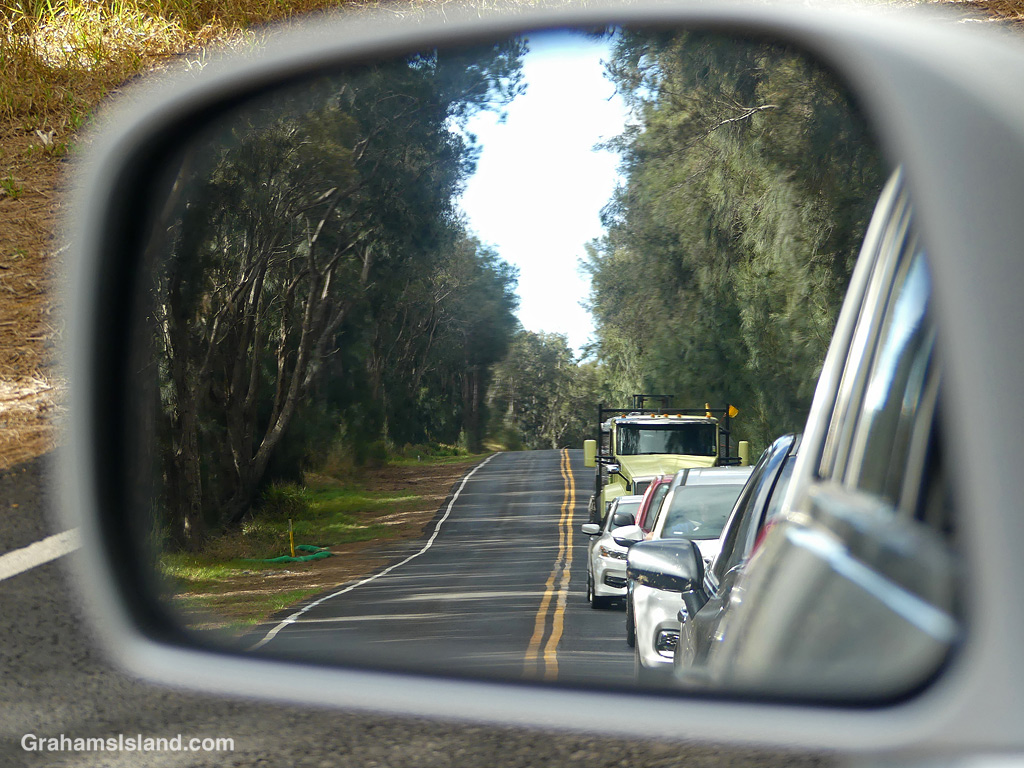
I took this photo while waiting in a line of traffic on the mountain road. As usual, the cars aren’t in line, but they do match the temporary striping in the middle of the road. I use the word ‘temporary’ with hesitation. Often, these temporary road markings are still in place months, or even years later.

This week’s Sunday Stills challenge theme is ‘Frightful.’ See more responses here.
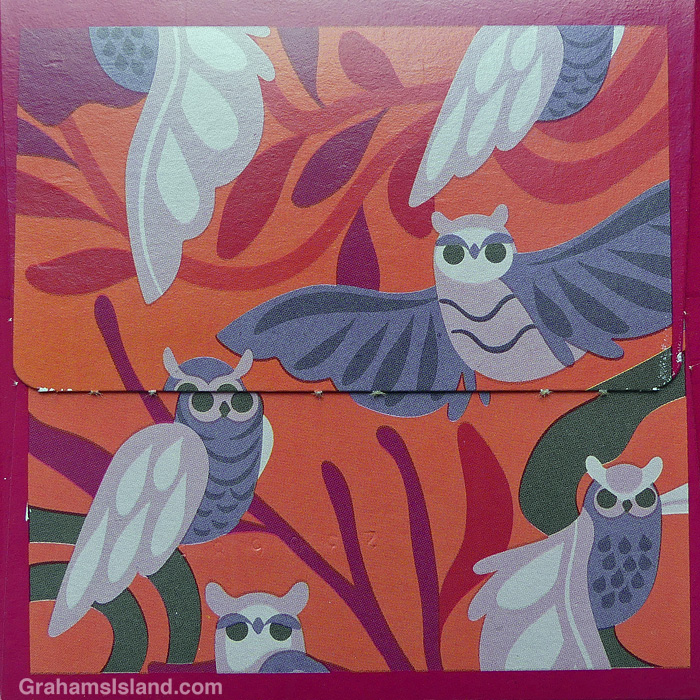
There’s a well-known brand of paper tissue that sells it’s products in cardboard boxes sporting a wide variety of designs, some more pleasing than others. Costco carries these items and currently sells a line that could be called colorful or garish, depending on ones tastes.
The top photo shows the end of one of these boxes. It features owls, which I love, but there’s something truly frightful in this image. I don’t know whether it’s the blood-tinged background colors or the bizarre purple owls from another dimension, and their dull black, vacant, staring eyes. I do know this isn’t what I want to see when I walk in the bathroom. So I’ve stopped buying from Costco until they get a less scary set of designs in.
The second photo is frightful in a fun, Halloweeny kind of way. I was picking up bread from the Sandwich Isle Bread Company in Waimea, when I saw these ”Mummy” Vanilla Choco Eclairs. Well, I couldn’t possibly pass them up, could I? They have several other Halloween-themed treats and they not only look fabulous, but always taste great.


On a recent swim, the most notable sighting was this duck, bobbing serenely in the water. It took a while to realize that its calm demeanor owed nothing to its personality, but all to its construction. The duck was a decoy, and a well made one, I thought. A dip under the water revealed no legs, but a good amount of marine growth, indicating it had been bobbing along for some time.
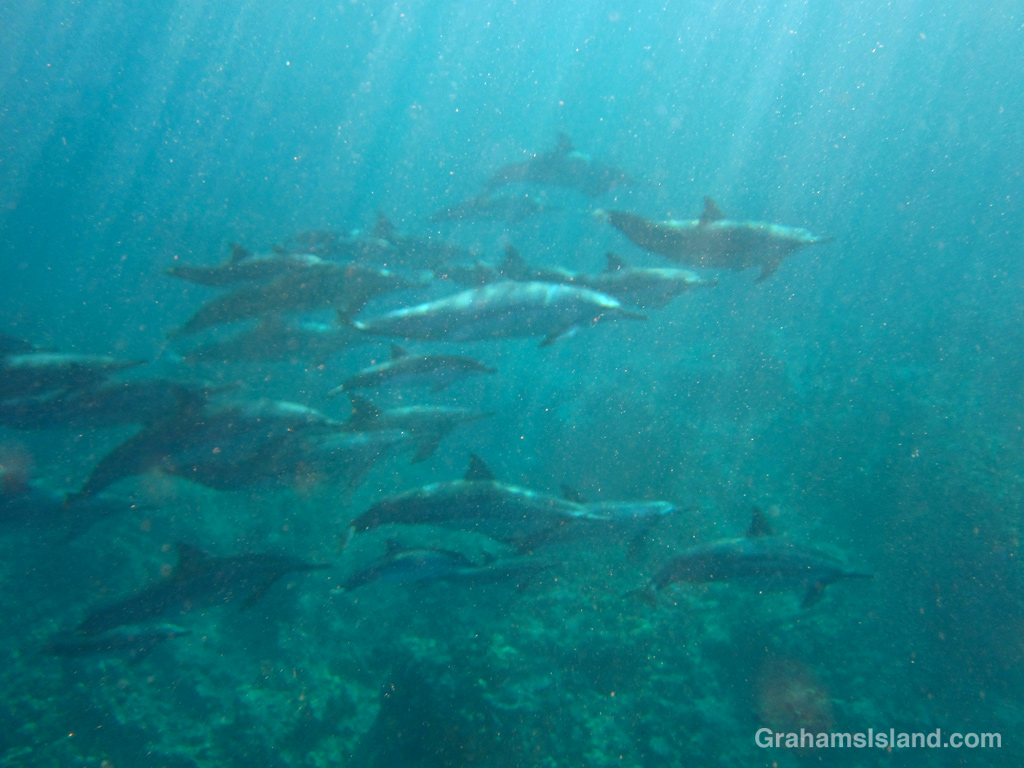
Yesterday, when I went swimming, the swells rolling in were larger than expected, and the visibility in the water, worse than expected. Consequently, it wasn’t a banner swim until I popped my head out of the water and saw spinner dolphins heading my way.
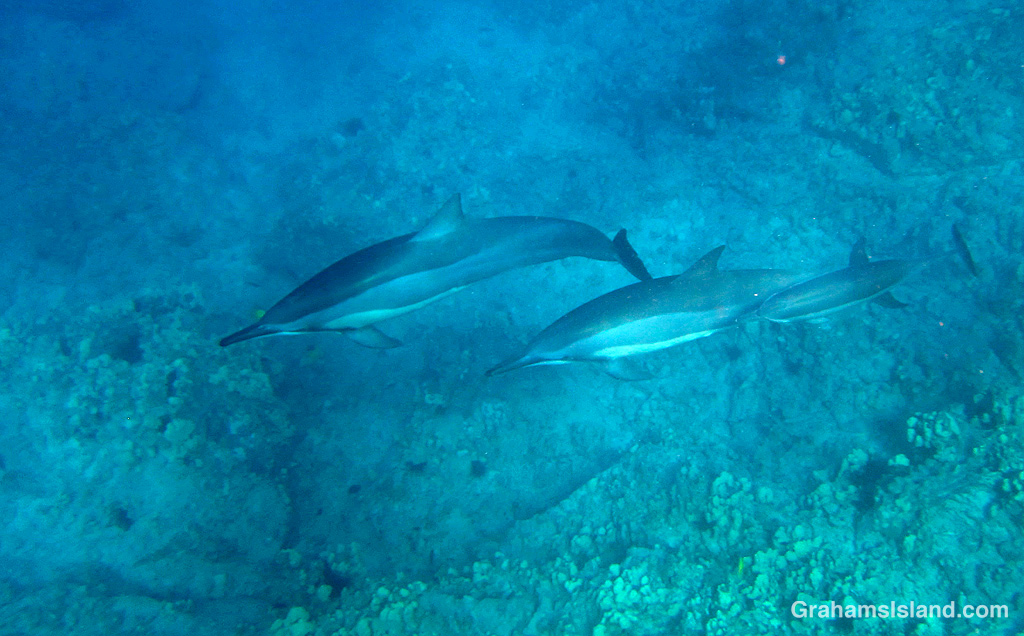
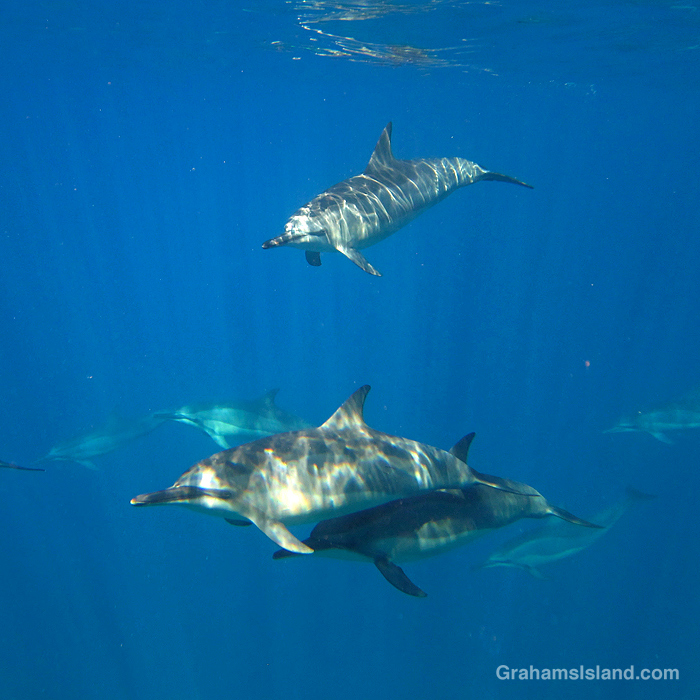
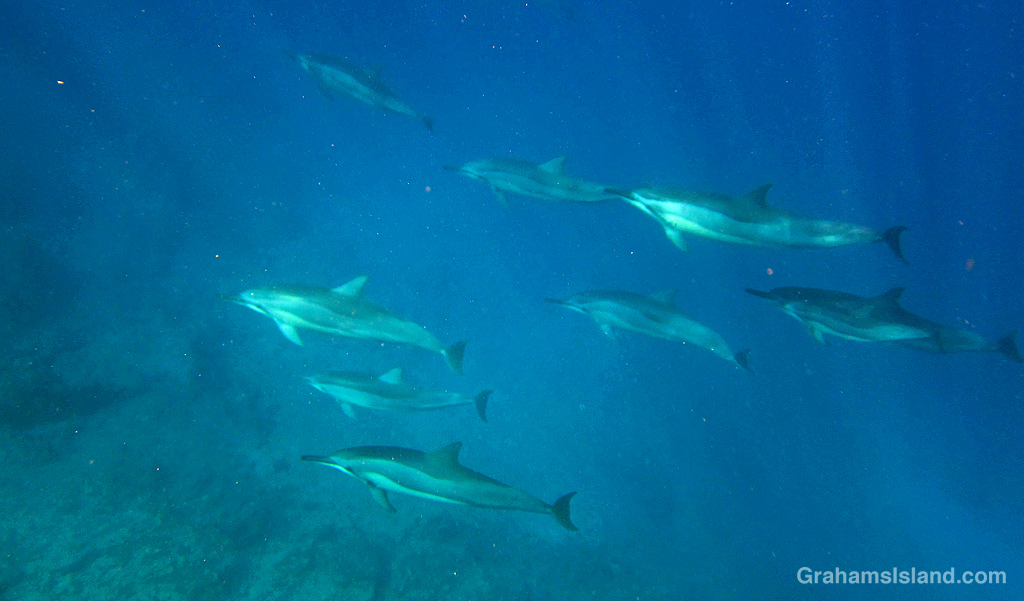
I reckoned there were at least 60 or 70 dolphins in the pod, but I suspect there the number was closer to 100. I count more than 25 in the top photo and that was one group going by on one side. The traffic was continuous on both sides, and below, for several minutes.
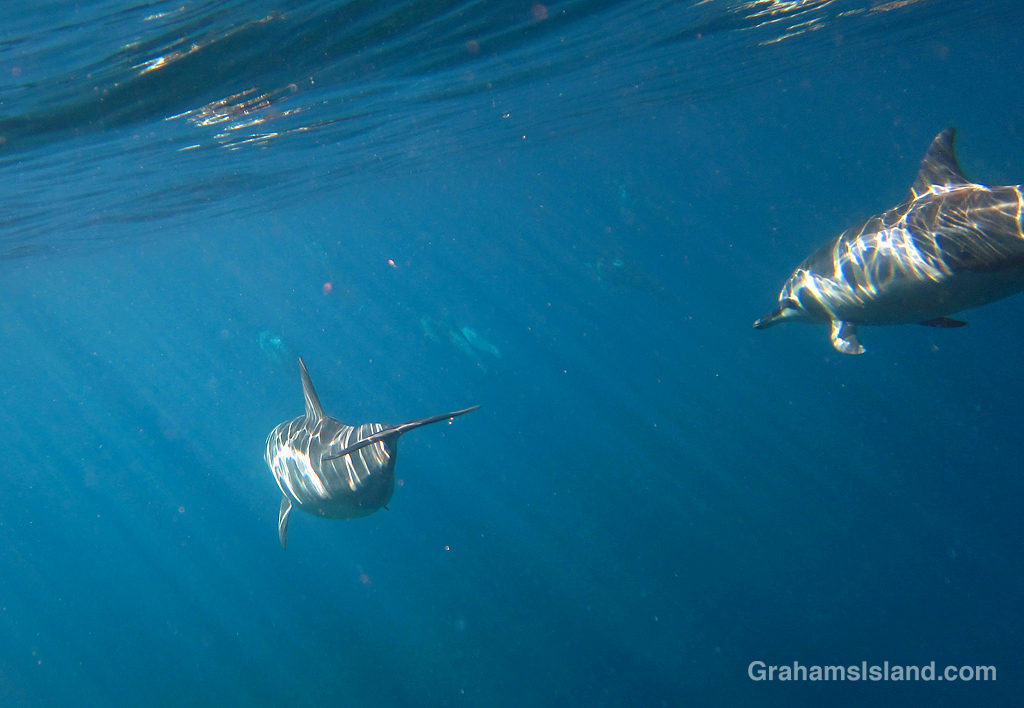
The dolphins weren’t hanging around, but zipped by, heading for their daytime resting spot. Several minutes later, a much smaller group passed by, traveling at a more sedate speed. I’m not sure why that was. Sometimes it’s because they’re escorting calves, but I didn’t see any. Perhaps they were just tired and not inclined to get caught up in the rush of the main group.

For some reason, on many recent swims I’ve seen a variety of cones in the water. Cones are marine snails and many have a venomous sting, which can be dangerous to humans, though not likely fatal.
The Hebrew Cone gets its name from its distinctive markings, which supposedly bear something of a resemblance to Hebrew letters. It’s quite common here, though this was the first one I’ve seen. Apparently, the largest Hebrew Cones are found in Hawaii, though that only means a length of around 2.5 inches, which this one might have been close to.
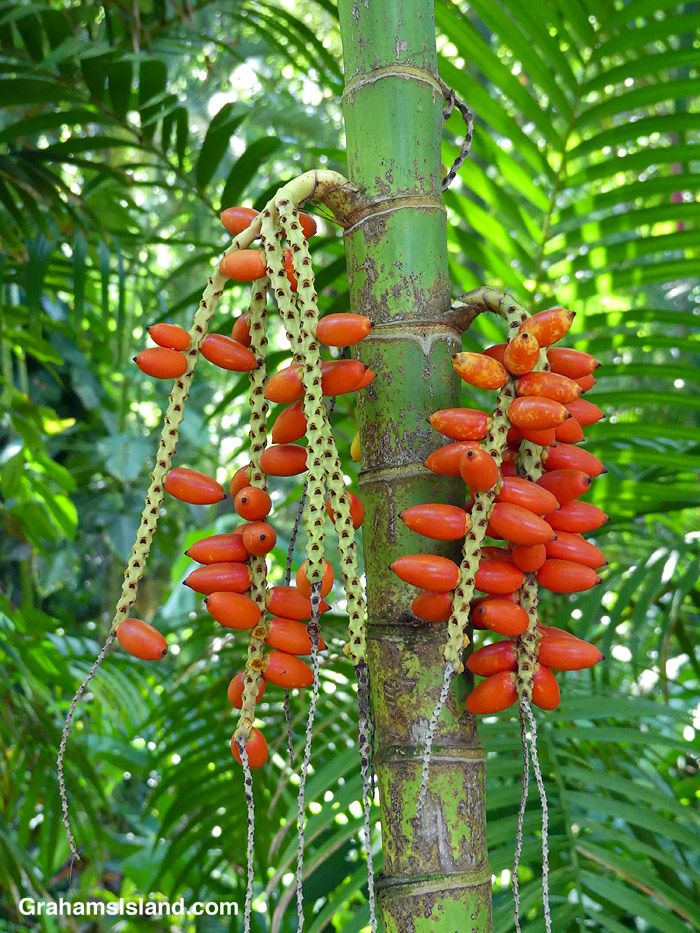
These are the fruits of a palm tree, not sure which kind. I was hoping someone would walk by so that I could say, ‘Looks like this Roma Tomato Tree has a good crop coming along.’ Alas, life is full of little disappointments.

Kohala by the Sea is an upscale gated community on the northern edge of Kawaihae. What appeals to me in this image is the curvy roads terminating in little asphalt blobs. It gives it an organic feel, which I suppose it is in a way.
 Graham's Island