On a recent swim, I happened to pass over this Pacific Day Octopus, wedged into a crack, not far below the water’s surface. It didn’t have a good, quick escape route so waited out my intrusion into its world. On the left is a red pencil urchin that it was butted up against.
These two bulls reside in a field beside the road to Upolu Aiport. I’ve never seen them more than six feet apart from each other! The cattle egret was just taking a break on a blustery day and took off soon after I took the photo.
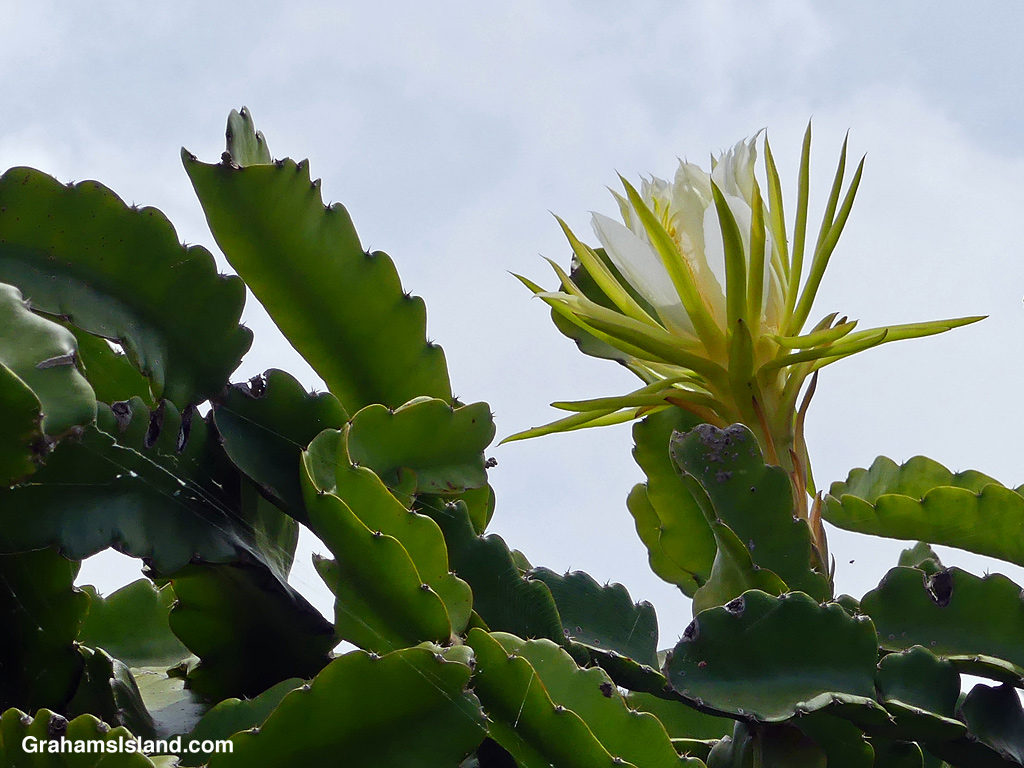
Dragon fruit is native to Central America, but is found in tropical and subtropical places worldwide these days. It grows on what used to be called the Hylocereus cactus, now known as Selenicereus cactus. It comes in three varieties, but the most common, with pink-skinned fruit and white flesh, is Selenicereus undatus.
This cactus is a climber and the one I’ve been taking photos of is growing up a tree branch in my neighbor’s yard. It takes a while for the plant to become mature enough to flower. The flowers bloom at night and are short-lived. I didn’t know this when I was driving to work one early morning and, in Kawaihae, saw two dragon fruit plants with a stunning array of blooms. I thought, I must get a photo of those on the way home and, amazingly, remembered this later in the day. But when I passed through Kawaihae, every single bloom had already wilted!
I did get photos of the neighbor’s flowers, but they were equally short-lived. After that it takes a while for the fruits to form, with the dead flower still hanging from it.
The fruit grows over time, but it’s not until it starts turning pink that it needs to be more closely watched. Ripe fruit will become a little softer to gentle pressure, as with avocados, and the scaly spikes sticking out from the fruit will start to turn brown and wilt.
Once the fruit is ripe, it can be cut open to reveal the seed-speckled flesh, which can easily be scooped out with a spoon. The flavor is a bit like a cross between kiwifruit and pear.
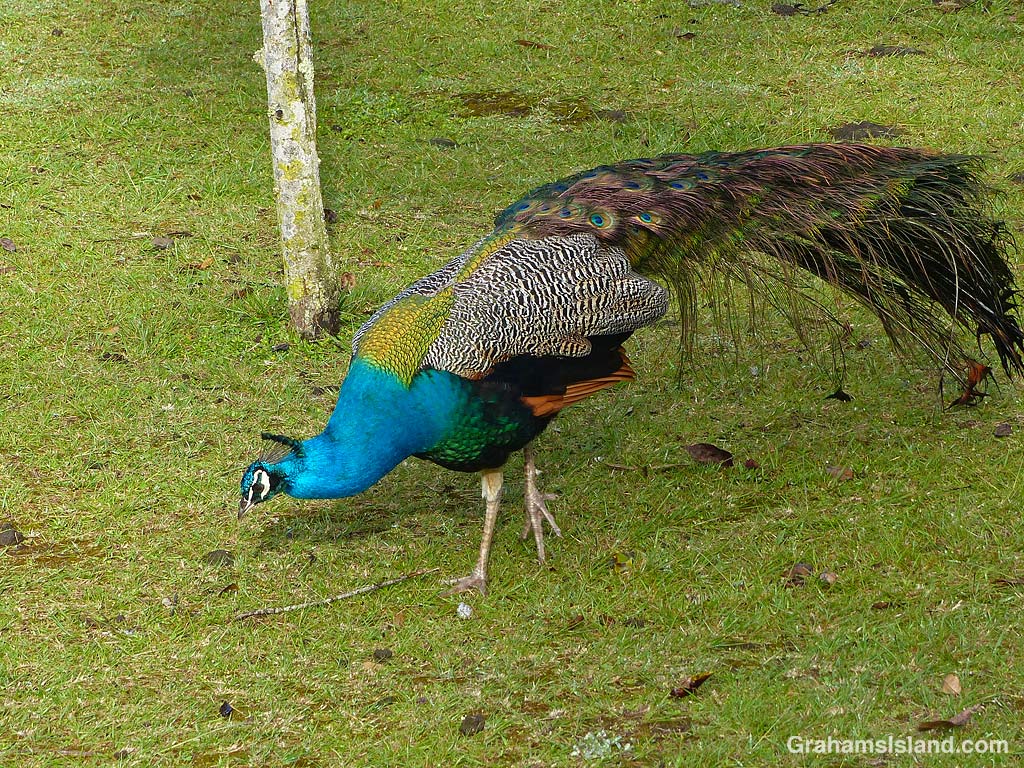
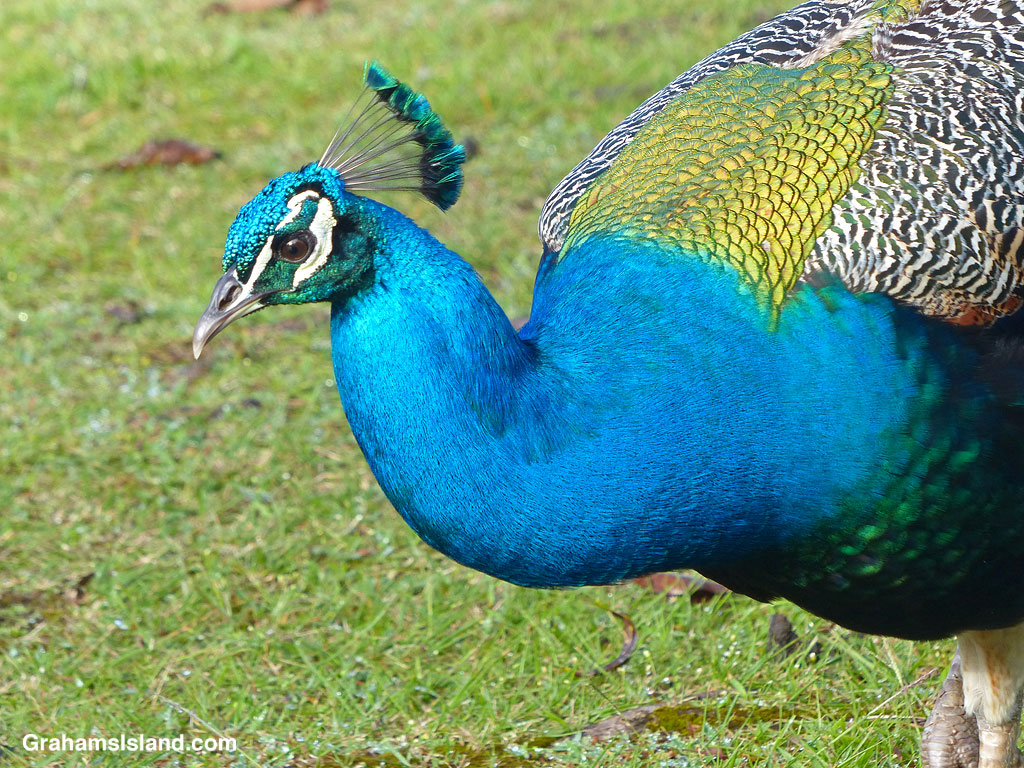
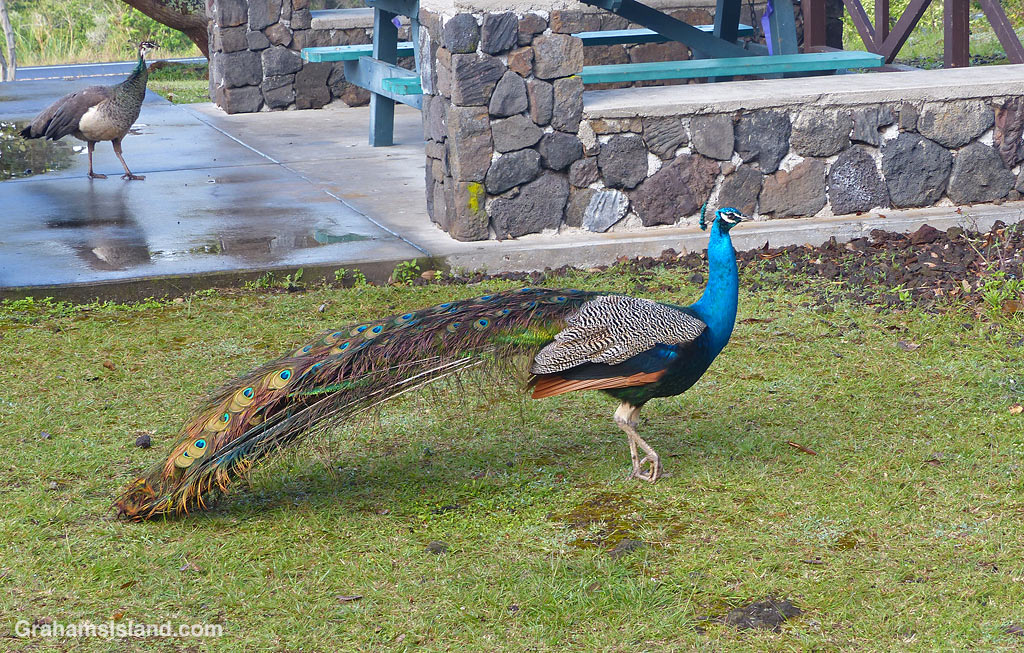
The Common Peafowl (Pavo Christatus) is better known as a peacock. The adult males are wildly colorful, and would look right at home in a Las Vegas chorus line.
These birds weren’t seen in Vegas, but at Manuka State Wayside Park, when I was down that way earlier this year. It was only when I saw them that I remembered I’d seen them there before, when I first moved to the island and lived just down the road for a while.
There are a few wild populations on the islands, but supposedly, most are quite shy. These weren’t, wandering around the parking and picnic areas, and entirely indifferent to those of us taking photos.
My regular swim these days, passes through the territory of the local Great Barracuda ohana. It’s quite common for them to gather in the wake of swimmers, mostly I think, in case the swimmers are spear fishing and might snag something they can steal.
Last week, this barracuda approached me from the front and gave me quite the look, but since it was no more than a foot long, I wasn’t too concerned.
A couple of days ago, I had a similar encounter with a similar-sized fish. This time the barracuda approached from dead ahead and only turned away at the last minute.
Had either of these been one of the giants, which can be three or four feet long and much bigger around, I’d probably have been wetting myself!
The second photo is posted for Bushboy’s Last on the Card photo challenge. See more responses here.
This week’s Sunday Stills challenge theme is ‘Fences.’ See more responses here.
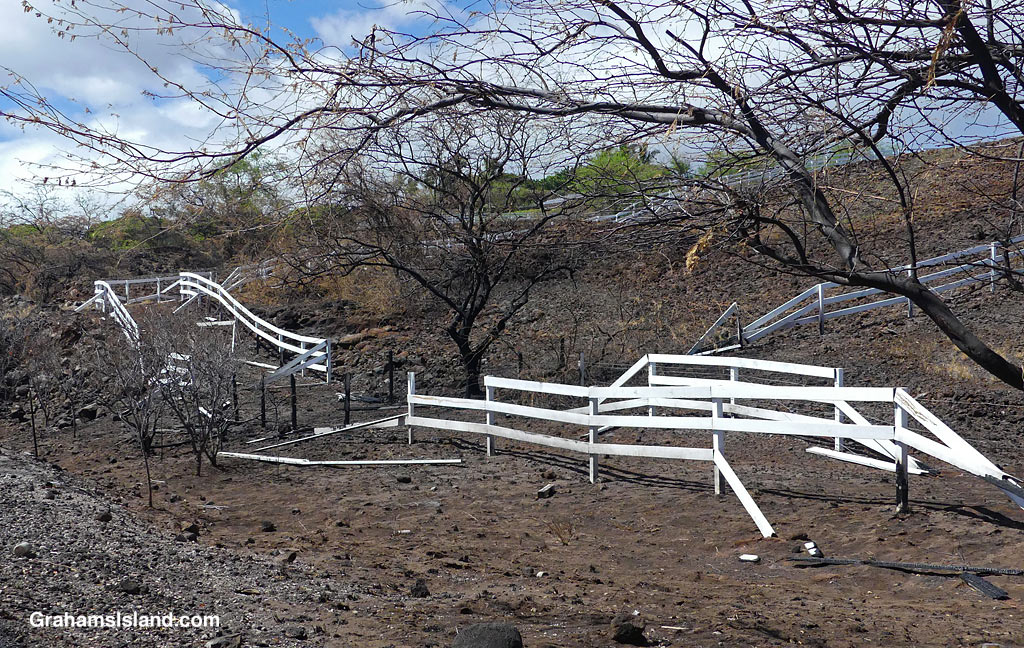
Here on the Big Island, fences tend to be of two kinds – chainlink and painted wood. Walls and hedges are possibly more popular. Walls don’t need as much maintenance and hedges fill in easily all by themselves, though they do require trimming if they’re not to take over.
These fences are ones that have seen hard times. The top photo is the chainlink fence around Upolu Airport. Someone managed to take out a section of this recently. Not sure whether they got distracted or were going too fast and lost control, but several sections of fence got destroyed. Judging from the trail of damage, the vehicle can’t have fared well either.
The other two photos are of fences around Kohala Ranch, a subdivision in Kawaihae. These photos were taken after August’s big brush fire. The tidy white fences surrounding the property have been rather battered. Fixing the damage will be a significant task, though I think most of the folks living there were probably happy to have been spared more than this largely aesthetical issue.
A few days ago I posted photos of people surfing outside the breakwater at Keokea Beach Park (here). This photo shows the sheltered waters inside the breakwater.








 Graham's Island