Kōlea lau nui (Myrsine lessertiana) is a tree that can grow up to 60 feet high. But it’s the new leaf growth that is its most striking feature. The color of the new growth can vary quite a bit, but it’s these deep pink leaves which really stand out in the otherwise mostly green woods where I’ve see them.
The approach to Kona Airport passes over barren lava fields and I often feel for people who must look down from the plane and wonder what the heck happened to the beautiful, tropical Hawaii they were looking forward to visiting. I know I felt that way on my first visit.
I saw these two fishermen on these rocks at the foot of a cliff in North Kohala. By the time I got organized, this is the photo I got. The photo I was after happened moments earlier, when the pair were being soaked by spray from a big set of swells breaking against the rock shelf the right of this photo. By the time the next big swells moved in the two of them had moved farther away from that spot and the photo opportunity had gone.
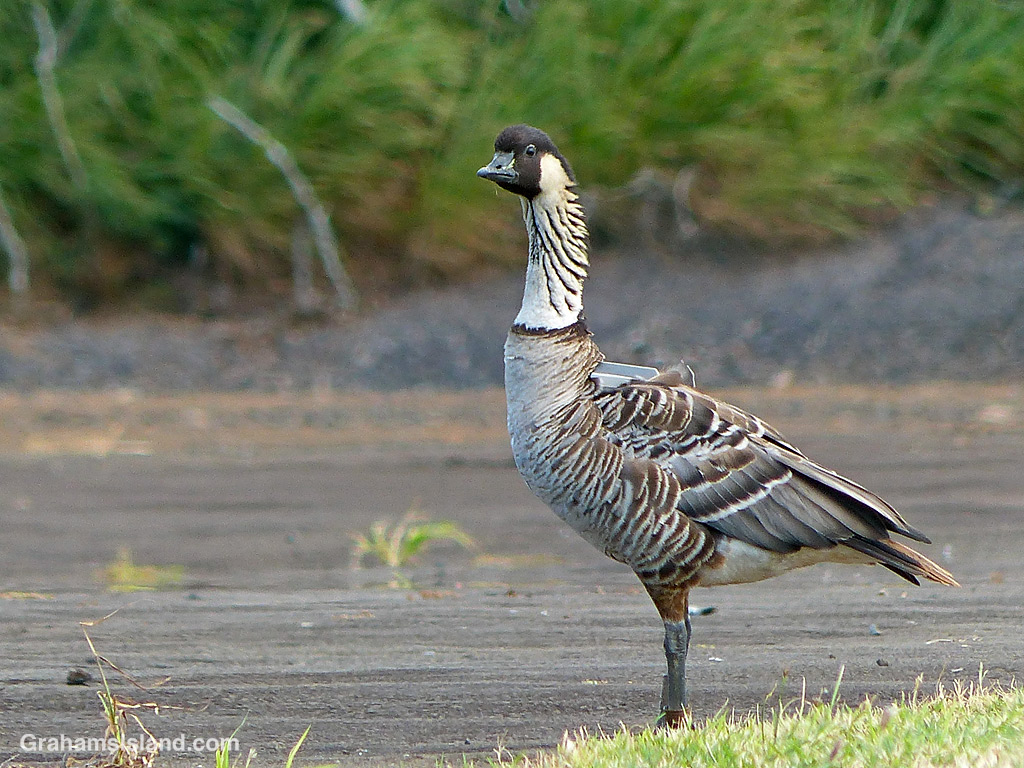
In last week’s Sunday Stills, Terri included a photo of a bald eagle with a transmitter on its back. In the comments, I mentioned that those trackers don’t stay on that long. Cue a few days ago when I saw this nene at Upolu. When I see nenes at Upolu, I report them to a contact at the Department of Land and Natural Resources (DNLR). The DNLR uses sighting information to build a picture of where the nenes are and where they go.
This is 32A, a bird I first saw in January of 2020. Back then, he didn’t have a tracker, but shortly after I saw him, one was attached. The DNLR thought the bird might be flying to and from Maui, but it turns out he wasn’t. Instead, the tracker has shown he mostly flies between Upolu, Hakalau, and Mauna Kea, all on the Big Island. However, the tracker is still on and still working, and I learned that they generally work for 3 to 5 years.
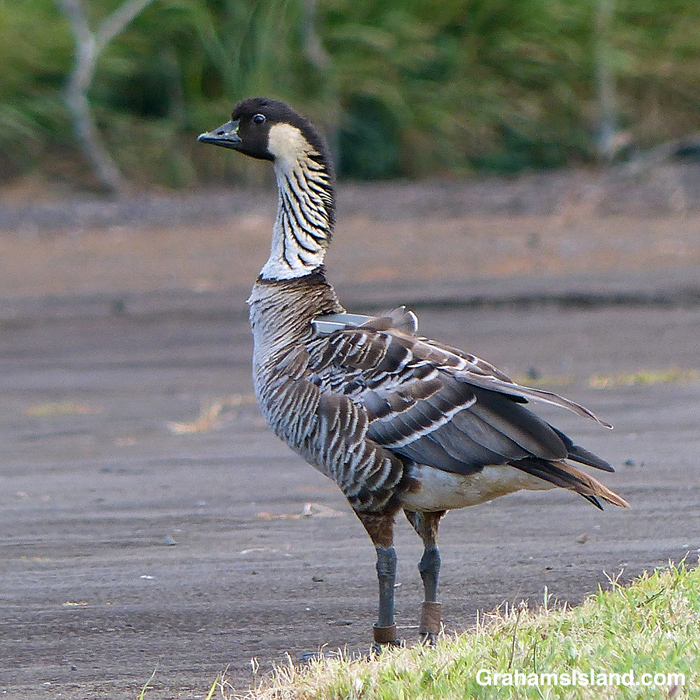
The reason I know this bird is 32A, besides the tracker, is that many nenes have bands on their legs to help with identification. In the second photo, the bands can be seen at grass level. The smaller band, on the left leg, is a US Fish and Wildlife tag. I’ve never been able to see any information on this smaller tag on any of the birds I’ve seen. The tag on the right leg is actually gray and shows the bird is one of almost 600 birds that were moved to the Big Island from a golf course near Kaua’i airport, between 2011 and 2016. These birds more than doubled the population of Big Island birds at that time. The fact that the tag is on the right leg means the bird is a male. The fact that the tag is brown and barely readable shows this bird has been wading through some very muddy conditions!
This week’s Sunday Stills challenge theme is ‘Earth Day.’ See more responses here.
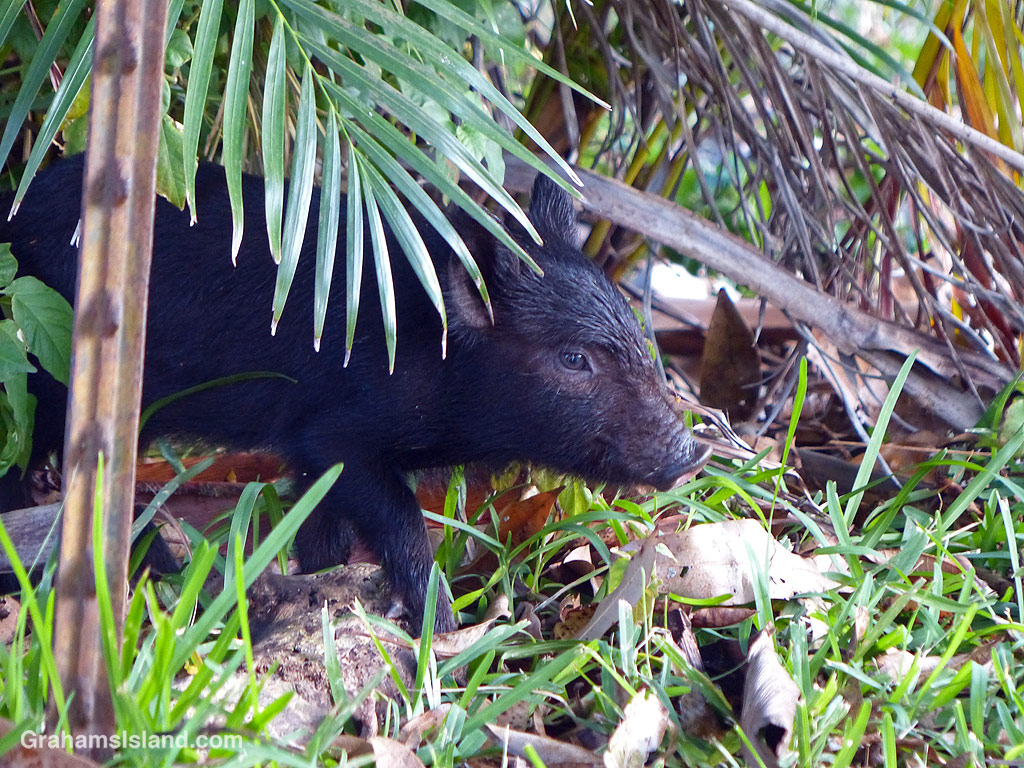
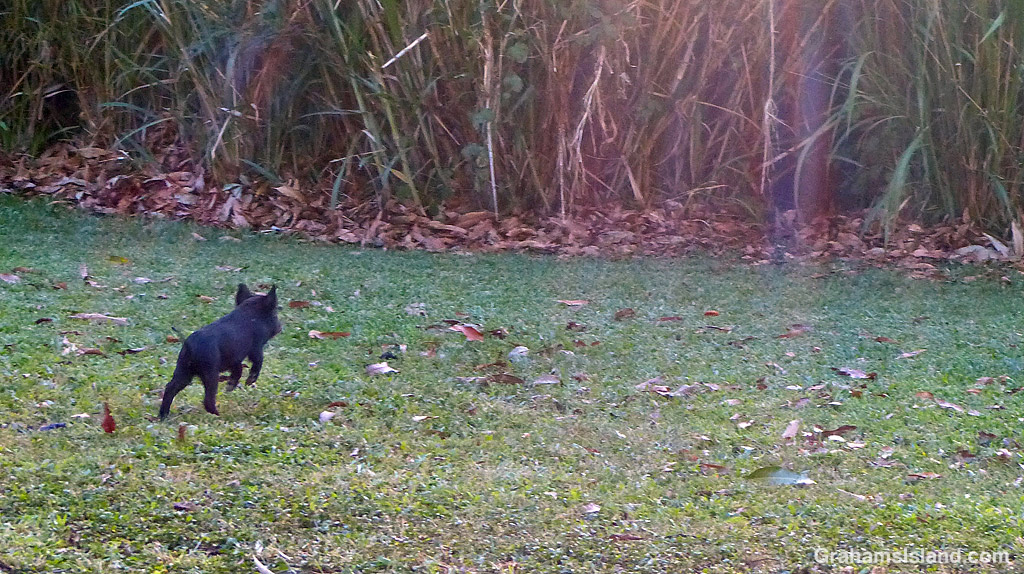
What’s more earthy than pigs. Of course, these piglets aren’t really back. The last litter is now much larger and correspondingly less cute. The ones in this photo are the latest batch. There are seven of them and they’re still in the ‘Everything is new and exciting’ phase. They root around in the dirt with such vigor that their back ends sometimes fly into the air. However, they haven’t yet learned that, while they’re doing this, they need to retain awareness of their surroundings. When something or someone, such as myself, can approach within five feet without them noticing, that might not end well. If mom’s around, she’ll warn them. If not, they’re easy to surprise.
In these photos, the piglets found something in the base of the palm and were clambering over each other to get a piece of it. I could have tapped one on the shoulder and it would probably have ignored me!










 Graham's Island