Dwarf Naupaka

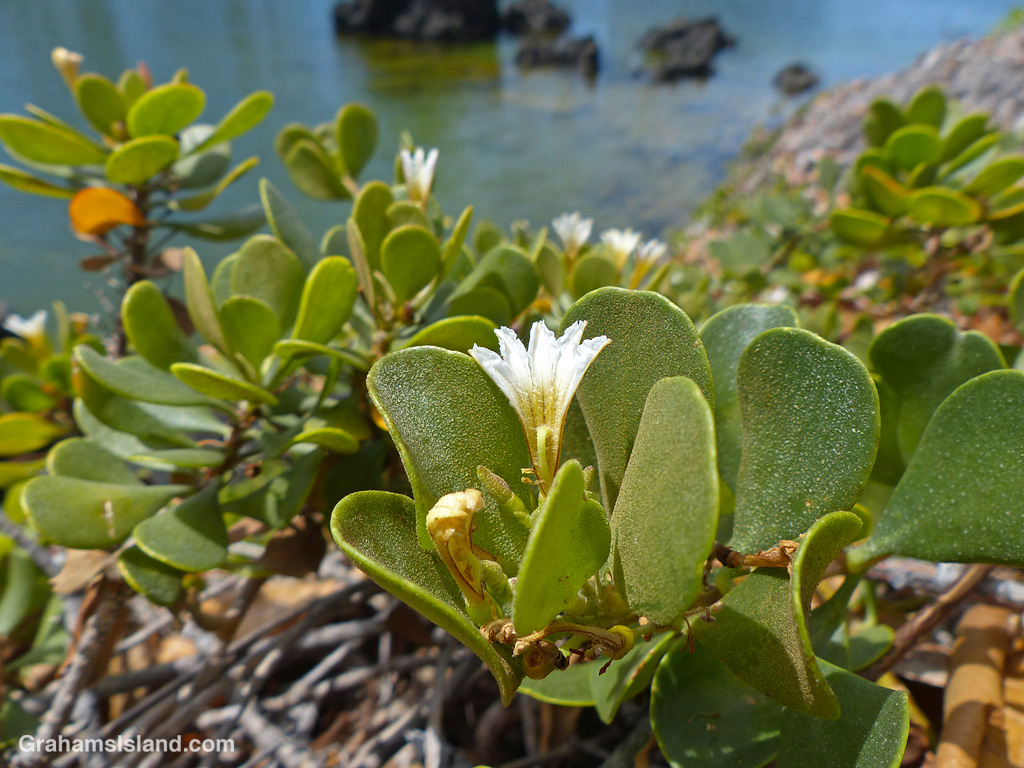
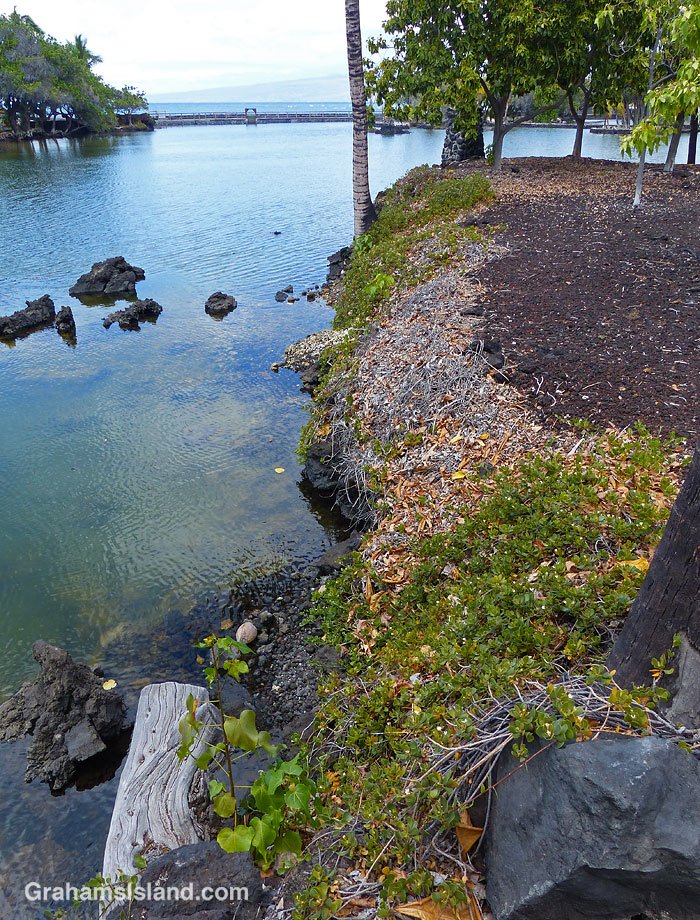
Endemic Dwarf Naupaka plants at Mauna Lani fishponds in Hawaii

Beach Naupaka (Scaevola sericea or Scaevola taccada) is relatively common here, often seen in coastal areas because of its salt tolerance. Dwarf Naupaka (Scaevola coriacea), on the other hand, is on the federal endangered list. It used to be seen on all the main islands, but these days it’s only seen on Maui and then not in many places. The flowers of Dwarf Naupaka are a little different and the leaves are considerably smaller, just one to two inches in length.

These endemic plants were spotted alongside one of the fishponds at Mauna Lani, on the South Kohala coast, by a friend who knows a lot about native plants. When he told me about them, I headed down to take a look and get some photos. I agreed with his identification and got a confirmation on Hawaii Plant ID.

It’s likely that the plants by the fishpond aren’t naturally occurring, but were deliberately planted, though by who or why is not clear. Still, it’s encouraging that at least one small pocket of these extremely rare plants still exists on the island.
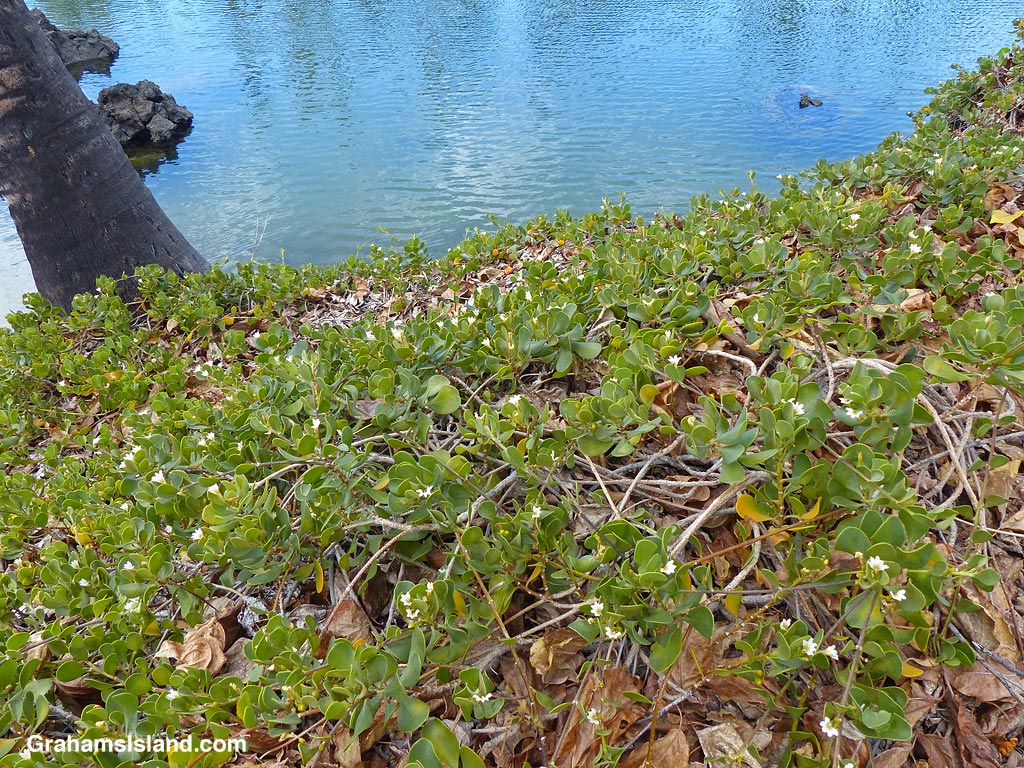
Endemic Dwarf Naupaka plants at Mauna Lani fishponds in Hawaii

Steam trail

Steam rises alongside the Steam Vents trail in Hawaii Volcanoes National Park

Steam rises from vents alongside the Crater Rim Trail in Hawaii Volcanoes National Park. In the distance is Volcano House, the park’s hotel and restaurant, which also boasts a decent view of the current eruption.

For more information about Hawaii Volcanoes National Park, go to nps.gov/havo/.

Fishing float

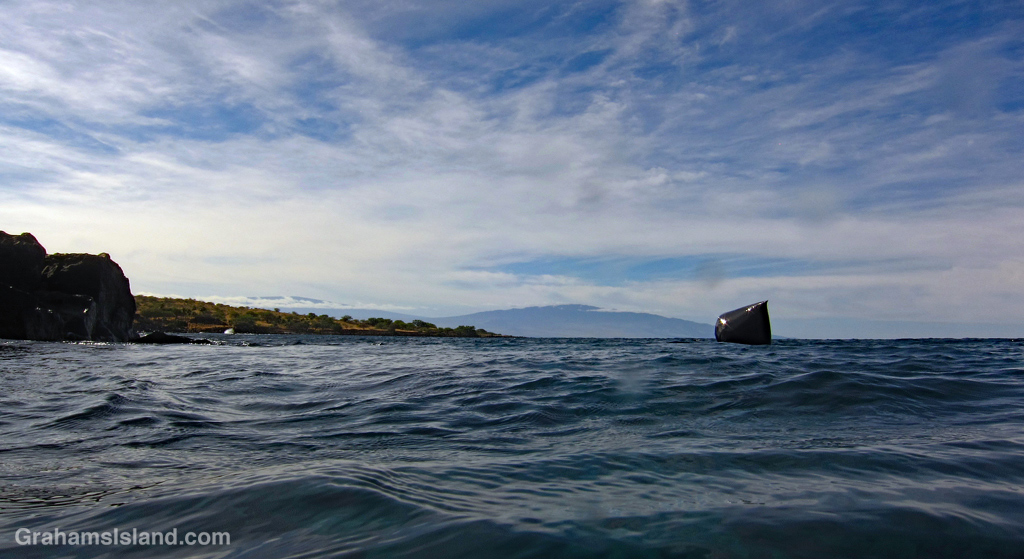
An inflated bag, used as a fishing float, on the waters off Hawaii

I saw this floating bag while out snorkeling. It looks like flotsam, but people fishing use such bags to get their hook and line out far enough to where it won’t get snagged on rocks and coral. Unfortunately, it’s not uncommon to see such bags, deflated and abandoned, left behind in the water. That’s because they do sometimes get caught on rocks or because the line broke leaving them to drift, just one more bit of drifting garbage.

Pacific Trumpetfish

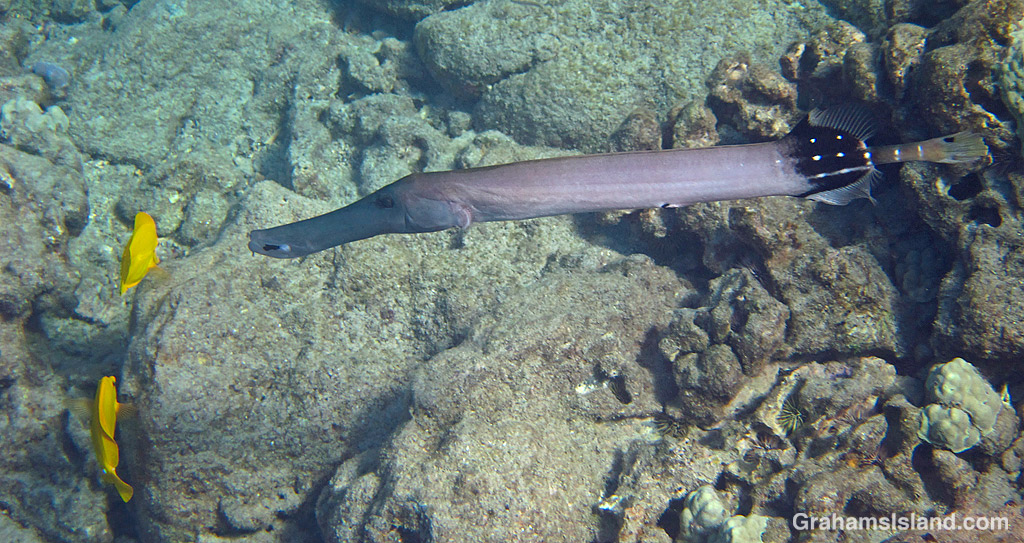
A pacific trumpetfish and two yellow tangs in the waters off Hawaii

A Pacific Trumpetfish drifts in the water as a couple of Yellow Tangs pass by. Trumpetfishes often hang vertically, head down waiting to snag a meal. They also change color and markings to blend in with other fish, hoping to sneak up on prey.

Trumpetfishes looks easy to spot, but they propel themselves with dorsal and anal fins set far back on the body where they’re not seen by potential prey and, from the front, which is where its prey is, they’re very hard to see.

Goats and egret

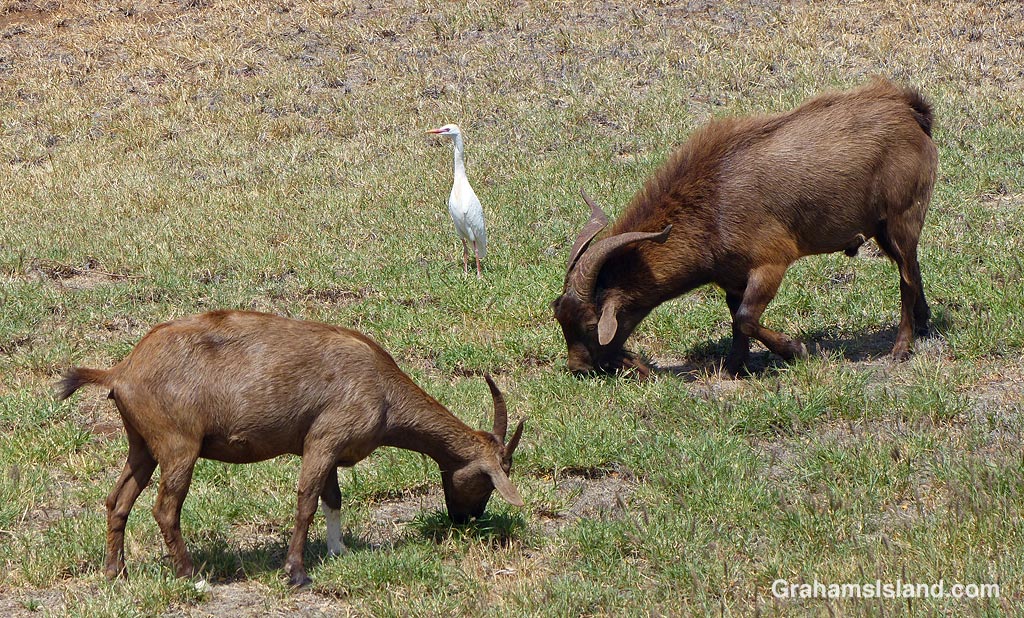
A cattle egret and two goats in Hawaii
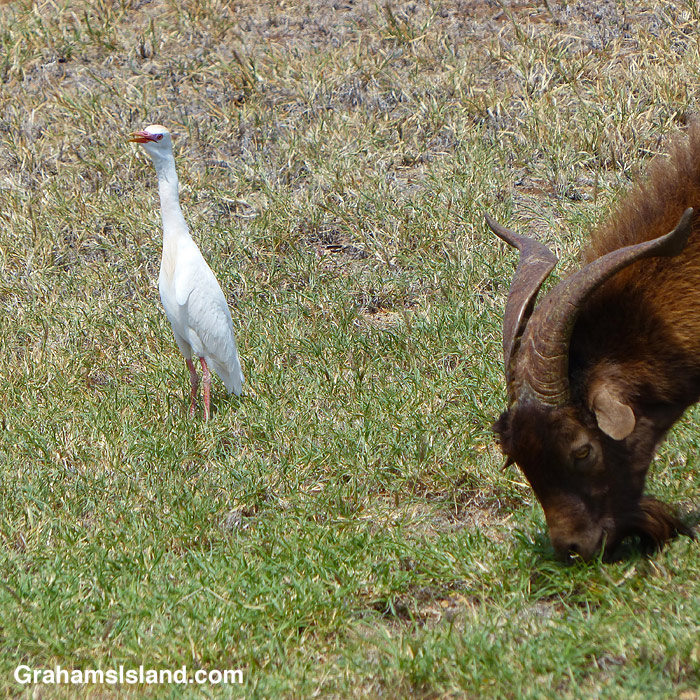
A cattle egret and a goat in Hawaii

This Cattle Egret appeared to have difficulty choosing which of several goats it should follow, in order to snap up bugs disturbed by their grazing. Or perhaps something else was going on. I could see its throat rippling, so it might have been calling, though I couldn’t hear any sound from where I was.

Flowery Flounder in reverse

A flowery flounder on the sand in Hawaii
A flowery flounder swimming in Hawaii
A flowery flounder on the sand in Hawaii

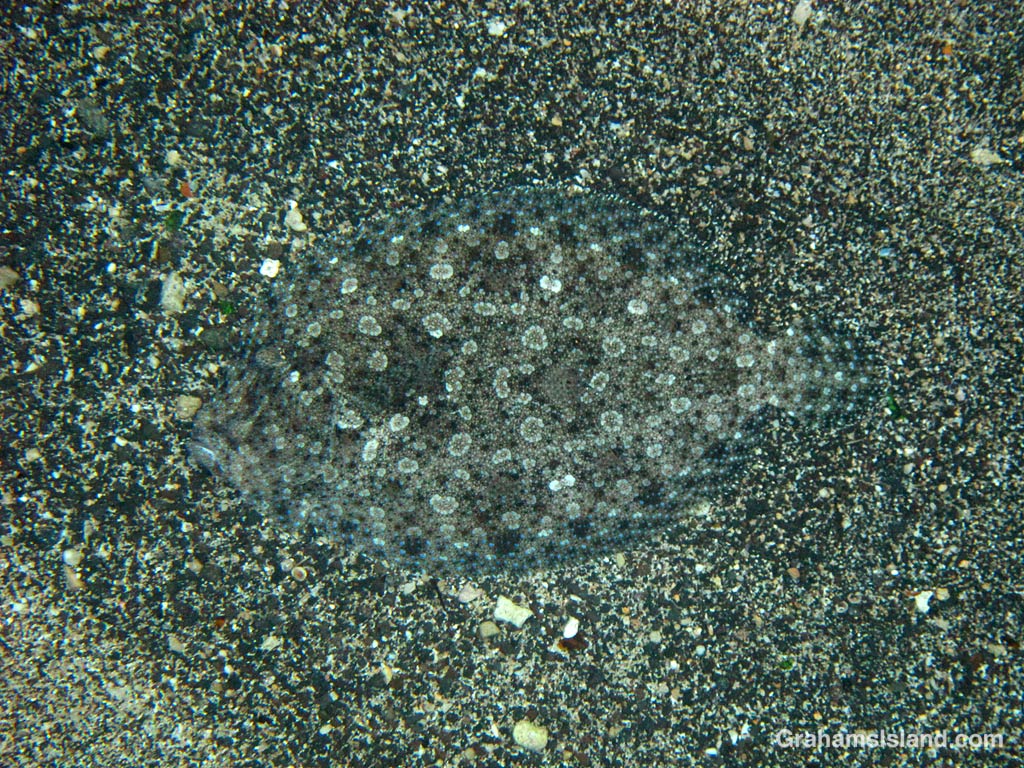
The top photo shows a Flowery Flounder resting on a patch of sandy sea floor. These fish blend in so well they’re almost impossible to spot. The trick is to spot them on the move (second photo). In motion, they’re quite distinctive with their undulating movement, especially if the pectoral fin is raised as in this photo.

The third photo shows the fish just as it landed on the sand to begin its very fast process of blending in.