
I saw this adult black-crowned night heron in a watchful pose on the edge of the lagoon behind the beach at Kawaihae. I liked how the stick matches the heron’s colors. It looks like it could be the antenna of the heron’s fish detector instrument.

I saw this adult black-crowned night heron in a watchful pose on the edge of the lagoon behind the beach at Kawaihae. I liked how the stick matches the heron’s colors. It looks like it could be the antenna of the heron’s fish detector instrument.


This week’s Sunday Stills challenge theme is ‘Color Challenge: Ruby wine.’ See more responses here. Terri described ruby wine as ‘burgundy-brownish’ and included a handy color match, which I’ve made use of here.
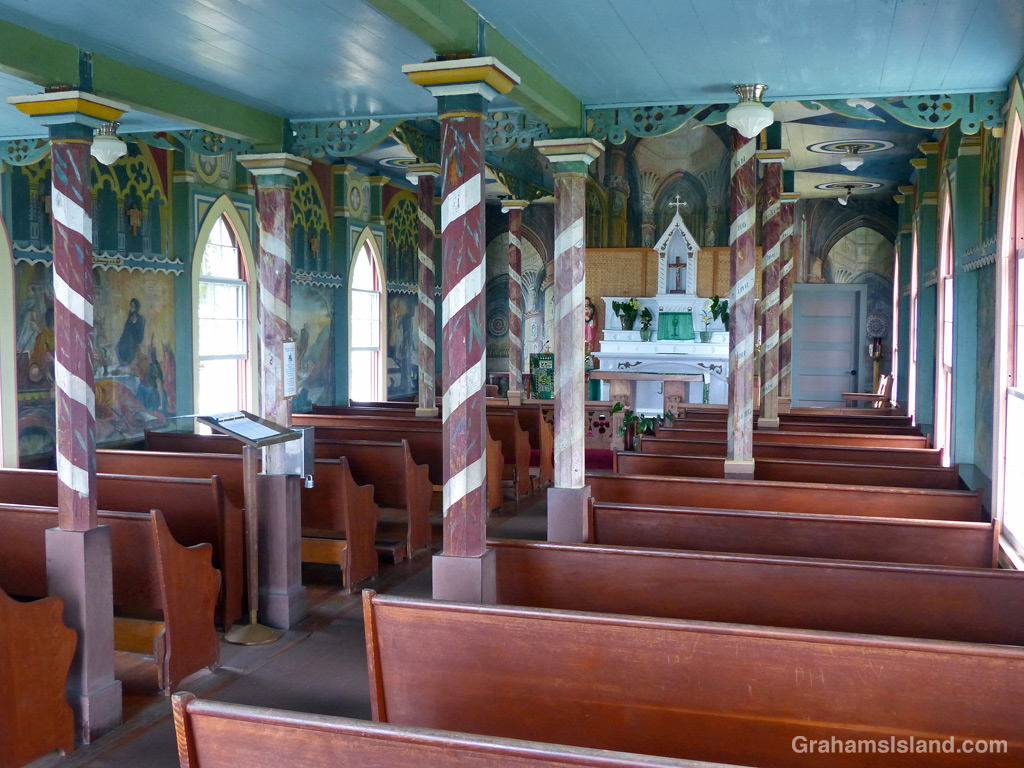
The top photo shows exterior of the Pu’uanahulu Baptist Church. The second photo features a fire extinguisher on a colorful wall. I liked the reflections in glass of the cabinet. The bottom photo features another church, this time the interior of the Painted Church south of Captain Cook.


Akia (Wikstroemia uva-ursi) is an endemic plant that’s quite rare in the wild, but is used quite a bit in landscaping here. The shrub, which grows to three or four feet high, is hardy, drought-tolerant, and not prone to pest problems. Its distinctive oval leaves, clusters of yellow flowers, and red or orange fruits add visual interest.
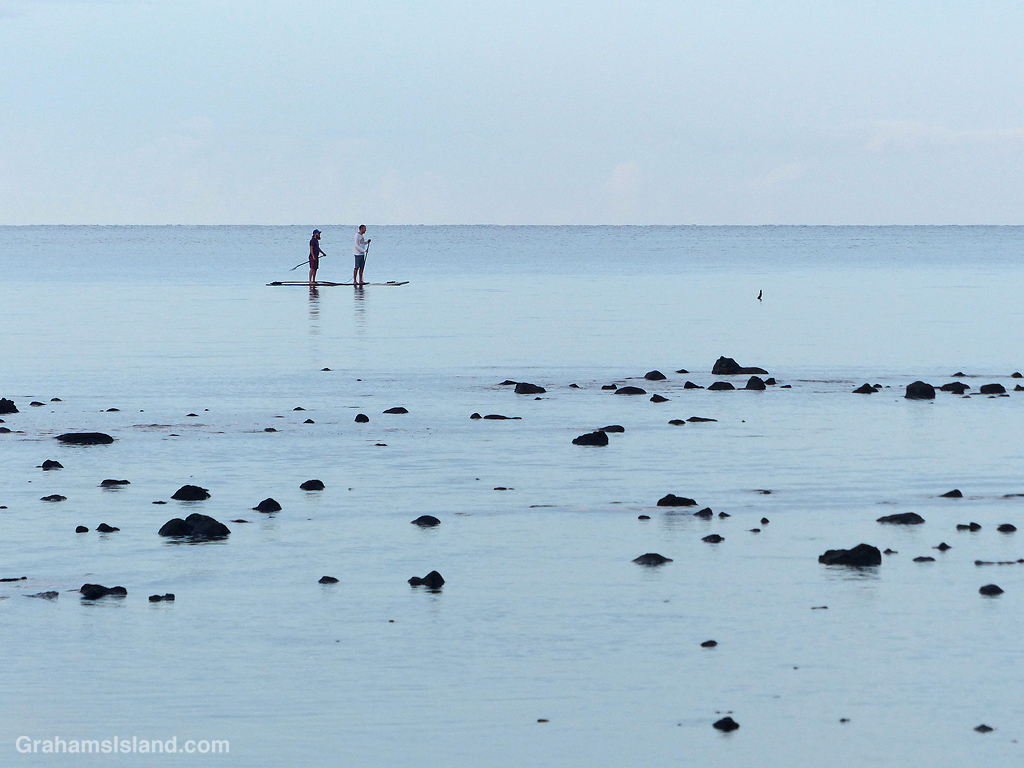
A pair of paddleboarders traverse the bay at Kawaihae. Even I might have managed to stay upright on such a tranquil morning!
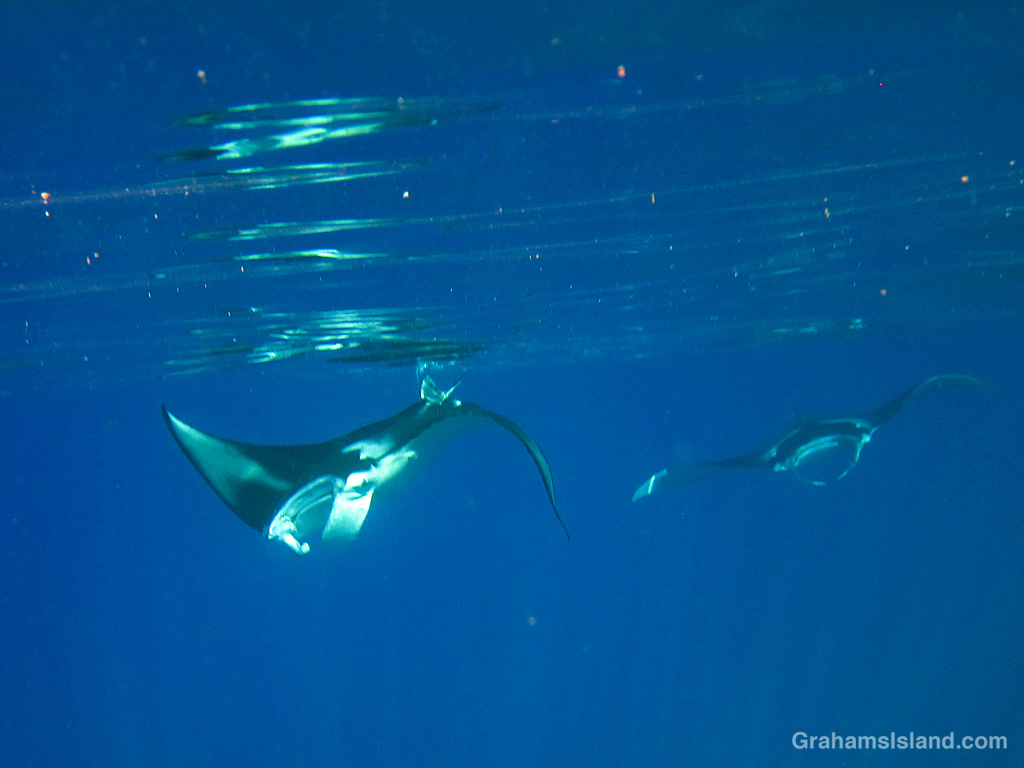
My most recent manta ray encounter happened a few days ago. I was swimming along and saw a familiar shape in front of me. It was a manta ray heading in the same direction. I tracked it for a while, hoping to catch up, but knowing that doing so was entirely up to the manta. Eventually I did draw level for a short while. Then the manta pulled away again.
As it disappeared, I thought at first I was seeing some kind of weird reflection in the water. Then I realized it was a second manta swimming toward me. As it approached the first manta turned and followed behind. Both were pretty large and up near the water’s surface, creating reflections.

They passed by, and receded in the direction I’d come from. I hung around for a while hoping they’d reverse course again and, sure enough, a few moments later the two of them came back toward me. On this pass, I could see that one had a badly damaged cephalic flap. It looked like an old wound and didn’t seem to trouble the manta much, but I don’t know how it would affect it when it came to feeding since they use the flaps to funnel plankton into their mouths.

Eventually, the mantas headed away and out into deeper water. I stayed out for a while on the off chance that they’d return, but wasn’t surprised when they didn’t. Still, it had been another wonderful encounter and I headed back toward shore in a very good mood.

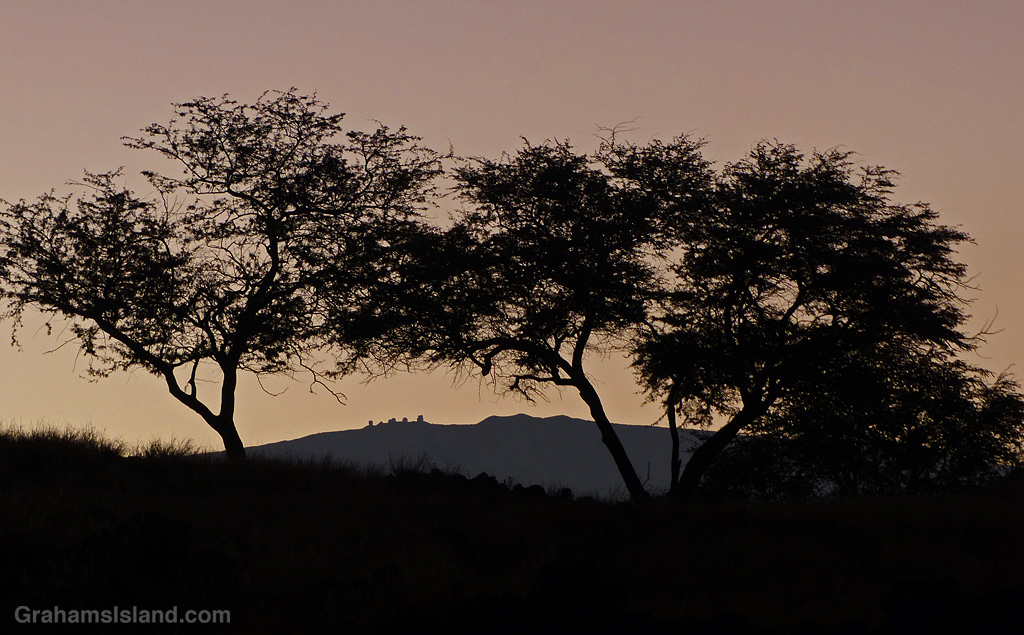
Kiawe Trees, and the telescopes at the top of Mauna Kea, are silhouetted against the early morning sky.
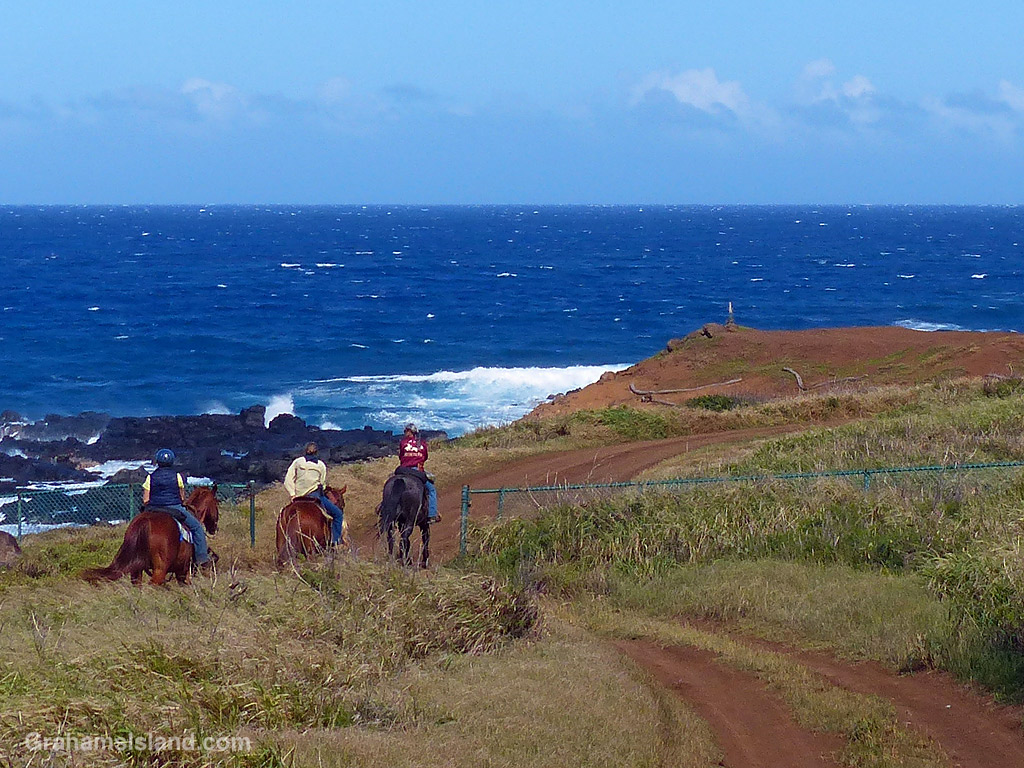
Horse riders enjoy an afternoon outing along the coast below Upolu airport.

I had just jumped in the water and submerged my head when I saw something move. The fish immediately plopped down by a rock but I’d already recognized the distinctive shape of a devil scorpionfish. I hung around for a short while hoping it would spread its pectoral fins in its distinctive display, but it never did. The second photo, which has run on the blog before, shows what I was looking for.

 Graham's Island