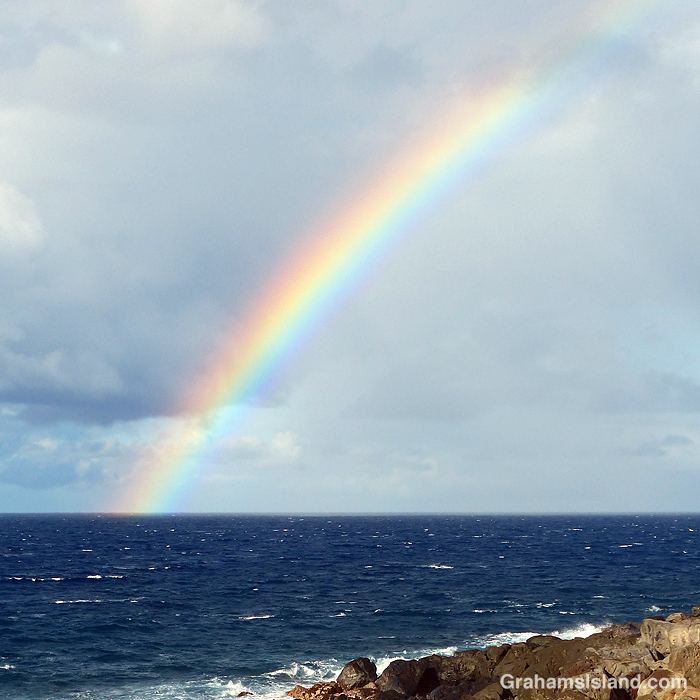
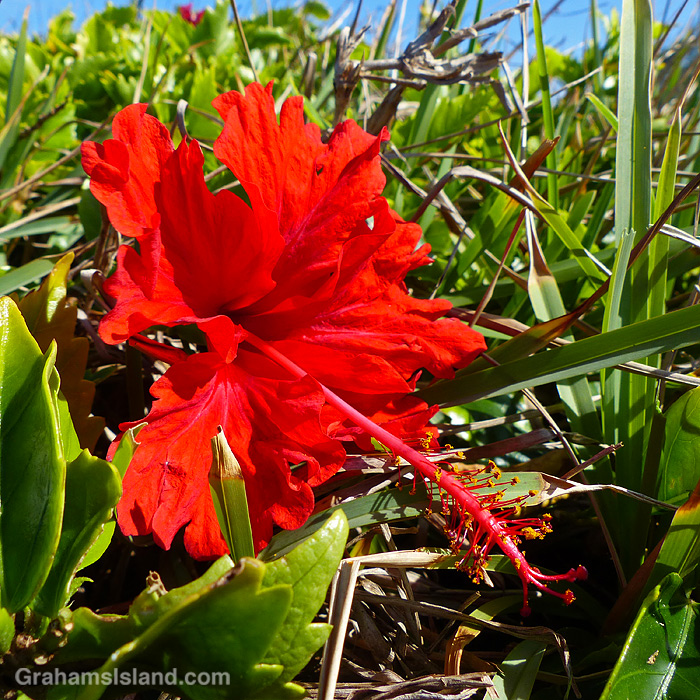
This month’s Becky’s Squares challenge theme is ‘Bright.’ (See more responses here.) Since I plan to post some bright colors in response, I thought I’d do that using a rainbow theme.
I’m starting with a rainbow off the north Kohala coast followed by a bright red hibiscus flower growing wild on that same coast. The third photo shows the front door of St. Augustine’s Episcopal Church in Kapaau, illuminated by a single bright light.
This month, Becky’s April Squares challenge theme is ‘Bright.’ (See more responses here.) First up I thought I’d share something very unusual, which I consider myself lucky to have seen.
You’ve probably heard of stick insects, but the stick swimming crab is a far less often encountered creature. Most crabs scuttle about on the sea floor, but swimming crabs have flattened segments on their legs, which they use to propel them through the water. But even with this different method of propulsion, swimming crabs tend to stay close to the bottom.
The stick swimming crab (Charybdis baculum) has a different approach. It heads for the bright light at the surface where it paddles along, maneuvering with its spindly legs. It will sometimes snag bits of floating debris and attach them to its body to enhance its appearance. Its goal is to look like a small, drifting haven for juvenile fishes and other marine organisms that often gather under such floating islands, which offer them some protection from predators. With the stick swimming crab, that safety is an illusion. Instead, they’re part of the crab’s lunch box, to be picked off at its leisure.
Stick swimming crabs spend most of their time at the surface, but return to the sea floor for periodic molts. This one looks like it has recently molted.
Oh wait, it’s just a stick.
Also posted in response to this week’s Friendly Friday challenge theme of “Something Learned.” See more responses here.
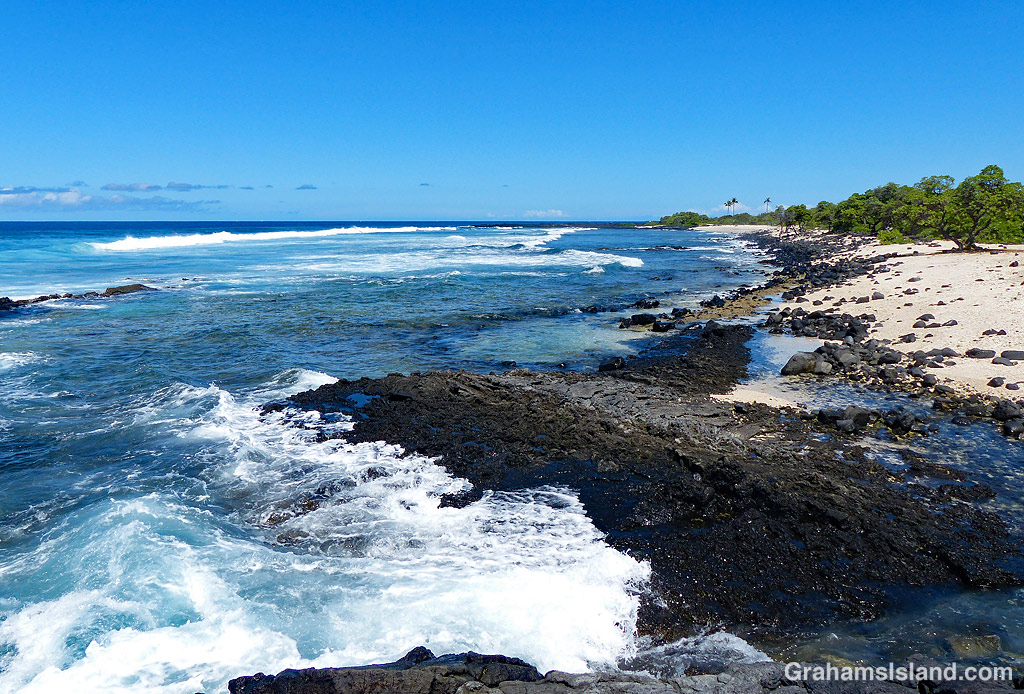
Kohanaiki, located just north of Kailua Kona, is my new favorite park here on the island. It’s the home of a popular surf break known as Pine Trees. There’s a long, sandy beach backed by trees offering shade (not pine trees though). It’s an historic area, too, and at the south end of the park is a variety of old Hawaiian structures as well as a garden featuring native plants.
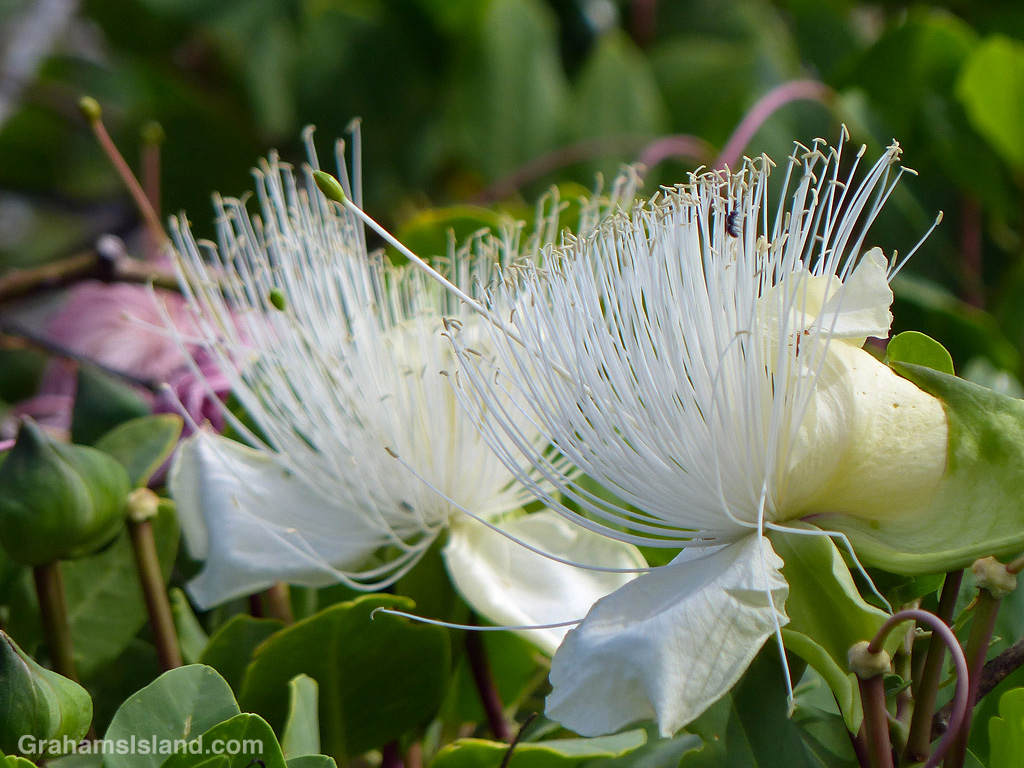
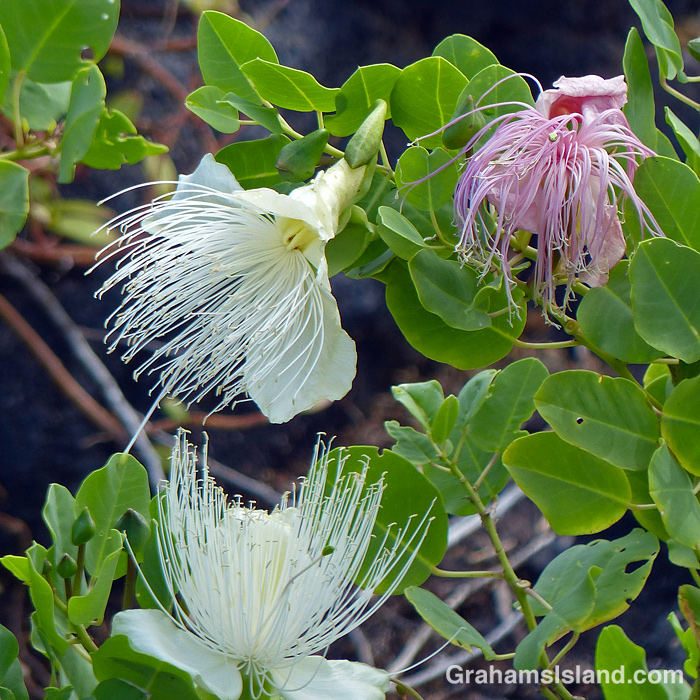
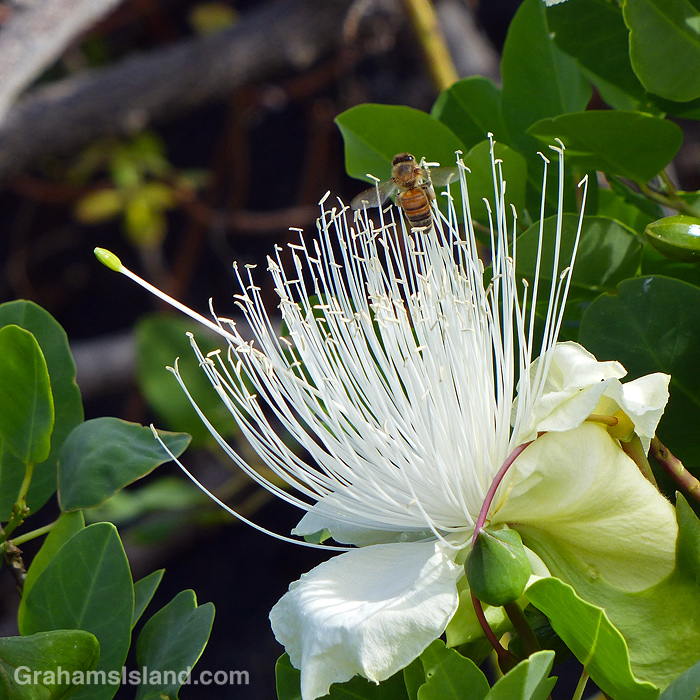
Maiapilo (Capparis sandwichiana) is an endemic plant that requires little water once established and is also salt tolerant. This means it grows well on the dry side of the island along the coast. This of course is also an area popular with humans, both for living and recreation. Consequently, maiapilo is considered an at risk plant.
Its standout feature is the beautiful white flowers, but if you want to see them, bring a flashlight or be prepared to get up early. Maiapilo blooms at night and begins to wilt early in the morning, fading to pink as it does so.
These photos were taken around nine in the morning and the bees were busy exploring and pollinating the flowers. At night though, native moths are the main pollinators, attracted by the white flowers and pleasant lemon scent. A cucumber-like fruit follows the flowers but, unlike them, it is said to have a very pungent smell.
The plant can be low-growing and sprawling, or a more upright shrub reaching 10 feet.
On Saturday, my wife and I got going early and went snorkeling. There was some swell rolling in and the visibility wasn’t great, but that had been the case the day before and we’d been pleasantly surprised to find that it was much clearer farther out. So we swam out, angling to the north.
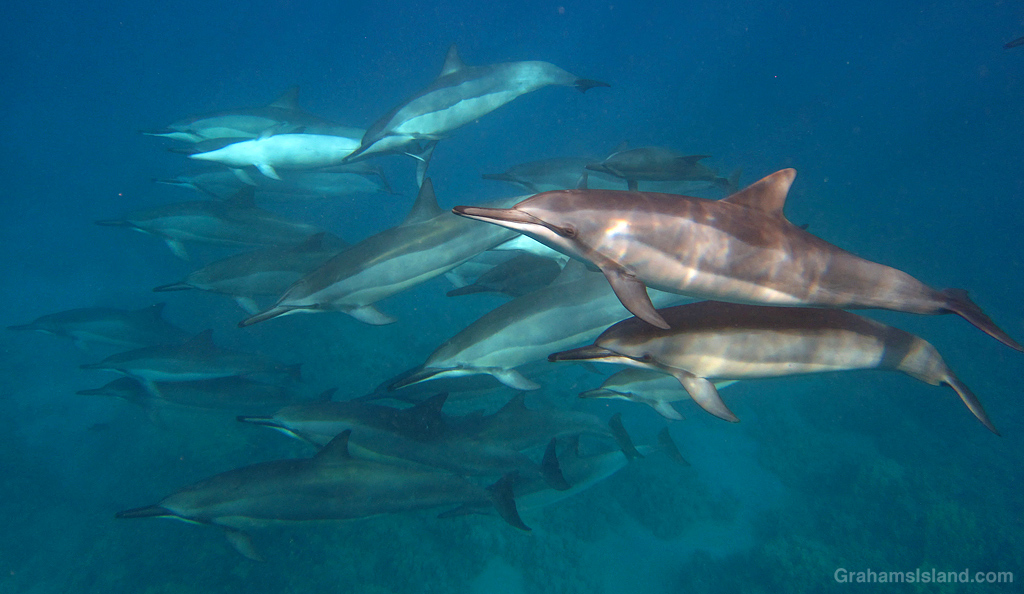
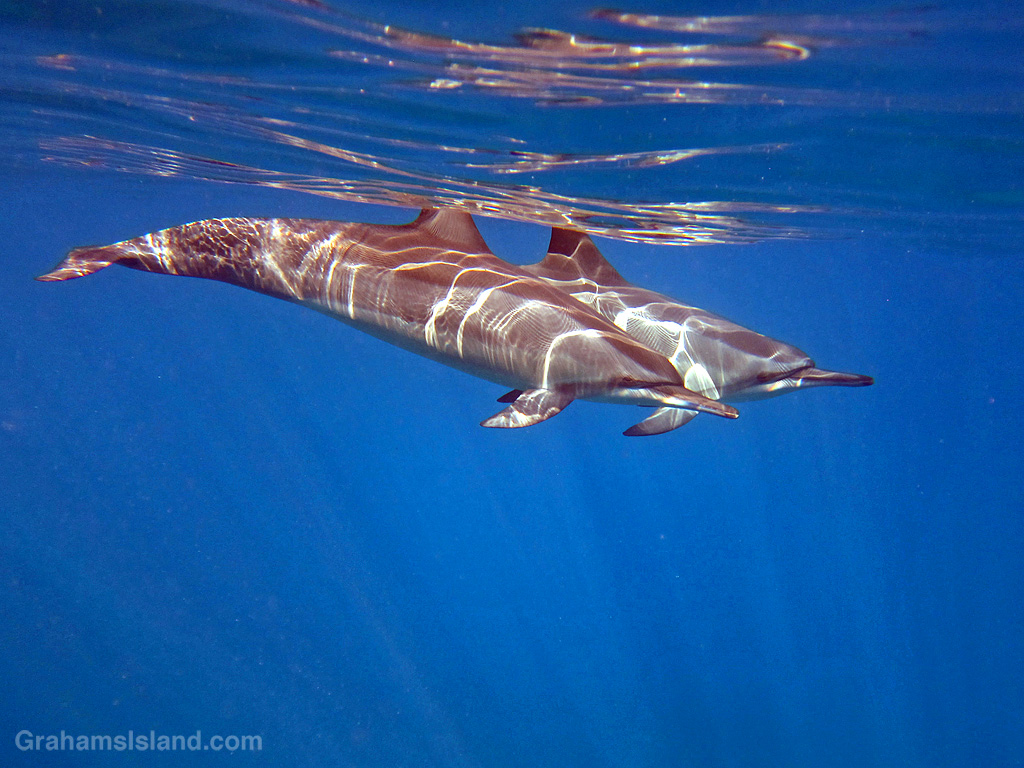
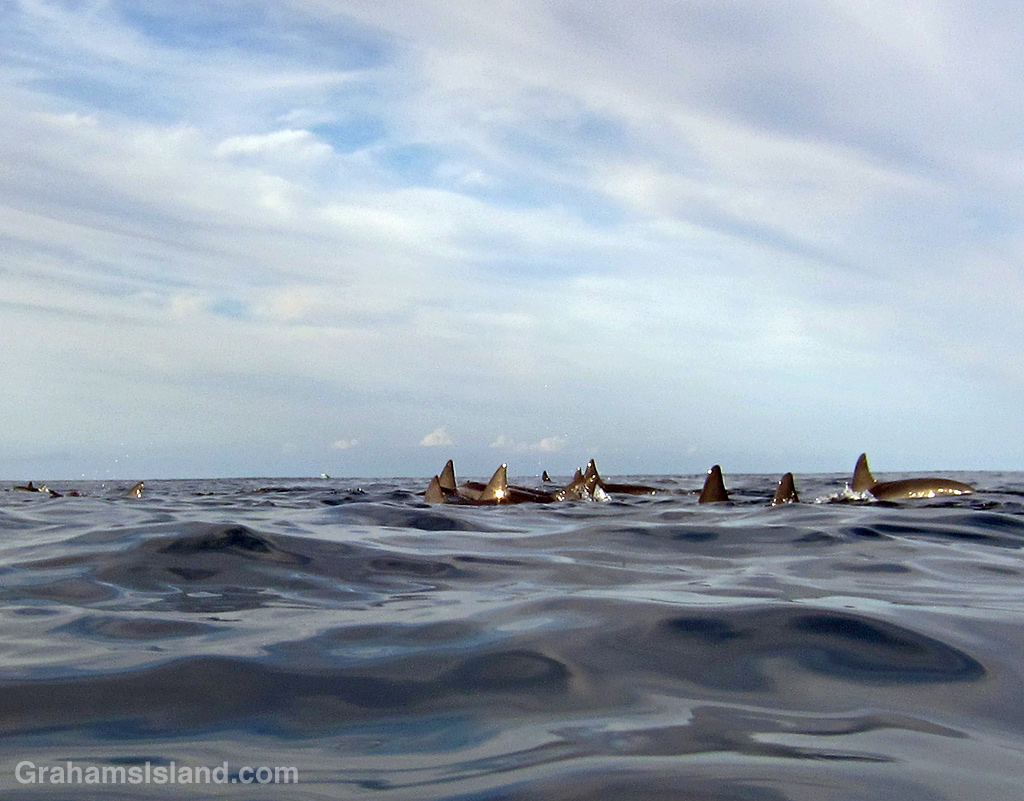
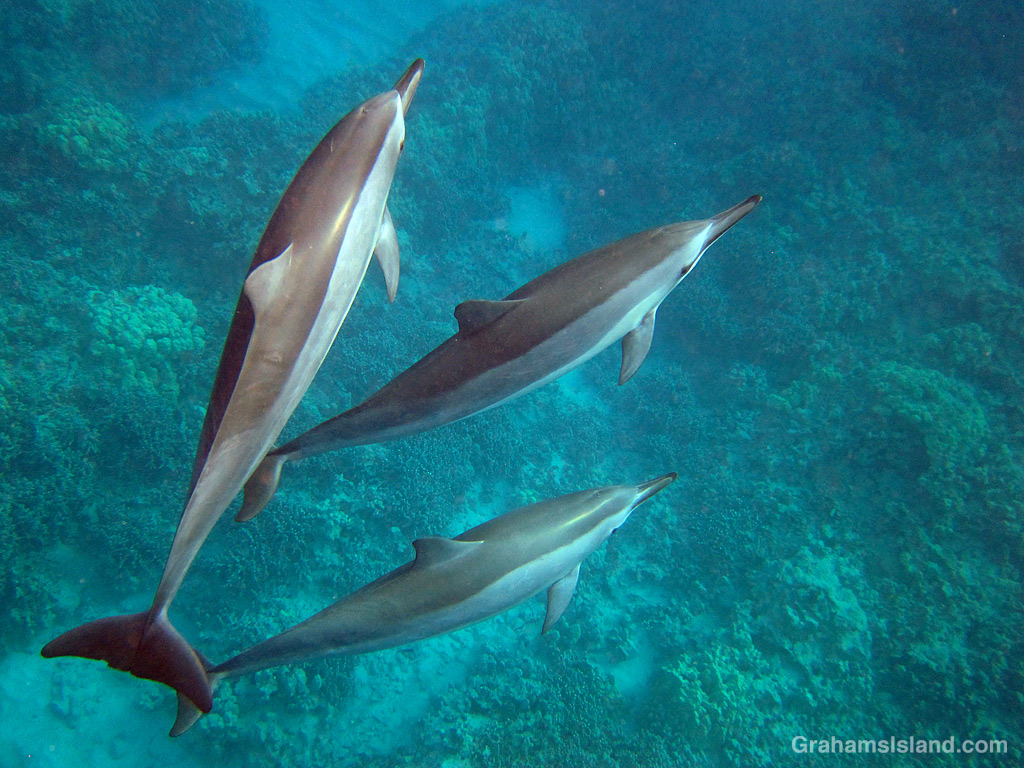
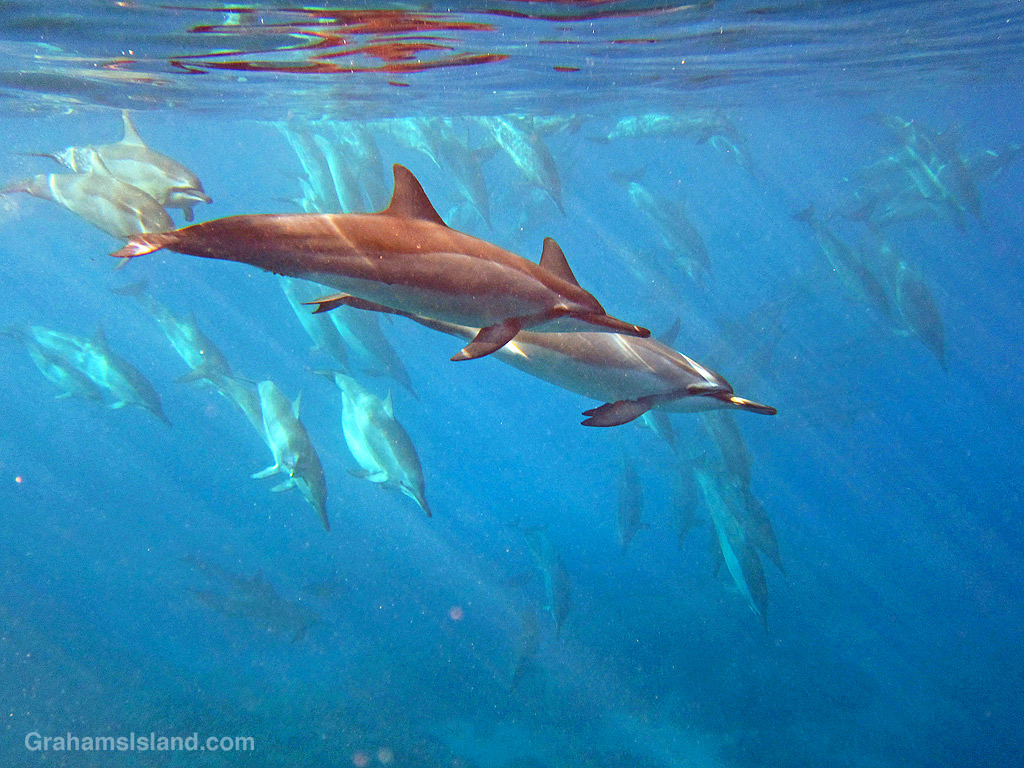
Suddenly, I saw something coming past me from the other direction. I pointed to it and turned to my wife, only to see her doing the same thing. It quickly became clear that these were spinner dolphins, about 15 or so we thought. A couple of them seemed interested in checking us out, but quickly the pod continued heading south.
It’s fairly common for dolphins to swim past the bay we were in, probably heading to the place they’re going to rest during the day. But after this pod passed, they stayed underwater for a while. Before they disappeared, their direction was somewhat into the bay, and I was curious where they’d resurface.
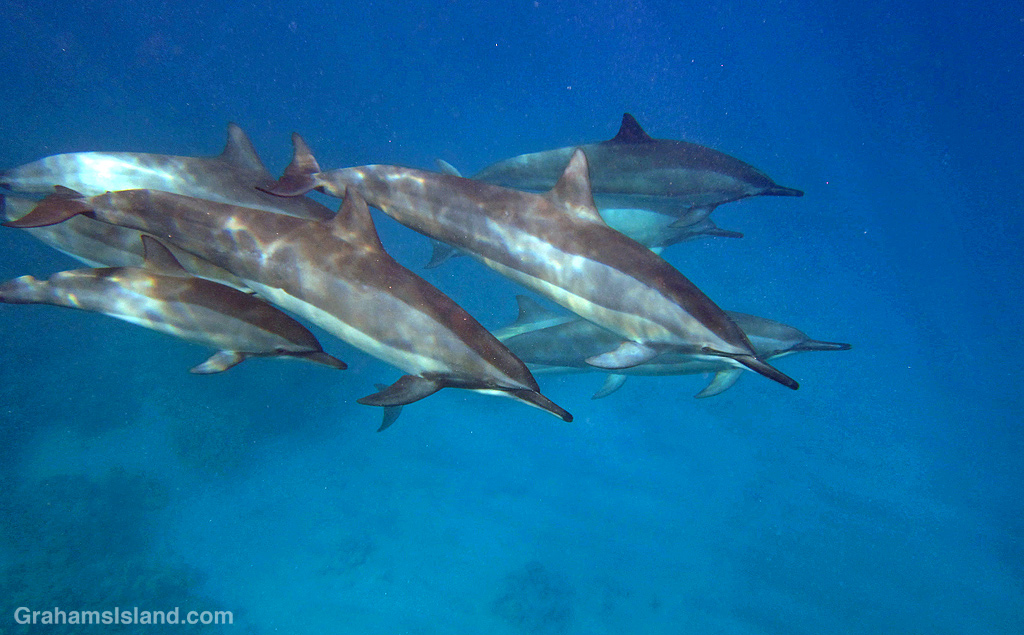
We swam back the way we’d come, popping up frequently to see if we could spot them. Sure enough, after a few minutes, we not only saw fins in the bay, but that they were coming our way. I got my camera ready and out of the hazy water the dolphins emerged. There were a lot more than we first thought. They swept beneath us and around us, hanging out for a short while, before taking off to the northwest. We watched them go, thrilled to have had this encounter.
A little later, as I was heading back into the bay, I looked up to see another snorkeler followed by a cluster of fins. The dolphins hadn’t gone away! They’d doubled back again. I swam slowly in their general direction. There was no point rushing. If the dolphins came my way, fine. If not, I was never going to be able to catch up with them even if I wanted to.
Sure enough, the dolphins came rocketing by, and for the next 10 or 15 minutes they zipped around the bay. I mostly stayed in the center of the bay, not trying to chase, and there was no need to. I’d watch a group whizzing by, see them recede, then turn around and spot another group coming my way. They were very active, twisting around each other as they swam, soaring up and down. When I’d see them heading for the surface, I popped up, hoping to get a photo of one spinning up into the air, but I didn’t see any doing that on this occasion.
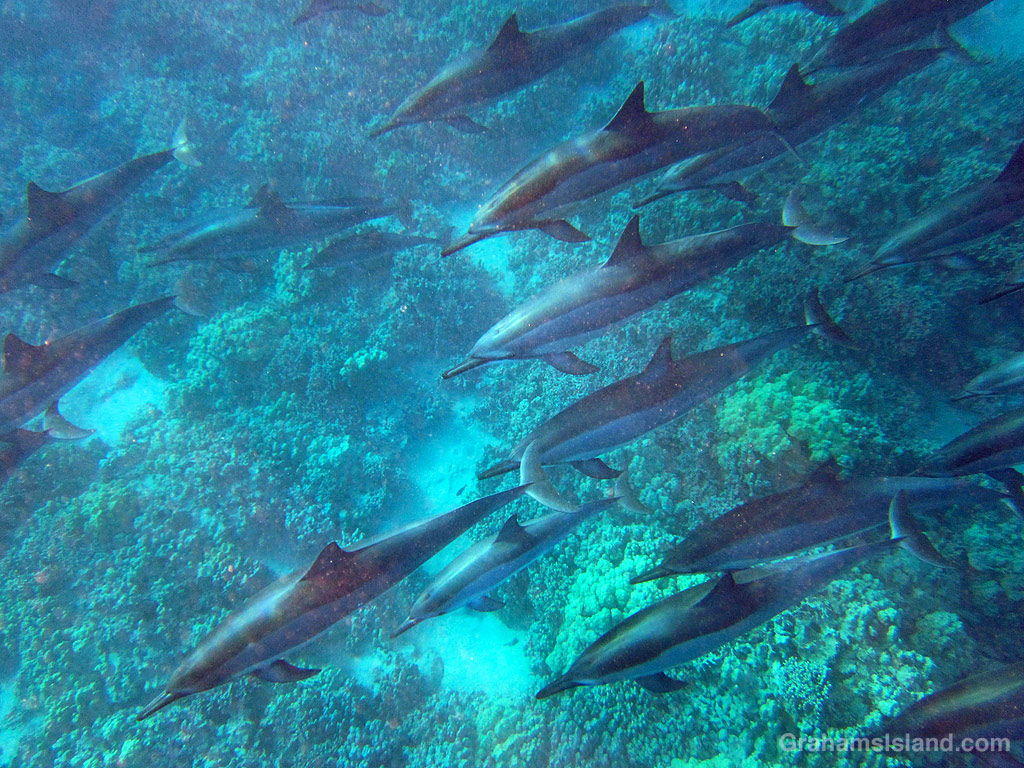
After a while, the dolphins moved away from where I was and I decided to head in. My wife and I thought there must have been at least 30 dolphins in the bay, perhaps more. When I looked at my photos, I saw that in one of them (the bottom photo), I could identify at least 40 dolphins, and I knew I hadn’t taken a photo of all of them. Probably there were 50 or 60, though I joked that after a few years of recalling this encounter the pod would likely be well into the hundreds!
One thing I can say with some certainty, is that swimming with dolphins never gets old for anyone. It’s always a thrill to spend a little time with these wonderful creatures in their natural environment.
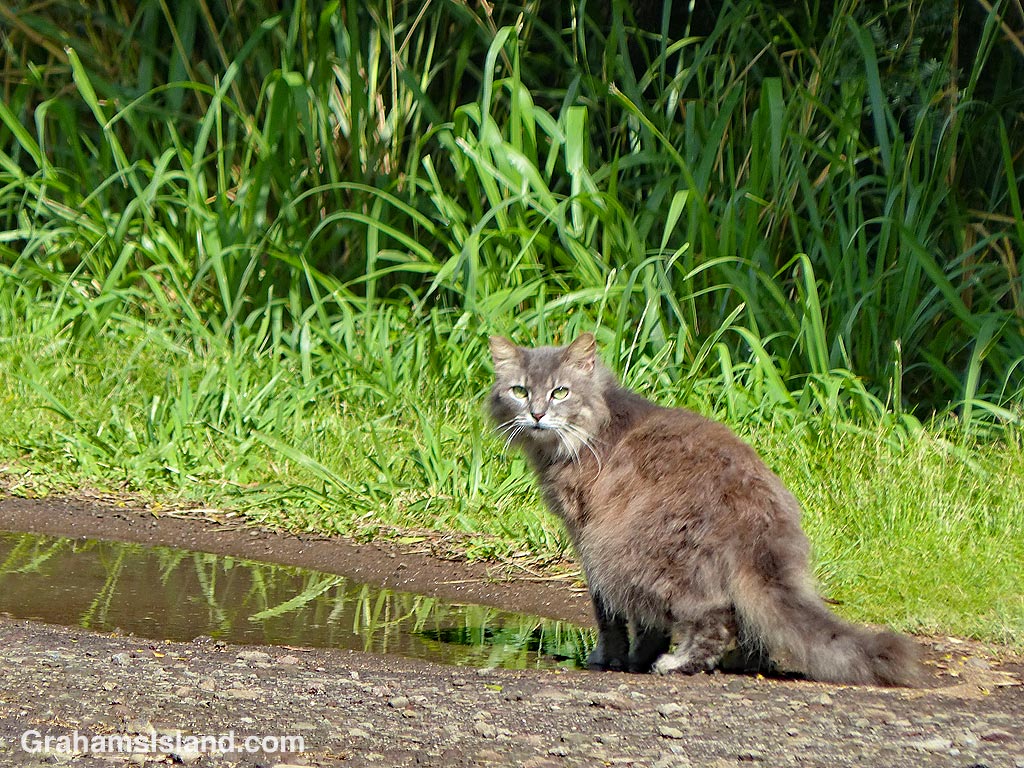
This week’s Sunday Stills challenge theme is ‘Respect the Cat.’ See more responses here.
We don’t have a cat here in Hawaii, but this is one of our neighbor’s cat. It used to spend more time around our house, but as it’s got older, it seems to stick closer to home. We call it the BGP, which stands, of course, for big gray pussycat.
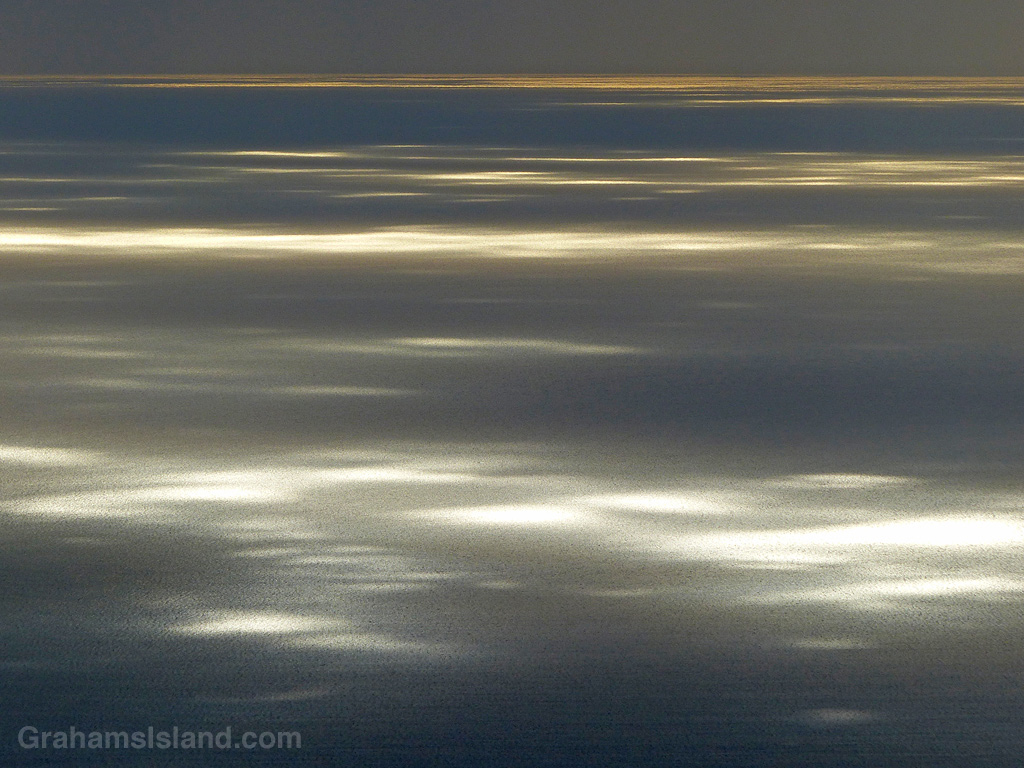
Driving home on the mountain road, I noticed the late afternoon light making interesting patterns on the ocean below, so I pulled over and snapped a few photos.
A pair of reef lizardfish rest on a patch of lobe coral. I usually see lizardfish by themselves so this was unusual. Their complete lack of movement was not unusual. That’s what they do unless you get too close.