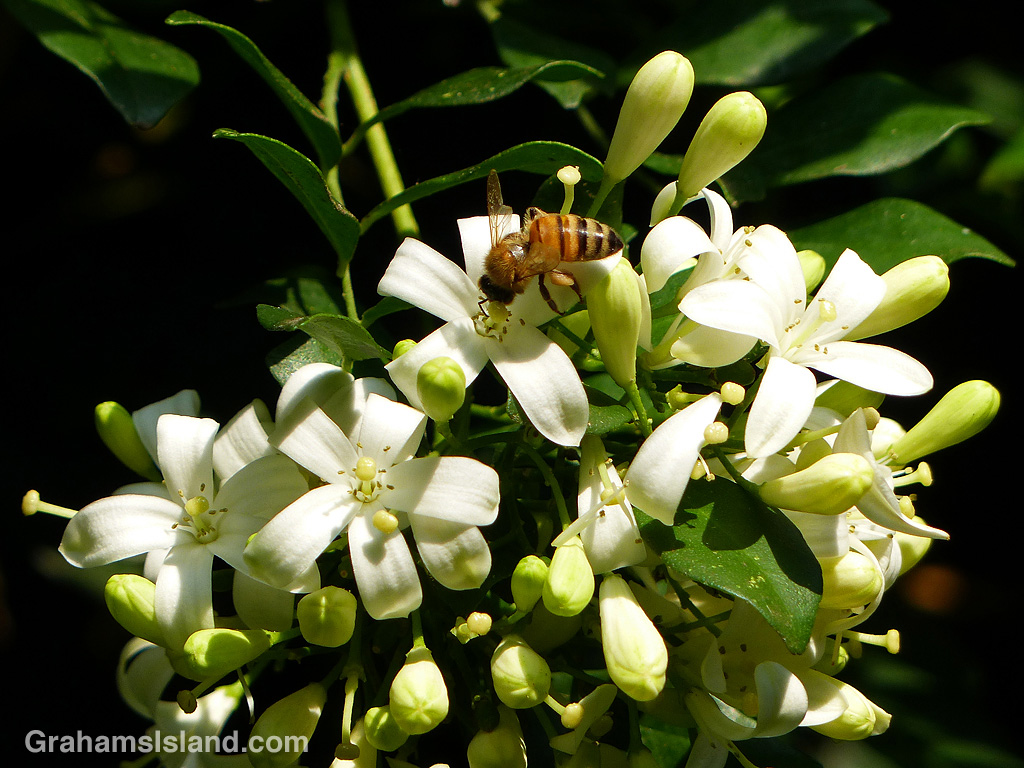
A bee forages on a mock orange. When the plant is in bloom, the aroma is thick in the air.

A bee forages on a mock orange. When the plant is in bloom, the aroma is thick in the air.


Canoe racing is part of a resurgence in traditional Hawaiian culture and activities. Before contact with western civilization, canoe racing was widely popular. But missionaries, who were among the early western arrivals on the islands, didn’t like the races and the gambling on them (along with pretty much every other enjoyable activity). Finally, Queen Ka’ahumanu, influenced by the missionaries, banned canoe racing.
In 1875, King David Kalakaua reinstated the sport, leading to renewed participation in the activity. These days, canoe racers come from all walks of life and take part in the sport for the exercise as well as the racing. Many of the boats, based on traditional designs, are made from fiberglass, but most canoe racing clubs have at least one canoe made from koa wood as it would have been in the old days.
In these photos, a group of local women train in a double-hulled canoe, zipping into Kawaihae Harbor ahead of one of the inter-island barges.
Posted in response to this week’s Sunday Stills challenge on the theme of ‘Sports or Hobbies.’ See more offerings here.

This week’s Friendly Friday challenge theme is ‘blue.’ See more responses here.
Here in Hawaii, blue sky and blue water dominate, especially along the coast. Fishermen are at the forefront of those who get to see these things the most, or they would be if they were around. This scene is typical: blue sky, blue water, a fishing pole, but no fisherman. No doubt resting somewhere in the scant shade provided by the trees.
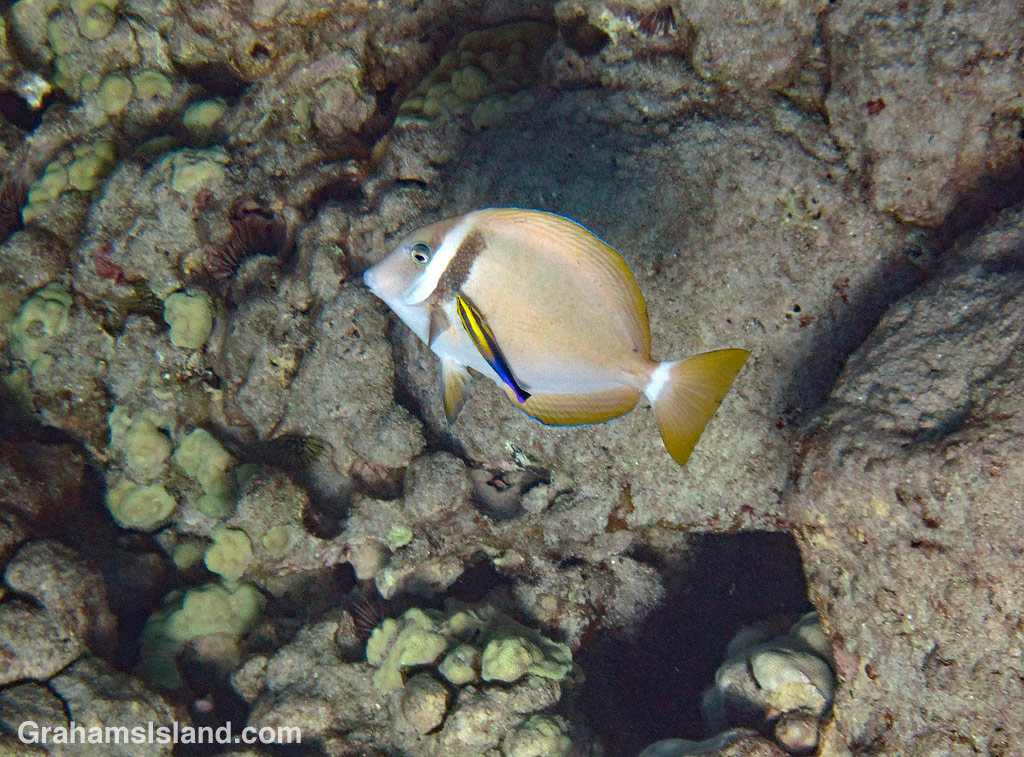
A cleaner wrasse performs its service on a whitebar surgeonfish. Cleaner wrasse establish stations where other fish can visit to be cleaned of mucus and parasites.
When I’m snorkeling, I enjoy visiting these stations to see what’s going on and which fish are availing themselves of the services offered. Some of these fish are predators who, in other circumstances, might be expected to make a meal of a cleaner wrasse. But because of the beneficial service they offer, cleaner wrasse get a free pass with predators.

I mostly see the multi-colored version of lantana, but there are other colors including this yellow one.
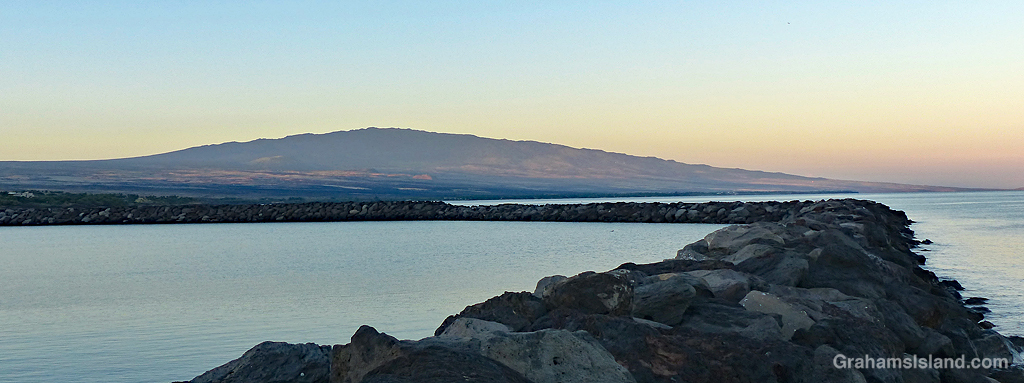
A view of Hualalai Volcano from the landward end of the breakwater at Kawaihae small boat harbor. I took this when I had a few minutes to spare on the way to work early one morning. I like being out at that time of day, not just for the light, but also for the quiet and the agreeable temperatures.
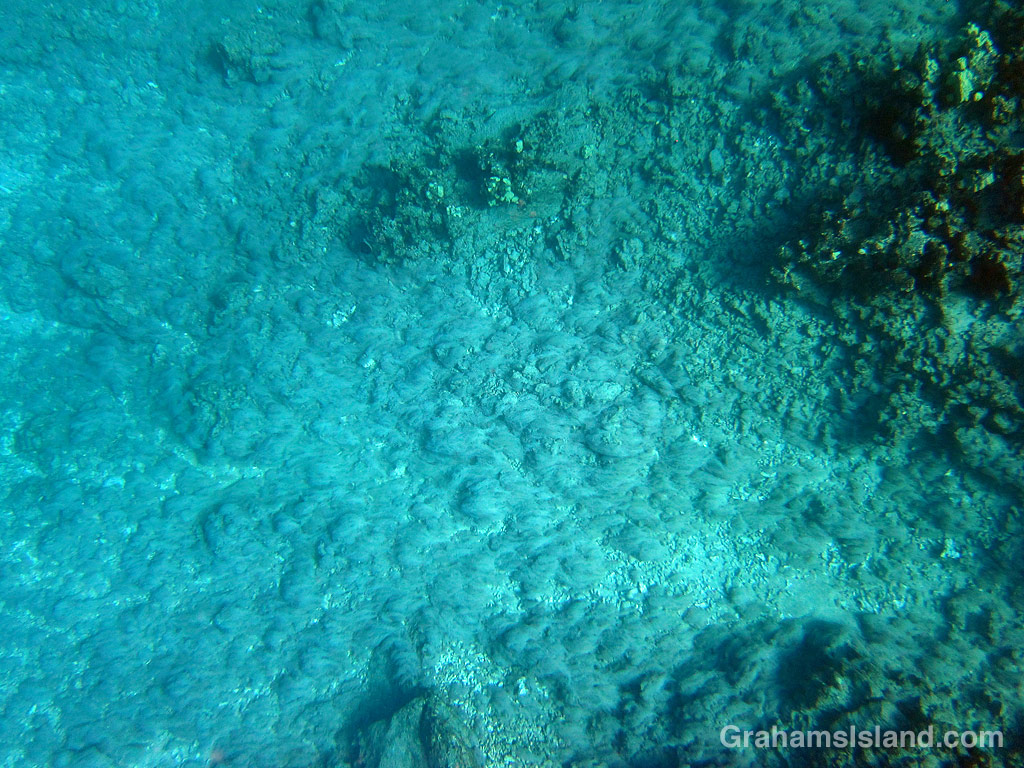
I hadn’t noticed these grasses or seaweeds before in an area where I snorkel regularly. But one day, there they were, swishing back and forth with the movement of the water. They weren’t around long, the sea floor soon being returned to its previous mix of sand, rock. and coral.
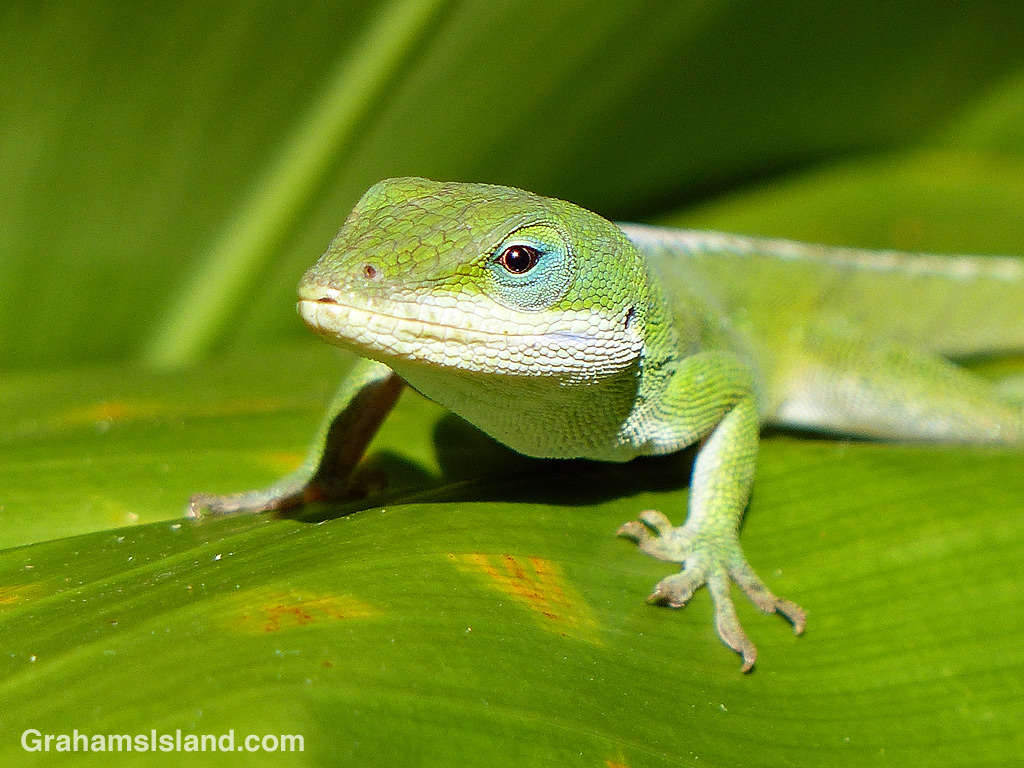
A green anole offers a stern expression as it keeps a wary eye on me.
 Graham's Island