

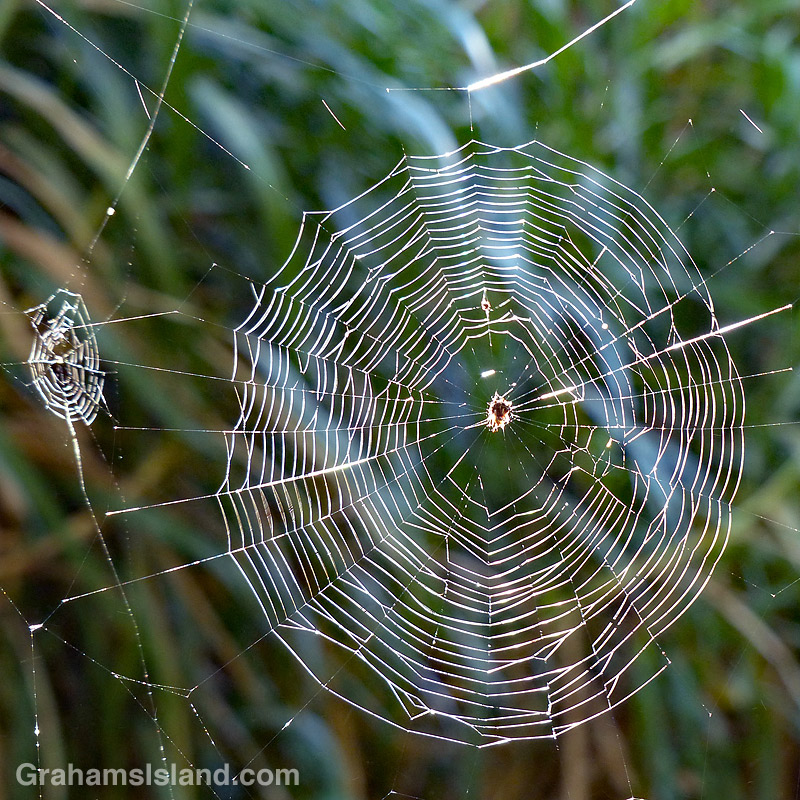
 Crab spiders tend to proliferate in the fall and dwindle in the spring. That means winter is prime time for encountering lots of them, usually in the form of blundering into their webs. This is easy to do for two reasons.
One is that the webs can be large. While the circular centers aren’t that big, the anchoring strands often span 10 feet or more, and are hard to spot. The second reason is that crab spiders build connected webs, meaning there are often a dozen or more covering a large area.
Crab spiders will bite, usually after they’ve got caught in someone’s clothing. This is why, when I run into a web or webs, my first response is to locate the spider. If I find it on a remnant of its web, I don’t worry too much. If I don’t see it, then I usually do my flailing crab spider dance, which serves no useful purpose other than to likely irritate the spider if it is on my person.
On the plus side, crab spider webs, like most webs, are quite beautiful when they catch the sunlight.

 Osmoxylon lineare is also commonly known as miagos bush. It hails from the Philippines and grows to about six feet high. This plant is interesting for its spiky foliage and because the distinctive creamy-white flowers and dark fruits can be seen on the same plant at the same time.
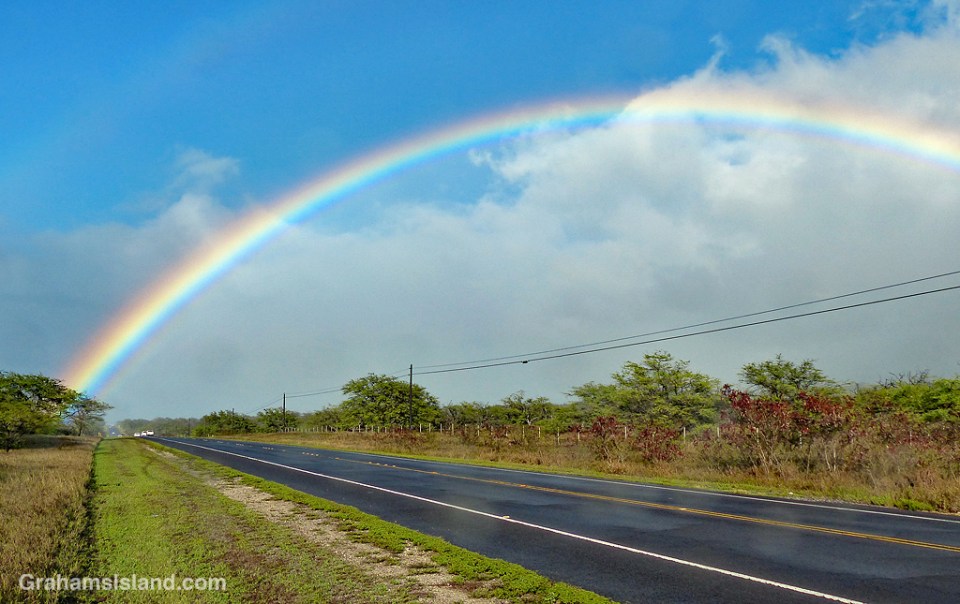
 Today marks the start of the fourth year for this blog. Post number one was of a rainbow over the northern coast, so I thought I’d post another one on the anniversary.
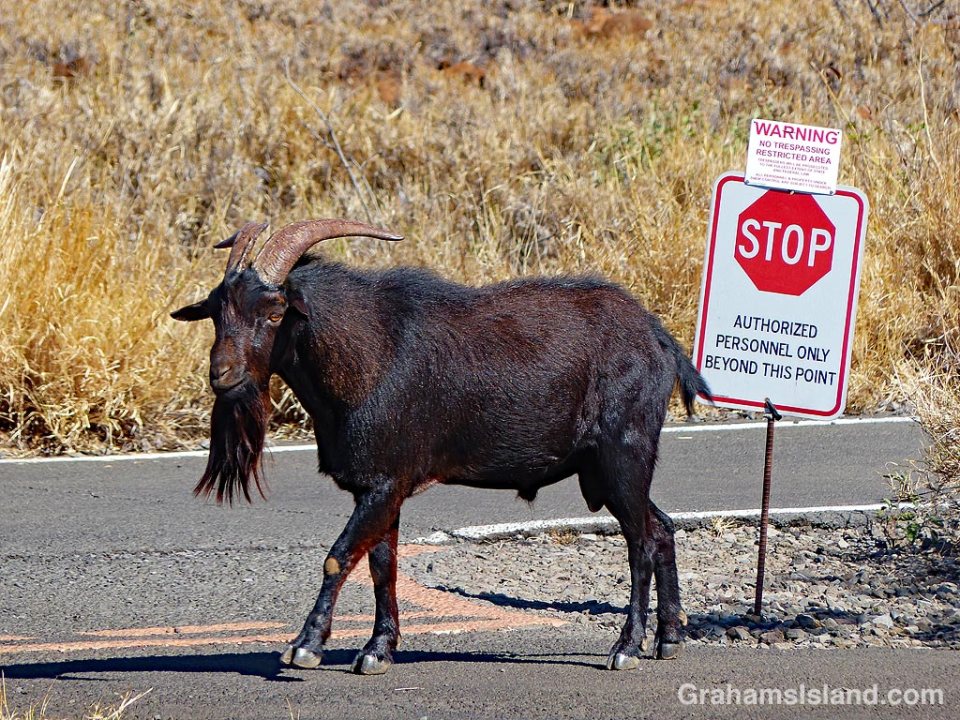
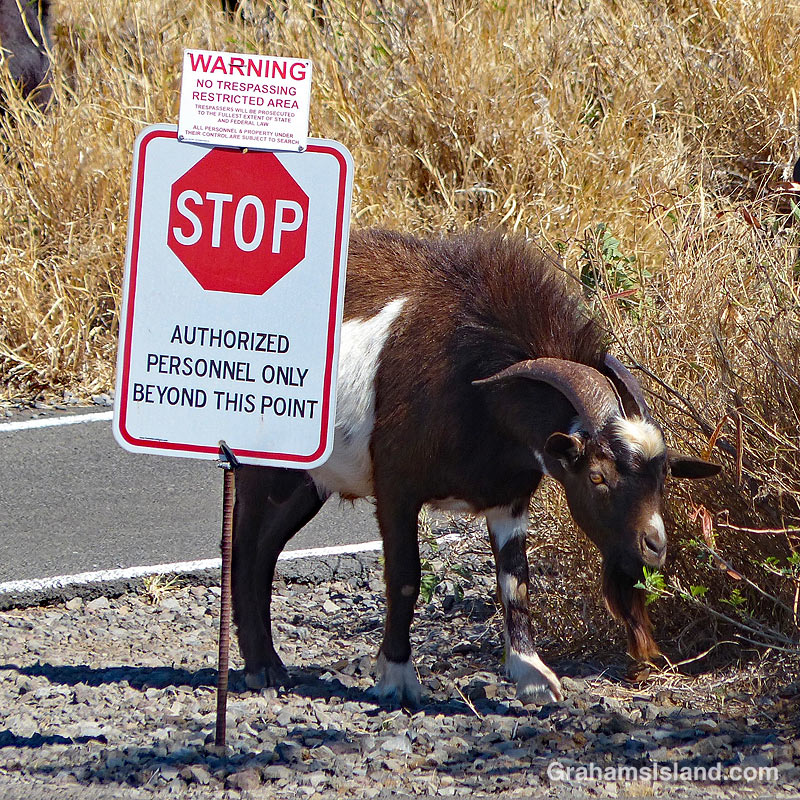 These goats, part of a large herd wandering in the environs of a heliport, weren’t authorized personnel. I wasn’t about to go out and point that out to them, in case they didn’t take kindly to the message.
 This week’s Sunday Stills challenge theme is ‘Something Red.’ (See more offerings
