

As is the way so often, this old engine is now a lawn ornament at a gated community’s open space area.
Sweetpotato bug
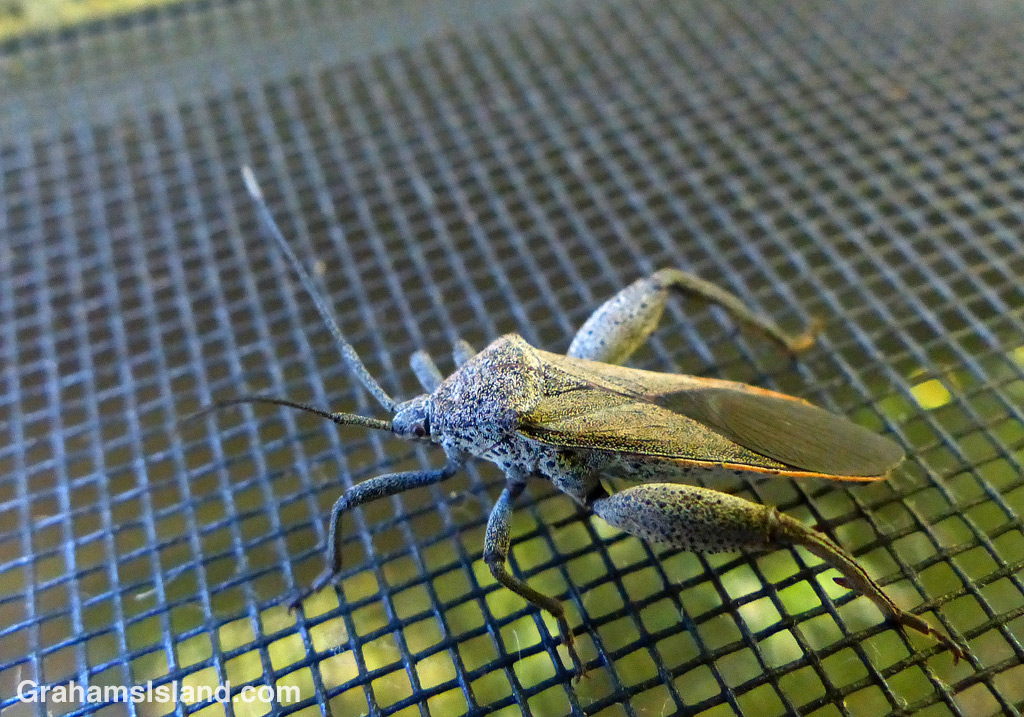
This bug (Physomerus grossipes) is a fairly recent introduction to Hawaii, most likely sneaking in on an imported plant. It’s from the family Coreidae, otherwise known as leaf footed bugs. It feeds by sucking juices out of various plants, including sweet potatoes. I found this one wandering across a window screen, some distance from anything edible.
A splash of color
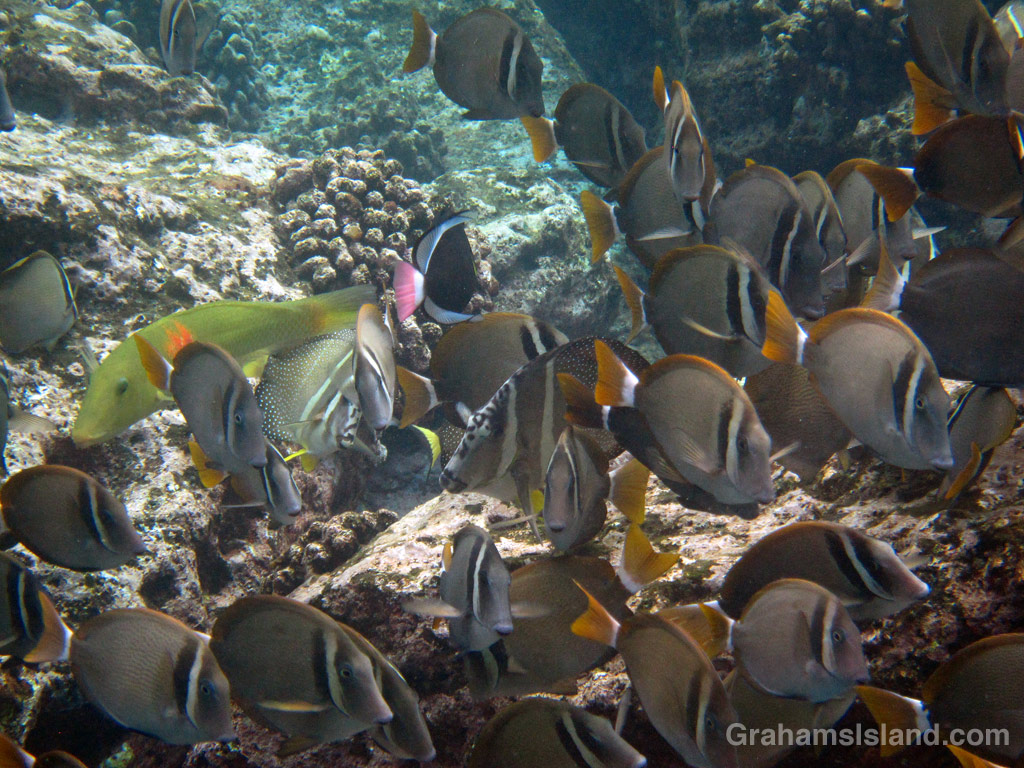
This predominately brown shoal of whitebar surgeonfish and whitespotted surgeonfish is enlivened by the yellow and orange of a male cigarfish and a flash of pink from the aptly named pinktail triggerfish.
In my attempts to identify what I see in the water, I use John P. Hoover’s book The Ultimate Guide to Hawaiian Reef Fishes, Sea Turtles, Dolphins, Whales, and Seals. His website is hawaiisfishes.com.
Mangoes down, mangoes down
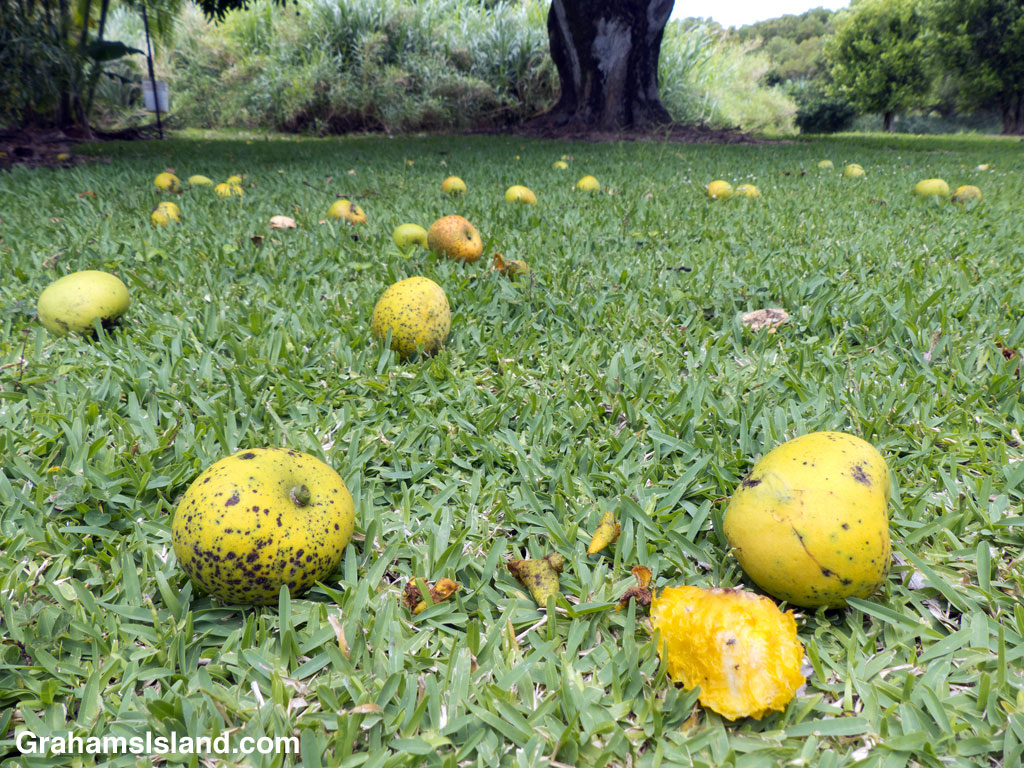
I posted here about the progression of our mango tree from flowers to fruit. Here’s what happens when the trade winds pick up after a couple of calm days. The lawn was empty a couple of hours before this photo, and this is just one segment of the windfall, probably about a third of what fell in that time frame.
Something had already eaten the mango in the front. It could have been a wild pig, but was more likely birds getting to the fruit while it’s still on the tree.
Abstracts: Early evening sun on water

Early evening sun illuminates ripples on the water.
Room with a view

I was driving the mountain road from Waimea to Hawi one day and came upon this scene. This house had appeared in what had previously been a pasture. Subsequent trips revealed that someone was building a foundation alongside for the house to be set upon. I suspect this building will ultimately be an ohana, a second dwelling for guests and relatives. A larger, more splendid structure will likely be built somewhere in front of this building to take advantage of the tremendous views.
Rolling, rolling, rolling, keep that …
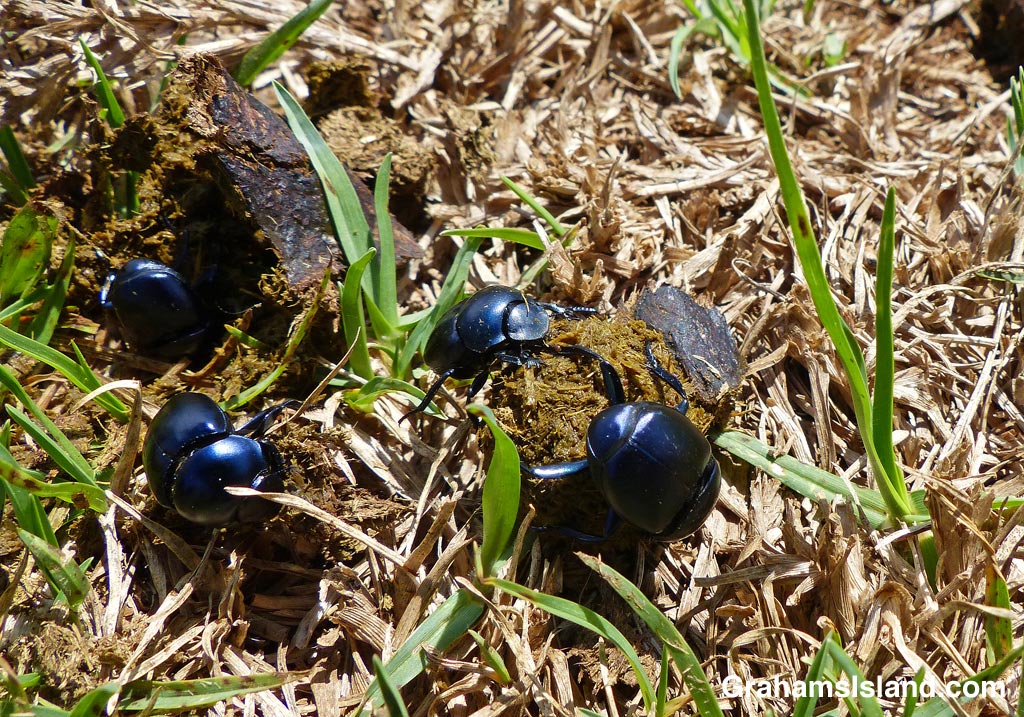

I came across these industrious beetles about half way up a steep trail. They’re rolling dung beetles, as opposed to ‘tunnelers’ or ‘dwellers.’ Tunneling dung beetles dig a hole and bury their dung. Dwellers simply live in the dung where they find it. Rolling dung beetles make a ball, roll it away, and then bury it. In each case, the purpose of this activity is for the female to lay her eggs in the dung. When the egg hatches the larva will have its food source ready and waiting. Yum!
I’m glad my mother didn’t opt for this strategy, but dung beetles make such a valuable contribution in recycling this waste that they’re often introduced into areas to help in this process. And that’s not the only laudable quality they possess. According to livescience.com, dung beetles can also navigate using the Milky Way, the only non-human creatures known to do so.
I have to say, I was a little worried about how these two would get on on this steep hill. They weren’t around when I returned.
Bluefin trevally
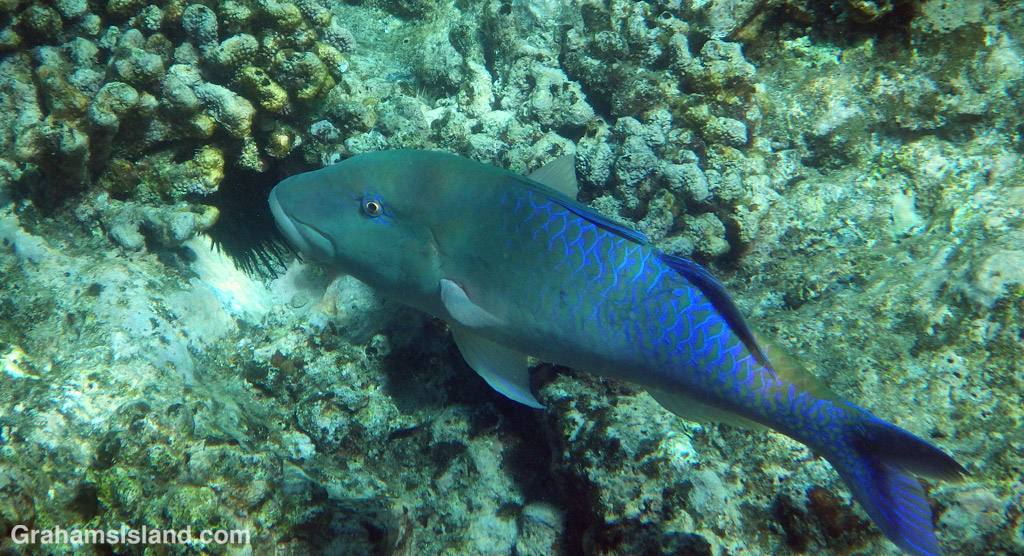
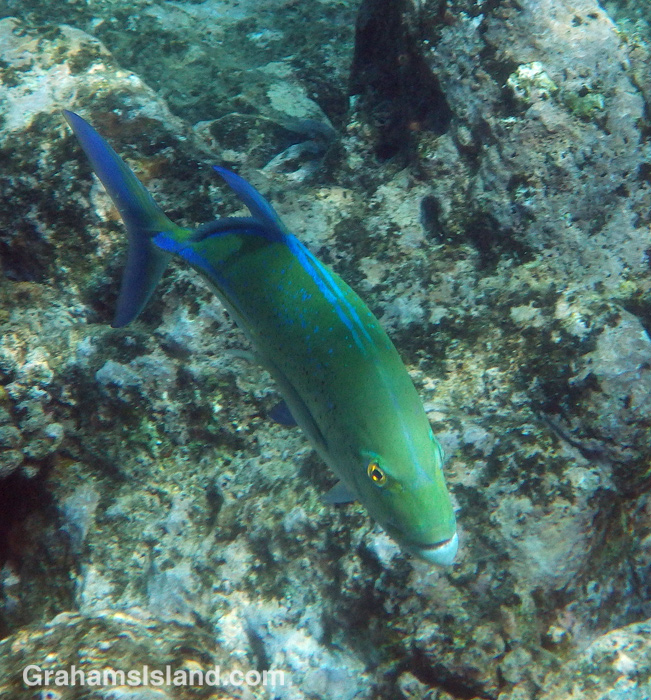
These are another of those fish that look quite different when they catch the light, with blue highlights standing out. They also look different as they age. The top photo is a large adult, the other two, a small younger adult.
These fish are big time predators, eating many other species of fish. I find this interesting because I often see bluefin trevally when I’m in the water. I see them pass by other fish and I’ve never seen them strike or seen other fish particularly bothered by their presence. One day …
In my attempts to identify what I see in the water, I use John P. Hoover’s book The Ultimate Guide to Hawaiian Reef Fishes, Sea Turtles, Dolphins, Whales, and Seals. His website is hawaiisfishes.com.


