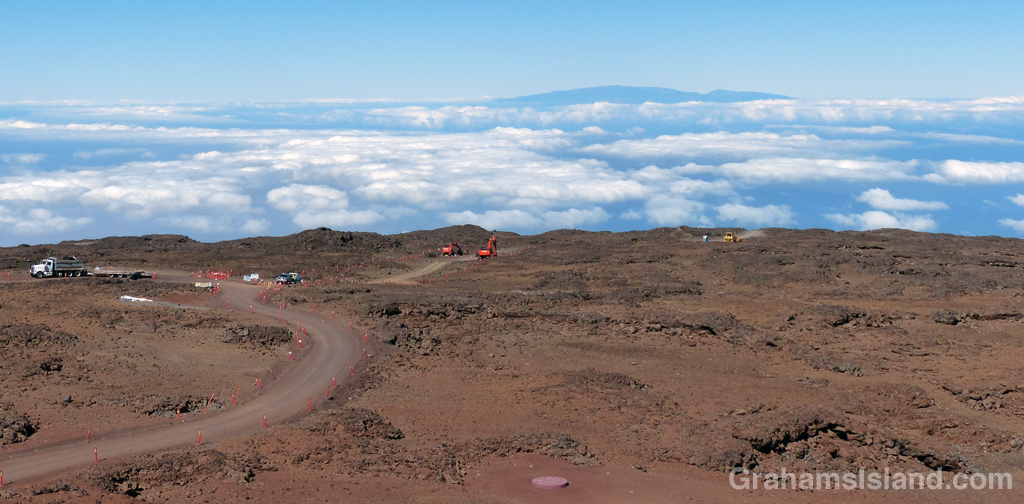
The planned Thirty Meter Telescope site on Mauna Kea

Thirty Meter Telescope site on Mauna Kea
This is where the planned Thirty Meter Telescope (TMT) is supposed to be built. I say ‘supposed to’ because the project is currently going in reverse. Construction should have started in April of last year, but protests derailed that. Then two court decisions late last year mean the permitting process has to start again. As it stands right now, The TMT people have said they need approved permits by early next year. In the meantime, alternative sites are being checked out, in case things don’t come together.

Personally, I don’t think the telescope will be built here. The protesters aren’t going to go away, I don’t think there’s the will in Hawaii officialdom to get it done, and I don’t think the TMT people want to do what it will take, which would leave them looking like the bad guys running roughshod over Hawaiian cultural practices.

It’s more complicated than this of course, but if I were a betting man, I know where my money would go.

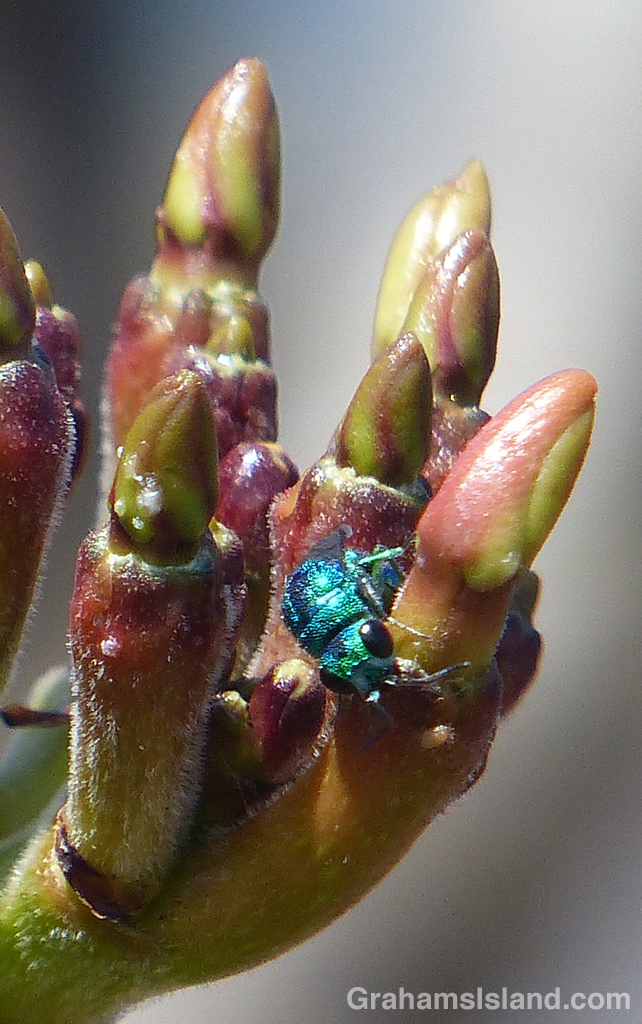
Cuckoo wasp

Cuckoo wasp on a frangipani.Cuckoo wasp on a frangipani.

I saw this small, bright insect flitting about on the new growth of a plumeria. The cuckoo wasp gets its name from its practice of laying eggs in the nests of other wasps and bees. Once hatched, the cuckoo wasp eats the host wasp or bee larva. Then it eats the food placed in the nest for the host’s offspring. Probably not an insect to invite to your next dinner party.

For more information about cuckoo wasps, go to bugguide.net/node/view/6946.

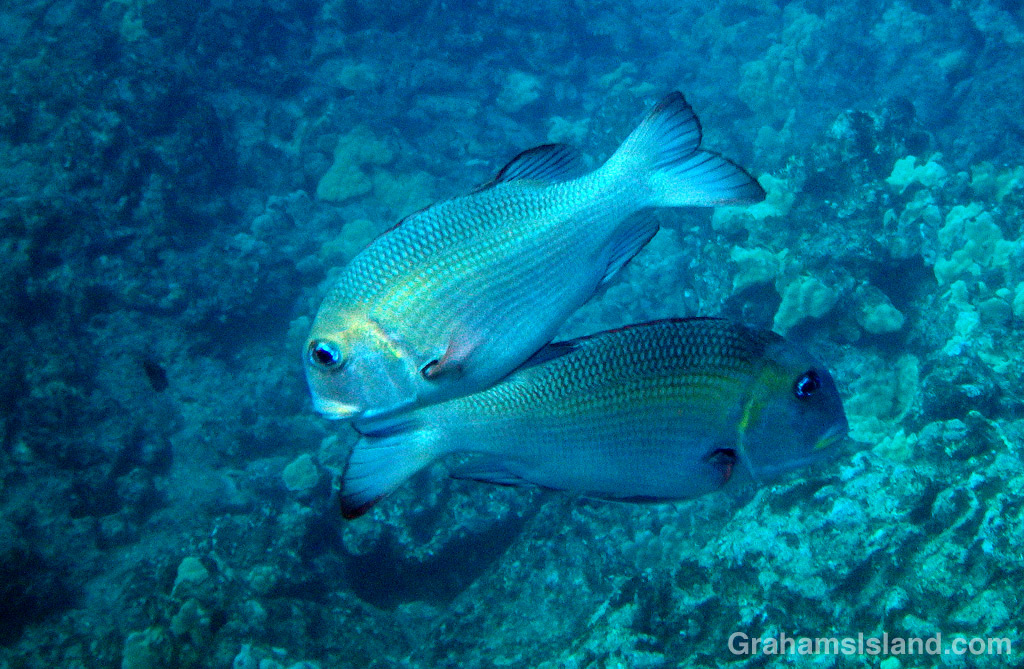
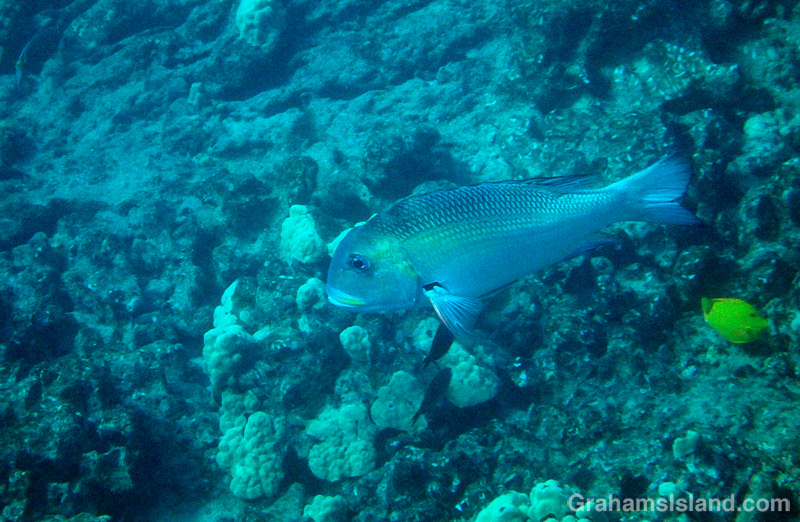
Big eye emperor

A pair of Big Eye Emperor fishBig Eye Emperor fish

It’s quite common to see this fish, usually in ones and twos, hanging almost stationary in the water, facing into the current or swells. Often they can be found hanging out in the same area for days in a row. Usually, when I approach, they drift away with minimal effort or noticeable movement. They’re quite large – up to two feet – and fun to see with their big eyes and dignified manner.

In my attempts to identify what I see in the water, I use John P. Hoover’s book The Ultimate Guide to Hawaiian Reef Fishes, Sea Turtles, Dolphins, Whales, and Seals. His website is hawaiisfishes.com.

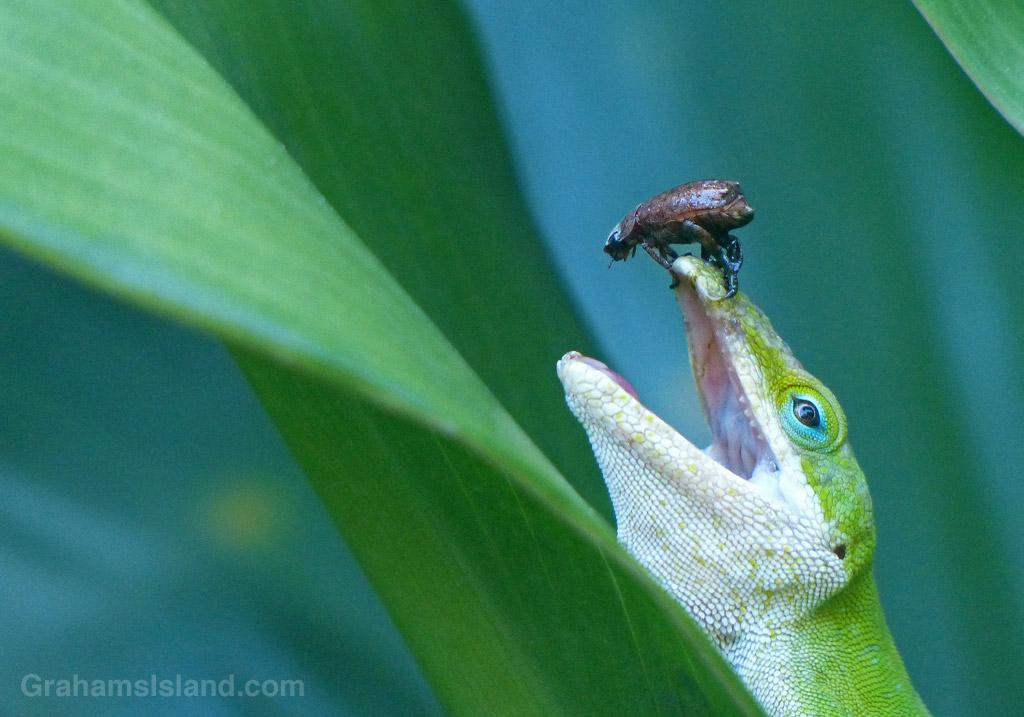
Breakfast strikes back

Breakfast strikes backAt first, this green anole had the bug in its mouth, but then events took a turn for the worse. At first I thought the bug was a larder beetle, but now I believe it’s a Chinese rose beetle, though I wouldn’t bet the farm on that. In the end, it got away. The anole did not look pleased to have these events witnessed.

For more information about green anoles, go to en.wikipedia.org/wiki/Carolina_anole.

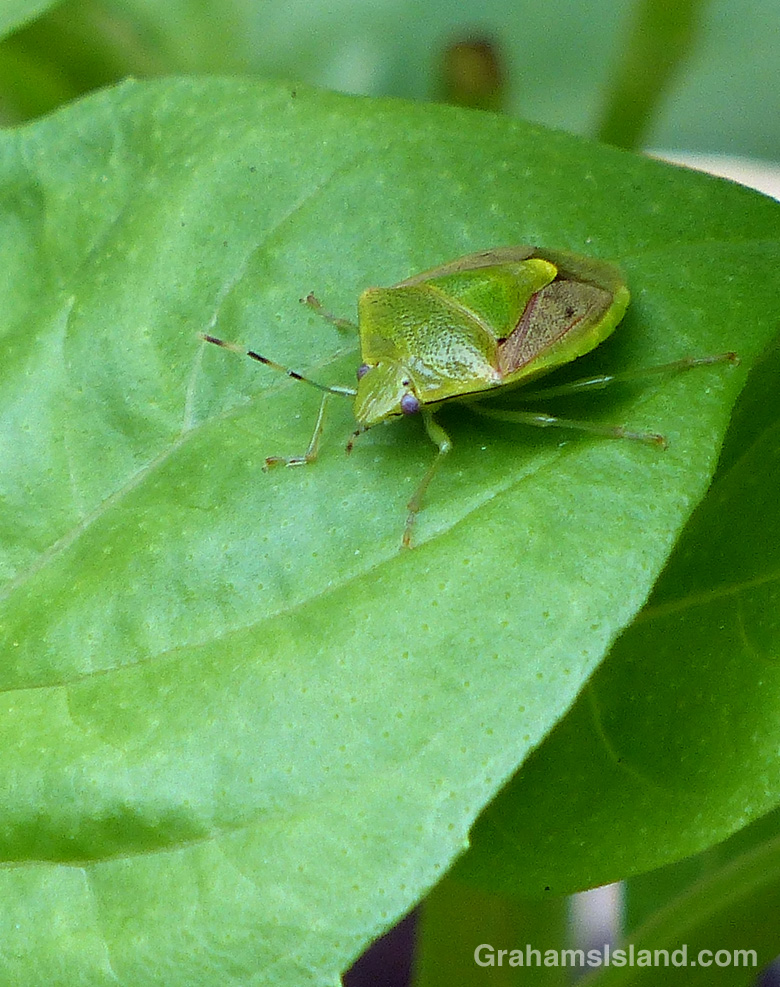
Oriental stink bug

An oriental stink bug on a basil leaf.

When I first saw this bug, I thought it was a Japanese beetle. Later, I realized I was wrong and it was a stink bug. They get their name because they can emit a foul-smelling substance when disturbed. Luckily, I didn’t disturb it enough to provoke that response, though there was no way I was going to leave it be on the basil plant where I found it. Most mornings see the plant with new holes or bite marks. Seems to be a favorite of just about every bug around.

How green is my valley?

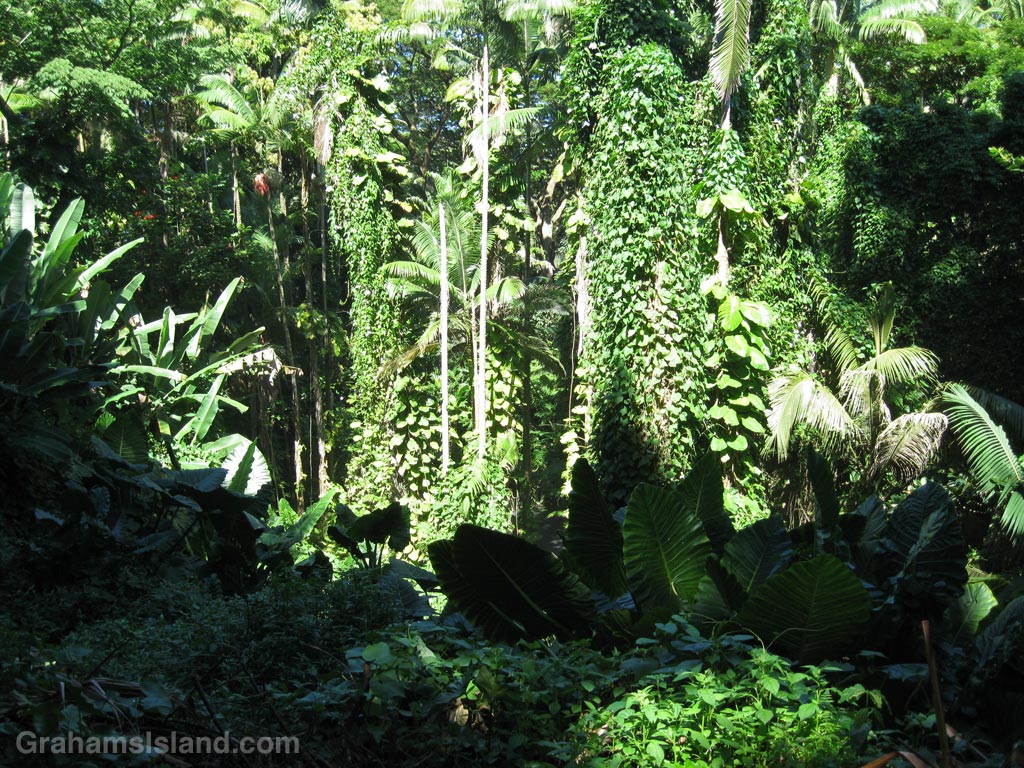
Lush foliage on the east side of the Big Island, Hawaii.
The north and east sides of the Big Island get more rain than the west – a lot more rain. Much of that area gets 100 inches and up. A good chunk of it gets more than 200 inches. By contrast, there are areas on the west coast that get less than 10 inches of rain a year. Two of the driest parts of the island are the summits of Mauna Kea and Mauna Loa, which also get less than 10 inches. That’s because they’re mostly up above the clouds.

The east side’s rain tends to be of the tropical variety – intense downpours that don’t necessarily last long. Several inches can fall in the space of half an hour. Flash floods are a threat all over the island. Those heavy rains falling up on the hills can channel down west side gullies.

Another result of all that rain is that the foliage is luxuriantly tropical: towering trees and shrubs, extravagantly large leaves, and vines with everything. This scene is on the coast near the Hawaiian Tropical Botanical Garden north of Hilo.

For more information about Hawaii Tropical Botanical Garden, go to htbg.com.