
Water shimmers over colorful rocks.

Water shimmers over colorful rocks.
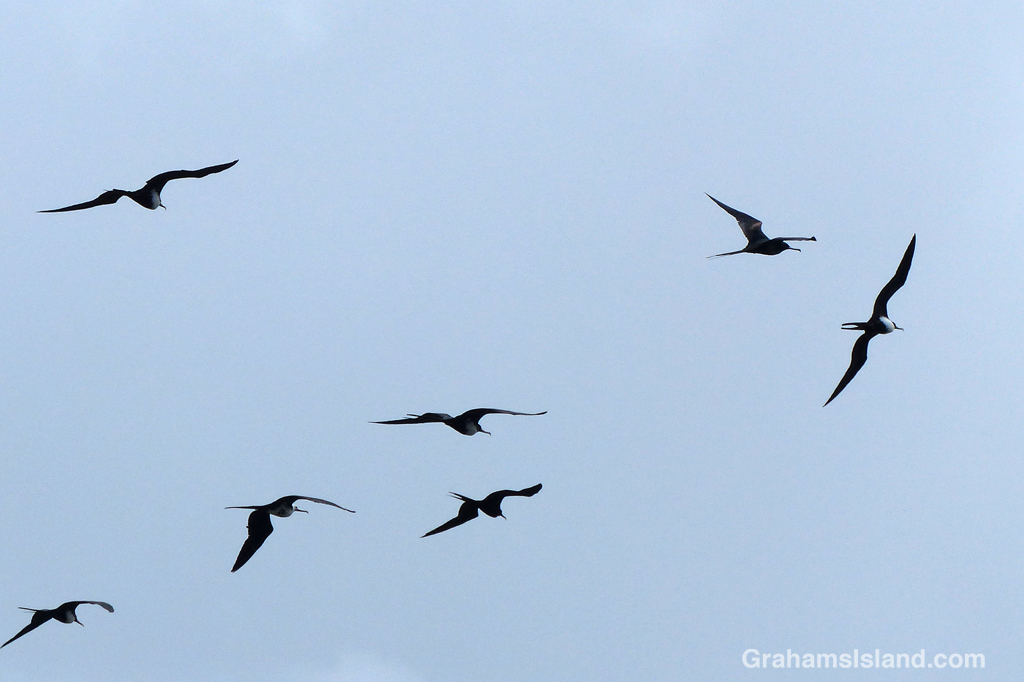
 Usually I see this bird in ones or twos, but on this occasion, I saw a flock of 15 or more cruising along near the coast.
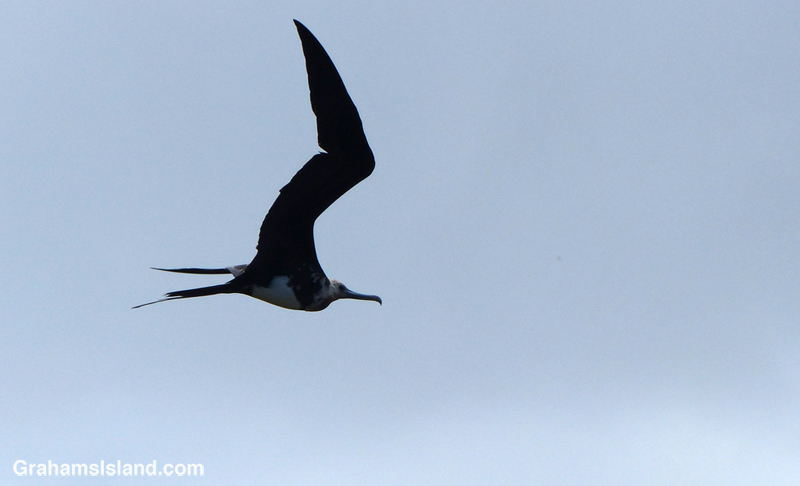
It’s known in Hawaii as the ’Iwa, which means ‘thief.’ It gets this name because it sometimes harasses other birds into dropping their catch, which it then swoops down to retrieve. Mostly though, it feeds on squid and flyingfish. Since it can’t take off from water, it scoops prey out with its hooked beak while on the wing.
The single bird pictured is a female, distinguished by the white breast and neck.
For more information about great frigatebirds, go to fws.gov/refuge/hawaiian_islands/wildlife_and_habitat/great_frigatebird.html.
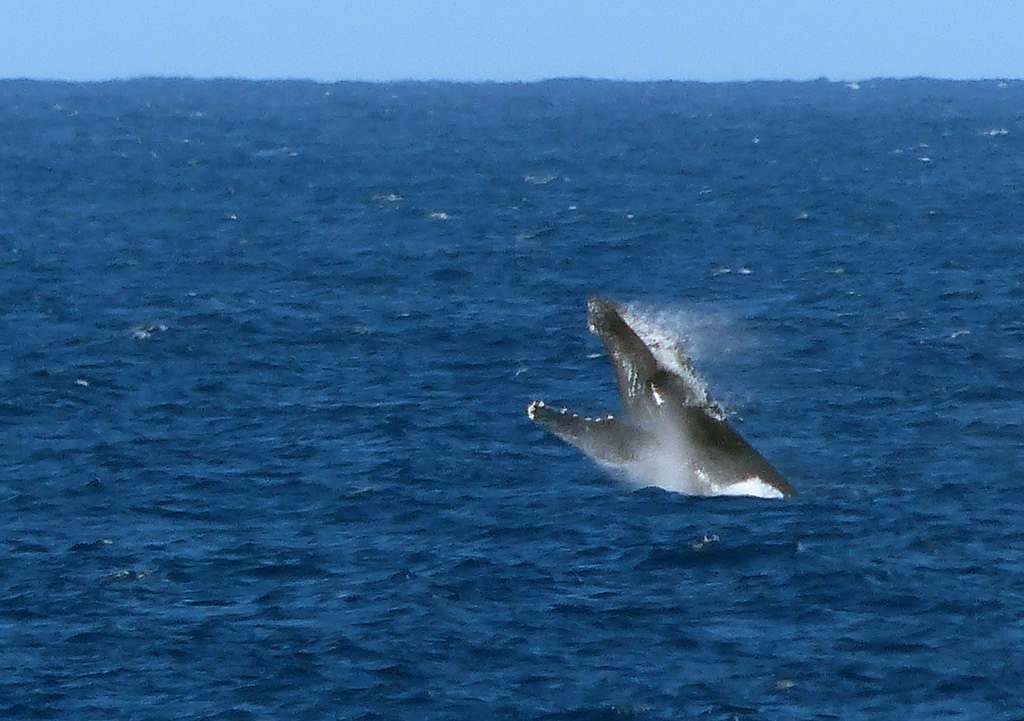 Seemed like a good day to run a photo I took a year or so ago, but what kind of terrible sea monster is it, rising from the ocean, jaws agape?
Truth is, it’s a humpback whale about to splash back into the water. The ‘lower jaw’ is really a pectoral fin. The ‘spiky teeth,’ are tubercles, knobby bumps on the fin’s leading edge. The ‘upper jaw’ is the lower jaw seen from below. And the ‘eye’? Well, that’s an eye, no fooling.
For more information about humpback whales, I recommend Jim Darling’s book, Humpbacks: Unveiling the Mysteries or go to whaletrust.org or hawaiihumpbackwhale.noaa.gov/welcome.html.
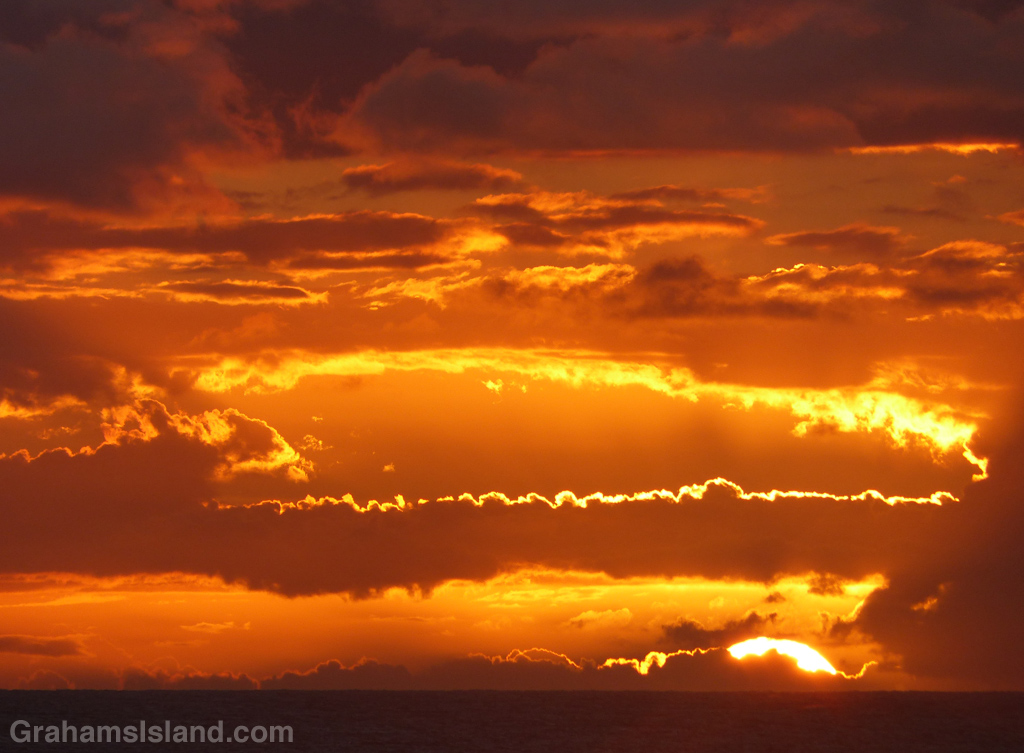 When conditions are right, the sunsets here can be spectacular.
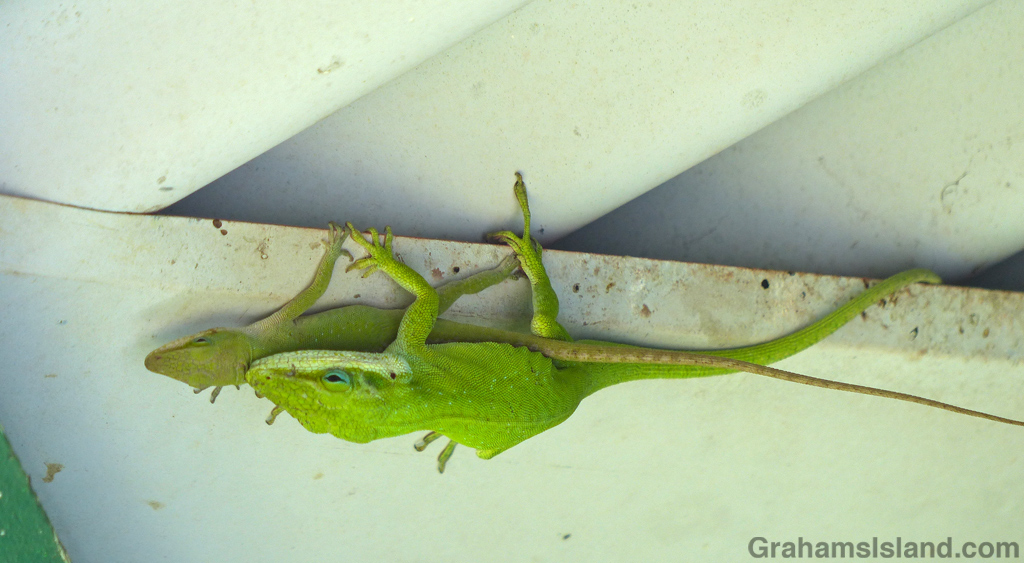

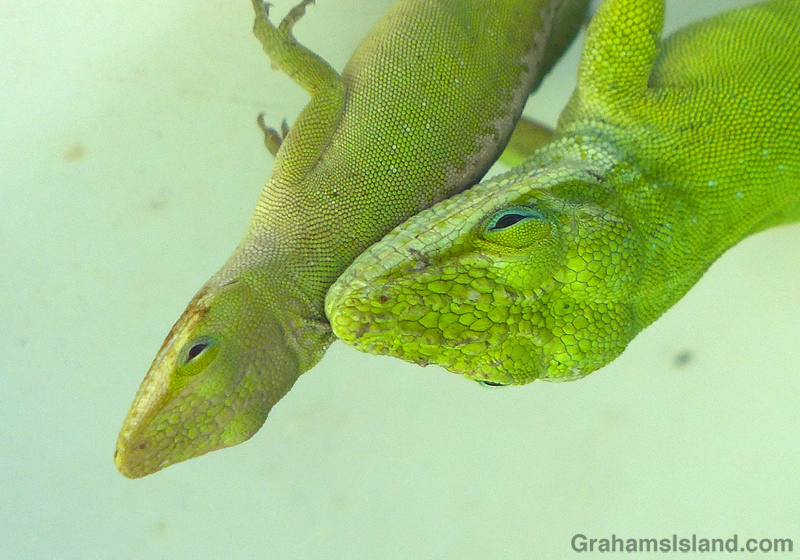
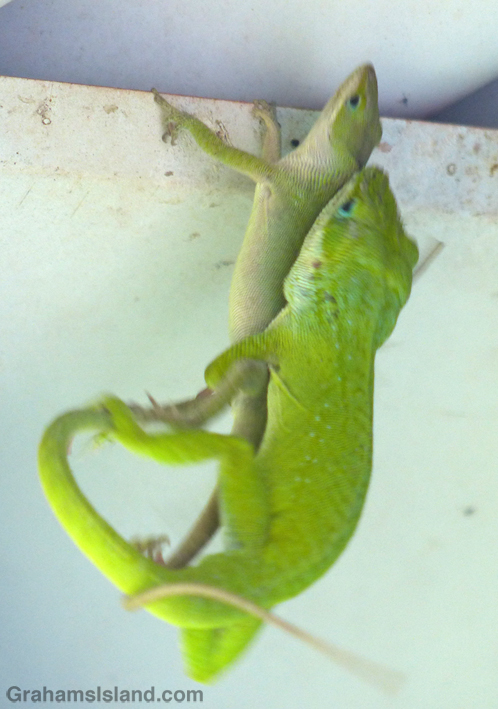
I found these two thrashing about under the eaves. At first I thought they were fighting, such was the violence of their activity, but I learned that’s just part of their mating ritual.

The key here is the larger male getting a grip with his jaws on the back of the female’s neck. He doesn’t let go. In this encounter, a series of skirmishes interspersed bouts of wrestling with periods of rest. All the while the male maintained a firm grip.
After one tussle, the male lost his footing and ended up hanging off the back of the female, his jaws still clenched on her neck. The female hung on with a couple of claws, as they swung side to side. Then she lost her grip.
The pair plunged onto a ti plant where the male immediately puffed out his dewlap. The female took the opportunity to scamper off. He pursued for a while but lost track of her and gave up. The female meanwhile looked somewhat the worse for wear, a clump of darkened skin bunched up from her neck.
Clearly anoles are one species where relationships can literally be a pain in the neck!
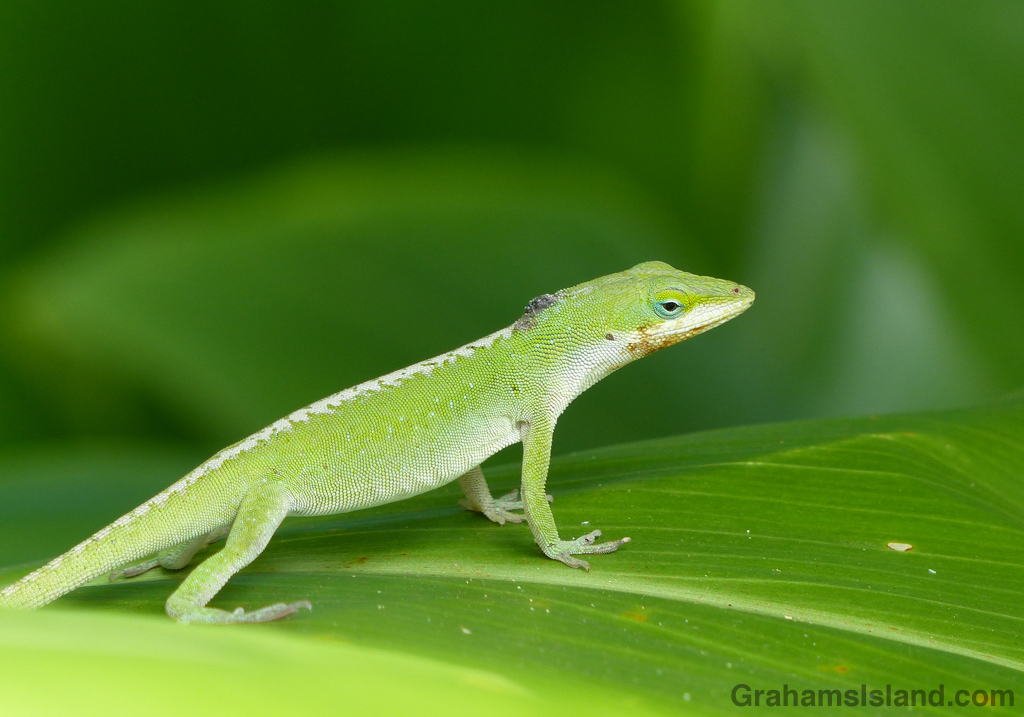
For more information about green anoles, go to en.wikipedia.org/wiki/Carolina_anole.
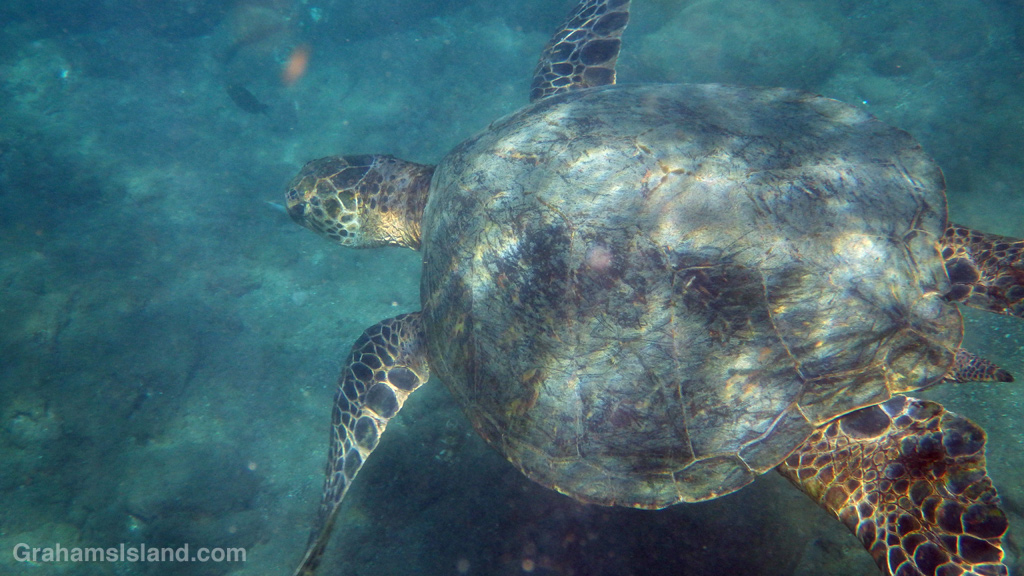
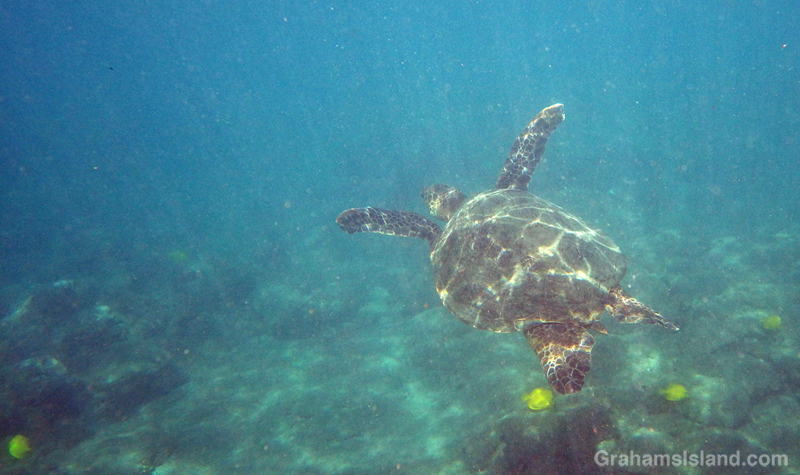 One day, when I got in the water, I dipped my head below the surface and saw a large barracuda idling a few feet away in murky water. Gathering myself, I took a few photos, none of which turned out.
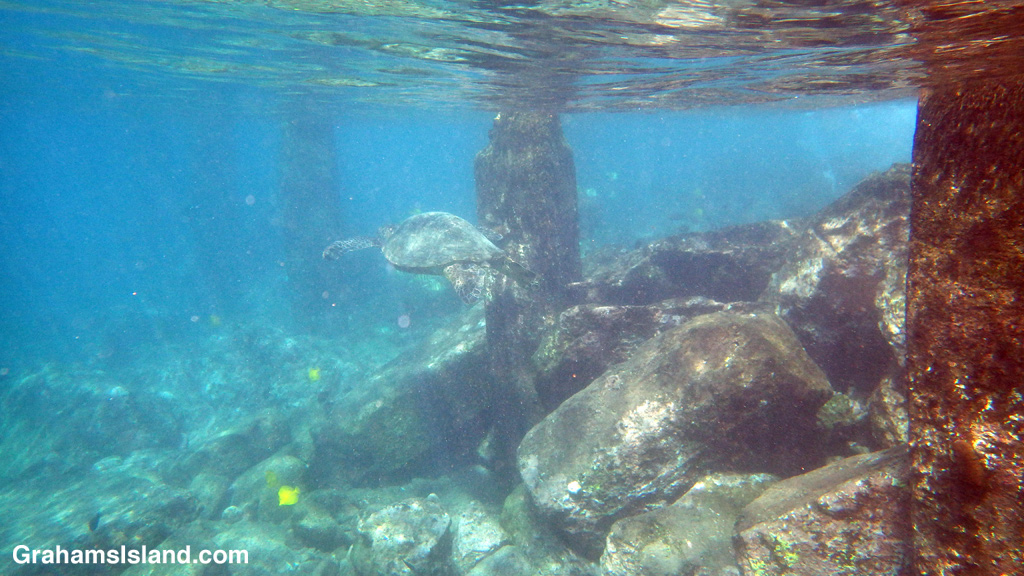
When the barracuda swam away, I tried to follow, but didn’t see it again. Instead, this green turtle slid by not two feet away. It pottered among the rocks, then came back out, passing me almost as close as before. I followed at a discreet distance, before it eased into the ruins of an old pier. I love seeing turtles in the water – they’re so graceful. First time I’ve had my camera with me.
In my attempts to identify what I see in the water, I use John P. Hoover’s book The Ultimate Guide to Hawaiian Reef Fishes, Sea Turtles, Dolphins, Whales, and Seals. His website is hawaiisfishes.com.
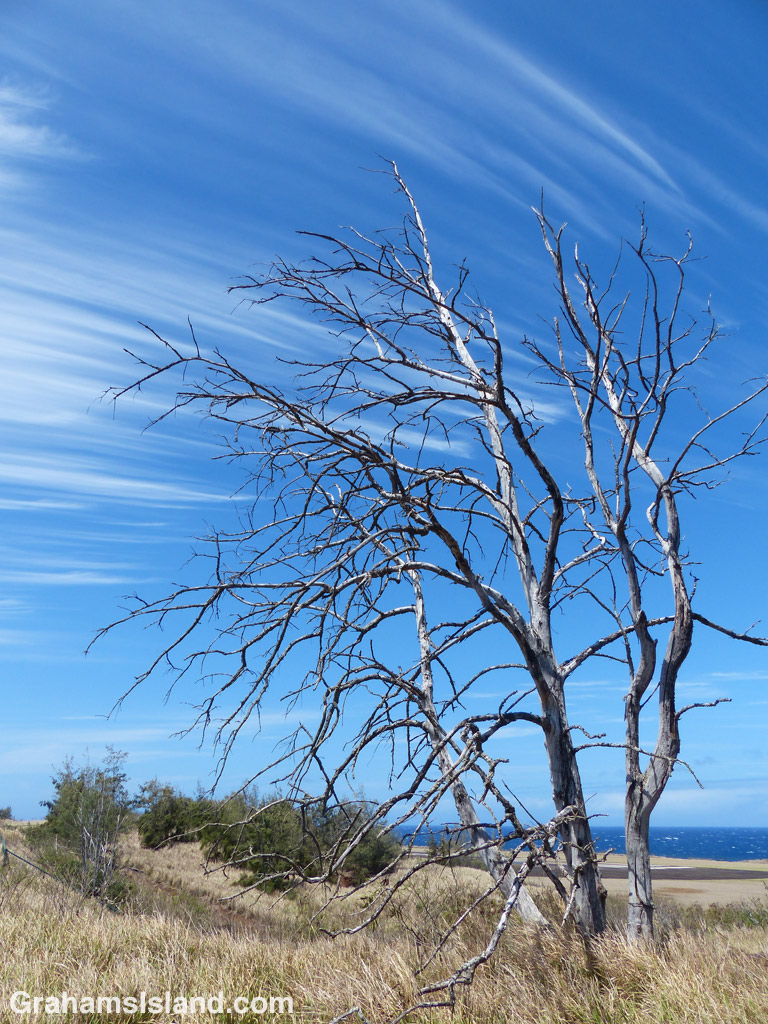
It’s been a while since this tree saw leaves.
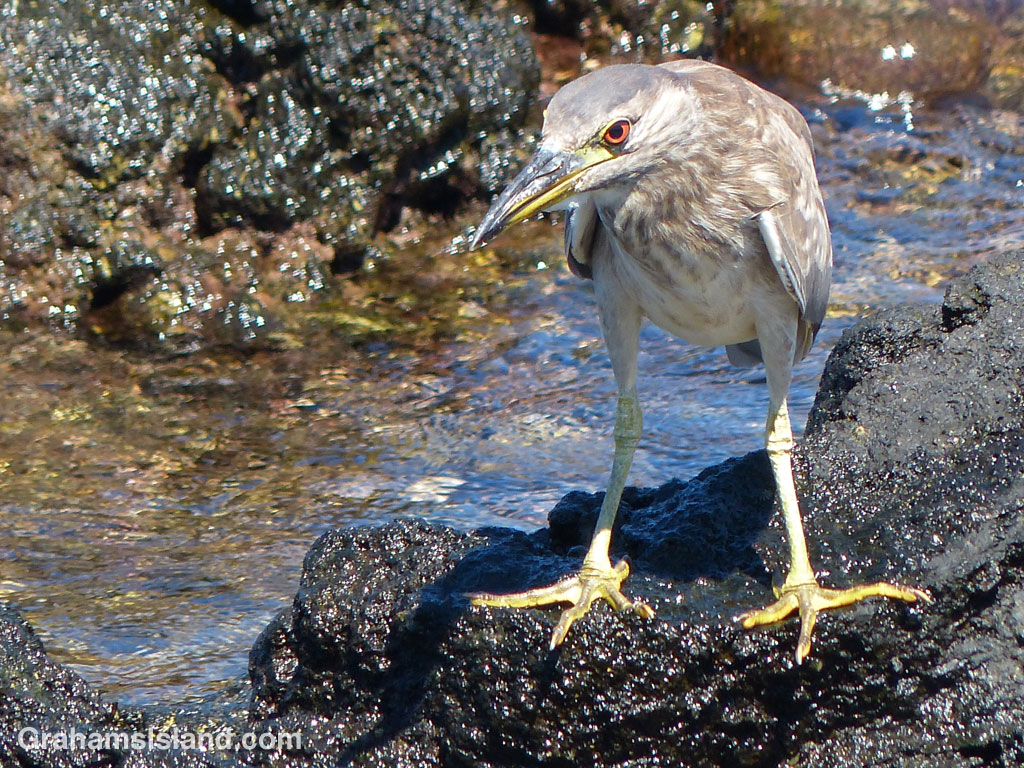 This is a juvenile black-crowned night heron which was standing in the shallows on the Kohala coast waiting for something to swim by or for me to go away – probably a bit of both.

