

Sunset is always a good time to head to the west coast of the Big Island.
Abstracts: Irrigation
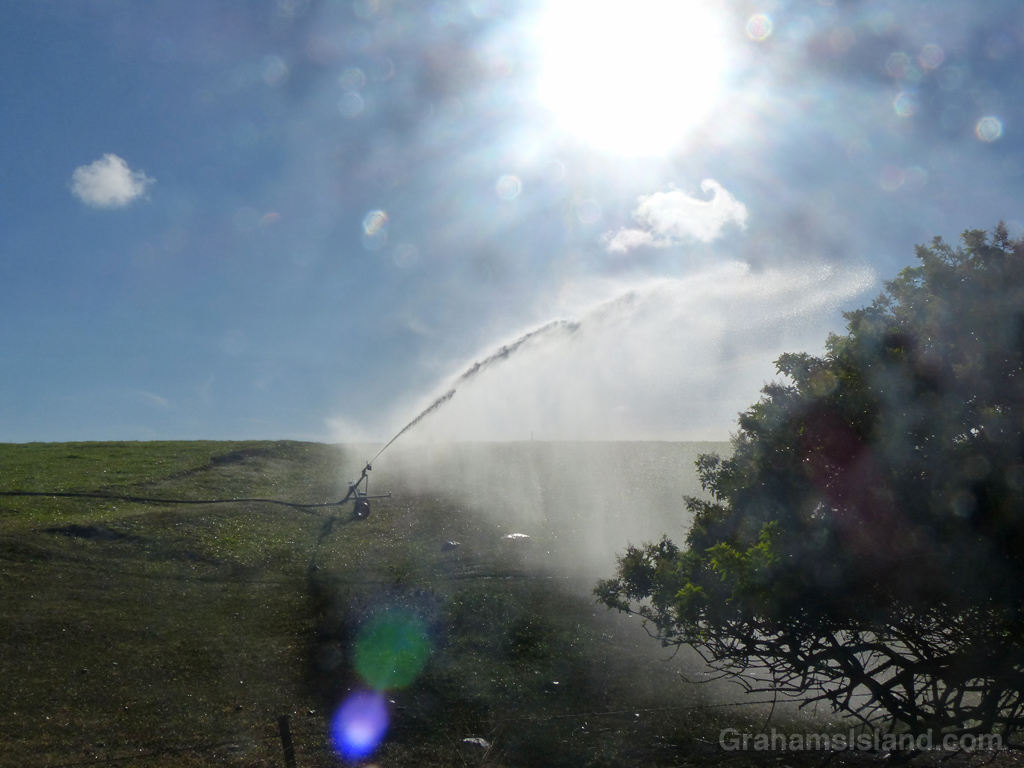
Irrigating the pastures of North Kohala. The water comes from the Kohala Ditch, an irrigation channel that runs from the northeast side of Kohala mountain to the dryer northwest end. The ditch was constructed back in 1906 to bring water to the sugar cane fields. These days the water goes to the many agricultural activities in the area.
For more information about the history of the Kohala Ditch, go to fluminkohala.com/the-kohala-ditch.
Moody black triggerfish
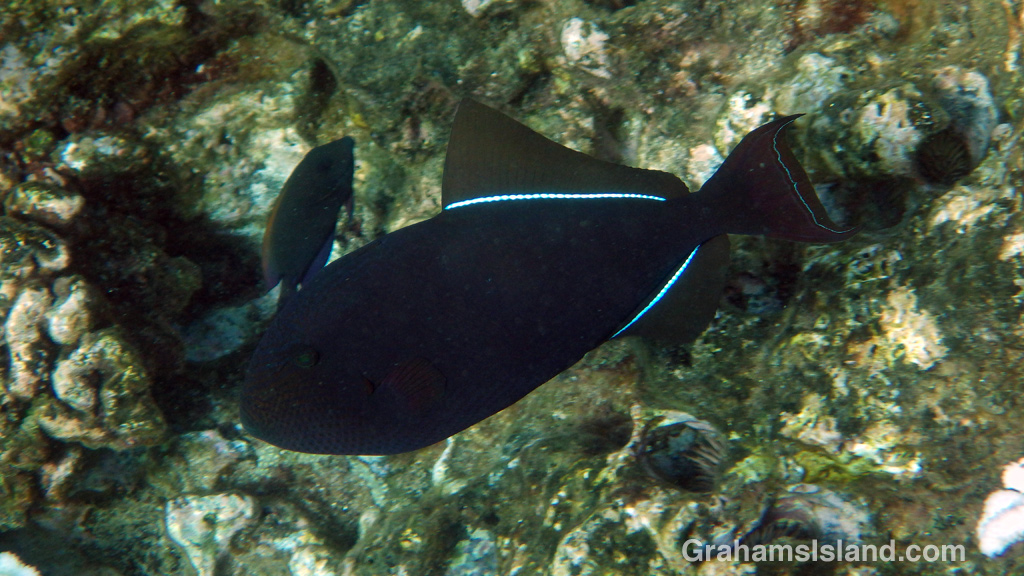
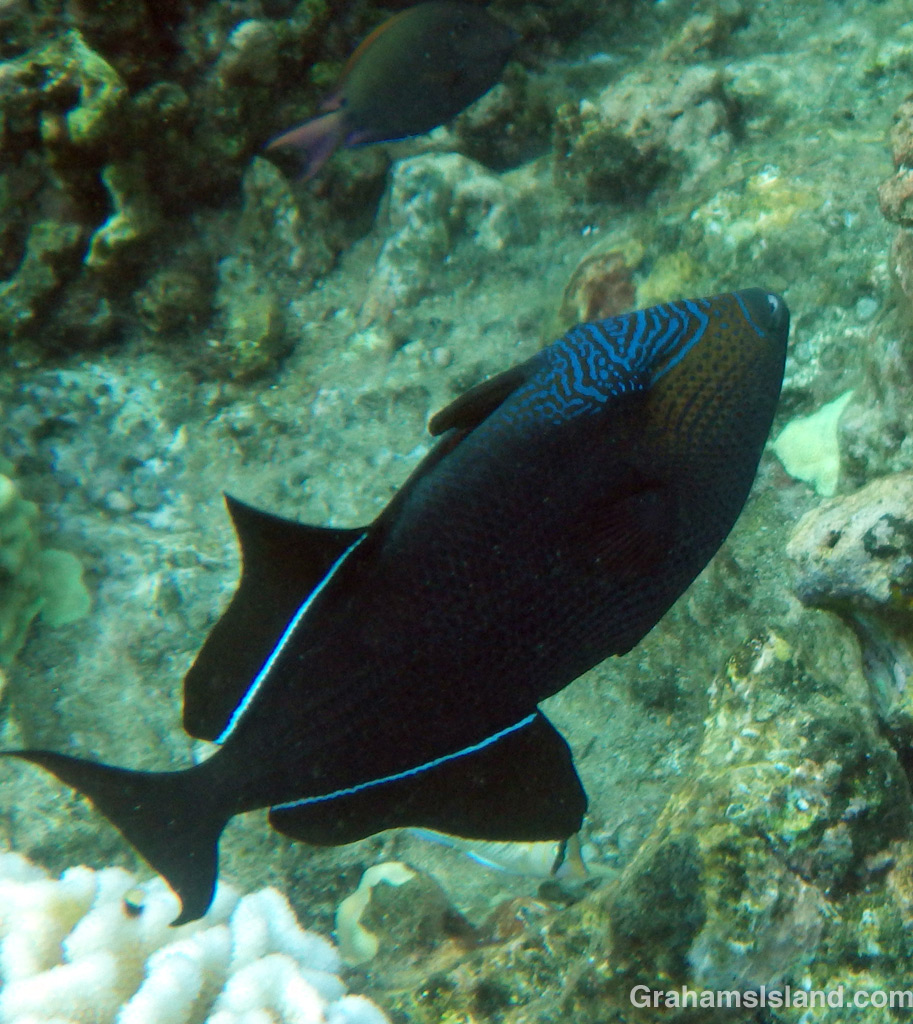
The black triggerfish is a common reef fish, not shy about showing how it feels. The top photo shows its usual color, a dark body with bright, pale blue lines along the base of its dorsal and anal fins.
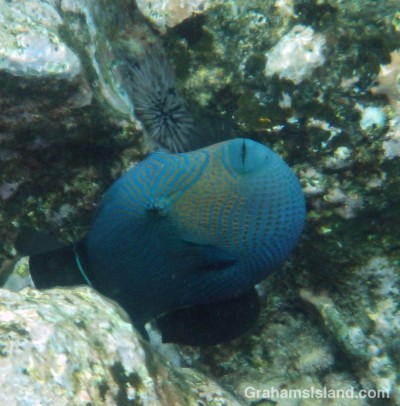
When it gets wound up like the one on the left, bright blue lines appear between the eyes. The more agitated it becomes, the more the blue expands. The one below is clearly not at all happy. I know when I’m not wanted.
In my attempts to identify what I see in the water, I use John P. Hoover’s book The Ultimate Guide to Hawaiian Reef Fishes, Sea Turtles, Dolphins, Whales, and Seals. His website is hawaiisfishes.com.
Common mynah bird
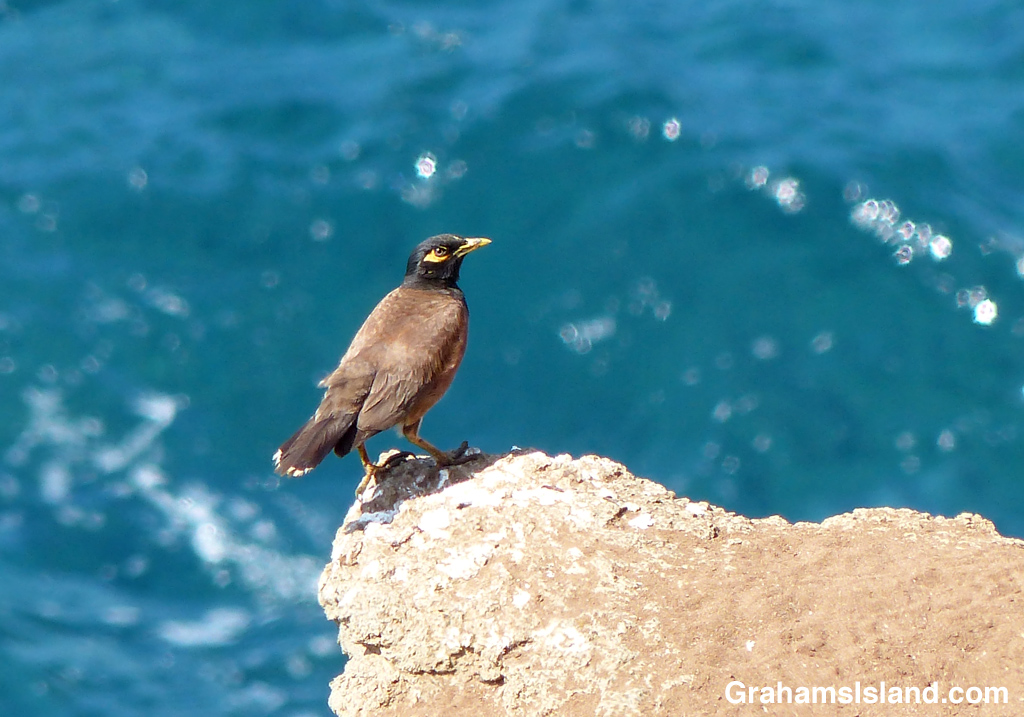
The mynah bird was introduced to Hawaii in 1866 to deal with the cutworm moth, an agricultural pest. The birds were successful in their task and promptly went on to thrive, becoming something of a pest themselves. I like them because they always look grumpy.
Hawaiian monarch butterfly
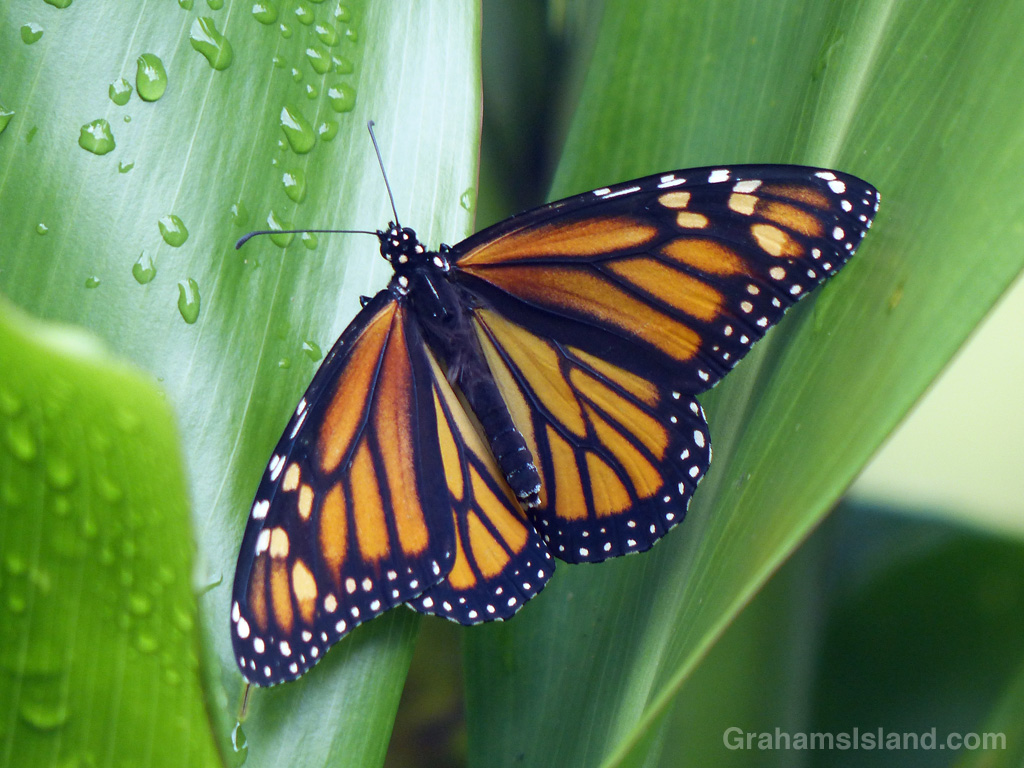
The Hawaiian monarch butterfly comes from the same stock as the mainland variety. It made its way to Hawaii in the mid 1800s, shortly after the milkweed plant (one of the Monarch’s host plants) was introduced. There’s a white variant that’s been seen on Oahu, but not on the Big Island as far as I know.
Inter-island barge

The inter-island barge leaves the Big Island on a tranquil evening.
Beach Naupaka
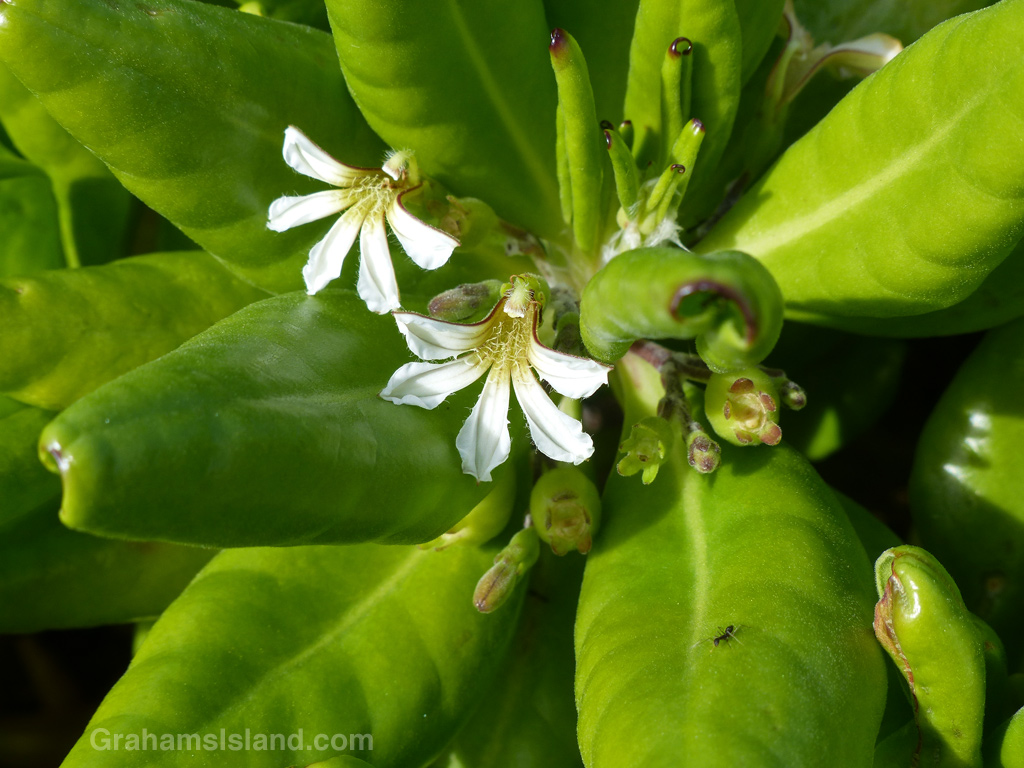
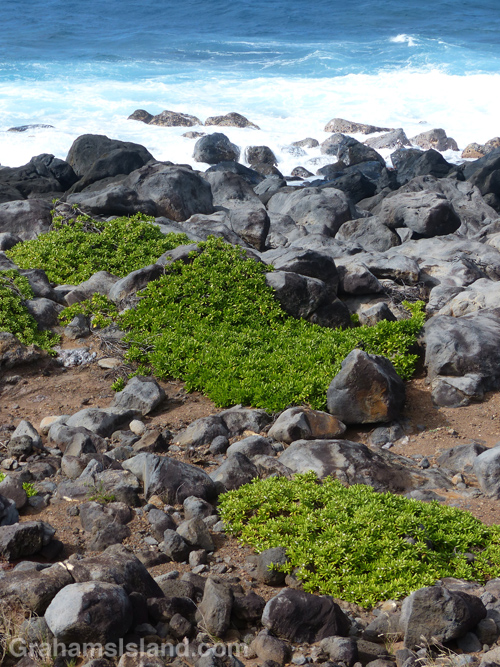
This native plant (scientific name Scaevola sericea) has curious half flowers, with five downward-facing petals. And it’s popular with ants, at least by my observation.
It does well along the coast because it’s salt tolerant and is often planted for erosion control and reclamation projects.
For more information about this and other Hawaiian flowers, go to wildlifeofhawaii.com/flowers/.
Moorish idol

The Moorish idol is one of the easiest fish to identify. Striking colors, striking shape, and no other fish quite like it. This one not only hung around while I was there, but obligingly slid into a patch of sunlight.
In my attempts to identify what I see in the water, I use John P. Hoover’s book The Ultimate Guide to Hawaiian Reef Fishes, Sea Turtles, Dolphins, Whales, and Seals. His website is hawaiisfishes.com.

