Tag Archives: Aircraft

Better Days: Wrecked bomber

Better-Days-Wrecked Bomber in trees

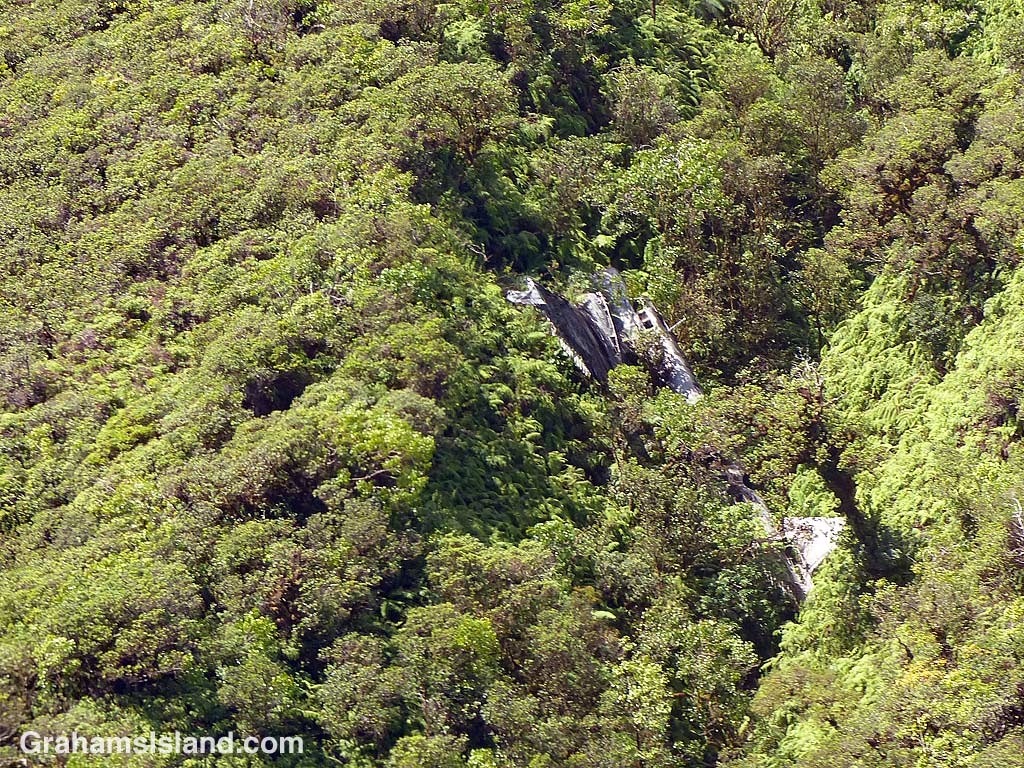
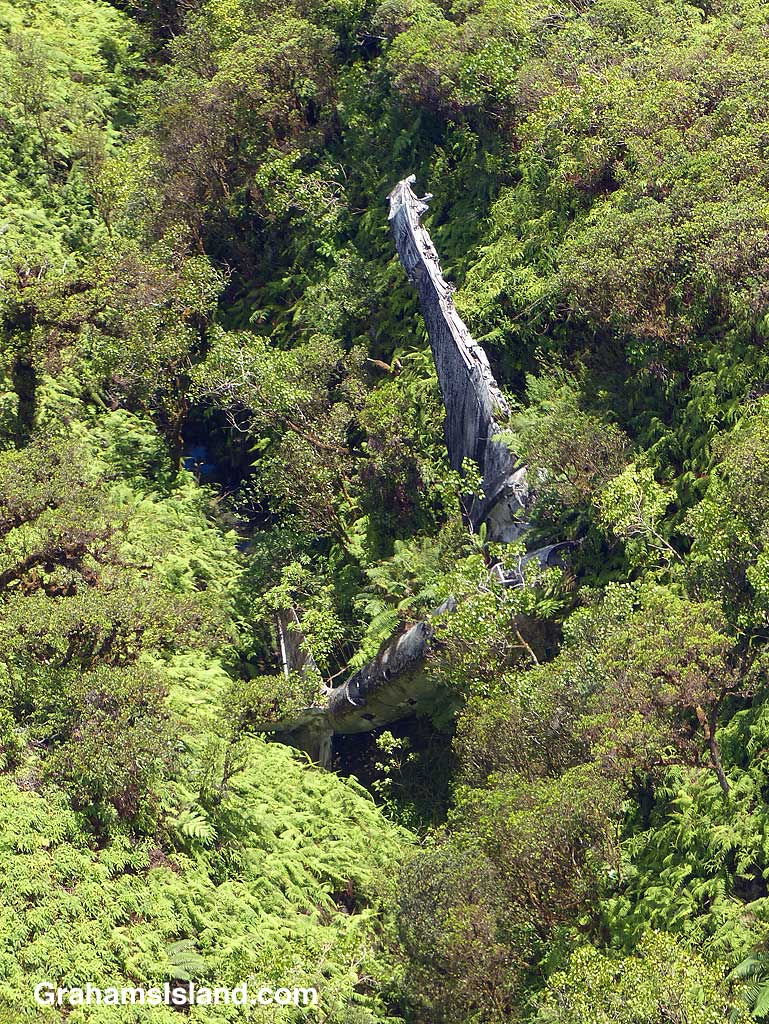
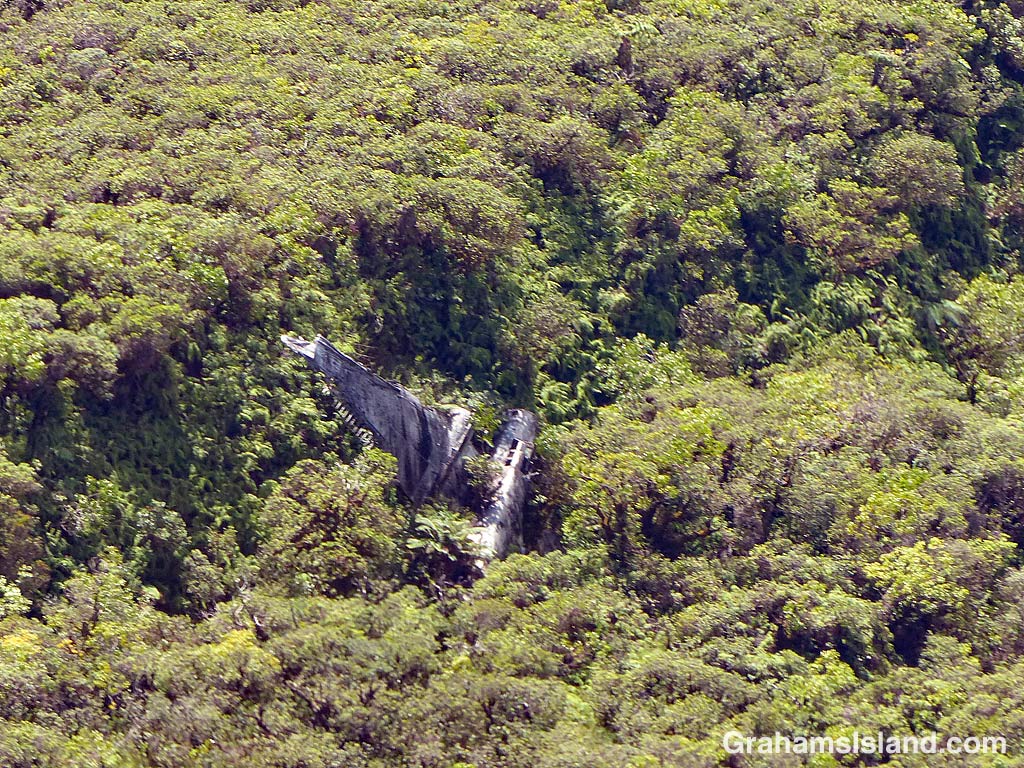
Better-Days-Wrecked Bomber in ravineOn the evening of Tuesday, February 25, 1941 this twin-engined B-18 bomber was part of a group of four aircraft on a night training mission. They had started out from Hickam Field on Oahu. Not far from Hilo the plane lost its port engine when a bearing failed. The pilot decided to try and reach Suiter Field (now known as Upolu Airport) at the island’s northern tip. It was not to be. Flying on only one engine, the plane lost altitude. The crew thought they were over the sea, but suddenly a mountain appeared in front of them. The pilot yanked on the flight yoke wheel and the plane stalled and flopped into the trees around 10 p.m.. Incredibly only one crewman was slightly injured.

Search aircraft from Hickam Field found the plane the next morning around 9 a.m.. The nose of the plane was hanging over a 75-foot deep ravine about 3,500 feet up on the northern side of Kohala Mountain. It was one of the most inaccessible places on the island. A rescue operation was started, but it was Thursday noon before it reached the crew.

Over the years, the aircraft has slid into the ravine which is where it rests today. As these photos show, the plane’s condition has deteriorated and it is increasingly being engulfed by trees. But it is still quite easily spotted from the air. On the ground, it remains one of the most inaccessible spots on the island.

It’s also worth noting that just nine months after this crash, almost all the B-18 bombers based at Hickam Field were destroyed on the ground during the attack on Pearl Harbor. 77 years on, this B-18, in its remote resting place, is one of only a handful remaining in existence.

For more information about this aircraft and the crash, search online for Big Island Bomber – hiavps.com or go to pacificwrecks.com/aircraft/b-18/36-446.html.

Better-Days-Wrecked Bomber

Island hopping

Mokulele plane landing at Kona

Honolulu AirportIn Hawaii, it’s not unusual for people to commute between islands. Many medical professionals are based in Honolulu, but have offices on the Big Island which they visit on a weekly basis. The same can be said for other professionals: lawyers, scientists, engineers and the like. Politicians and government officials go back and forth on a regular basis.

But it’s not just professionals. Skilled tradespeople might work on any of the islands, commuting on a daily or weekly basis. Highway construction crews likewise move from island to island depending on where and what projects are being worked on. Musicians and other artists are regular island hoppers. The list goes on.

There’s one mode of transport for all these people and that’s air travel. There are no inter-island ferries. The Hawaii Superferry operated from 2007 to 2009 but was suspended when the Hawaii Supreme Court ruled that a second environmental impact statement was required. One concern with a ferry is the increased risk of spreading invasive species and diseases of plants and animals.

Hawaiian Airlines is the biggest operator in the islands, with the lion’s share of the inter-island business. It operates from its hub in Honolulu, but also offers direct flights between the other islands. The second photo shows the distinctive tails of a couple of its planes at Honolulu Airport.

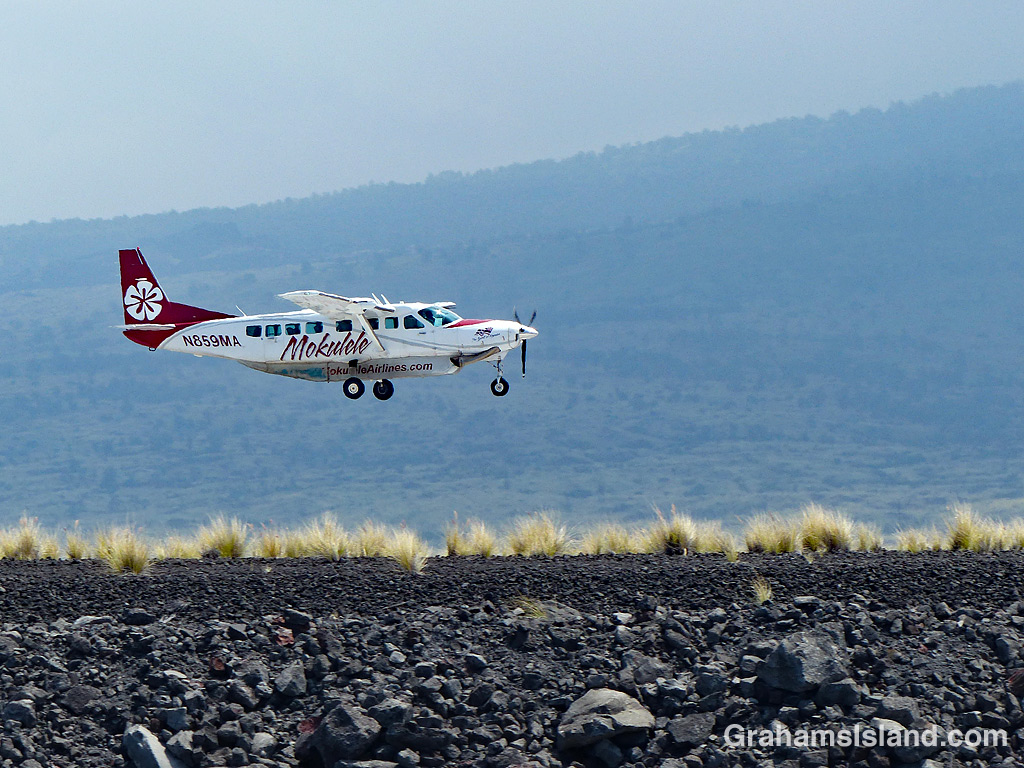
Smaller airlines have also offered inter-island routes. These include Aloha Airlines, Go! Airlines and Island Air. These three ceased business in 2008, 2014, and 2017 respectively. Currently, the only other island airline is Mokulele Airlines, though it doesn’t fly to Kauai. They service some smaller airports and operate smaller planes such as the one above, coming in to land at Kona Airport.

Posted in response to this week’s Sunday Stills challenge is on the theme of ‘Transportation or Commute.’ (More responses here.)

F-22 Raptor at Kahului Airport

F-22 at Kahului Airport on Maui

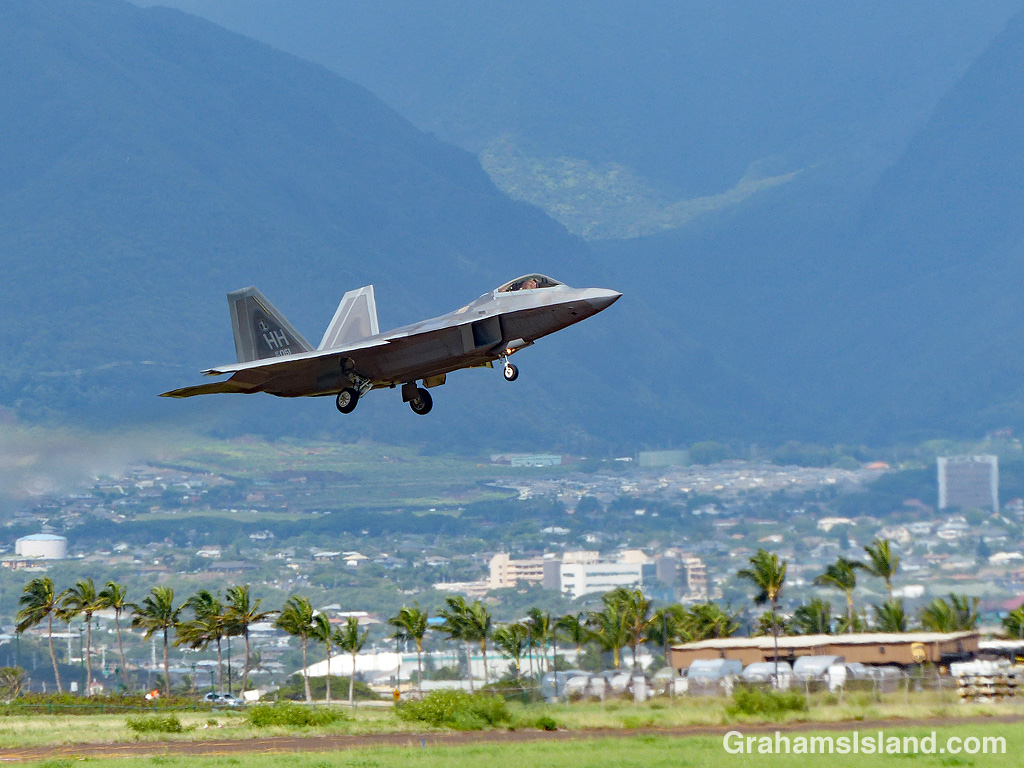
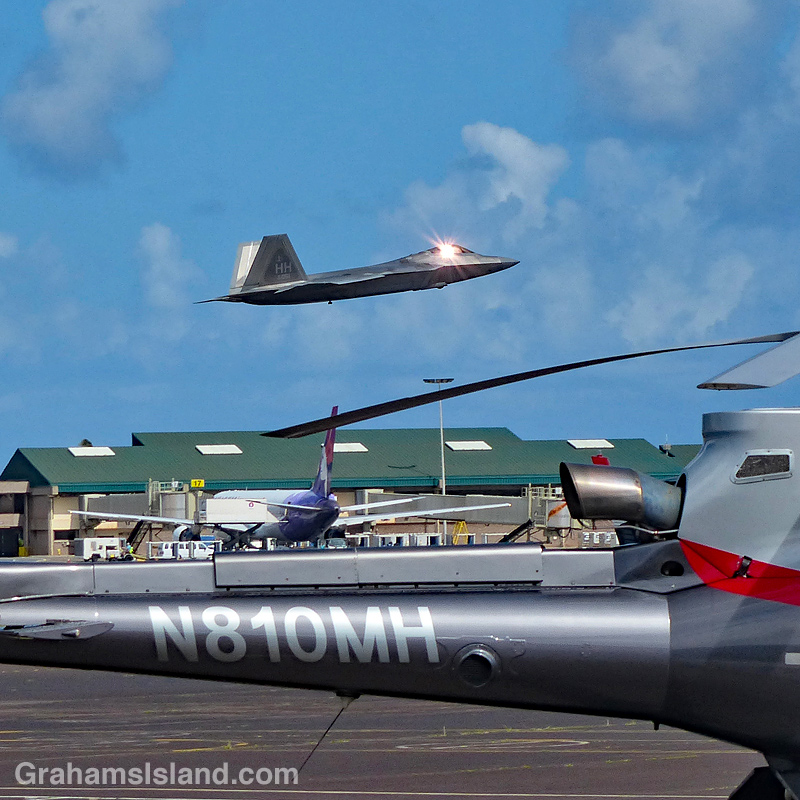
F-22 at Kahului AirportRecently, I took a short jaunt to Maui. By short, I mean I left in the morning and returned at lunchtime and the only place I visited was Kahului Airport. However, while I was there I did get to see this F-22 Raptor make three low-level passes of the airport.

I happened to be outside when it made its first pass. By the time it returned, people had spilled out of offices and workshops, phones pointed at the sky, as it zipped by. And it did zip by. Compared to the rest of the action – commercial planes lumbering in to land, light aircraft wobbling through the wind, helicopters scooting up and around and away – the F-22 was a flash of noise and action.

The F-22 Raptor entered service in the United States Air Force (USAF) in 2005 and the last plane was delivered to the USAF in 2012. It has since been largely supplanted by the F-35 which is considered to be cheaper (relatively speaking) and more flexible.

International takeoff

Japan Airlines plane tail

Japan Airlines planeKona airport is officially called the Ellison Onizuka Kona International Airport at Keahole.

Ellison Onizuka was an astronaut from Kealakekua, Hawaii, who died in the destruction of the Space Shuttle Challenger. Kona is the district and Keahole the place name for the actual location (Keahole Point) of the airport. And International? Well that’s largely due to the aircraft in these photos.

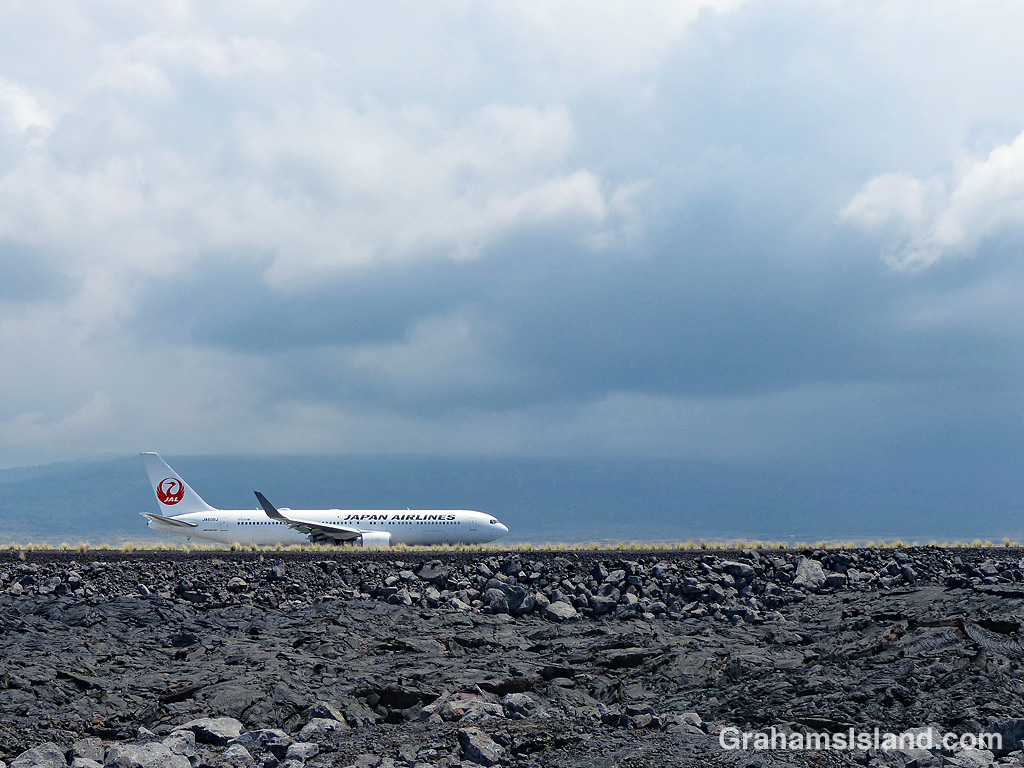
Japan Airlines (JAL) began flying to Kona from Tokyo in 1996, but suspended service in 2010. With no international flights coming in, the feds shut up shop, and that’s the way it stayed until the end of 2016. At that point, Hawaiian Airlines began service to Tokyo three times a week and a new Federal Inspection Service facility opened at the airport to accommodate the needs of the government. But the icing on the cake occurred in September of last year when JAL resumed daily flights to Kona. And in December of this year, Air Canada will begin seasonal nonstop flights from Vancouver. Très internationale!

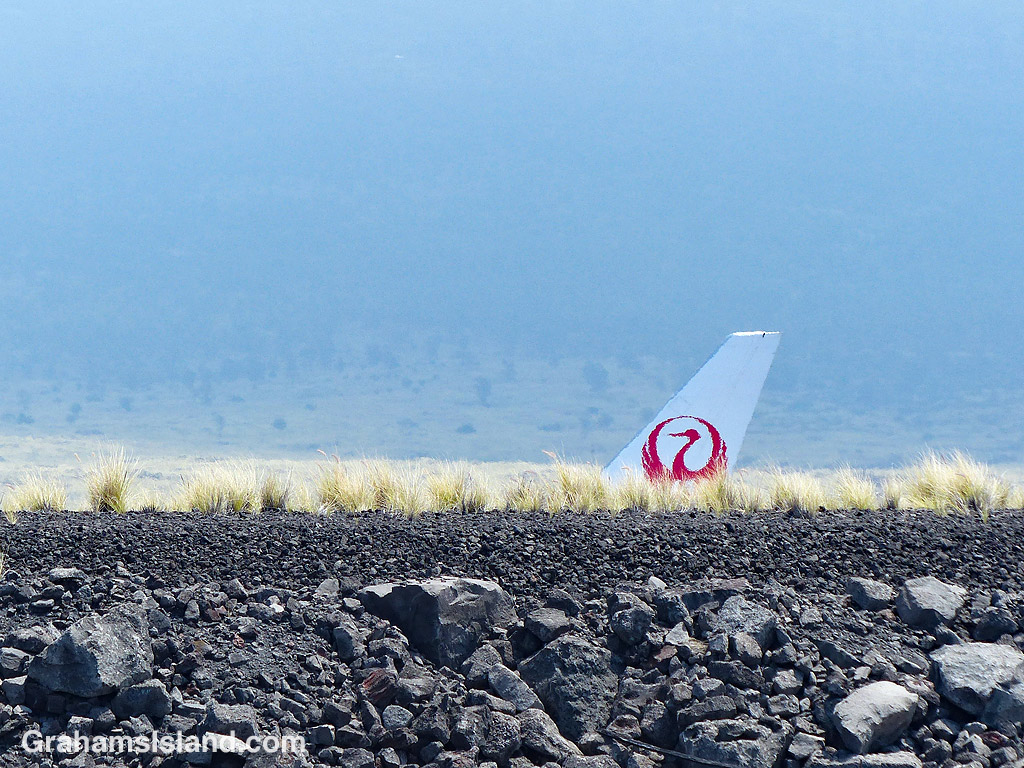
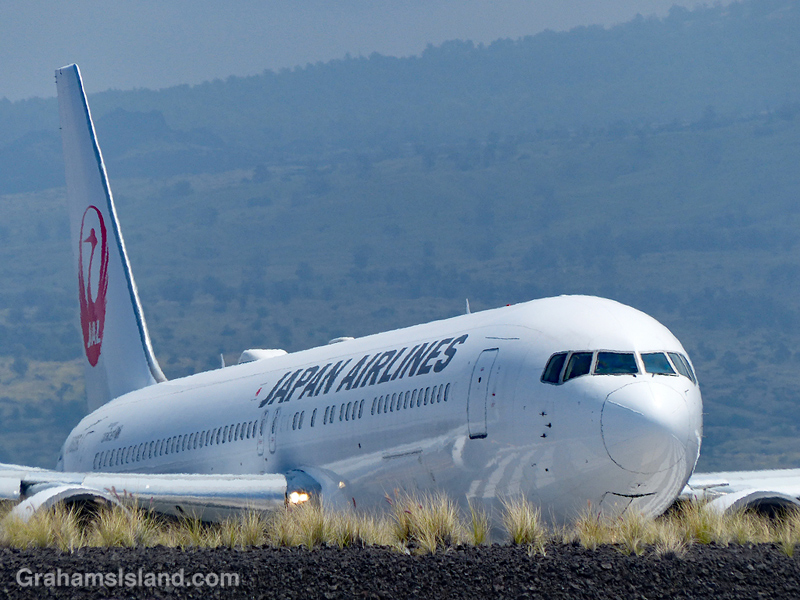
These photos are of the outgoing JAL flight preparing to take off on the return journey to Japan. I took the top photo because it made me think of a shark cruising by.

Japan Airlines plane takeoff

Your tax dollars at rest

Sikorsky CH 53E Super Stallion helicopter at Upolu Airport

I was out on one of my usual coast walks when I heard the thrumming of engines. I looked up to see a pair of military helicopters heading west. I see a lot of helicopters on my walks, sometimes military ones, but more often those on tours.

I kept walking but, as they sometimes do, the helicopters turned and came in to land at Upolu Airport. This wasn’t unusual. Military aircraft often land at the lightly used airstrip. I’d have carried on, but the two aircraft had come to rest a little way above where I was walking. All I could see of them was their rotors turning, though I could hear plenty; helicopters are loud.

Anyway, I thought the situation had some photographic potential so I edged toward the airport fence and took some shots – not too interesting as it turned out. Still, I knew that when military craft touch down here, they only tend to stick around for a few minutes before taking off again. I thought these large helicopters rising above the vegetation might be interesting, so I waited, punishing my ears in the process.

Five minutes passed, then 10. I started to get antsy. What were they up to? I waited another five minutes or so and then I saw one of the crewmen through a gap in the vegetation, walking on the runway from the second helicopter to the first. Now it was possible he was returning to his aircraft prior to takeoff and I just hadn’t noticed him going the other way, but I figured if the crew were wandering around on foot, chances were that nothing was going to happen any time soon. I put away my camera and started walking again.

At this point in the story, one might expect that both helicopters to take of and collide in a flash of flame, or a UFO comes down and lands between them, but no. I walked a bit and turned around in time to see the rotors on the second helicopter turning slower and slower on their way to stopping. Something was wrong.

I kept going and several minutes later there was a surge in noise and the first helicopter rose up, made a sharp curve through the air, and headed off toward Oahu. I didn’t get a photo of this in part because I was looking directly into the sun and in part because it was halfway to Honolulu before I reacted.

Instead, I finished my walk and saw that the second helicopter was still sitting forlornly at the far end of the runway (something of a hazard for anyone else wanting to land there). So I drove my truck down the road and parked opposite the helicopter. I didn’t see anyone in it, but the doors were open and I didn’t think it had been abandoned. I was tempted to yell across asking if they needed a gallon of gas, but restrained myself, aware that such a craft was probably bristling with machine guns. Instead, I took these photos and left.

Later that evening, not long after dark, I heard that thrumming again and next day the runway was empty so I assume that whatever had gone wrong had been fixed.

The helicopter is a Sikorsky CH-53E Super Stallion operated by the U.S. Marine Corps who have a base at Kaneohe Bay on Oahu. It’s used for heavy-lift transport and I think it was a couple of these craft that were stationed in Hilo recently in case people needed to be evacuated from the region threatened by the current lava flow in Puna.


Sikorsky CH 53E Super Stallion helicopter


Planes landing at Kailua-Kona Airport

Plane landing at Kailua-Kona airport

Hawaii has the reputation of being a tropical paradise, but arriving at Kailua-Kona Airport looks anything but. The final approach to the airport comes over the 1801 Huʻehuʻe lava flow from Hualali volcano. This flow is still quite barren with next to no vegetation. For first-time visitors, touching down on actual tarmac can come as something of a relief.

Exiting the plane, it will most likely be hot, but sunny? Not so much, especially if touchdown is after noon. Typically, clouds roll in during the morning and vog (volcanic smog, caused by pollutants from Kilauea Volcano) settles over the area. The appearance, seen in these photos, is sometimes called ‘concrete skies.’ Not a bad description.

Plane landing at Kailua-Kona

V-22 Ospreys at Upolu

V-22 Ospreys landing at Upolu

Upolu is a favorite spot where I walk most often. The coast below the airport is wild with crashing surf and strong winds. There’s a wealth of ocean life to be seen from turtles to humpback whales, though this year the whale numbers have been down, at least from my observations. There’s also a good variety of birds and other wildlife.

Also on this coast are Mo’okini Heiau and King Kamehameha’s Birthplace and, in a more modern vein, there’s the airport. I’m posting these photos, not because this is the most notable feature of the area, but because I just took them.

Last May, the Marine Corps got some flack for the amount of operations taking place at Upolu, so they stopped using it for the rest of the year. This is the first time I’ve seen the planes back since then, but it has been two days in a row that I know of.

In the top photo, the planes kick up the dirt as they come in to land. Below, they sit on the tarmac, dwarfing the little plane used by a local skydiving operation.

Posted in response to the WordPress photo challenge, ‘Favorite place’.

V-22 Ospreys at Upolu

Kona airport

A couple of photos from a recent too-early foray to Kona airport. Above, passengers ooze out of the crowded toothpaste-tube-with-engines that is the modern passenger jet. The airport is still relatively small and open (though ongoing improvements will likely eradicate much of that charm) and, yes, many of those passengers are wearing shorts and a shirt at 6 a.m..

Below is one of the airport’s boarding areas. Busy during the day, at this hour only a few still-sleepy people mill about waiting for the restaurant to open and the first plane of the day to arrive.

Memo to self: It doesn’t matter how early you get up, it doesn’t matter how fast you drive, and it doesn’t matter what time you get to the airport. Until TSA starts work you’re not going anywhere.

In response to WPC ‘A face in the crowd.’